• 13850 CENTRAL AVE, CHINO CA
  • Help@evcube.net
  • Help@evcube.net

$0.00 0

Cart

No products in the cart.

EV Charging Boom: Is the U.S. Keeping Up?


The Race: EV Growth vs. Infrastructure

The electric vehicle (EV) revolution is undeniably underway, with over 3 million EVs now traversing U.S. roads in just the last three years. However, this surge in EV adoption begs a crucial question: Is the nation’s public EV charging infrastructure keeping pace? This is not a straightforward query, as a simple charger-to-EV ratio can be misleading. The perceived lack of adequate charging stations remains a significant barrier to wider EV adoption, making it imperative to understand the true state of charging infrastructure.

Loren McDonald, chief analyst at Paren, a leading charging data firm, emphasizes that a basic ratio doesn’t paint an accurate picture. For example, Oklahoma might appear to be an EV paradise based on its high charger-to-EV ratio, but this doesn’t reflect the actual charging needs and behaviors of EV owners in the state. The key lies in analyzing utilization rates across different markets to gauge the real demand and availability of chargers.


Utilization Rates and Regional Disparities

Paren’s recent report on the EV charging industry sheds light on the significant variations in charger utilization across the U.S. The study focused on the peak hours of 12 p.m. to 6 p.m. and revealed that Las Vegas had the highest utilization rate at 43.3%, while Columbus, Ohio, had the lowest at 14.3%. This stark contrast underscores the importance of understanding local market dynamics when assessing charging infrastructure adequacy.

These numbers suggest that in high-utilization markets like Las Vegas, EV owners may frequently encounter wait times for chargers. Conversely, in cities like Columbus, the existing infrastructure appears more than sufficient to meet current demand. Overall, McDonald believes that the U.S. is generally well-equipped with charging infrastructure, particularly in core urban markets. However, this doesn’t negate the challenges and disparities that exist across different regions.

CityPeak Hour Utilization Rate
Las Vegas, NV43.3%
Columbus, OH14.3%


Charging 2.0: The Evolution of the EV Charging Industry

The EV charging industry is maturing, moving beyond its “teenage years” into a more stable and profitable phase, dubbed “Charging 2.0” by McDonald. Average utilization rates exceeding 25% in several markets signal a positive trend for a sector that has historically struggled with profitability. This progress is attracting new and significant players to the field.

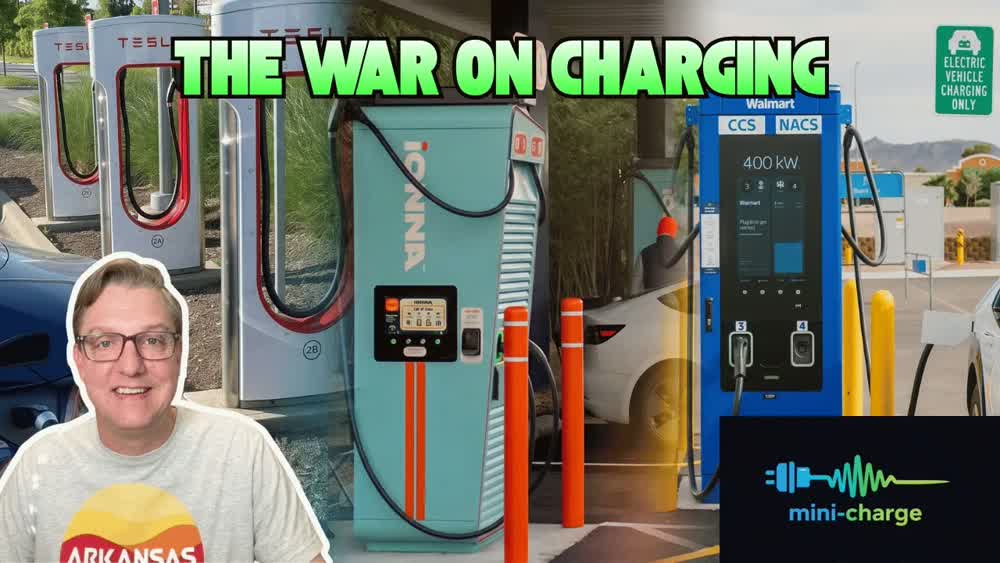
Major convenience store and gas station chains, such as Wawa, Sheetz, 7/11, BP, and Circle K, are recognizing the potential revenue from longer EV charging stops. Furthermore, automakers are acknowledging the need for robust charging solutions to drive EV sales. This has led companies like Mercedes-Benz, Rivian, and Ionna (funded by a consortium of automakers) to establish their own charging networks, following Tesla’s pioneering model. These new entrants bring substantial capital and diverse motivations to the charging infrastructure landscape.


Overcoming Challenges and the Role of NEVI

Despite the positive developments, significant challenges remain. Large portions of rural America still lack adequate charging infrastructure. The uncertain future of the $5 billion National Electric Vehicle Infrastructure (NEVI) program further complicates matters. The NEVI program, designed to subsidize the construction of fast-charging stations along major travel corridors and in less profitable areas, faces potential setbacks.

The pause of NEVI funding could lead charging firms to concentrate on high-demand areas, exacerbating the charging infrastructure divide and potentially deterring potential EV buyers. As McDonald points out, regions like Wyoming and Montana lack the economic incentives for private investment in charging infrastructure, making NEVI’s role crucial. While fast charging is becoming a viable business, its profitability is not universal, and government support is essential to ensure equitable access to charging infrastructure across the country. The reliability of EV chargers, particularly at non-Tesla sites, has also improved, with Paren’s reliability index showing a positive trend due to the replacement of aging hardware. Additionally, new stations are expanding, with the average number of ports per site increasing.

MetricValue (Q1 2025)Change
New Chargers Added3,667N/A
New Stations Added794N/A
Average Ports per New Non-Tesla Site3.9Up from 2.7 in Q1 last year
Non-Tesla Charger Reliability Index82.6Up from 81.2 in previous quarter


Frequently Asked Questions


Why is a simple charger-to-EV ratio misleading?

A simple ratio doesn’t account for regional differences in EV usage, driving patterns, and charger availability. A high ratio in one area might not indicate sufficient charging options if the chargers are poorly located or underutilized.


What is “Charging 2.0”?

“Charging 2.0” refers to the maturation of the EV charging industry, characterized by increased utilization rates, improved profitability, and the entry of major players like convenience store chains and automakers.


How does the NEVI program aim to address charging infrastructure gaps?

The NEVI program aims to subsidize the buildout of fast-charging stations along major travel corridors and in areas where private investment is not economically viable, ensuring more equitable access to EV charging across the country.


What factors contribute to the improved reliability of EV chargers?

The improved reliability is primarily due to efforts to replace aging hardware and implement better maintenance practices. This leads to a higher uptime and better user experience at charging stations.


How are convenience stores and gas stations influencing the EV charging landscape?

Convenience stores and gas stations are investing in EV charging infrastructure to capitalize on the longer dwell times associated with EV charging. This allows them to attract and retain customers who may purchase goods and services while their vehicles are charging.

    Comments are closed

    Search

    Follow us

    Have any questions?

    • help@evcube.net
    • +1 (510)-878-5951
    level 2 ev charger charging at home,tesla charger for home charging

    Safe

    level 2 ev charger charging at home,tesla charger for home charging

    Speed

    level 2 ev charger charging at home,tesla charger for home charging

    Stylish

    level 2 ev charger charging at home,tesla charger for home charging

    Save

    level 2 ev charger charging at home,tesla charger for home charging

    Smart

    level 2 ev charger charging at home,tesla charger for home charging

    Suitablility

    Tesla Redesigns Doors for Emergency Safety

    Table of Contents 1. Introduction: Tesla's Door Handle Redesign 2. NHTSA Investigation and Safety Concerns 3. Details of the New Door Release Design 4. Global Regulatory Landscape 5. FAQ Introduction:…
    Read more

    Lyft Teams With Waymo to Catch Uber

    Table of Contents 1. Lyft's Pursuit of Autonomous Vehicles 2. The Waymo-Lyft Collaboration: A Game Changer? 3. Uber's Autonomous Driving Initiatives 4. Nashville as the Launchpad for Robotaxis 5. FAQ…
    Read more

    Hyundai’s 600-Mile EREV: 2027 Game Changer

    Table of Contents 1. Hyundai's Electrified Future: The 2027 EREV Launch 2. Understanding Extended Range Electric Vehicles (EREVs) 3. Hyundai's Unique EREV Strategy and Genesis Expansion 4. EREVs in the…
    Read more

    Tesla Redesigns Doors for Emergency Safety

    Table of Contents 1. Introduction: Tesla's Door Dilemma 2. The Proposed Design Change: A Unified Approach 3. NHTSA Investigation and Regulatory Scrutiny 4. Global Impact and Future Solutions 5. FAQ…
    Read more

    BMW: Gas Engines Will Never Die

    Table of Contents 1. BMW's Dual-Track Strategy: EVs and Combustion Engines 2. Market Dynamics Driving BMW’s Decision 3. The Future of BMW Platforms: A Diverse Approach 4. FAQ 1. BMW's…
    Read more

    Tesla FSD vs NYC Chaos: Robotaxi Test

    Table of Contents 1. Introduction: The Tesla Robotaxi Challenge in NYC 2. Navigating NYC with Tesla's Full Self-Driving 3. Tesla's Vision-Based Autonomy vs. the Competition 4. FSD Beyond NYC: Suburban…
    Read more
    evcubnb level 2ev charer,tesla charger,home charger,50a charger,nema 14-50charger

    Any Charging Problem?
    Let Us Know 24/7

    • 13850 CENTRAL AVE, CHINO CA
    • help@evcube.net
    ©2022 EVCUBE - All rights reserved