• 13850 CENTRAL AVE, CHINO CA
  • Help@evcube.net
  • Help@evcube.net

$0.00 0

Cart

No products in the cart.

Hyundai EVs Charge Faster, But Not at Tesla Stations


Hyundai’s Fast-Charging Prowess Meets a Tesla Network Hurdle

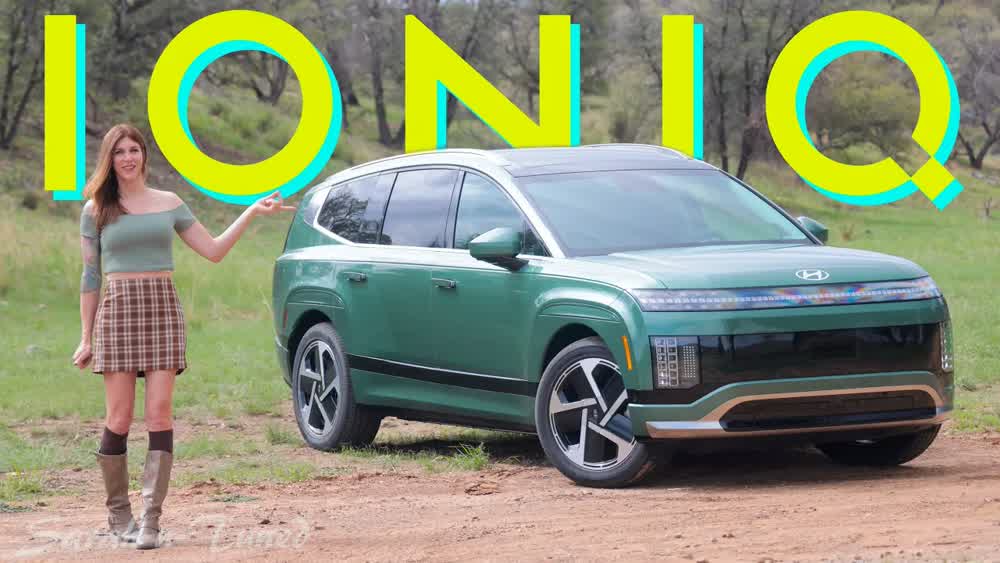
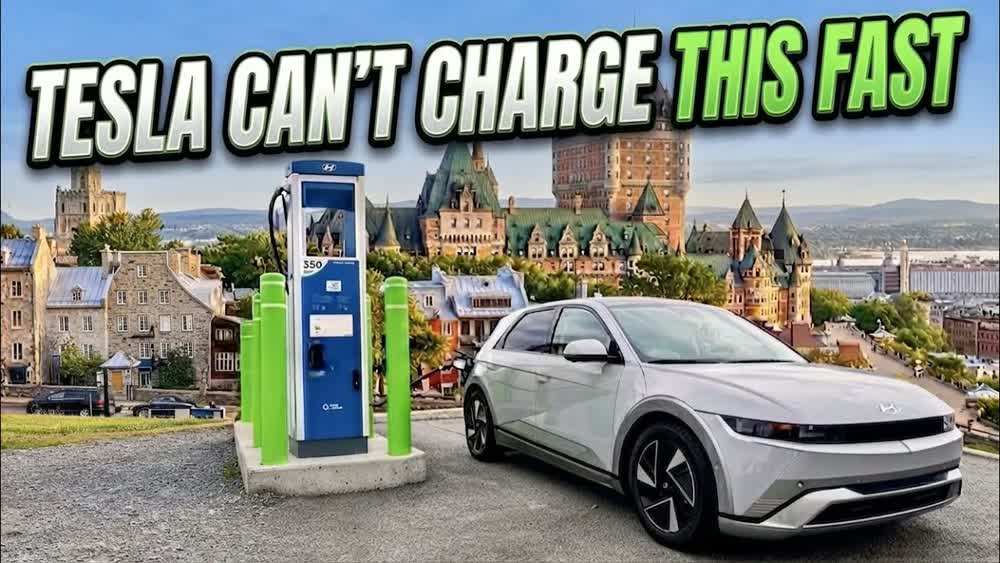
Hyundai has rapidly emerged as a frontrunner in the electric vehicle revolution, particularly renowned for its Hyundai EVs‘ exceptional fast charging capabilities. This technological edge has cemented the South Korean automaker’s status as an automotive tech leader in America. Models like the Ioniq 5 crossover have captured significant consumer interest, becoming highly sought-after EVs. However, a significant challenge looms as Hyundai vehicles, including the upcoming Ioniq 9 SUV, begin to access Tesla’s expansive Supercharger network.

The crux of the issue lies in charging speed. While Hyundai’s advanced 800-volt architecture allows for incredibly quick charging on compatible stations, the current Tesla Supercharger network, predominantly operating at around 400 volts, cannot match these speeds for Hyundai vehicles. Consider the new Hyundai Ioniq 9, a spacious three-row SUV designed for families. When connected to a high-power 350-kilowatt charger from networks like Electrify America or EVgo, Hyundai estimates a 10% to 80% charge in a mere 24 minutes. In stark contrast, the same charging session at a Tesla Supercharger is projected to take approximately 41 minutes.

This disparity exists even though the 2026 Hyundai Ioniq 9 is among the pioneering non-Tesla vehicles to feature the Tesla-designed North American Charging Standard (NACS) port directly from the factory. While Hyundai drivers now have access to Tesla’s vast network, achieving the advertised ultra-fast charging times will necessitate seeking out other high-voltage charging providers. This situation underscores that the EV industry’s shift towards NACS is still navigating an “awkward phase,” with interoperability and performance nuances yet to be fully ironed out.

Feature / EV ModelHyundai Ioniq 9Hyundai Ioniq 5
Battery Capacity110.3 kWh63 kWh / 84 kWh options
Optimal Charging (e.g., 350kW, 800V DC Fast Charger)
Est. 10-80% Charge Time~24 minutes~20 minutes
Peak Charging Power~237 kWUp to ~235 kW
Tesla Supercharger (Current ~400V Network)
Est. 10-80% Charge Time~41 minutes~24-30 minutes
Peak Charging Power~126 kWSignificantly lower than optimal


The Voltage Divide and the Evolving EV Charging Landscape

The core of this charging speed discrepancy is voltage. Voltage, often compared to water pressure in a pipe, is the force that propels electrons through a charging system. Hyundai Motor Group’s premier EVs, including the Ioniq 5 and Ioniq 9, are built on an 800-volt electrical architecture. This high-voltage system is key to their rapid charging capabilities, performing optimally with chargers that can supply at least 800 volts, such as those advertising 350 kW or more, and even some 150-kW Electrify America units. Conversely, Tesla vehicles have traditionally used a 400-volt system, and consequently, their Supercharger network is primarily designed for this voltage level, at least for now.

“It’s absolutely a hurdle,” acknowledged Karl Holodnick, engineering manager for propulsion and charging at Hyundai America’s Technical Center, during the Ioniq 9’s press launch. “When Tesla decides to go to their higher-voltage chargers, our vehicles will be able to charge at higher powers there.” To bridge this gap, Hyundai has integrated hardware into its EVs, like the Ioniq 9, that can step up a Supercharger’s 400V supply to the 800V its batteries require. However, this conversion process is inherently less efficient and slower than direct charging from a native 800V station. As a result, the Ioniq 9 can draw significantly more power—peaking at 237 kW—from compatible non-Tesla chargers, enabling its swift 24-minute pit stop. On a Supercharger, its intake is limited to about 126 kW. Holodnick noted that while the Ioniq 9 should reach and sustain this 126 kW rate effectively, the overall charging time is impacted. He emphasized that focusing solely on peak power can be misleading: “It’s the curve, the area under the curve, that we’re trying to optimize in order to reduce the total charge time.”

The popular Hyundai Ioniq 5 experiences a similar situation: it can achieve a 10-80% charge in about 20 minutes on an optimal 800V charger, but this extends to 24-30 minutes at a Tesla Supercharger. The Ioniq 9’s larger 110.3 kWh battery (compared to the Ioniq 5’s 63 kWh and 84 kWh options) naturally means longer Supercharging times, further highlighting the voltage challenge.

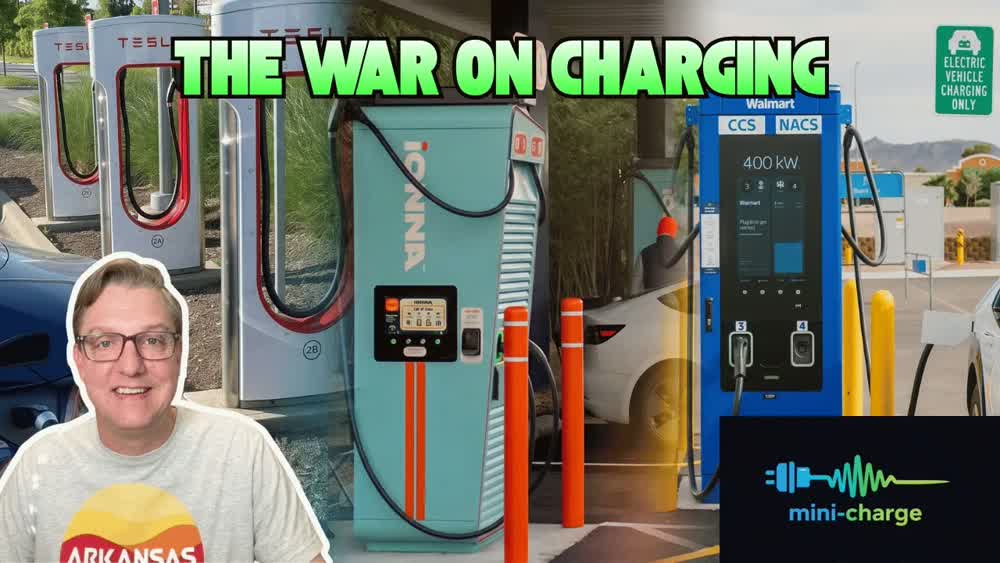
This scenario is part of the broader, somewhat messy transition to NACS. Most of the U.S. auto industry is moving from the older, bulkier Combined Charging System (CCS) plug to Tesla’s more compact NACS design. This shift also involves automakers collaborating with Tesla to grant their customers access to the Supercharger network, the nation’s most extensive. However, this transition is fraught with complexities. While companies like GM, Ford, and Rivian have enabled Tesla network access for their users (often via adapters initially), others such as BMW, Honda, and Volkswagen are still in the process. Adapters remain necessary to bridge NACS and CCS systems, and these voltage disparities add another layer of complication.

Hyundai, along with Kia and Genesis, has been proactive, with NACS-equipped models like the Ioniq 5 and Ioniq 9 already available (they also include free adapters for CCS chargers). Many other EVs with 800V or higher architectures are also caught in this transitional phase. The move to higher voltages offers benefits like improved fast charging speeds, better efficiency, enhanced thermal management, and potential weight savings. For instance, the 926V Lucid Gravity, one of America’s fastest-charging EVs (capable of 400 kW and adding 200 miles in under 11 minutes), also features NACS but sees its Supercharger intake capped at 225 kW. The older Lucid Air, despite supporting 300 kW on high-voltage chargers, is limited to just 50 kW at a Supercharger.

Interestingly, Tesla’s own Cybertruck utilizes an 800V battery system, meaning it too is constrained by the current Supercharger infrastructure. Looking ahead, Tesla plans to introduce next-generation 1000V Superchargers later this year. This development, Holodnick believes, signals the direction for the entire charging industry. “The biggest players in the field right now are mostly moving to 800-volt or higher charging systems,” he stated. “My guess is there will be a point in the future where network providers will continue to converge around the higher-power chargers.” This evolution promises a future where EV owners, including those of Hyundai EVs, can expect a consistently fast and convenient charging experience, much like refueling a gasoline car, regardless of the station.


Frequently Asked Questions


Why do Hyundai EVs charge slower on Tesla Superchargers despite using the NACS port?

The primary reason is the voltage difference. Hyundai EVs like the Ioniq 5 and Ioniq 9 use an 800-volt architecture for fast charging. Most current Tesla Supercharger stations operate at around 400 volts. While Hyundai vehicles have onboard converters to step up the voltage, this process is not as efficient or fast as charging directly from a native 800-volt charger, leading to longer charge times and lower peak power delivery (e.g., Ioniq 9 gets ~126 kW vs. its ~237 kW potential).


What is the difference between 800V and 400V charging architecture?

Voltage is the electrical pressure. An 800V system allows for higher power transfer (more kilowatts) at the same current compared to a 400V system, or the same power at lower current. This can lead to faster charging times, potentially thinner and lighter cabling, and improved thermal management. Hyundai EVs leverage this for their quick charging speeds.


Will Hyundai EVs ever charge at their maximum speed on Tesla Superchargers?

Yes, potentially. Tesla is planning to roll out next-generation Superchargers (V4) capable of delivering up to 1000 volts. Once these higher-voltage Superchargers become widely available, 800V vehicles like Hyundai’s Ioniq series should be able to charge at or near their maximum speeds on the Tesla network.


What is NACS, and why is the industry transitioning to it?

NACS stands for North American Charging Standard. It is the charging plug design originally developed by Tesla. The U.S. auto industry is largely adopting NACS due to its more compact and user-friendly design compared to the previous CCS standard, and to gain access to Tesla’s extensive Supercharger network, which is the largest in the country.


Are other EV brands facing similar charging speed issues on the Tesla network?

Yes, other EVs with high-voltage architectures (800V or more) also experience limitations on the current 400V Tesla Supercharger network. Examples include the Lucid Gravity, Lucid Air, and even Tesla’s own 800V Cybertruck. They cannot achieve their maximum charging speeds until higher-voltage Superchargers are deployed.


What are the benefits of higher-voltage EV architectures like Hyundai’s 800V system?

Higher-voltage architectures (e.g., 800V or more) offer several advantages:

  • Faster Charging: Enables higher power delivery for quicker charging times.
  • Improved Efficiency: Can reduce energy losses during charging and operation due to lower current for the same power.
  • Better Thermal Management: Lower currents can lead to less heat generation, simplifying cooling systems.
  • Potential for Lighter Components: May allow for thinner, lighter cables and components.

    Comments are closed

    Search

    Follow us

    Have any questions?

    • help@evcube.net
    • +1 (510)-878-5951
    level 2 ev charger charging at home,tesla charger for home charging

    Safe

    level 2 ev charger charging at home,tesla charger for home charging

    Speed

    level 2 ev charger charging at home,tesla charger for home charging

    Stylish

    level 2 ev charger charging at home,tesla charger for home charging

    Save

    level 2 ev charger charging at home,tesla charger for home charging

    Smart

    level 2 ev charger charging at home,tesla charger for home charging

    Suitablility

    Tesla Redesigns Doors for Emergency Safety

    Table of Contents 1. Introduction: Tesla's Door Handle Redesign 2. NHTSA Investigation and Safety Concerns 3. Details of the New Door Release Design 4. Global Regulatory Landscape 5. FAQ Introduction:…
    Read more

    Lyft Teams With Waymo to Catch Uber

    Table of Contents 1. Lyft's Pursuit of Autonomous Vehicles 2. The Waymo-Lyft Collaboration: A Game Changer? 3. Uber's Autonomous Driving Initiatives 4. Nashville as the Launchpad for Robotaxis 5. FAQ…
    Read more

    Hyundai’s 600-Mile EREV: 2027 Game Changer

    Table of Contents 1. Hyundai's Electrified Future: The 2027 EREV Launch 2. Understanding Extended Range Electric Vehicles (EREVs) 3. Hyundai's Unique EREV Strategy and Genesis Expansion 4. EREVs in the…
    Read more

    Tesla Redesigns Doors for Emergency Safety

    Table of Contents 1. Introduction: Tesla's Door Dilemma 2. The Proposed Design Change: A Unified Approach 3. NHTSA Investigation and Regulatory Scrutiny 4. Global Impact and Future Solutions 5. FAQ…
    Read more

    BMW: Gas Engines Will Never Die

    Table of Contents 1. BMW's Dual-Track Strategy: EVs and Combustion Engines 2. Market Dynamics Driving BMW’s Decision 3. The Future of BMW Platforms: A Diverse Approach 4. FAQ 1. BMW's…
    Read more

    Tesla FSD vs NYC Chaos: Robotaxi Test

    Table of Contents 1. Introduction: The Tesla Robotaxi Challenge in NYC 2. Navigating NYC with Tesla's Full Self-Driving 3. Tesla's Vision-Based Autonomy vs. the Competition 4. FSD Beyond NYC: Suburban…
    Read more
    evcubnb level 2ev charer,tesla charger,home charger,50a charger,nema 14-50charger

    Any Charging Problem?
    Let Us Know 24/7

    • 13850 CENTRAL AVE, CHINO CA
    • help@evcube.net
    ©2022 EVCUBE - All rights reserved