Table of Contents
1. Introduction: The Kia EV3 and Its Promise
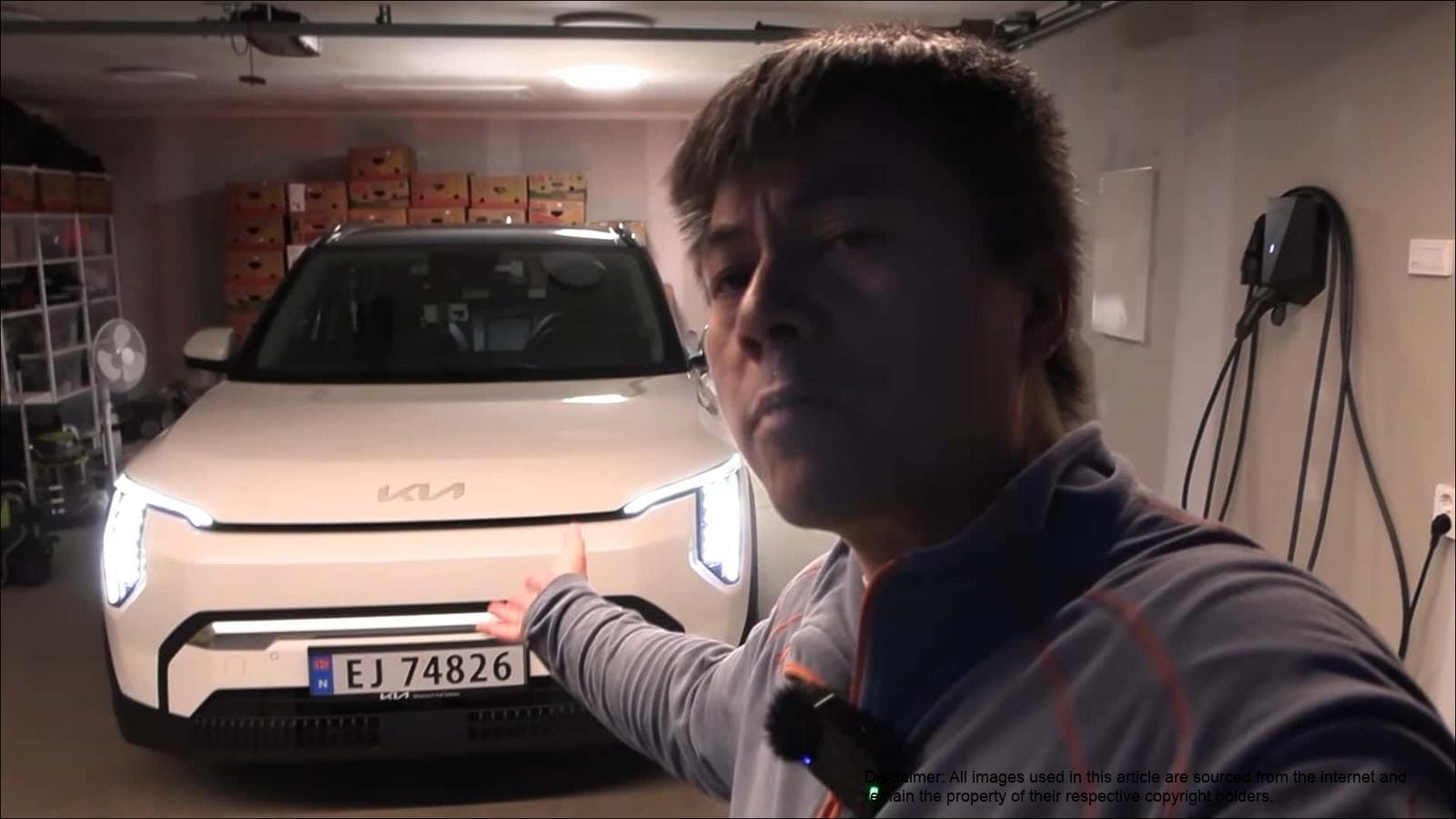
The Kia EV3 is making waves as a compelling electric crossover, especially in the European market. This subcompact EV boasts an impressive combination of affordability, clever design, and strong specifications, positioning it as a formidable competitor. While its arrival in the American lineup remains uncertain, the EV3 has already begun to outperform many rivals across the Atlantic. It offers a surprisingly spacious and comfortable interior, coupled with a promising driving range. If the Kia EV3 does make its way to the United States, a price point around $35,000 would place it in direct competition with vehicles like the Chevrolet Equinox EV, making it an attractive option for budget-conscious EV enthusiasts. The Kia EV3 has a WLTP-rated range of up to 375 miles and can fast charge at up to 135 kW.
2. The 1,000 Kilometer Challenge: Testing the EV3’s Mettle
The real question is: how well does the Kia EV3 handle long journeys? To answer this, renowned EV tester Bjorn Nyland subjected the front-wheel-drive EV3, equipped with the long-range battery pack, to his rigorous 1,000-kilometer (621-mile) challenge. This challenge involves driving an EV for 621 miles on highways in Norway and Sweden, with the primary objective of determining the total time required to cover the distance, including all necessary charging stops. It serves as a comprehensive test of both the EV’s real-world range and its charging capabilities under typical driving conditions. This provides valuable insights into the practicality of the Kia EV3 as a road trip vehicle.
3. EV3 Performance Analysis: Range, Charging, and Road Trip Suitability
The Kia EV3 variant tested features an 81.4-kilowatt-hour (gross) battery pack, promising a WLTP-rated range of up to 375 miles. However, a long driving range alone doesn’t guarantee a good road-tripping experience; charging speed is equally crucial. Nyland’s test revealed that the front-wheel-drive EV3 Long Range, maintaining an average speed of 61.1 miles per hour (98.4 kilometers per hour), completed the 621-mile journey in 10 hours and 10 minutes. The average energy consumption was 2.38 miles/kWh (2.6 kWh/100 km), with an average ambient temperature of 44.6 degrees Fahrenheit (7 degrees Celsius). This performance places the EV3 on par with vehicles like the BMW i4 M50, BMW iX xDrive50, Kia EV6 (rear-wheel drive with 77 kWh battery), and the MG4 (with 64 kWh battery). Considering the EV3’s affordability and its classification as a 400-volt family hatchback designed primarily for urban and suburban trips, these results are quite respectable. For context, the fastest EVs in Nyland’s 1,000 km challenge have completed the trip in approximately nine hours.
| Metric | Value |
|---|---|
| Average Speed | 61.1 mph (98.4 km/h) |
| Total Time | 10 hours 10 minutes |
| Average Energy Consumption | 2.38 miles/kWh (2.6 kWh/100 km) |
| Average Ambient Temperature | 44.6 degrees Fahrenheit (7 degrees Celsius) |
4. Optimizing Charging: The 70% Sweet Spot
A key insight from the test is the EV3’s battery charging curve. It’s most efficient to unplug the EV3 after it reaches 70% state of charge (SoC). Beyond this point, the charging speed drops below 100 kW. However, up to 70% SoC, the EV3 can comfortably receive around 120 kW of power. A 70% charge translates to approximately 125 miles (200 km) of highway driving, or about two hours of travel time. This information is invaluable for planning efficient charging stops during long journeys, maximizing travel time and minimizing charging duration. Understanding the Kia EV3’s charging characteristics allows drivers to optimize their road trips, ensuring they spend less time plugged in and more time on the road.