Table of Contents
The Race for Faster Charging: A Global Perspective
The electric vehicle (EV) landscape is rapidly evolving, with one of the most critical areas of advancement being charging speed. While EVs offer numerous benefits, the time it takes to recharge their batteries remains a key concern for potential buyers. The industry is intensely focused on bridging the gap between the convenience of gasoline refueling and the charging times of electric vehicles. Recent announcements from China’s BYD and CATL, the world’s largest battery manufacturer, highlight this accelerating trend.
BYD recently unveiled its next-generation vehicles boasting the ability to add 250 miles of range in just five minutes of charging. Not to be outdone, CATL announced a battery pack claiming to add over 323 miles in the same short period. While these figures are based on Chinese range estimates, which tend to be optimistic, even accounting for real-world conditions, the potential is remarkable. We can estimate around 170 miles of real-world range for the BYD and 210 miles for the CATL pack. These advancements represent a significant leap forward in charging technology, potentially revolutionizing the EV ownership experience.
| Company | Claimed Range Added in 5 Minutes | Estimated Real-World Range Added |
|---|---|---|
| BYD | 250 miles | 170 miles |
| CATL | 323 miles | 210 miles |

Lucid Gravity: Charging Performance and Innovation
While Chinese manufacturers are making headlines with ambitious charging claims, Lucid Motors is emerging as a leader in charging technology in the United States. The Lucid Gravity SUV, according to testing by Tom Moloughney of InsideEVs and State of Charge, is currently the fastest charging EV available outside of China. This achievement is a testament to Lucid’s focus on innovation and its commitment to pushing the boundaries of EV technology. At a recent media preview for the Gravity, Emad Dlala, Lucid’s senior vice president of powertrain, shared insights into the engineering behind the vehicle’s impressive charging capabilities.
The Lucid Gravity stands out as a true “charging monster,” theoretically capable of accepting 400 kW of peak charging power. In real-world testing at a 350-kilowatt EVgo dispenser, the Gravity reached a maximum charging rate of 375 kW. While this is only slightly higher than other high-performance EVs like the Porsche Taycan or GMC Hummer EV, the Gravity’s true advantage lies in its ability to sustain high charging power for an extended period. This is reflected in the Gravity’s exceptional “charging curve,” which illustrates how charging power ramps up and declines during a charging session. The Gravity maintained over 300 kW until nearly a 40% state of charge and over 200 kW up to almost 50%.
In terms of mileage, the Gravity added 100 miles of EPA-rated range in just over five minutes, 200 miles in 10.9 minutes, 250 miles in 15 minutes, and 300 miles in 20 minutes. These figures are practically unheard of outside of China, showcasing the Gravity’s superior charging performance. Lucid achieved these impressive results through a combination of innovative battery technology and advanced thermal management systems. The Gravity utilizes a new battery cell developed in partnership with Panasonic, boasting better energy density (800 watt-hours per liter) and enhanced charging capabilities compared to the cells used in the Lucid Air. This new cell also exhibits improved performance in extreme temperatures, ensuring consistent charging performance in diverse climates. The Gravity’s impressive charging speeds are also attributed to its high-voltage architecture, operating at 926 volts, more than double the voltage of typical EVs.
| Charging Time | EPA-Rated Range Added |
|---|---|
| 5 minutes | 100 miles |
| 10.9 minutes | 200 miles |
| 15 minutes | 250 miles |
| 20 minutes | 300 miles |

Lucid vs. BYD: A Charging Technology Showdown
With BYD’s recent announcements about their “flash charging” technology, the natural question arises: How does Lucid’s charging performance compare? Emad Dlala provided valuable insights into this comparison, highlighting the different priorities and approaches of the two companies. According to Dlala, BYD appears to have prioritized charging power and speed over energy density and range. This trade-off is evident in the BYD Han L, which utilizes the new “flash-charging” tech but has a relatively lower EPA-equivalent range rating of under 300 miles.
Furthermore, BYD’s technology is optimized for use with 1,000-kilowatt charging stations, a charging infrastructure that is not yet widely available. In contrast, Lucid has focused on striking a balance between charging speed, range, and compatibility with existing charging infrastructure. While the highest-powered chargers in America currently dispense 350-500 kW, Lucid has engineered the Gravity to maximize its charging performance within these constraints. Dlala emphasizes that Lucid could potentially make the Gravity charge even faster, but questions whether the added cost and compromised range would be worthwhile, given the current state of charging infrastructure. He believes that Lucid has “really hit the right balance,” offering a compelling combination of fast charging, long range, and compatibility with existing charging networks.
It’s worth noting that the lack of vehicles capable of utilizing ultra-high-powered chargers may be a factor in the slow deployment of such infrastructure. In China, companies like BYD, Huawei, and Zeekr are actively deploying 1,000 kW+ charging dispensers to meet the demand from their new generation of fast-charging cars. BYD’s new cars also feature dual charge ports, enabling them to draw power from two charging stalls simultaneously, maximizing their utilization of existing EV charging infrastructure. The future of EV charging technology will likely involve a combination of factors, including advancements in battery technology, the deployment of higher-powered charging infrastructure, and a focus on optimizing the overall EV ecosystem.
| Feature | Lucid Gravity | BYD Han L |
|---|---|---|
| EPA-Equivalent Range | 450 miles | Under 300 miles |
| Optimal Charging Infrastructure | 350-500 kW Chargers | 1,000 kW Chargers |

Navigating the Tesla Supercharger Network
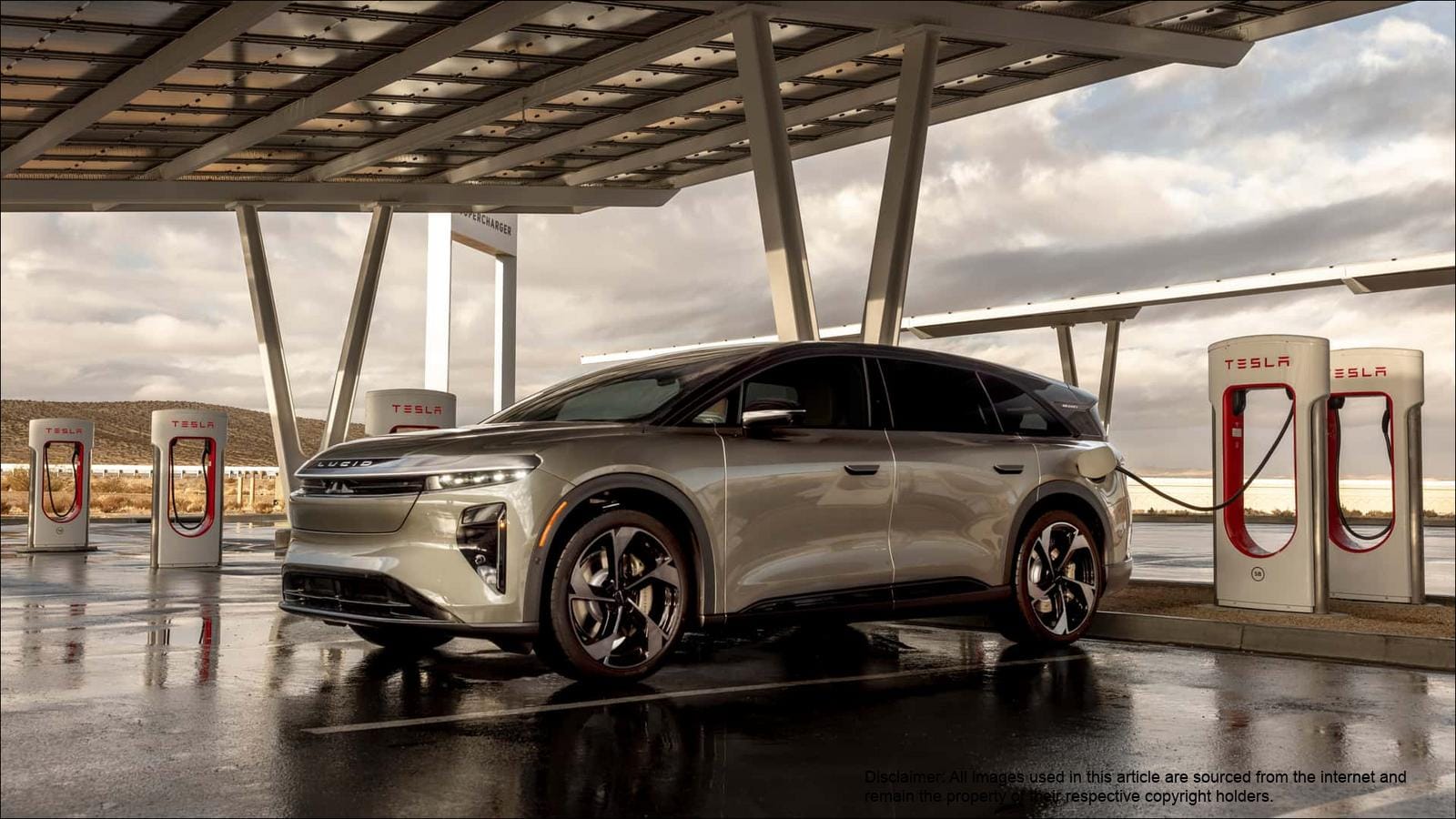
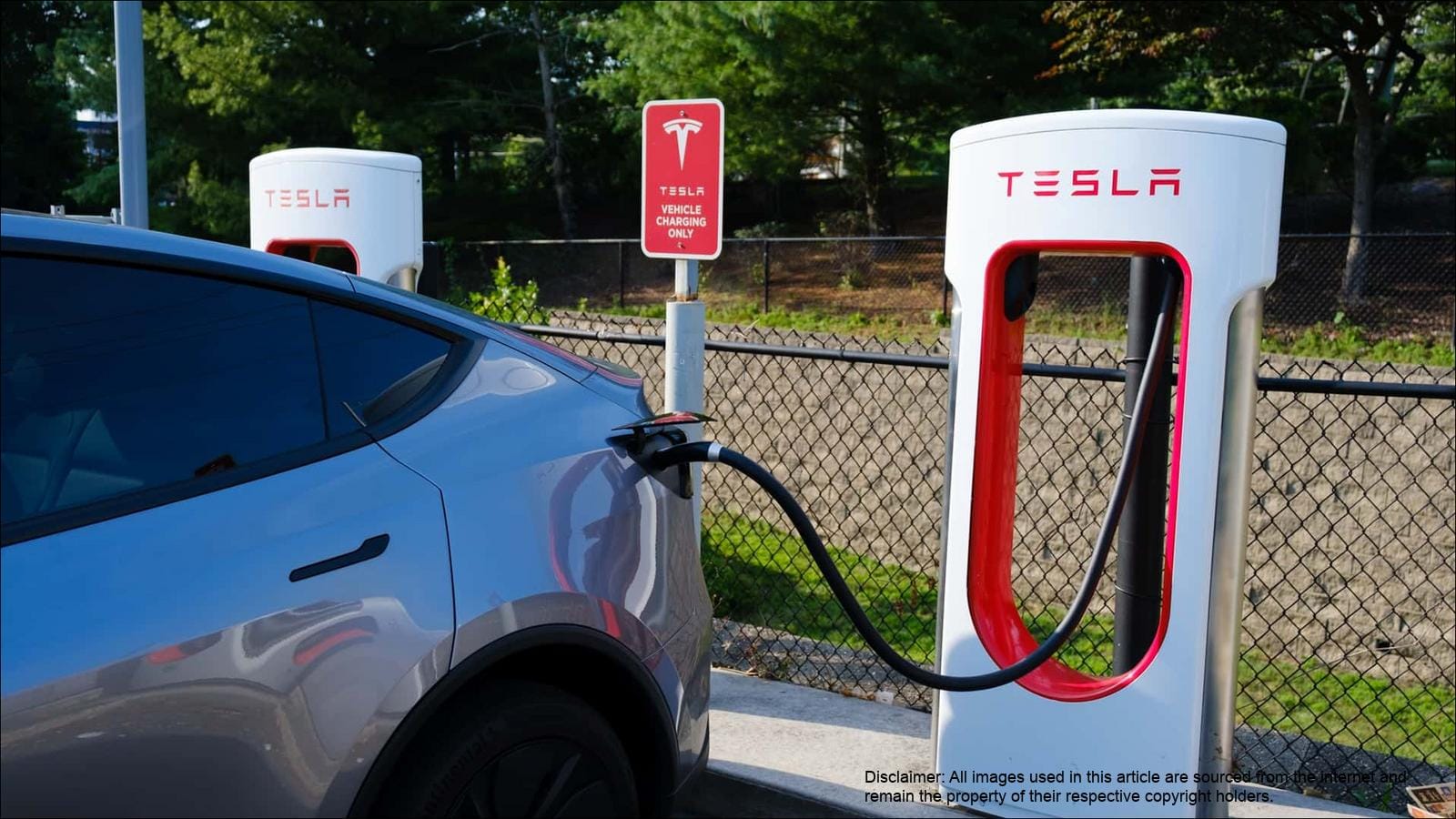
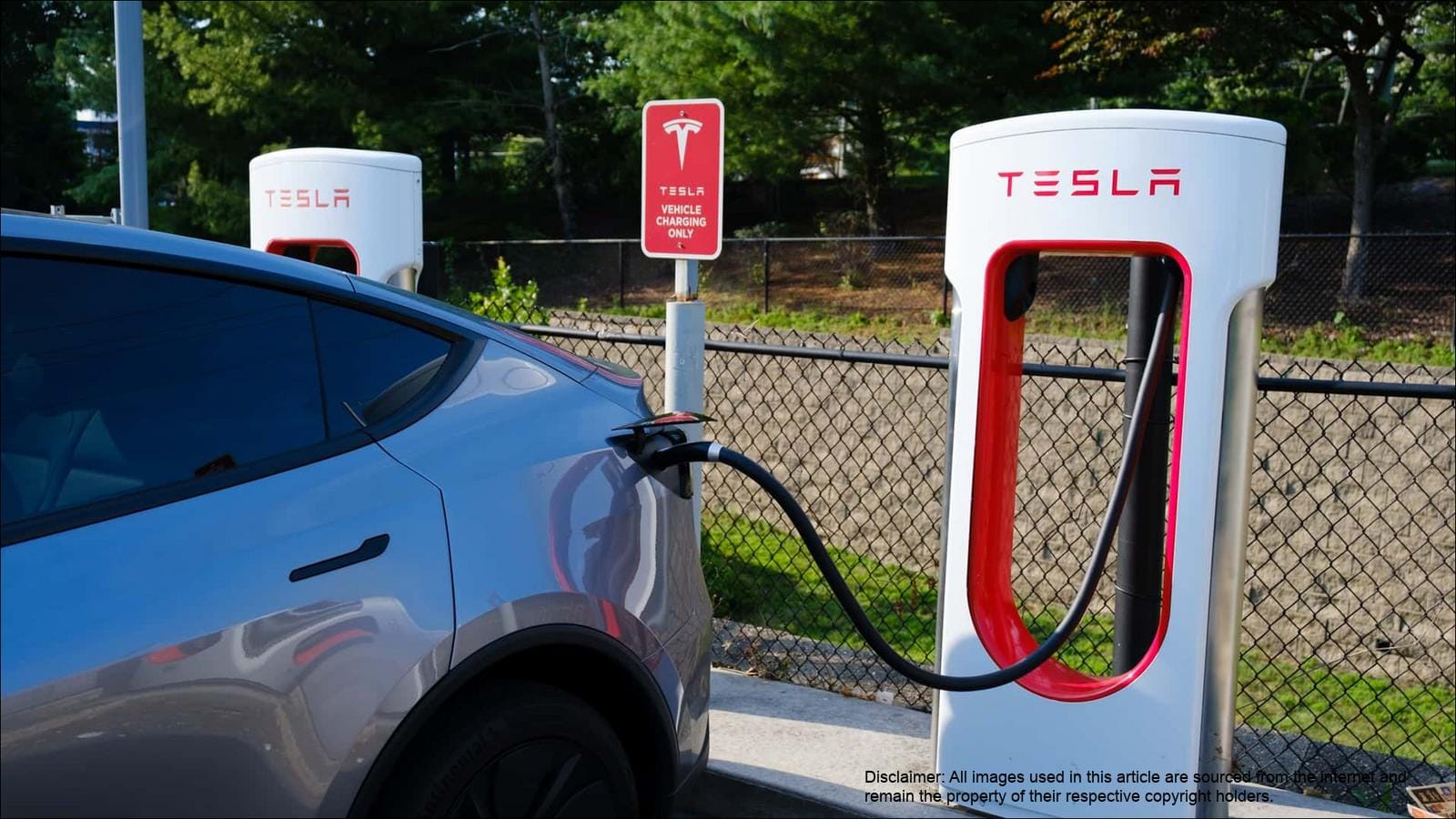
As the auto industry increasingly adopts the Tesla-designed North American Charging System (NACS) port, the Lucid Gravity is among the first EVs to come factory-equipped with this standard. This allows Gravity owners to access the extensive Tesla Supercharger network, a significant advantage for long-distance travel. However, compatibility with the Supercharger network presents a unique engineering challenge. Most Superchargers operate at 500 volts, a limitation stemming from the voltage capabilities of older Tesla models. To overcome this, Lucid ingeniously repurposed the Gravity’s rear drive unit to act as a voltage booster, effectively stepping up the electricity from 500 volts to the Gravity’s 926-volt operating voltage. This innovative solution ensures that the Gravity can charge effectively at Supercharger locations.
While the Gravity cannot achieve its maximum 400 kW charging rate on most Superchargers, it can still manage a respectable 225 kW. Tesla is actively rolling out its V4 Superchargers, which boast 1,000-volt capability and support charging speeds of up to 325 kW, with plans to reach 500 kW later this year. These upgrades will further enhance the charging experience for Gravity owners and other EVs capable of utilizing higher-voltage charging. Furthermore, Lucid has developed the first NACS port rated for 500 amps and 1,000 volts, demonstrating their commitment to future-proofing their vehicles and supporting the evolution of charging infrastructure. By embracing the NACS standard and developing innovative solutions to overcome voltage limitations, Lucid is ensuring that Gravity owners can seamlessly integrate into the expanding EV charging ecosystem.
Efficiency plays a crucial role in maximizing the benefits of fast charging. Lucid focuses on optimizing efficiency in three key areas: rotating parts (wheels, brakes, motors), electronics (battery and other systems), and aerodynamics. By minimizing energy consumption across these areas, the Gravity can travel further per kilowatt-hour, resulting in shorter and less frequent charging stops. This holistic approach to efficiency, combined with advanced charging technology, sets the Lucid Gravity apart from its competitors and contributes to a superior EV ownership experience.
| Supercharger Version | Voltage | Charging Speed |
|---|---|---|
| Most Superchargers | 500 volts | 225 kW (Lucid Gravity) |
| V4 Superchargers | 1,000 volts | Up to 325 kW (planned 500 kW) |

Frequently Asked Questions


Tesla Redesigns Doors for Emergency Safety

Lyft Teams With Waymo to Catch Uber

Polestar 4’s No Rear Window Wins Over 80% of Buyers

Hyundai’s 600-Mile EREV: 2027 Game Changer

Tesla Redesigns Doors for Emergency Safety

BMW: Gas Engines Will Never Die

Tesla Car Wash Mode: Don’t Make This Costly Mistake

Tesla FSD vs NYC Chaos: Robotaxi Test


Any Charging Problem?
Let Us Know 24/7