Table of Contents
Rivian’s R2 Strategy: Profitability Through Innovation
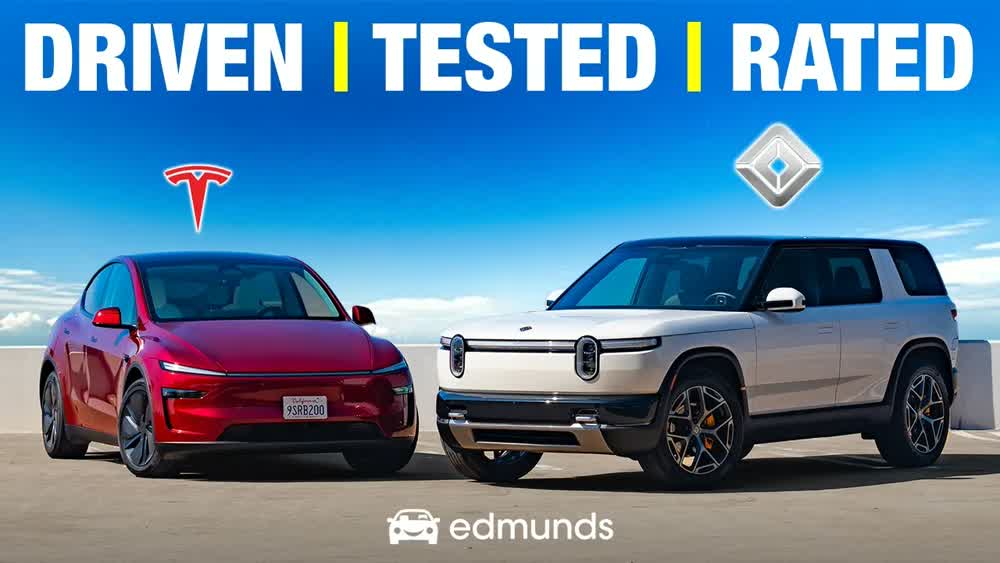
For EV startups like Rivian, profitability isn’t just a goal; it’s the key to survival. Rivian, known for its impressive R1S and R1T electric vehicles, has achieved gross profitability for two consecutive quarters. However, to truly compete in the big leagues, they need more. Enter the R2, an electric SUV poised to make a significant impact. Scheduled for release in the first half of next year with a starting price around $45,000, the Rivian R2 aims to carve out its space in the competitive mid-size electric crossover segment, currently dominated by the Tesla Model Y. The challenge? Creating a profitable, enjoyable, and drivable electric SUV without compromising quality. Rivian’s strategy revolves around innovative solutions that minimize production costs while maximizing profit margins. This approach is crucial for Rivian to establish a strong foothold in the EV market and ensure long-term sustainability as an EV startup.
Key Cost-Cutting Measures in the Rivian R2
Rivian is implementing several clever engineering solutions to reduce the production costs of the Rivian R2. One of the most significant changes involves the vehicle’s wiring harness. The R2’s wiring harness is substantially lighter, weighing 44 pounds (20 kilograms) less than the R1’s, and it uses 2.3 miles fewer wires. It also incorporates 60% fewer in-line connectors, greatly simplifying the assembly process. This is a notable improvement, especially considering Rivian already reduced the R1’s wiring by 1.6 miles in its refreshed version. Another key area of cost reduction is the simplification of the vehicle’s electronic architecture. The R2 will feature just seven Electronic Control Units (ECUs), a significant decrease from the R1’s seventeen. Fewer ECUs not only reduce costs but also streamline assembly and potentially improve reliability. Furthermore, the R2’s electric motor inverter has 41% fewer parts than the Enduro drive unit used in the R1S and R1T. This reduction is achieved through innovative designs, such as integrating the drive unit mount into the inverter lid and using the inverter chassis to close the oil cooling path, demonstrating Rivian’s commitment to efficient and cost-effective engineering.
Streamlined Production and Assembly
To further optimize production, Rivian is adopting large high-pressure die castings for the R2’s body structure, mirroring Tesla’s megacasting technology. According to RJ Scaringe, the R2’s rear structure will consist of just three castings, a stark contrast to the R1’s roughly 50 stampings and over 300 joints. This approach significantly simplifies both production and assembly, reducing the number of parts and labor required. However, it may present challenges in terms of crash repairs, as replacing large castings could be more complex and costly than repairing smaller stamped parts. Rivian has already commenced pilot-scale assembly of validation units using mostly production tooling, indicating that the company is on track with its production timeline. Streamlining production and assembly is essential for Rivian to achieve the desired profit margins and efficiently meet the anticipated demand for the electric SUV.
Scaling Production for Future Growth
In the previous year, Rivian delivered 51,579 vehicles, including the R1S, R1T, and Commercial Van, marking a significant achievement for the startup. However, the first quarter of this year saw a sales decline both year-over-year and quarter-over-quarter, with 8,640 EVs delivered. While this is a respectable figure for a startup, Rivian needs to substantially increase its sales volume to compete effectively with established automakers. The R2 is expected to play a crucial role in this growth. To support increased production, Rivian is upgrading its current factory in Normal, Illinois, to a capacity of 155,000 vehicles per year. Additionally, the company’s new factory in Georgia is projected to produce 400,000 vehicles per year once fully operational. These expansions are essential for Rivian to meet the anticipated demand for the R2 and other models, solidifying its position in the EV market.