Table of Contents
Rivian’s R2 Pricing Strategy Amidst Tariffs
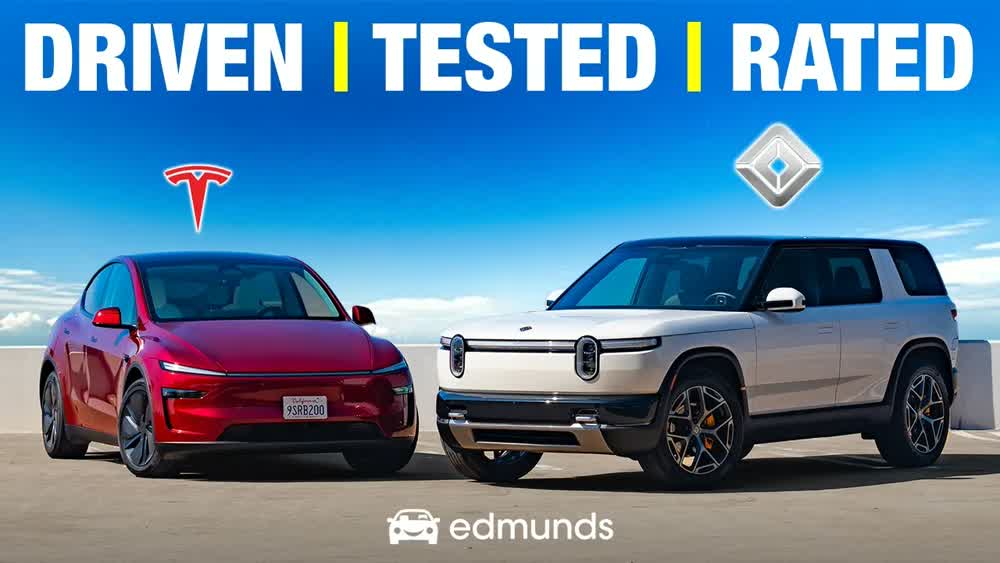
Rivian is committed to maintaining the $45,000 starting price for its upcoming R2 crossover, despite the introduction of new tariffs. According to Rivian’s founder and CEO, R.J. Scaringe, the company is actively working on strategies to navigate the “dynamic situation” created by evolving trade regulations. This decision underscores the importance of the R2 in Rivian’s long-term growth strategy, positioning it as a competitive electric vehicle (EV) in the mass market. The commitment to this price point is crucial as Rivian aims to attract a broader customer base, directly competing with models like Tesla’s Model Y. The company is exploring various avenues to mitigate the impact of tariffs, ensuring the R2 remains an accessible option for consumers. The R2 represents a significant step for Rivian in expanding its market reach and establishing a stronger foothold in the EV sector.
| Vehicle Model | Starting Price (USD) | Target Market |
|---|---|---|
| Rivian R2 | $45,000 | Mass Market |
| Tesla Model Y | $44,990 | Mass Market |
| Rivian R1S | $74,900 | Premium SUV Market |
Production Timeline and Delivery Guidance Adjustments
While Rivian reaffirms its commitment to begin R2 production in the first half of 2026 at its Normal, Illinois, plant, the company has adjusted its delivery guidance for 2025. The initial projection of 46,000 to 51,000 vehicles has been revised to 40,000 to 46,000 units. This adjustment is attributed to “evolving trade regulations” and other policy-related factors that could impact the demand for Rivian’s vehicles. The delivery numbers for 2023 and 2024 were just over 50,000 and 51,579 respectively, indicating a potential plateau in demand for the R1S SUV and R1T truck. The R2 is thus crucial for Rivian to unlock its next phase of growth, offering a more accessible and mass-market-friendly option. The company is strategically positioning the R2 to compete directly with Tesla’s Model Y, targeting a range of over 300 miles and offering single-, dual-, and tri-motor configurations. These adjustments reflect the challenges and uncertainties in the current automotive market, where trade policies and evolving consumer preferences play a significant role.
| Year | Delivery Guidance | Actual Deliveries | Notes |
|---|---|---|---|
| 2023 | N/A | 50,000+ | Actual deliveries exceeded expectations. |
| 2024 | N/A | 51,579 | Slight increase in deliveries. |
| 2025 (Original) | 46,000 – 51,000 | N/A | Original delivery guidance. |
| 2025 (Revised) | 40,000 – 46,000 | N/A | Revised due to “evolving trade regulations.” |
Strategic Battery Sourcing and Long-Term Planning
Rivian is proactively addressing potential tariff impacts by strategically planning its battery sourcing. Initially, the R2 will utilize batteries manufactured by LG Energy Solution (LGES) in South Korea. However, by 2027, Rivian intends to source these same LGES batteries from a new facility located in Arizona. This move towards domestic battery production is expected to help Rivian mitigate the financial impact of import tariffs and potentially qualify for federal incentives aimed at promoting domestic manufacturing of electric vehicle components. This strategic decision reflects Rivian’s long-term vision and its commitment to building a sustainable and cost-effective supply chain. By securing a domestic source for its batteries, Rivian aims to reduce its exposure to international trade uncertainties and ensure a more stable and predictable cost structure for the R2. The proactive approach to battery sourcing underscores Rivian’s dedication to innovation and strategic planning in the competitive EV market.
| Component | Initial Source | Future Source (2027) |
|---|---|---|
| Batteries | LG Energy Solution (South Korea) | LG Energy Solution (Arizona, USA) |