Table of Contents
The Tesla Model Y Sales Question: Will the Updated Model Revive Tesla’s Fortunes?

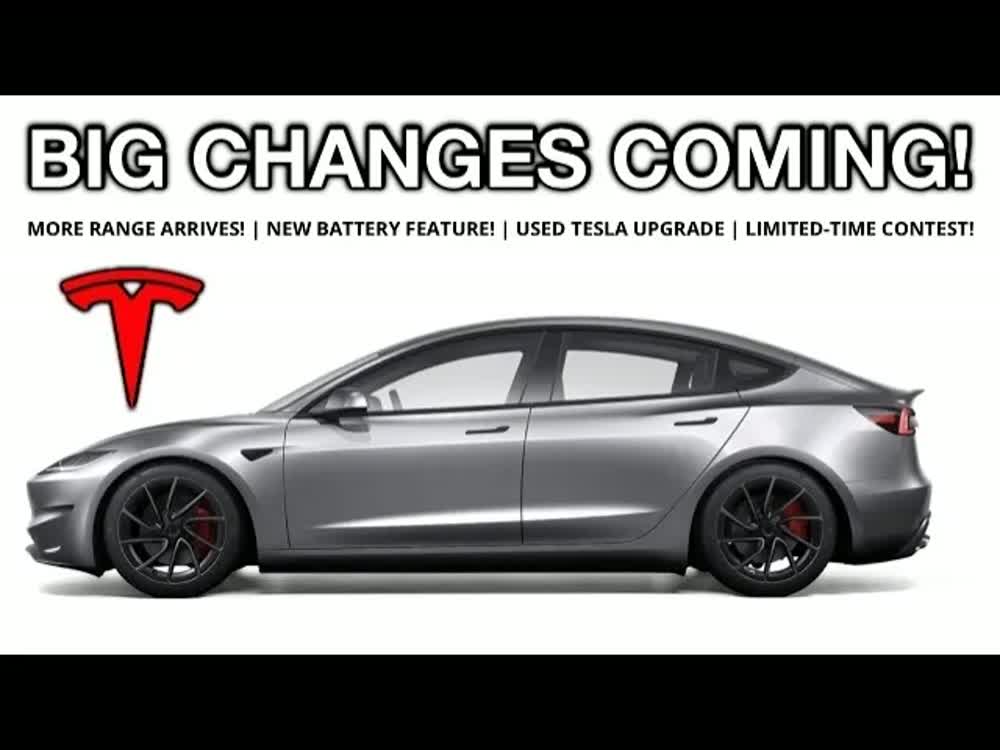
For many Tesla enthusiasts, the anticipated arrival of the updated Tesla Model Y, often referred to as “Juniper,” was seen as the key to reversing the company’s recent sales slump. As the world’s best-selling electric vehicle and a crucial model for Tesla, the expectation was that its release would trigger a significant revival in sales. However, recent data suggests that this may not be the case, raising concerns about Tesla’s ability to meet its ambitious future goals. The updated Model Y has received positive reviews, with many praising its improvements over the original. However, it appears that external factors, such as the backlash against Tesla CEO Elon Musk, are impacting sales more than the car’s inherent qualities.
In Europe, Tesla has experienced significant declines in key EV markets, even with the introduction of the redesigned Model Y. According to Bloomberg, Tesla’s sales have dropped in eight of Europe’s ten largest EV markets. Production line changes at global assembly plants, including in Germany, led to several weeks of lost output, contributing to the company’s worst quarterly sales since 2022. While the UK saw a 6% increase in Tesla registrations, this growth lagged far behind the overall 43% jump in battery-electric vehicle sales across the industry. Even in Norway, where the Model Y topped sales charts, the nation’s road federation noted that Tesla’s overall sales are “nowhere near the level we are used to.” This suggests that consumers are increasingly considering other brands that offer comparable products in the same price range.
In the United States, Tesla is offering attractive financing options, such as 1.99% interest rates, which are notably low in the current economic climate. This move indicates that Tesla is trying to stimulate demand, but it also raises questions about the underlying strength of Model Y sales. As Tesla invests heavily in future technologies like robotaxis and autonomous driving, the immediate need to sell cars remains critical for the company’s financial stability. The upcoming U.S. delivery numbers for the second quarter will be closely watched to gauge the true impact of the updated Model Y on Tesla’s sales performance.
Rivian’s Tariff Troubles and Promising Profits: Navigating Economic Uncertainty

Rivian, despite posting a profitable quarter and securing additional funding from Volkswagen, is facing significant challenges due to evolving trade regulations and tariffs. Even as a U.S.-based manufacturer with a high degree of vertical integration, Rivian is not immune to the impacts of the global trade environment. The company has adjusted its delivery outlook for 2025, reducing it from 46,000-51,000 units to 40,000-46,000 units, and has increased its capital expenditures guidance from $1.6-1.8 billion to $1.8-1.9 billion. These adjustments reflect the anticipated impact of tariffs on parts costs and the broader effects of an uncertain macroeconomy on consumer demand.
According to Yahoo Finance’s Pras Subramanian, Rivian acknowledges that “evolving trade regulation, policies, tariffs,” and their impact on consumer sentiment and demand have led to these revisions. Despite these challenges, Rivian has maintained its 2025 full-year adjusted EBITDA loss projection in the range of $1.7 billion to $1.9 billion. This suggests that while the company is facing headwinds, it remains confident in its ability to manage costs and maintain profitability in the long term.
Rivian’s ability to navigate these challenges will depend on its ability to keep the R2 model on track and manage its existing $6.6 billion loan. While the loan is under scrutiny, Rivian’s strong financial performance and strategic partnerships may provide the necessary resources to weather this transitional year. The company’s focus on U.S. manufacturing and USMCA-qualified materials provides some insulation from global trade uncertainties, but the broader economic environment remains a key factor in Rivian’s future success.
| Metric | Original Projection | Revised Projection |
|---|---|---|
| 2025 Delivery Outlook | 46,000 – 51,000 units | 40,000 – 46,000 units |
| 2025 Capital Expenditures | $1.6 – $1.8 billion | $1.8 – $1.9 billion |
| 2025 Adjusted EBITDA Loss | $1.7 – $1.9 billion | $1.7 – $1.9 billion (Maintained) |
China’s EV Battery Swaps Could Make Big Waves In Other Countries

During a recent visit to China, I had the opportunity to experience Nio’s battery-swapping technology firsthand, and I must say, it’s incredibly impressive. The process is seamless: you simply drive into the designated markings, and the car autonomously handles the rest, including backing into the station. From there, it’s akin to going through a car wash, except instead of getting a clean car, you receive a fully charged battery.
While I’m not entirely convinced that battery swapping is the ultimate solution for all EV users, I believe it’s a valuable option to have available. In fact, some Nio employees have shared that they now exclusively use battery swapping for their personal vehicles. According to a BBC report, battery swapping may hold even greater potential in developing markets that are just beginning to embrace electric vehicles. Battery swapping offers the significant advantage of reduced time compared to traditional recharging methods. Although it faces challenges in China, where fast-charging infrastructure is rapidly developing, experts suggest that it could be particularly beneficial in countries where EV adoption is still in its early stages, helping to alleviate range anxiety among drivers.
Outside of China, battery swapping is gaining traction. India and several Southeast Asian countries are developing battery swap technology for scooters and motorbikes. In 2022, India announced a new battery swap policy to encourage electric car sales. Taiwan-based Gogoro partnered with the Indian state of Maharashtra and local supplier Belrise in 2023 to build smart battery-swapping and energy infrastructure, investing $2.5 billion (£1.9 billion). Kenya has also partnered with Spiro, an electric vehicle and battery swap company. In California, Ample, a battery-swapping start-up, has partnered with Stellantis and Tokyo’s EV infrastructure after trials with Uber in San Francisco in 2021. Battery swapping can also be a great solution in countries like Japan, which often struggles with energy production due to its lower voltage.
However, battery swapping is not without its drawbacks. One major issue is that car owners must relinquish ownership of their battery. For example, a car owner who swaps a new battery on the motorway is likely to receive an older one in return. To address this, some companies have adopted a business model where consumers buy cars without batteries and rent them directly from the company. Additionally, while battery swaps can alleviate range anxiety, they can also lead to long wait times if swap stations lack fully charged batteries or are experiencing high demand. A Nio owner I met near the Beijing Olympic Sports Centre shared that he almost missed an important meeting because no fully charged batteries were available during a visit to the suburbs. Despite these challenges, battery swapping remains a promising alternative to traditional charging methods, particularly in markets where rapid electrification is a priority.

Frequently Asked Questions
Contact the author: patrick.george@insideevs.com