My Supercharger Adventure: A First-Hand Account
While the theoretical benefits were clear, experiencing this newfound access firsthand in a Chevrolet Blazer EV SS truly solidified its impact. Until a recent road trip, my encounters with Superchargers in non-Tesla vehicles were limited to the early “Magic Dock” pilot programs. Much has evolved since then.
A Lifeline in the Charging Desert: My Blazer EV Story
A long weekend trip to Nevada City, California, a charming mining town about 150 miles from my Bay Area home, put this to the test. After a weekend of exploring, the Blazer EV’s battery was down to roughly 30%. A charging stop on the way home was inevitable, ideally before even setting off to make the three-hour drive in one go. A quick search revealed a stark reality: Nevada City and its immediate surroundings were largely a charging desert for fast chargers. However, there was a beacon of hope: a 12-stall Tesla Supercharger station, open to non-Teslas, less than a 10-minute drive away and conveniently on my route. The Tesla app confirmed eight available stalls – a true “Huzzah!” moment.
Sure, other options existed, like an Electrify America station an hour into the journey. But on a busy Memorial Day weekend, the risk of queues was high. A large, reliable Tesla station just six miles away felt like a major win, especially around lunchtime, a perfect time for a charging break.
The Supercharger Experience: Smooth Sailing with a Few Ripples
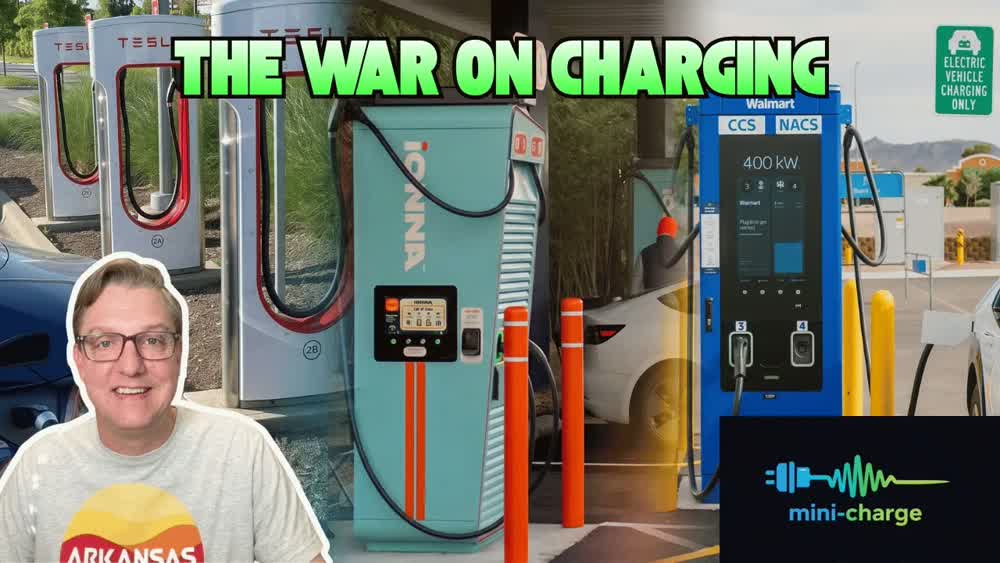
Tesla owners have long benefited from what’s arguably the best EV charging experience in America. Now, others are getting a taste. The sheer number of stations and plugs per station is a significant advantage. While many third-party stations offer 2-6 plugs, Superchargers often boast 12 or more, and they have a strong reputation for reliability, a stark contrast to the “out-of-order” signs that plague some other networks.
Using the Supercharger at the Grass Valley station was remarkably straightforward. With billing info already in the Tesla app, I simply found an open stall, connected the Chevy-approved adapter (provided with the loaner vehicle), and initiated the charge via the app. Power flowed within seconds, quickly ramping up to an impressive 183 kilowatts. The Tesla app itself deserves praise for its sleek, intuitive interface – feeling more like a product from a tech company than a traditional automaker. In just 25 minutes, the Blazer EV went from 30% to 76%, adding enough range (242 miles indicated) for a comfortable journey home.
| Chevrolet Blazer EV Supercharging Session (Grass Valley) |
|---|
| Metric | Details |
|---|
| Initial State of Charge (SoC) | ~30% |
| Final State of Charge (SoC) | 76% |
| Charging Time | 25 minutes |
| Peak Charging Speed | 183 kW |
| Reported Range After Charge | 242 miles |
| Method | Tesla App with CCS-to-NACS adapter |
The Parking Puzzle: An Ongoing Refinement
A stroke of luck at the Grass Valley station was the availability of pull-through stalls, where the charging post is situated between two spots. This was crucial because Supercharger cables are notoriously short, designed to reach the back-left charge port on Tesla vehicles. The Blazer EV, like many non-Teslas (e.g., Ford F-150 Lightning), has its port elsewhere (front driver’s side for the Blazer). Without pull-through stalls or longer cables, non-Tesla vehicles might need to park awkwardly, sometimes blocking an adjacent Supercharging spot – a less-than-ideal situation for everyone. This Grass Valley experience, with easy access, felt like the perfect non-Tesla Supercharging scenario.
My initial elation led me to vow to use Superchargers whenever possible. However, back in Berkeley, this enthusiasm met a practical hurdle. While several local Superchargers are open to non-Teslas, the double-parking issue became apparent. At one station with about half its 12 stalls free, the occupied stalls were alternating, meaning no two adjacent spots were open – a necessity for the Blazer without inconveniencing others. Reluctantly, I opted for a local EVgo station instead. Tesla is aware of this and is actively working on solutions, including deploying more pull-through spots and next-generation V4 Supercharger posts with longer cables. Despite these growing pains, the expansion of Tesla Supercharger access is a massive win, as evidenced by the Rivians and F-150s also charging in Grass Valley. When it works well, it’s truly excellent, but there are still some kinks to iron out for universal seamlessness.