• 13850 CENTRAL AVE, CHINO CA
  • Help@evcube.net
  • Help@evcube.net

$0.00 0

Cart

No products in the cart.

Trump Eases Tariffs, Slate’s Anti-Gigafactory, Tesla Semi Hiring Spree


Trump Administration’s Tariff Relief for Automakers

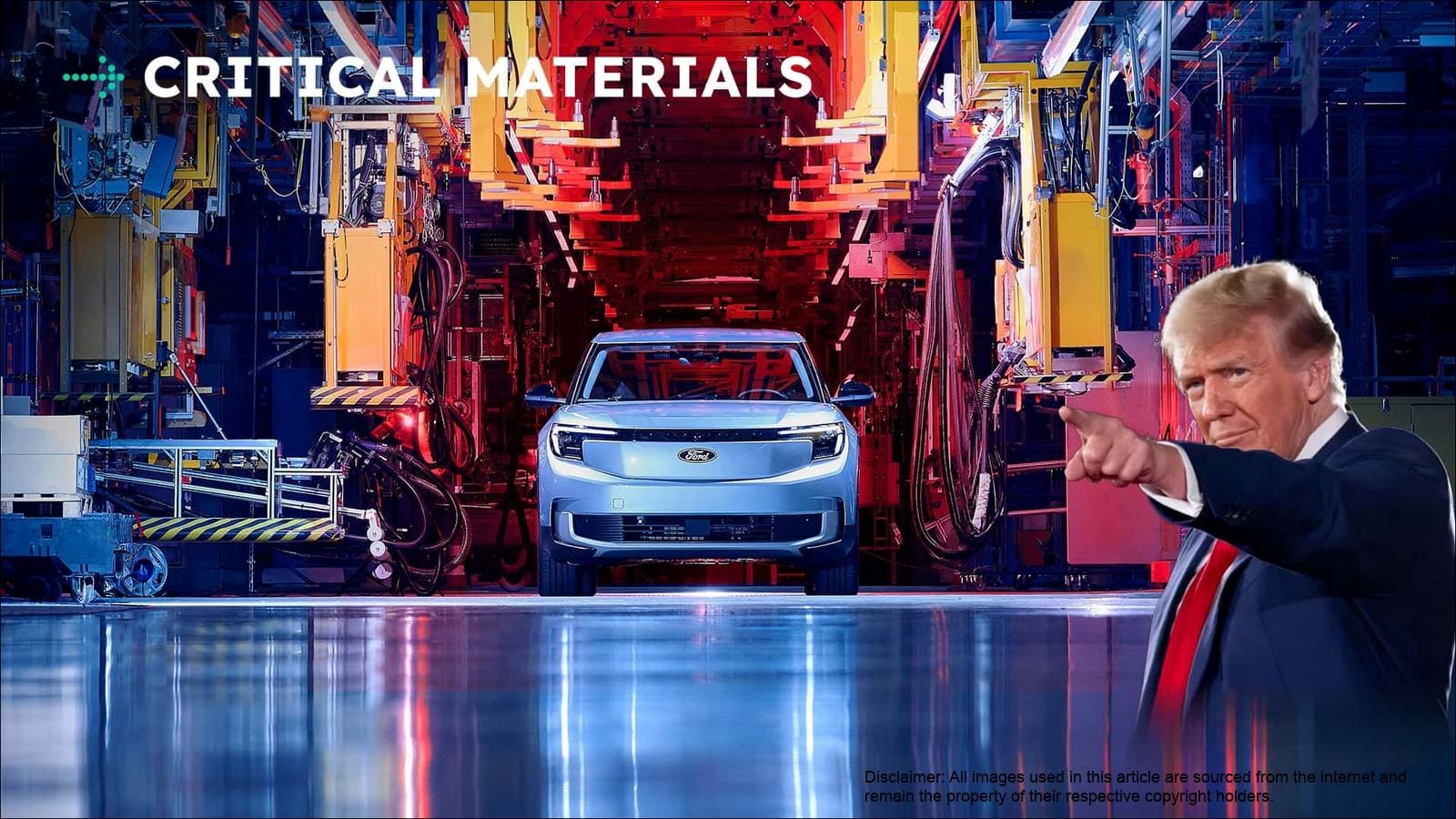
The Trump administration, known for its assertive trade policies, introduced a series of tariffs that significantly impacted the automotive industry. Facing mounting pressure from automakers, the administration announced a plan to provide some relief, just ahead of a critical deadline. This move aimed to address the financial strain caused by the new and frequently changing presidential policies on foreign trade.

According to the Wall Street Journal, the specifics of the relief were expected to be revealed just before a rally in Detroit. The policy changes were designed to soften the blow of the automotive tariffs, but not eliminate the financial challenges altogether. The key provisions included preventing the stacking of duties on foreign-made cars and easing levies on foreign parts used in U.S. manufacturing.

Key Provisions of the Tariff Relief

  • No Stacking of Tariffs: Automakers would not be charged multiple duties, such as those on steel and aluminum, in addition to automotive tariffs.
  • Retroactive Reimbursement: Automakers could be reimbursed for tariffs already paid under the previous policy.
  • Partial Reimbursement for Auto Parts: A 25% tariff on foreign auto parts would be partially offset by reimbursements up to 3.75% of the value of a U.S.-made car in the first year, decreasing to 2.5% in the second year before being phased out.

To illustrate the impact, consider a hypothetical scenario where the “value” of a car is $30,000. In the first year, an automaker could be reimbursed up to $1,125 in tariffs, effectively nullifying the cost of importing approximately $4,500 in foreign parts. In the second year, the reimbursement would decrease to $750, covering the cost of importing $3,000 in foreign parts. This phased approach aimed to provide automakers with a transition period to adjust their supply chains.

Tariff Relief AspectYear 1Year 2
Reimbursement Cap (based on $30,000 car value)$1,125$750
Equivalent Import Value Covered$4,500$3,000

Commerce Secretary Howard Lutnick stated that this deal would reward companies already manufacturing domestically and provide a runway for those investing in America. The administration’s overarching goal was to reduce reliance on foreign parts and supply chains, pushing for increased domestic manufacturing.

Ford CEO Jim Farley acknowledged the “cost and chaos” caused by the tariff policies but appreciated the changes and recognized the importance of promoting domestic growth. However, the fundamental issue remained: if domestic manufacturing costs are higher, vehicle prices would likely increase, impacting automakers’ already slim profit margins.

Slate’s Innovative Anti-Gigafactory Approach

Slate, a relatively new player in the automotive industry, is taking a unique approach to manufacturing that they’ve dubbed the Anti-Gigafactory. Instead of investing in large, expensive machinery for high-volume production, Slate focuses on cost savings through simplicity and streamlined processes. This approach aims to make low-volume, low-price trucks profitable, addressing a critical gap in the electric vehicle market.

Key Elements of Slate’s Manufacturing Strategy

  • Plastic Paneling: Instead of using large stamping machines to shape metal, Slate employs smaller machines to injection mold plastic in a single color. This reduces tooling costs and simplifies the manufacturing process.
  • Stamped Metal Underpinnings: The truck’s underpinnings are built from stamped metal fastened together to form a unibody, which should make the truck easier to repair and less likely to be totaled in minor accidents.
  • No Paint Shop: Eliminating the paint shop saves hundreds of millions of dollars in tooling, automation, and materials.
  • Reduced Complexity: Slate minimizes complexity by offering one vehicle configuration in one color, with options like a bigger battery and speakers available as add-ons.

This strategy is reminiscent of Saturn, GM’s brand known for its economical cars and unique plastic body panels. Slate’s approach aims to provide a smart, economical choice without sacrificing quality or reliability. By focusing on simplicity and cost-effectiveness, Slate hopes to unlock the secret to building affordable EVs in the United States.

Manufacturing AspectSlate’s ApproachTraditional Approach
Body PanelsInjection-molded plasticStamped metal
Paint ShopEliminatedRequired
CustomizationMinimalExtensive


Tesla’s Hiring Spree and the Future of the Semi

Tesla’s Semi program, first unveiled in 2017, has faced numerous delays. However, recent developments suggest that the company is finally gearing up to launch the all-electric Class 8 tractor-trailer in volume. A significant indicator is Tesla’s recent hiring spree, with 83 new job openings posted for workers assigned to the Semi project.

Key Highlights of Tesla’s Semi Program

  • Hiring Spree: Tesla posted 83 new job openings for the Semi project, primarily at its facility in Sparks, Nevada.
  • Production Timeline: Volume production is expected to begin in late 2025, with a ramp-up for external customers in early 2026.
  • Production Capacity: Tesla is planning for an annual capacity of around 50,000 units.
  • Past Deliveries: Tesla delivered a few Semis to PepsiCo in 2022, but deliveries have been limited since then.

The majority of the new positions are directly related to the production of the trucks, including roles like maintenance technicians, technical trainers, and production control process engineers. While some engineering positions are also available, it seems late in the game to hire high-level engineers for Tesla-specific semi-truck components, given the planned launch this year.

Lars Moravy, VP of Vehicle Engineering at Tesla, and Dan Priestley, head of engineering for the Tesla Semi project, have both provided updates on the production timeline, reaffirming that volume production is expected to begin in late 2025. The launch of the Semi could be a significant boost for Tesla’s commercial side of the business, especially considering the recent decline in retail sales.

TimelineEventDetails
2017Semi UnveilingTesla Semi first unveiled alongside the next-gen Tesla Roadster.
2022Initial DeliveriesLimited deliveries to PepsiCo.
Late 2025Volume ProductionExpected start of volume production.
Early 2026External CustomersRamp-up for deliveries to external customers.


Frequently Asked Questions


How will the Trump tariffs impact the automotive industry?

The Trump tariffs led to increased costs for automakers due to duties on imported parts and vehicles. While the administration provided some relief, the industry still faced challenges in adjusting supply chains and maintaining profitability. The long-term effects depend on how automakers adapt to domestic manufacturing and whether these policies continue under future administrations.


What is the Anti-Gigafactory approach, and why is Slate adopting it?

The Anti-Gigafactory approach focuses on cost savings through simplicity in manufacturing. Slate is adopting it to make low-volume, low-price trucks profitable by avoiding the high capital investments associated with traditional large-scale factories. This involves using plastic paneling, eliminating paint shops, and reducing customization options.


When is Tesla expected to begin volume production of the Semi?

Tesla is expected to begin volume production of the Semi in late 2025, with a ramp-up for external customers starting in early 2026. The company is planning for an annual capacity of around 50,000 units.

    Comments are closed

    Search

    Follow us

    Have any questions?

    • help@evcube.net
    • +1 (510)-878-5951
    level 2 ev charger charging at home,tesla charger for home charging

    Safe

    level 2 ev charger charging at home,tesla charger for home charging

    Speed

    level 2 ev charger charging at home,tesla charger for home charging

    Stylish

    level 2 ev charger charging at home,tesla charger for home charging

    Save

    level 2 ev charger charging at home,tesla charger for home charging

    Smart

    level 2 ev charger charging at home,tesla charger for home charging

    Suitablility

    Tesla Redesigns Doors for Emergency Safety

    Table of Contents 1. Introduction: Tesla's Door Handle Redesign 2. NHTSA Investigation and Safety Concerns 3. Details of the New Door Release Design 4. Global Regulatory Landscape 5. FAQ Introduction:…
    Read more

    Lyft Teams With Waymo to Catch Uber

    Table of Contents 1. Lyft's Pursuit of Autonomous Vehicles 2. The Waymo-Lyft Collaboration: A Game Changer? 3. Uber's Autonomous Driving Initiatives 4. Nashville as the Launchpad for Robotaxis 5. FAQ…
    Read more

    Hyundai’s 600-Mile EREV: 2027 Game Changer

    Table of Contents 1. Hyundai's Electrified Future: The 2027 EREV Launch 2. Understanding Extended Range Electric Vehicles (EREVs) 3. Hyundai's Unique EREV Strategy and Genesis Expansion 4. EREVs in the…
    Read more

    Tesla Redesigns Doors for Emergency Safety

    Table of Contents 1. Introduction: Tesla's Door Dilemma 2. The Proposed Design Change: A Unified Approach 3. NHTSA Investigation and Regulatory Scrutiny 4. Global Impact and Future Solutions 5. FAQ…
    Read more

    BMW: Gas Engines Will Never Die

    Table of Contents 1. BMW's Dual-Track Strategy: EVs and Combustion Engines 2. Market Dynamics Driving BMW’s Decision 3. The Future of BMW Platforms: A Diverse Approach 4. FAQ 1. BMW's…
    Read more

    Tesla FSD vs NYC Chaos: Robotaxi Test

    Table of Contents 1. Introduction: The Tesla Robotaxi Challenge in NYC 2. Navigating NYC with Tesla's Full Self-Driving 3. Tesla's Vision-Based Autonomy vs. the Competition 4. FSD Beyond NYC: Suburban…
    Read more
    evcubnb level 2ev charer,tesla charger,home charger,50a charger,nema 14-50charger

    Any Charging Problem?
    Let Us Know 24/7

    • 13850 CENTRAL AVE, CHINO CA
    • help@evcube.net
    ©2022 EVCUBE - All rights reserved