Table of Contents
The Importance of EV Range Testing
Electric vehicle (EV) range is a critical factor for consumers. The advertised range, often provided by the EPA, can significantly differ from real-world performance. Factors such as temperature, driving style, and road conditions all play a role in how far an EV can travel on a single charge. Consumer Reports has taken on the task of rigorously testing EVs to provide consumers with a more accurate understanding of what to expect.
Consumer Reports’ testing methodology involves driving fully charged EVs at a constant speed of 70 mph until the battery is completely depleted. This “100% to 0%” test provides a consistent benchmark for comparing different models. While extreme, this test highlights the importance of understanding highway range, a key consideration for long-distance travel. The data collected from these tests helps bridge the gap between manufacturer claims and actual performance, empowering consumers to make informed decisions. This is particularly crucial, as unexpected range dips can lead to significant inconvenience, especially during long journeys.
Surprising Winners and Notable Losers
Consumer Reports’ latest EV range test revealed some surprising results. While most EVs performed relatively close to their EPA estimates, a few stood out as either overachievers or underperformers. The Ford F-150 Lightning, for example, fell short of its EPA estimate by a significant margin, achieving only 270 miles compared to the expected 320 miles. This discrepancy underscores the impact of factors like vehicle weight and aerodynamics on real-world range.
On the other hand, several models exceeded expectations. The Mercedes-Benz EQS 580 sedan demonstrated impressive range, achieving 380 miles in the test, slightly above its EPA rating. However, the BMW iX truly shined, delivering 370 miles of range, a remarkable 61 miles more than its EPA estimate of 309 miles. These results highlight the importance of independent testing in uncovering the true capabilities of electric vehicles. Below is a summary of some key findings from the Consumer Reports test:
| Vehicle | EPA Estimated Range (Miles) | Consumer Reports Tested Range (Miles) | Difference (Miles) |
|---|---|---|---|
| Ford F-150 Lightning | 320 | 270 | -50 |
| BMW iX | 309 | 370 | +61 |
| Mercedes-Benz EQS 580 | 371 | 380 | +9 |
BMW’s Impressive Showing
BMW emerged as a standout performer in Consumer Reports’ EV range testing. In addition to the exceptional performance of the BMW iX, other BMW models also exceeded their EPA estimates. The BMW i4 outperformed its EPA estimate by 51 miles, while the i5 came in 45 miles above expectations. This consistent overperformance suggests that BMW has optimized its electric vehicles for real-world driving conditions, particularly at highway speeds.
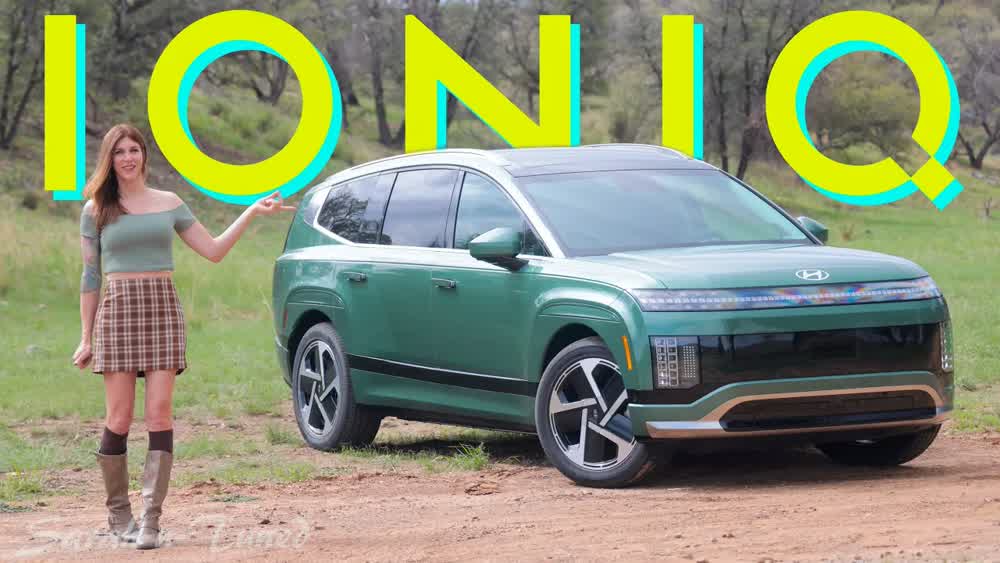
Even the Hyundai Ioniq 5 N, known for its performance capabilities, managed to exceed its EPA estimate by 15 miles. Conversely, the Lucid Air Touring, typically recognized for its long range and efficiency, fell short of its EPA estimate by 33 miles. These varied results emphasize the complexity of EV range and the importance of considering independent testing data when making purchasing decisions. Here’s a summary of BMW’s performance in the Consumer Reports test:
| Vehicle | EPA Estimated Range (Miles) | Consumer Reports Tested Range (Miles) | Difference (Miles) |
|---|---|---|---|
| BMW iX | 309 | 370 | +61 |
| BMW i4 | 283 | 334 | +51 |
| BMW i5 | 295 | 340 | +45 |