Table of Contents
Electrifying Europe: Ionity’s Leap to 600 kW Charging
Imagine pulling into a charging station and adding nearly 200 miles of range to your electric vehicle in the time it takes to grab a coffee. That vision is becoming a reality in Europe, thanks to Ionity, a consortium of major automakers dedicated to building a comprehensive ultra-fast charging network. Later this year, Ionity plans to roll out its next-generation chargers, capable of delivering up to 600 kW of power. This marks a significant step up from their current 350 kW chargers and promises to dramatically reduce charging times for compatible EVs. The experience is poised to mirror the groundbreaking megawatt-charging demonstrations we’ve seen in China, where adding hundreds of kilometers of range can be achieved in mere minutes, rivaling the speed of a traditional gasoline fill-up. This upgrade is not just about faster charging; it’s about making electric vehicles a more practical and convenient option for everyone, especially for long-distance travel.
| Charging Network | Current Max Charging Speed | Future Max Charging Speed |
|---|---|---|
| Ionity | 350 kW | 600 kW |
Unpacking the Alpitronic HYC1000 System
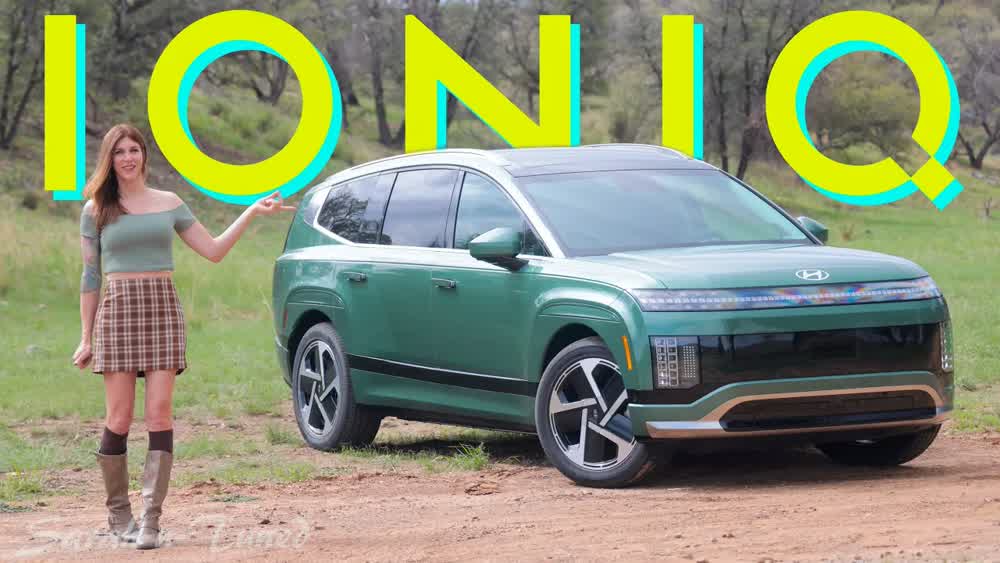
The backbone of Ionity’s charging revolution is the Alpitronic HYC1000 system. While marketed as megawatt-capable, it’s crucial to understand the nuances of its architecture. The system features a Power Cabinet capable of delivering 1,000 kW, which is then distributed among up to four individual charging stalls. Each stall is equipped with two liquid-cooled charging cables, allowing for a maximum of eight EVs to charge simultaneously from a single installation. However, this shared power arrangement means that the 1,000 kW capacity is dynamically allocated. A single stall can deliver a maximum of 600 kW (at 1,000 volts and 600 amps) to a compatible EV. It’s worth noting that currently, no EVs on the European market can fully utilize this 600 kW potential. The system intelligently manages power distribution, ensuring that EVs capable of higher charging rates, like the Porsche Taycan or Hyundai Ioniq 5, receive the maximum power they can handle, even when sharing a station with a vehicle with a lower maximum charging rate, such as the MG4. This dynamic allocation ensures efficient use of available power and optimizes charging times for all users.
| Component | Capacity/Specification |
|---|---|
| Power Cabinet | 1,000 kW |
| Charging Stalls per Cabinet | Up to 4 |
| Charging Cables per Stall | 2 (Liquid-Cooled) |
| Maximum Power per Stall | 600 kW (1,000V at 600A) |
The Future of EV Charging: Implications and Partnerships
The introduction of Ionity’s 600 kW chargers represents a pivotal moment for EV adoption in Europe. While current EVs can’t fully exploit the potential, the infrastructure is being built to support the next generation of electric vehicles. Ionity estimates that a future-proof EV could gain approximately 186 miles (300 km) of range in just eight minutes using these new chargers, bringing the charging experience much closer to the convenience of refueling a gasoline car. Beyond technological advancements, strategic partnerships are also playing a crucial role. Ionity has joined forces with Fastned, Atlante, and Electra to form Spark Alliance, creating Europe’s largest DC fast charging network. This alliance, which encompasses over 1,700 stations and 11,000 stalls, will allow EV drivers to seamlessly charge their vehicles across different networks using a single app, starting this summer. This collaborative approach is essential for overcoming range anxiety and making EV ownership a hassle-free experience for drivers across Europe. The combination of faster charging technology and widespread network accessibility is set to accelerate the transition to electric mobility.
| Alliance Name | Members | Stations | Stalls |
|---|---|---|---|
| Spark Alliance | Ionity, Fastned, Atlante, Electra | 1,700+ | 11,000+ |