Table of Contents
1. The Dawn of a New Hybrid Era
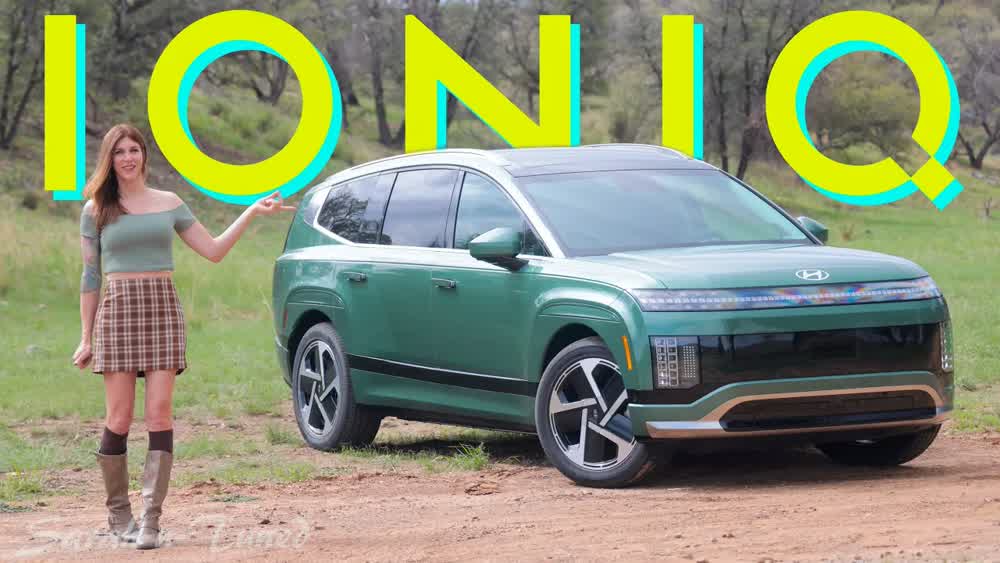
Electric vehicles (EVs) have undoubtedly revolutionized the automotive landscape. However, hybrids, often overshadowed by the iconic Toyota Prius, are experiencing a resurgence. As global hybrid sales surge, automakers are accelerating the development of gas-electric powertrains. Hyundai is at the forefront of this movement, embracing hybrid technology across its U.S. lineup, which includes hybrid versions of the Santa Fe, Tucson, Sonata, and Elantra. Now, Hyundai is expanding its hybrid offerings with the introduction of the 2026 Hyundai Palisade Hybrid.
2. Unveiling the Hyundai TMED-II System
The 2026 Palisade Hybrid marks the debut of Hyundai Motor Group’s second-generation TMED-II hybrid system in the U.S. TMED, which stands for Transmission-Mounted Electric Drive, represents a significant leap forward from its predecessor. The TMED-II system offers notable improvements in power and efficiency and provides drivers with enhanced control over the hybrid battery’s state of charge. This level of control was previously unavailable, marking a substantial upgrade in hybrid technology.
3. The 2026 Palisade Hybrid: Power and Efficiency
To illustrate the advancements, consider the Santa Fe Hybrid, which uses a 1.6-liter turbocharged inline-four engine paired with a 60-horsepower electric motor and a 1.49 kWh lithium-ion battery. In contrast, the 2026 Hyundai Palisade Hybrid features a larger 2.4-liter turbocharged inline-four engine and a 1.65 kWh battery, complemented by two electric motors. One motor, rated at 17 hp (13 kW), assists with start-up and powers in-vehicle functions. The other, a more powerful 72-hp (54 kW) motor, drives the wheels and supports regenerative braking. These compact motors are cleverly integrated within the transmission case, minimizing any increase in overall size, as Melvyn Bautista, product planning manager at Hyundai Motor America, explained at the New York Auto Show. Unlike Toyota’s power-split hybrid system, Hyundai employs a parallel-hybrid layout.
| Component | Santa Fe Hybrid | 2026 Palisade Hybrid |
|---|---|---|
| Engine | 1.6-liter Turbocharged Inline-Four | 2.4-liter Turbocharged Inline-Four |
| Electric Motor | 60 hp | 17 hp & 72 hp |
| Battery | 1.49 kWh Lithium-Ion | 1.65 kWh Lithium-Ion |
Hyundai projects that the Palisade Hybrid will achieve 34 miles per gallon, providing an estimated driving range of 619 miles. This is particularly impressive for a vehicle of its size. The hybrid system also enhances power, adding 90 hp over the V6 Palisade, resulting in a combined estimated output of 329 hp and up to 339 pound-feet of torque.

4. Introducing Stay Mode: A New Level of Convenience
A standout feature of the 2026 Hyundai Palisade Hybrid is the new Stay Mode, accessible via the touchscreen. This mode allows users to operate the HVAC, infotainment, radio, and other in-car systems without starting the gasoline engine. This means you can remain parked—whether at a trailhead, a sports event, or a campsite—and still power the cabin using electricity alone. What’s more, Stay Mode can be prepared in advance. Drivers can activate it a few miles before reaching their destination, prompting the system to use the engine and regenerative braking to charge the battery to 70–80% before arrival. Once parked, the vehicle can run its systems on the stored charge, eliminating the frequent engine starts and stops common in many idling hybrids. This feature is particularly beneficial for families needing to spend time in the car between activities, providing a comfortable environment without running the engine for up to two hours.
5. The Future of Hybrids
Looking ahead, future iterations of this hybrid system are expected to incorporate vehicle-to-load (V2L) functionality, allowing users to power external appliances using the vehicle’s battery. While V2L is common in modern EVs, it is a feature yet to be widely adopted in hybrids. The TMED-II system offers a glimpse into the future of hybrid technology, which promises more energy-dense battery packs, more efficient motors, and an increasing array of EV-like features.