No products in the cart.
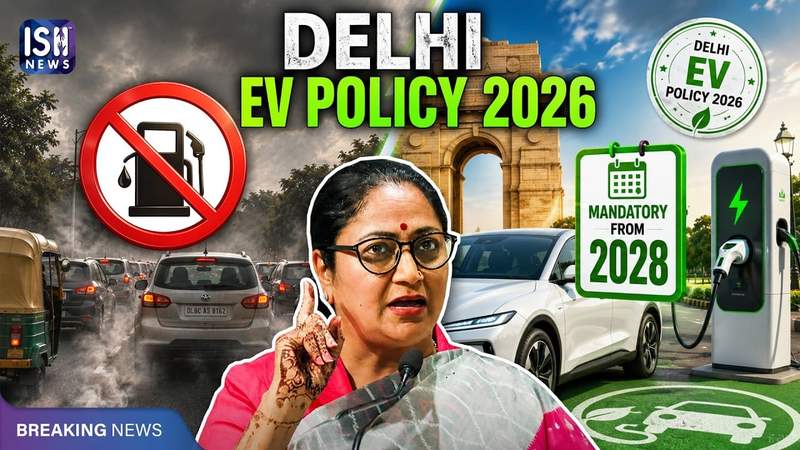
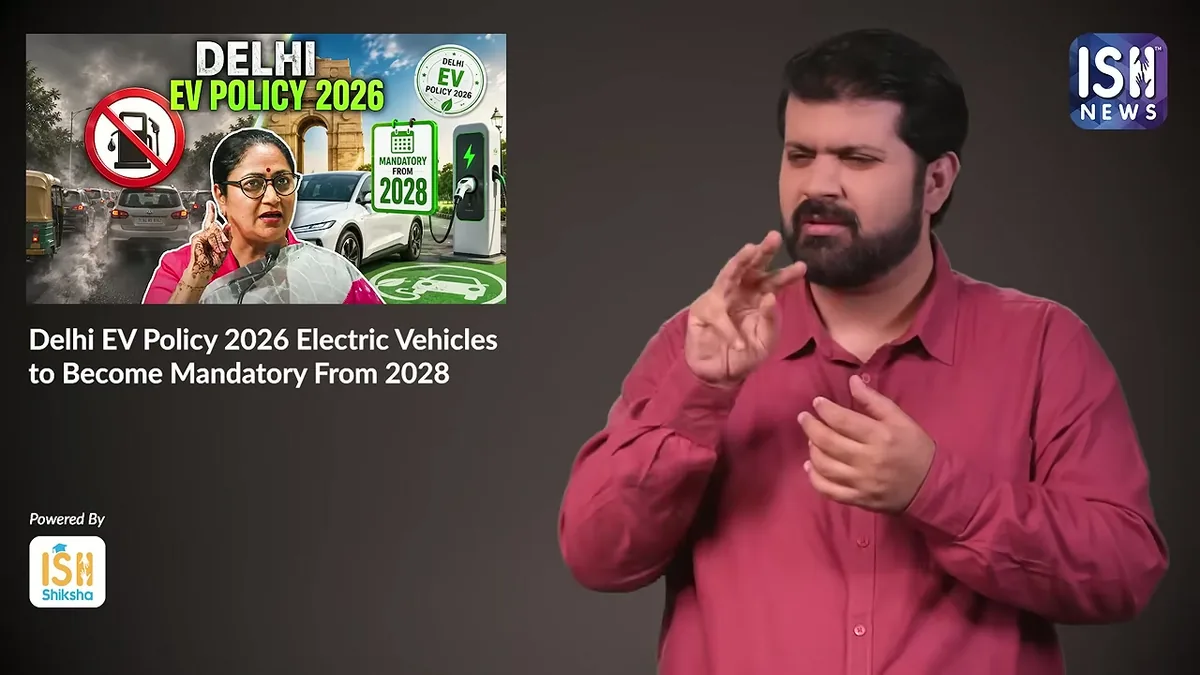
Delhi is set to become India’s first city to mandate electric vehicles for all new vehicle registrations, phasing in requirements from 2028 under the ambitious Delhi EV Policy 2026. The policy targets 100% electrification of new two-wheelers and 50% of new four-wheelers by 2030, backed by a citywide charging network of 100,000 public charge points within five years.
Video highlights
What the policy announcement reveals
00:00 — 01:15
Policy framework unveiled
Delhi government announces the EV Policy 2026 with a phased mandate requiring all new two-wheelers and commercial vehicles to be electric from 2028, with four-wheelers following by 2030.
01:16 — 03:30
Charging infrastructure blueprint
A detailed rollout plan for 100,000 public charging stations across Delhi’s 70 assembly constituencies, with priority deployment in residential colonies, metro stations, and commercial districts.
03:31 — 05:45
Financial incentives and subsidies
Purchase subsidies of up to Rs 1.5 lakh for electric cars and Rs 30,000 for electric two-wheelers, plus reduced road tax and registration fees for the first three years of the policy.
05:46 — 08:29
Industry response and challenges
Automakers and charging network operators respond to the mandate. Concerns around grid readiness, battery recycling infrastructure, and affordability for lower-income segments are discussed.
Key moments from the video
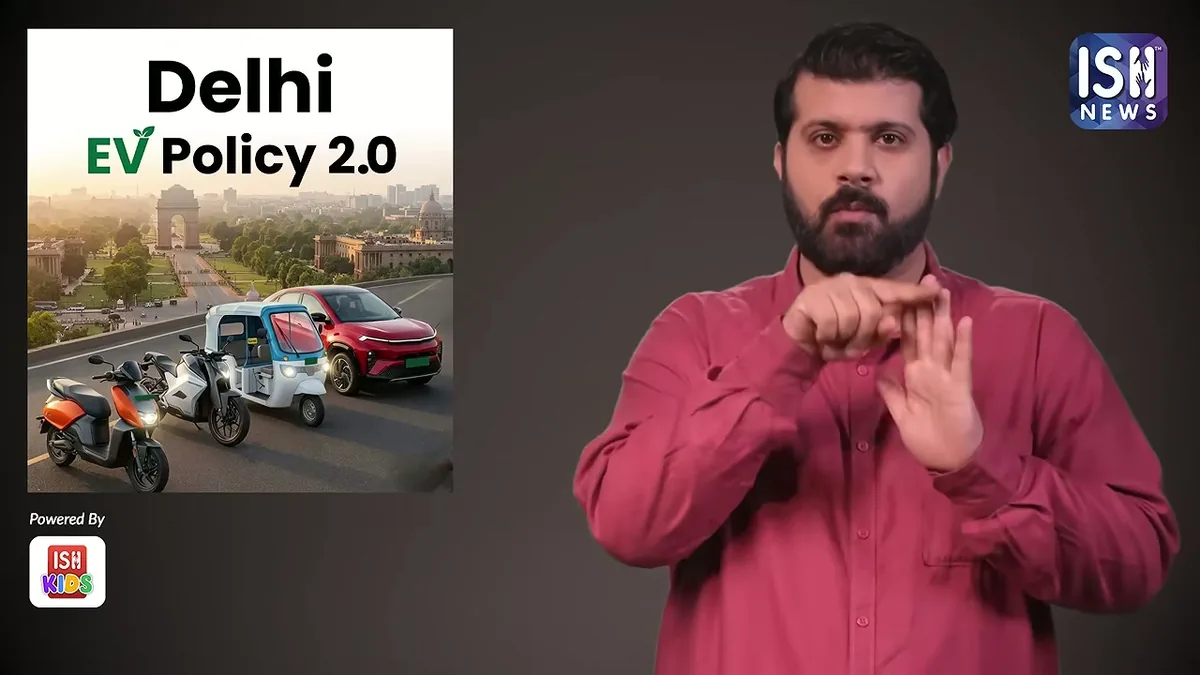
Visual highlights from the policy announcement
Key data
Numbers that define Delhi’s electric future
All new two-wheelers and commercial vehicles must be electric from January 2028. Private four-wheelers follow by 2030.
Target for public charging infrastructure across Delhi by 2032, including 20,000 fast chargers and 80,000 level-2 AC chargers.
Upfront purchase subsidy for electric cars, plus Rs 30,000 for e-two-wheelers. Road tax exemption for three years from policy launch.
Half of all new private car registrations in Delhi must be electric by 2030, rising to 80% by 2032 under the policy’s glide path.
Analysis
Breaking down Delhi’s EV mandate and its implications
The mandate structure: phased and category-specific
Unlike national-level policy frameworks that rely on incentives and voluntary adoption, Delhi’s EV Policy 2026 introduces legally binding mandates by vehicle category. Two-wheelers, which account for roughly 65% of Delhi’s registered vehicle population, face the earliest deadline of January 2028. Commercial vehicles including auto-rickshaws, taxis, and light goods vehicles follow the same timeline. Private cars get a two-year extension, with a 50% mandate by 2030. This phased approach allows the charging ecosystem time to mature while immediately targeting the highest-volume segments where electric alternatives already exist at competitive price points.
Charging infrastructure: the 100,000-point network
The 100,000 public charge point target represents a step-change for Indian urban charging infrastructure. Delhi currently has fewer than 3,000 public chargers across all categories. The policy mandates that every new residential and commercial development must include EV-ready parking in a 20% ratio, and existing apartment complexes receive subsidies to retrofit parking areas. Fast-charging corridors along the Ring Road, Outer Ring Road, and major arterial roads will ensure inter-neighbourhood travel is viable. BYD, Tata Power, and Statiq have already announced plans to deploy 15,000 chargers in the first phase.
Grid readiness and renewable integration
A critical question raised by the mandate is whether Delhi’s power grid can absorb the additional load. BRPL and BSES estimate that 100,000 chargers operating at peak could add 500-700 MW of demand. The policy pairs each charging deployment with rooftop solar mandates: commercial charging stations must source at least 30% of their power from on-site renewable generation by 2029. Time-of-day pricing incentives encourage off-peak charging, and vehicle-to-grid pilot programs are planned for 2027 to test bidirectional power flow from EV batteries back to the grid during evening peaks.
Affordability and equity considerations
While purchase subsidies reduce the upfront cost gap, the policy’s effectiveness hinges on ensuring lower-income households are not priced out of mobility. The Delhi government has introduced a swap-and-go battery subscription model for e-auto-rickshaws, eliminating the need for battery ownership. For two-wheeler owners, the total cost of ownership of an electric scooter already undercuts petrol alternatives by 35-45% over five years in Delhi’s usage patterns. The policy also reserves 25% of new charging station tenders for operators from scheduled castes, scheduled tribes, and women entrepreneurs.
Comparison
How Delhi’s policy compares with other Indian EV mandates
| Parameter | Delhi EV Policy 2026 | FAME II (National) | Karnataka EV Policy |
|---|---|---|---|
| Two-wheeler mandate | 100% from 2028 | Incentive-based only | Target 80% by 2030 |
| Four-wheeler mandate | 50% by 2030, 80% by 2032 | No mandate | Target 40% by 2030 |
| Public charging target | 100,000 by 2032 | ~50,000 nationally by 2030 | 30,000 by 2030 |
| Purchase subsidy (cars) | Up to Rs 1.5 lakh | Up to Rs 1.0 lakh (FAME II) | Up to Rs 1.0 lakh |
| Road tax exemption | 3 years full exemption | State-dependent | 100% for 5 years |
| Building code mandate | 20% EV-ready parking | Recommended only | 15% EV-ready parking |
| Battery recycling mandate | Producer responsibility included | Under EPR rules | Guidelines stage |
FAQ
Common questions about Delhi’s EV Policy 2026
When does the Delhi EV mandate take effect?
The mandate is phased: all new two-wheelers and commercial vehicles must be electric from January 1, 2028. Private four-wheelers must be 50% electric by 2030, rising to 80% by 2032. The policy itself was launched in July 2026.
How many charging stations will Delhi have?
The policy targets 100,000 public charge points by 2032, consisting of 20,000 DC fast chargers and 80,000 level-2 AC chargers. These will be deployed across all 70 assembly constituencies with priority in residential areas, metro stations, and commercial hubs.
What subsidies are available for buyers?
Electric car buyers receive up to Rs 1.5 lakh in upfront subsidy, while e-two-wheeler buyers get up to Rs 30,000. All EVs registered in Delhi receive full road tax and registration fee exemption for three years from the policy launch date.
Will existing petrol or diesel vehicles be banned?
No. The mandate applies only to new vehicle registrations. Existing internal combustion engine vehicles can continue to operate, be sold used, and be re-registered. The policy focuses on ensuring that all newly added vehicles from 2028 onward are electric.
Is Delhi’s power grid ready for this transition?
Estimates suggest 100,000 chargers could add 500-700 MW of peak demand. The policy includes time-of-day tariffs to shift charging to off-peak hours, mandates 30% on-site solar for commercial charging stations by 2029, and plans vehicle-to-grid pilot programs starting 2027 to use EV batteries as distributed storage.
How does this affect apartment dwellers without private parking?
The policy requires all new residential developments to include EV-ready parking in a 20% ratio. Existing apartment complexes can apply for subsidies to retrofit parking with charging points. The public charging network is specifically designed to serve areas with high-density housing and limited off-street parking.
Sources