EV Market Analysis · Buying Guide
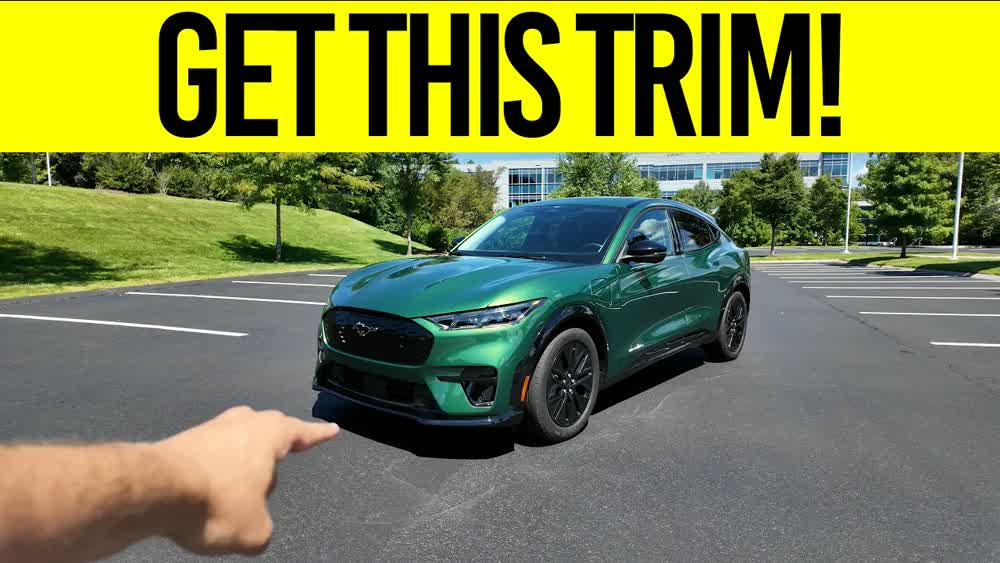
2026 Ford Mustang Mach-E Buying Guide: The EV That Beat Its Gas Sibling — and the Fine Print
The 2026 Mach-E did something no EV crossover was supposed to do: it outsold the gasoline Mustang two years running. But the “win” is a timing artifact, not a verdict — and the 2026 buyer gets none of the subsidy that created it.
After a full week with a 2026 Mach-E — commuting into Boston, running the suburbs, logging close to 400 miles without a flicker of range anxiety — the more interesting story isn’t that an electric crossover beat a muscle car. It’s how it happened, and what Ford quietly changed for 2026 while you were admiring the sales chart.
The sales “win” was a tax-credit fire sale, not a coronation
Here’s the number people throw around: in Q3 2025, Ford moved 20,177 Mach-Es against just 9,267 gas Mustangs — more than two to one. Sounds like a changing of the guard.
It was also the last quarter before the federal $7,500 EV tax credit expired on September 30, 2025. Buyers rushed. Dealers pushed. The entire industry saw a pull-forward spike, and the Mach-E rode it harder than most.
| Year | Mach-E | Gas Mustang | Margin |
|---|
| 2024 | 51,745 | 47,215 | Mach-E +4,500 |
| 2025 | ~51,620 | ~45,333 | Mach-E +~13% |
| Q3 2025 only | 20,177 | 9,267 | Mach-E 2.2× |
Ford itself confirms EV market share “declined sharply following the discontinuation of the federal tax credit program in September 2025.” The Mach-E didn’t magically become America’s favorite Mustang. It had a very good nine months, subsidized by a tax code that no longer exists.
How much of the “beat the gas Mustang” story was real?
Q3-2025: tax-credit rush (2.2×)
Full-year: real but narrow (~13%)
2026 buyer: no credit at all
Read the 2:1 headline as a timing artifact. The 2026 buyer gets none of that subsidy — and Ford quietly un-bundled value elsewhere (see the frunk).
What the 2026 Mach-E actually costs
Ford’s official 2026 pricing landed lower than the old “around $41,000 Premium” figure that’s been floating around:
| Trim | Start (MSRP) | Battery | EPA range (RWD / eAWD) |
|---|
| Select | $37,795 | 73 kWh standard | 260 / 240 mi |
| Premium | $40,595 | 73 or 88 kWh | 320 / 300 mi |
| GT | $53,395 | 91 kWh | 280 mi (eAWD) |
| Rally | $57,690 | 91 kWh | 255 mi (eAWD) |
Add all-wheel drive and you’re looking at roughly $3,000 more. Step up to the extended-range battery and it’s about $5,000 on top. The week-long tester stickered near $54,000 — and that included close to $10,000 of options, which tells you how easy it is to climb the ladder.
Range reality: you probably don’t need the extended battery
The extended-range Premium credits 320 miles RWD (300 eAWD) — sounds like a massive upgrade over the standard battery’s 260 / 240. But you’re paying $5,000 for roughly 60 more miles of range.
Sixty miles. For five grand. After a week of mixed driving, the standard-range car never came close to stranding us. The 2026 model also gains a standard heat pump across the lineup, which trims the cold-weather penalty that used to dog earlier Mach-Es. Combined with a public charging network that, in 2026, is genuinely there, range anxiety is mostly a legacy fear at this point.
Charging: the part Ford leaves off the brochure
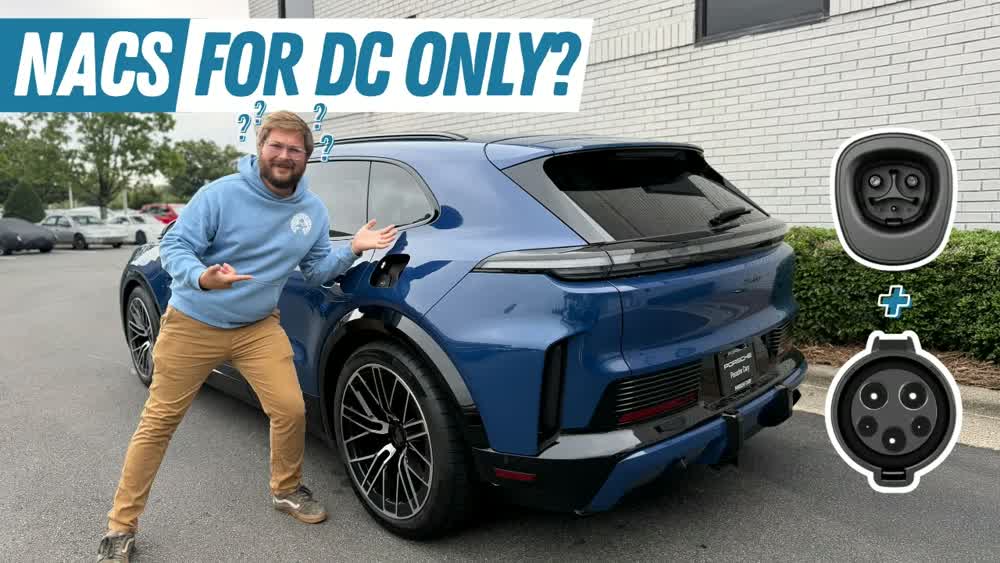
Here’s the myth some guides still spread: the Mach-E has a native NACS port and a 35-minute charge. Neither is quite right, and the difference costs you money.
Through the 2026 model year, the Mach-E in North America still uses a CCS1 port, not native NACS. To plug into a Tesla Supercharger you need Ford’s Fast Charging Adapter (NACS) — and as of 2026 that adapter is a paid purchase of roughly $200, not the freebie Ford handed early adopters. Ford’s own product pages and charging trackers confirm the current car is still CCS1 with an adapter.
- DC fast-charge ceiling: ~150 kW
- 10% to 80%: about 32–38 minutes on a strong charger
- Supercharger access: 29,000+ stalls via the BlueOval Charge Network
10–80% charge time — where the Mach-E sits
IONIQ 5 / 800V: ~18 min
Mach-E CCS1: ~32–38 min
Old 400V: 40+ min
The Mach-E is competitive, not class-leading. A Tesla Model Y plugs straight in with no adapter and does 10–80% in about 25 minutes.
What changed for 2026 (and not all of it is good)
Ford gave the 2026 Mach-E a light refresh. Some of it is genuinely better: a standard heat pump, a column-mounted shifter, the GT California Special, and a Sport Appearance Package that makes it look like a proper Mustang.
And then there’s the part Ford would rather you not calculate:
The Mach-E didn’t lose its frunk. Ford just put a price tag on it.
For 2026, the front trunk — once standard on every trim, the feature Ford marketed for years — is now a $495 option. Ford’s stated reasoning: customers weren’t using it. The more honest read is cost control on a vehicle that has to stand without federal subsidies. It’s a $495 reminder that the “free” era of EV packaging is over.
The quiet win: J.D. Power crowned it #1
In the 2026 U.S. Electric Vehicle Experience (EVX) Ownership Study (published Feb 18, 2026), the Mach-E scored 760 out of 1,000 — the highest of any mass-market BEV. It beat the Hyundai IONIQ 6 (748), the Kia EV9 (745), and the Hyundai IONIQ 5 (743). In the premium segment, only the Tesla Model 3 (804) and Model Y (797) ranked higher.
This matters more than a sales chart. A car can post big delivery numbers on a tax-credit sugar high and still frustrate its owners. The Mach-E, apparently, doesn’t.
How it stacks up
| Model | Starts at | Max range | Charge 10–80% | Supercharger |
|---|
| Mach-E (Premium ext) | $40,595 | 320 mi | ~32–38 min | Adapter, ~$200 |
| Tesla Model Y LR | $39,990 | 320 mi | ~25 min | Native |
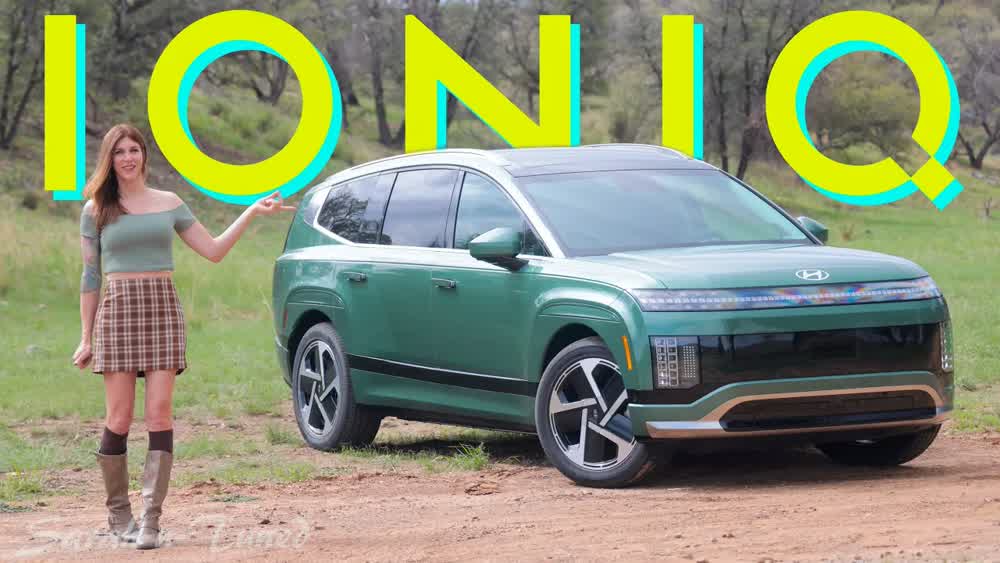
| Hyundai IONIQ 5 | ~$42,000 | 318 mi | ~18 min (800V) | Adapter |
| Gas Mustang (EcoBoost) | ~$32,000 | ~400 mi | 5 min (gas) | N/A |
So what should you actually buy?
- Best value: Premium RWD with the standard battery — comfortable, 260 miles, no $5,000 range tax.
- Need snow grip? Step up to eAWD (about $3,000).
- Skip the extended battery unless you road-trip constantly.
- Want the look? The Sport Appearance Package earns its keep.
- Got the speed bug? The GT (0–60 in 3.3s with the Performance Upgrade) starts at $53,395.
A Few Honest Questions About the 2026 Mach-E
Is the frunk really $495 now?
Yes. For 2026 the front trunk became a $495 option on most trims. It was standard before. Ford cites low usage; the blunter read is cost control now that federal subsidies are gone.
Does the Mach-E have a native NACS port?
No — not through the 2026 model year in North America. It’s CCS1, and you need Ford’s paid (~$200) NACS adapter to use Tesla Superchargers. Some older write-ups claiming “native NACS” are out of date.
Is it a good road-trip car?
Yes, with one caveat. At ~150 kW peak and 32–38 min 10–80%, it’s slower than an 800V IONIQ 5 or a native-NACS Model Y, but the public network is dense enough in 2026 that stops are short and rare. A heat pump helps in winter.
Should I wait for the tax credit to return?
Nobody can time that. If you need a car now, buy on today’s math — the 2026 Mach-E is a genuinely good EV whose real strengths (J.D. Power #1, value, character) don’t depend on a credit.
Sources
Related reading on EVCUBE