EV Market Analysis · Road-Trip Test
We Drove a 2026 Hyundai IONIQ 5 575 km to Quebec City on Basically One Charge — Here’s the Real Data
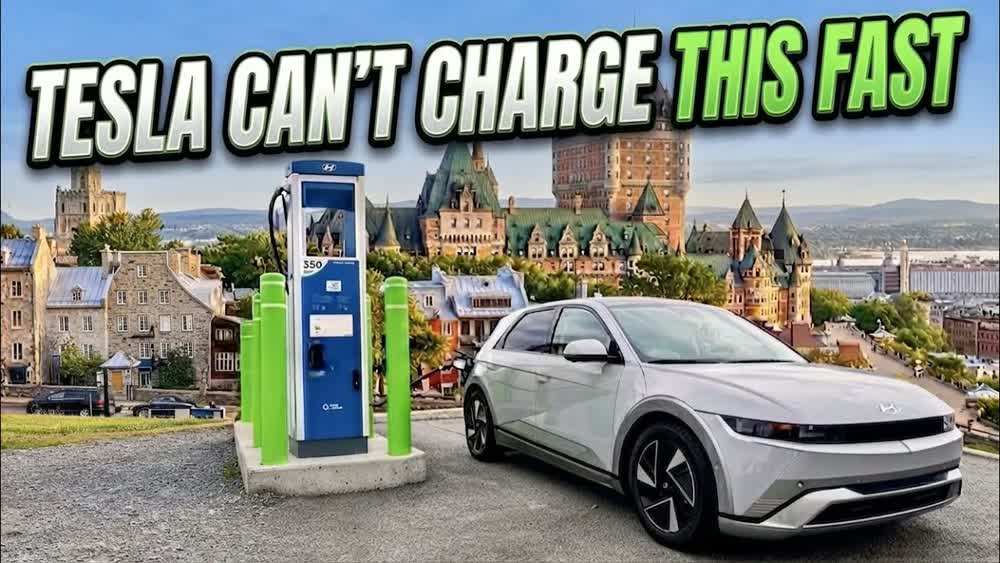
Most “EV can’t road trip” panic dies the moment you actually do one. We just watched a 2026 IONIQ 5 leave Montreal at 100%, drive 278 km to Quebec City, wander the old town for hours, and roll home — a 575 km round trip — having stopped to fast-charge for barely eleven minutes on the way back.
This isn’t a press-launch fairy tale. It’s a real owner-style road trip, and the data it produced is the most useful thing you’ll read if you’re weighing an IONIQ 5 against range anxiety.
The car: 84 kWh, 800 volts, and a native NACS port
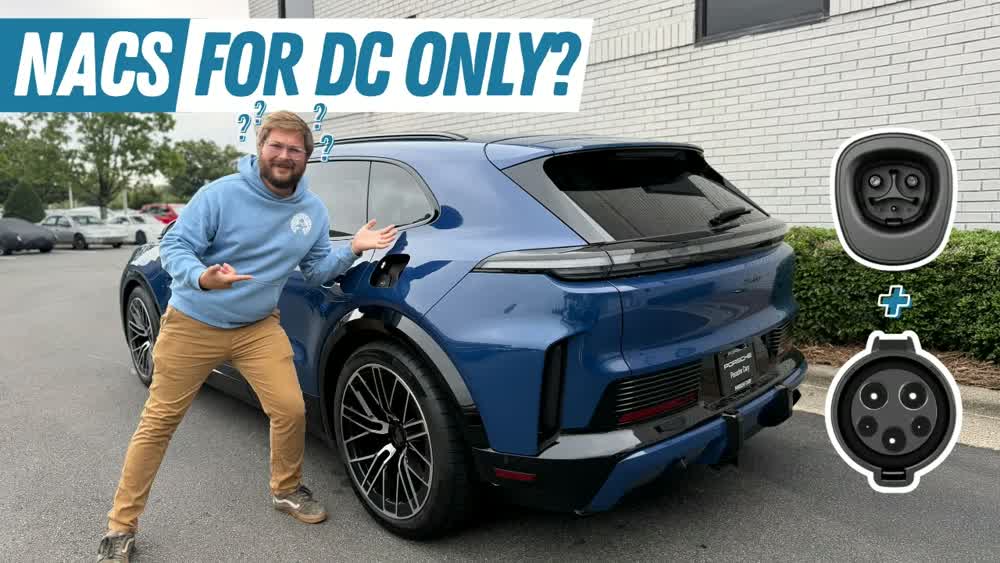
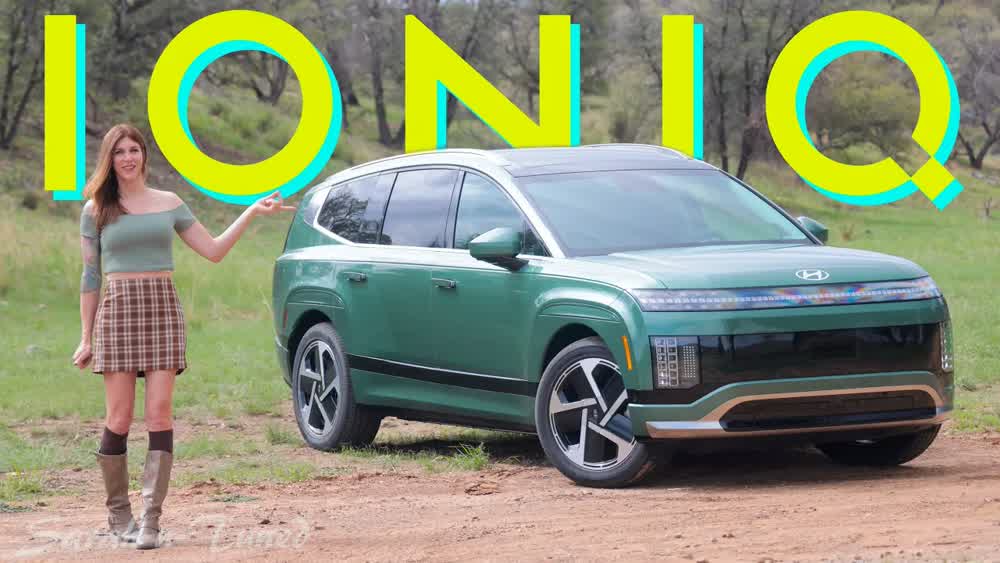
The 2026 IONIQ 5 sits on Hyundai’s E-GMP platform, and the headline number is the battery: a 84 kWh pack (up from the older 77.4 kWh) feeding an 800-volt architecture. Hyundai rates a 10–80% top-up in 18 minutes at a 350 kW stall, and claims 336 km of range added in just 15 minutes. Our tester also carried a native NACS port, so at a Tesla Supercharger it plugs straight in — no adapter in the glovebox.
The drive: 278 km on 56% of the battery
Montreal to Quebec City is about 270 km each way. In warm, dry, 21°C weather — no winter range penalty — the host arrived in Vieux-Québec after 278 km having used just 56% of the pack, sitting at 44% state of charge. Efficiency ran 17.1 kWh per 100 km.
| Leg | Distance | Energy used | Arrival SOC |
|---|
| Montreal → Quebec City | 278 km | ~56% (~47 kWh) | 44% |
| Full round trip | 575 km | ~17.5 kWh/100 km avg | home on one short stop |
For a crossover SUV, 17.5 kWh/100 km is genuinely good highway consumption. The IONIQ 5 is not the smallest EV on the road — which is exactly why that number matters.
The charging monster: 259 kW on a 350 kW stall
On the return, the host ran the pack down to 18% and pulled into Saint-Louis-de-Blandford — one of Quebec’s largest charging sites, with four 350 kW ABB pull-through stalls. Then the 800V platform did its party trick:
- Plugged in at 18% SOC.
- Ramped to a 259 kW peak (holding 256 kW for minutes), exactly where E-GMP platforms hit their stride — between 30% and 40% state of charge.
- Walked out 11 minutes 38 seconds later at 66% SOC, having added roughly 40 kWh.
- Cost: about $26 CAD.
Charging speed: where the IONIQ 5 sits
IONIQ 5 @ 350 kW CCS: ~18 min
Tesla Supercharger: ~30 min
Old 400V: 40+ min
Native 800V means the car actually uses a 350 kW stall. On a 400V Supercharger it’s capped far lower.
The Tesla reality check: 125 kW, and that’s the ceiling
For research, he plugged the same car into a Tesla Supercharger V4 at 55% SOC and pulled 125.8 kW. Hyundai’s own U.S. spec rates the NACS Supercharger session at up to 150 kW (10–80% in about 30 minutes) — and that is the cap.
| Charger type | Peak power | 10–80% time | Why |
|---|
| 350 kW CCS (800V) | ~259 kW observed | ~18 min | 800V pack matches the stall |
| Tesla Supercharger (400V, NACS) | ~125–150 kW | ~30 min | 800V pack can’t fully exploit 400V |
You still plug in natively with no adapter — but if maximum speed is the goal, a 350 kW CCS site beats a Supercharger for this car.
The lesson nobody puts in the brochure: charge what you need
The host admitted he overcharged. He only needed about a 5–6 minute top-up to get home. The 11-minute stop was insurance — and at DC fast-charging prices, insurance is expensive. The Tesla stop, by contrast, ran a comparatively cheap 35¢/kWh. The takeaway: DC fast charging is for getting home, not for filling up. Charge the minimum you need, then finish cheaply on your wallbox.
What this trip did NOT test
This was a 21°C summer day. Quebec winters are different, and cold is the one thing that drags EV range down hardest. The IONIQ 5 carries a heat pump, which trims the cold-weather penalty versus older EVs, but a January run would not post 17.5 kWh/100 km. Expect higher consumption, slower charging, and more frequent stops — still one of the better winter road-trippers in its class, just not this exact math.
The infrastructure asterisk for Quebec
The host’s other sharp observation: Quebec’s high-speed network is still “really being deployed.” He flagged a first-of-its-kind Alpitronic Hypercharger 400 at a FLO/AddEnergie test site in Quebec City — the kind of 400 kW hardware that, once live, changes the province’s charging map. For now, the IONIQ 5 is faster than the average local stall can feed it. The car is ready; the grid is catching up.
A Few Honest Questions About the IONIQ 5
Why is the IONIQ 5 slower at a Tesla Supercharger?
Its 800V architecture can’t fully exploit a 400V Supercharger stall, so it peaks around 125–150 kW there versus ~259 kW on a 350 kW CCS charger. You still plug in natively with no adapter — the speed gap is physics, not a missing part.
How efficient is it on the highway?
In this 575 km trip it averaged ~17.5 kWh/100 km — strong for a crossover. Real-world range on the 84 kWh pack landed close to its rated figure once you account for stops.
Does it have a heat pump for winter?
Yes. The heat pump trims the cold-weather range penalty versus EVs without one, though a hard Quebec winter will still raise consumption and slow charging versus this warm-day test.
Is the IONIQ 5 a good road-trip car?
One of the best. 800V charging means a real 10–80% in about 18 minutes, native NACS means Supercharger access without an adapter, and the 84 kWh pack means most day trips need a single short stop. Charging speed decided the trip, not range.
Sources
Related reading on EVCUBE