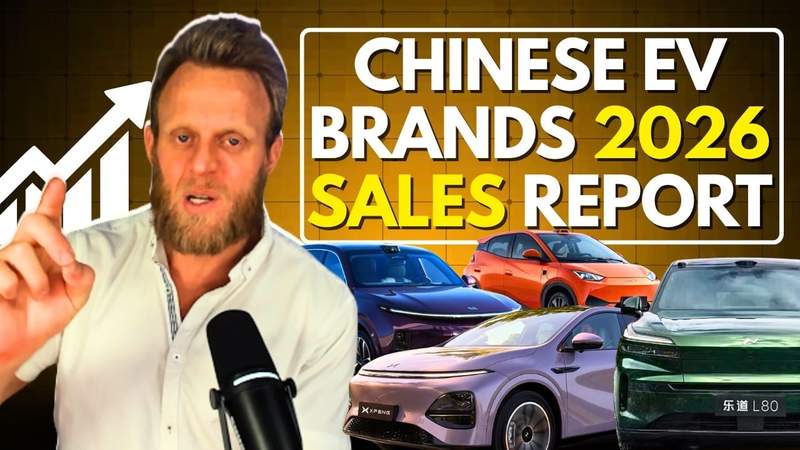
The Chinese EV industry has been through a turbulent first half of 2026. Domestic sales contracted sharply as consumer confidence waned, yet the major players each tell a different story. This analysis examines the May 2026 delivery data for BYD, Geely, Li Auto, Xiaomi, Huawei, NIO, and Zeekr, and explores what these numbers reveal about the state of the global EV transition.
BYD: The Overseas Surge Masks Domestic Pressure
BYD finally ended its eight-month consecutive sales decline in May 2026, but the recovery was marginal deliveries rose just 0.26% year-over-year. The headline number, however, hides a dramatic divergence between its domestic and international performance.
Outside China, BYD delivered 160,644 vehicles, representing an extraordinary 80% year-over-year increase. This overseas surge is the single most important dynamic in BYD current story. It demonstrates that Chinese EV manufacturers can compete and win in global markets despite the tariff barriers erected by the European Union and the United States.
Domestically, however, BYD remains under significant pressure. Sales within China are still down substantially versus the same period last year. Part of this stems from production bottlenecks around the new Blade battery, which has caused delays for highly anticipated models like the Great Tang SUV a vehicle that has accumulated over 100,000 pre-orders and has been confirmed for right-hand drive markets but has yet to begin customer deliveries in volume.
On a positive note, May deliveries were up 20% month-over-month from April, suggesting that the worst of BYD domestic decline may be behind it as newer models enter production.
160,644BYD overseas deliveries in May 2026
+80%Year-over-year export growth
+20%Month-over-month increase from April
100K+Pre-orders for the new Great Tang SUV
Geely: Record Exports and a Strategic Pivot to PHEVs
Geely delivered 237,640 vehicles in May, a modest 1% year-over-year increase, but the composition of those sales tells a fascinating story about tariff arbitrage and market strategy.
Geely export growth was even more explosive than BYD up 184% year-over-year, setting a new record for overseas shipments. This expansion compensated for a sharp 26% decline in domestic Chinese sales. The contrast highlights the structural challenge facing Chinese automakers: the domestic market is saturated and consumer confidence is low, while overseas markets offer the primary growth vector.
Perhaps the most strategic shift is in Geely powertrain mix. Pure EV sales fell 20%, but plug-in hybrid sales surged 32%. The reason is straightforward: European tariffs on Chinese EVs range from 35% to 40%, while PHEVs face only a 10% tariff. Geely is rationally optimizing its export mix toward higher-margin PHEVs for the European market.
Notably, Volvo which is a Geely brand reports its sales separately, so these figures do not include Volvo global numbers.
| Metric | BYD | Geely |
|---|
| May 2026 Total Deliveries | ~330K est. | 237,640 |
| Export Growth (YoY) | +80% | +184% |
| Domestic Sales Change | Down vs 2025 | 26% decline |
| EV-only Change | N/A | 20% decline |
| PHEV Change | N/A | +32% growth |
Li Auto, Xiaomi, and the Huawei Factor
Li Auto
Li Auto saw its sales decline 18% in May, with year-to-date deliveries of 163,000 vehicles down 3% versus the same period in 2025. The company is pinning its hopes on a new flagship EV model to reverse the trend, and has announced plans to expand into multiple international markets including Australia by late 2027. The key question is whether its range-extender strategy will resonate outside of China the way it has domestically.
Xiaomi The Enigma of EV Sales Reporting
Xiaomi continues to be the most opaque of the Chinese EV makers when it comes to sales figures. After the runaway success of the SU7 sedan in 2025, Xiaomi announced that the U7 SUV variant received roughly 400,000 orders. Yet delivery numbers have not climbed proportionally approximately 36,700 in April and over 30,000 in May.
This gap between announced orders and actual deliveries is puzzling. Unlike every other Chinese automaker which reports exact monthly figures, Xiaomi provides only vague ranges. It remains unclear whether the discrepancy stems from production constraints, order cancellations, or simply Xiaomi unconventional approach to reporting. The cars themselves have been well-reviewed, making the delivery bottleneck all the more curious.
Huawei AITO and the HIMA Alliance
Huawei AITO brand delivered 46,000 vehicles in May, an impressive figure for a relatively young brand. The Harmony Intelligent Mobility Alliance (HIMA), which brings together five Chinese automakers under Huawei software and hardware ecosystem, collectively delivered 192,000 vehicles in the first five months of 2026, representing 3.8% year-over-year growth.
The Huawei brand is immensely strong within China, and its ability to package software, autonomous driving technology, and dealer networks into a coherent ecosystem gives it a unique competitive advantage. These vehicles are not yet widely available outside China, but the HIMA model represents a fascinating alternative to the vertically integrated approach of BYD or Tesla.
The Market at 62%: China EV Tipping Point
The most striking macro data point from May 2026: electric vehicles including pure EVs, plug-in hybrids, and extended-range EVs now account for 62% of all new car sales in China. This is despite an overall market that has contracted roughly 20% year-over-year.
This means internal combustion engine vehicles and conventional hybrids are bearing the full weight of the market decline. As consumer confidence weakens and government purchase incentives are reduced, buyers are overwhelmingly choosing EVs over ICE alternatives. The tipping point has not just been reached it has been decisively crossed.
The 62% figure also has profound implications for global automakers. Any company that relies on ICE vehicle sales in China from Volkswagen to Toyota to General Motors is facing a rapidly shrinking addressable market. The joint ventures that have dominated Chinese auto manufacturing for decades must accelerate their EV transitions or risk being rendered irrelevant in the world largest auto market.
May 2026 Sales Snapshot: Chinese EV Leaders
| Company | May Deliveries | YoY Change | Key Metric |
|---|
| BYD | ~330K | +0.26% | Overseas +80% |
| Geely | 237,640 | +1% | Exports +184% |
| Li Auto | ~30K | 18% decline | New flagship EV coming |
| Xiaomi | ~30K+ | N/A | 400K U7 orders, deliveries lag |
| Huawei/AITO | 46,000 | +3.8% | HIMA: 192K Jan-May |
| NIO | ~20K | Flat | Battery swap expansion |
| Zeekr | ~18K | Growing | Global expansion accelerating |
What This Means for the Global EV Market
The May 2026 data from China offers several important takeaways for anyone tracking the global EV transition:
1. Chinese EV makers have become export powerhouses. Both BYD (80%) and Geely (184%) posted staggering overseas growth. These are not speculative exports to friendly markets they represent real demand for Chinese EVs across Southeast Asia, Latin America, Europe, and Australia. The tariffs imposed by Western governments have slowed but not stopped this momentum.
2. The domestic market is saturated but structurally shifting. Even as overall car sales in China decline 20%, EV penetration has reached 62%. This is no longer a niche it is the mainstream. Automakers that cannot offer compelling EVs in China are effectively locked out of 62% of a 20-million-plus-unit market.
3. Tariffs are reshaping export strategies. Geely pivot to PHEVs in response to the EU 35-40% EV tariff versus 10% for PHEVs is a textbook example of how trade policy shapes product mix. Expect more Chinese automakers to adopt similar strategies: pure EVs for tariff-free markets, PHEVs for protected markets, and localization factories for long-term access.
4. The Xiaomi situation is a cautionary tale. Massive order backlogs do not equal sales. Investors should focus on delivered units rather than announced reservations. The gap between Xiaomi 400,000 U7 orders and its 30,000 monthly deliveries should give the industry pause.
5. Huawei has built a credible EV ecosystem. The HIMA alliance 192,000 vehicles in five months shows that software-centric automotive strategies can scale. This model could be particularly relevant for legacy automakers struggling with their own software transformations.
Frequently Asked Questions
Why did Chinese EV sales rebound in May 2026?
After eight consecutive months of decline for some brands, May saw a modest recovery driven primarily by export growth. Domestic sales remained under pressure from weak consumer confidence and reduced government incentives, but overseas demand surged as Chinese automakers expanded their global footprint.
How are European tariffs affecting Chinese EV exports?
The 35-40% tariff on Chinese EVs has led manufacturers like Geely to pivot toward plug-in hybrids (which face only 10% tariffs) for the European market. At the same time, Chinese automakers are building factories in Europe and other regions to bypass tariff barriers entirely.
What is the significance of 62% EV market share in China?
This figure means that nearly two out of every three new cars sold in China is now electric or plug-in hybrid. It represents a structural shift with profound implications for global automakers, oil demand, and the pace of the energy transition.
Is Xiaomi a serious EV competitor?
Xiaomi SU7 has been well-reviewed and the U7 SUV generated massive order volumes. However, the persistent gap between announced orders and actual deliveries raises questions about production capacity and demand durability. Xiaomi is serious in product quality but remains an unproven quantity in scaled manufacturing.