In a wide-ranging interview with The Verge Decoder podcast, Ford CEO Jim Farley laid out a stark vision of the automotive industry. He called Chinese automakers the “700-pound gorilla” of EVs, acknowledged that Ford cannot currently build a $30,000 EV profitably, and outlined a survival strategy built around a new low-cost platform and a radical restructuring of Ford manufacturing and engineering. This analysis breaks down the key takeaways.
The Chinese EV Threat: Ford View
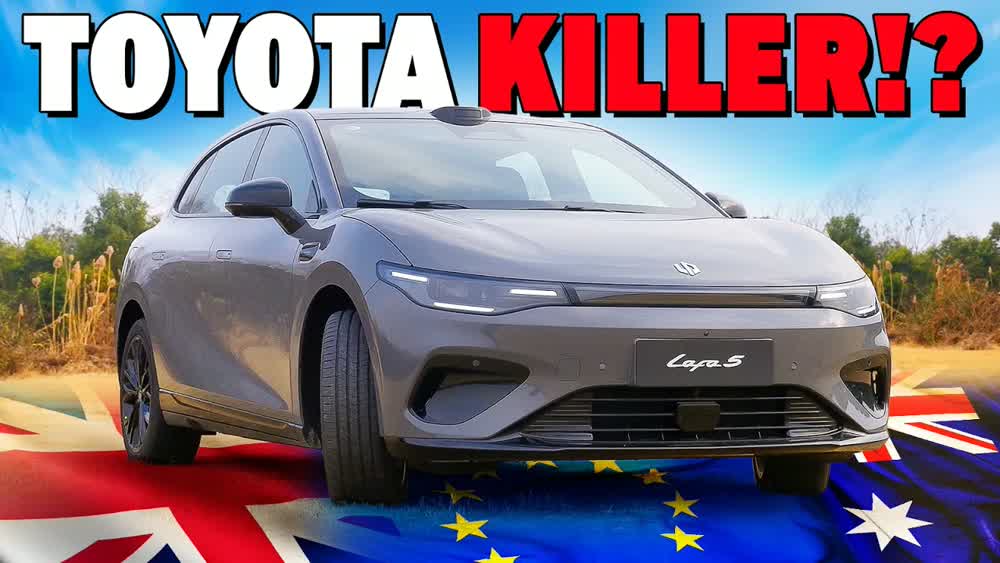
Farley did not mince words about the competitive position of Chinese EV manufacturers. He described them as the “700-pound gorilla” of the EV industry, arguing that no Western automaker including Tesla, GM, or Ford has produced anything that genuinely competes with what China is bringing to market.
The core problem is cost. Chinese automakers have achieved a level of vertical integration and manufacturing efficiency that US and European companies cannot match at scale. Farley specifically highlighted that Chinese EV supply chains are so efficient that even with current tariffs, Chinese EVs could still undercut domestic American production on price.
The $30,000 EV Problem
A central theme of the interview was the challenge of building an affordable EV. Farley was brutally honest: if Ford sells a $30,000 EV, it currently costs the company closer to $50,000 to build it. That math does not work. You can have an “affordable” EV on a price list, but if you lose money on every one you sell, it is not a sustainable business.
This honesty is itself significant. Many automakers have announced affordable EV plans without addressing the fundamental profitability gap. Farley admission that Ford cannot currently make money on a sub-$30,000 EV explains why the company has been cautious about its EV transition pace, and why it is prioritizing higher-margin segments like trucks and commercial vehicles first.
Ford Strategy: A New Low-Cost Platform
Ford response to this competitive pressure is a new, dedicated low-cost EV platform. Farley emphasized that Ford is undertaking a “radical” restructuring of its manufacturing and engineering operations to reduce costs. This includes rethinking how vehicles are designed, how supply chains are structured, and how labor is deployed on the production line.
The new platform is intended to be the foundation for a family of affordable Ford EVs that can compete with Chinese imports on price while maintaining the brand strengths that Ford customers expect: durability, capability, and service network. However, Farley was clear that this platform will take time to develop and bring to market.
Tariffs: A Double-Edged Sword
Farley addressed the role of tariffs in protecting the US auto industry from Chinese EV imports. He acknowledged that current tariffs on Chinese EVs provide some breathing room for domestic manufacturers, but warned that tariffs alone are not a solution. They buy time, but if US automakers do not use that time to become genuinely cost-competitive, the underlying threat remains.
He also noted the complexity of the global trade environment. Ford operates in China, Europe, and other markets where trade policies differ dramatically. Navigating this fragmented landscape while maintaining competitiveness is one of the biggest strategic challenges Ford faces.
The Bigger Picture: What This Means for the Industry
Farley interview paints a picture of an industry in transition, where the competitive dynamics have shifted fundamentally. A few key takeaways:
1. The cost gap is real and structural. Chinese EV cost advantages are not a temporary phenomenon. They stem from years of investment in battery supply chains, manufacturing scale, and government support that Western automakers cannot quickly replicate.
2. The $30,000 EV is the holy grail, but it is years away for US automakers. Every major manufacturer wants to sell an affordable EV, but the economics do not work yet. Battery costs, platform development, and manufacturing scale all need to improve significantly.
3. Restructuring is essential. Farley emphasis on radical restructuring suggests that legacy automakers cannot simply add EV production to existing operations. They need to fundamentally rethink how they design, build, and sell vehicles.
4. Tariffs are a temporary shield. While tariffs protect domestic manufacturers in the short term, they do not solve the underlying competitiveness problem. The US auto industry needs to use this window to become genuinely cost-competitive.
Ford vs. Chinese EV Makers: Competitive Snapshot
| Factor | Ford | Chinese EV Makers |
|---|
| Manufacturing Cost | Higher (legacy operations, union labor) | Lower (vertically integrated supply chain) |
| EV Platform | In development (new low-cost platform) | Mature (multiple generations of dedicated EV platforms) |
| Battery Supply Chain | Building partnerships (SK On, CATL tech license) | Full control (CATL, BYD, Gotion are Chinese companies) |
| Tariff Protection | 100% tariff on Chinese EVs (US) | Circumventing via Mexico, Hungary plants |
| $30K EV | Not profitable currently | Already profitable at this price point |
| Global Reach | Established dealer/service network | Rapidly expanding (Europe, SE Asia, Latin America) |
Frequently Asked Questions
Can Ford survive the Chinese EV threat?
Yes, but only if it successfully executes its low-cost platform strategy and uses tariff protection as a window to restructure its operations. Farley acknowledged the challenge is existential in scale.
When will Ford have a $30,000 EV?
Farley did not give a specific timeline, but Ford new low-cost platform is expected in the 2027-2028 timeframe. The challenge is making it profitable at that price point.
How much do tariffs protect US automakers?
Current tariffs on Chinese EVs (around 100% including the Section 301 and Section 232 duties) provide significant short-term protection. However, Chinese automakers are building factories in Mexico and other free-trade partners to bypass these barriers.
Sources and Further Reading