No products in the cart.
The Conservative Case for Building More Clean Energy in America
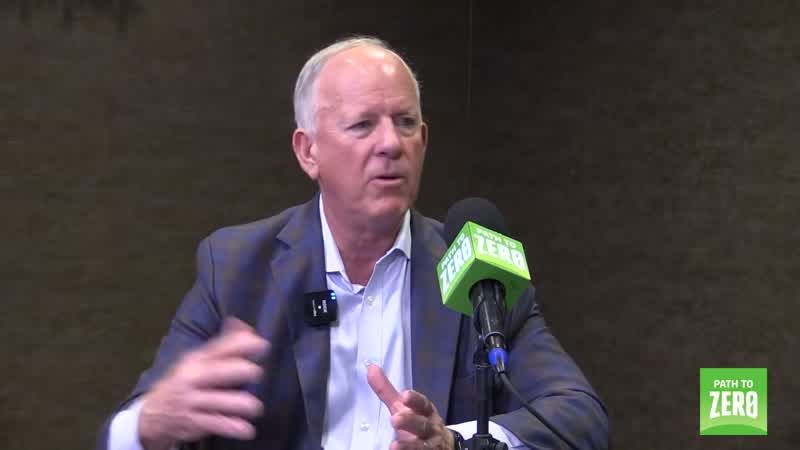
Jeremy Harrell, CEO of ClearPath, has a pitch that sounds unusual in Washington: markets over mandates, innovation over regulation, and a clean-energy buildout that conservatives can vote for. The throughline is speed. If the U.S. can’t build nuclear, geothermal, and long-duration storage faster than it does today, it will lose the AI race, the manufacturing race, and the race to make EV charging truly clean.
ClearPath is a conservative clean-energy advocacy organization. Its mission is to accelerate American innovations that reduce global energy emissions, with a focus on advanced nuclear, geothermal, long-duration energy storage, and cleaner industrial processes like steel, cement, and fertilizer. The approach is explicitly pragmatic: let private capital pick winners, use targeted policy to speed up permitting, and treat energy as a competitiveness issue rather than a culture-war topic.
The energy gap that worries Washington
In testimony before Congress, Harrell has cited a stark comparison: in 2024, China added 475 gigawatts of new generation to its grid, while the U.S. added 48.6 GW — barely one-tenth. On renewables and storage, the gap is just as wide: China built 421 GW of renewables and 74 GW of energy storage; the U.S. built 35 GW and 10 GW. The paltry 2024 U.S. buildout was actually the largest new-capacity addition since 2002.
That gap matters because electricity demand is growing again in the U.S. after 20 years of flat growth. Data centers, AI training, advanced manufacturing, and electrification — including EVs — are all competing for the same electrons. If the grid doesn’t expand fast enough, the result is higher prices, dirtier backup power, and a slower EV transition.
| 2024 buildout | China | United States |
|---|---|---|
| Total new generation | 475 GW | 48.6 GW |
| New renewables | 421 GW | 35 GW |
| New energy storage | 74 GW | 10 GW |
Signal for EV owners: An EV is only as clean as the grid that charges it. Faster clean buildout — nuclear, geothermal, storage — directly lowers the lifetime carbon footprint of every electric vehicle.
Markets, not mandates
ClearPath’s framing is deliberate. Instead of regulations that force a particular technology, the group argues for policies that remove barriers and let private investment flow. That includes modernizing the Nuclear Regulatory Commission, streamlining federal permitting, and funding demonstration projects for technologies that are too risky for private capital alone but promising enough to scale.
The conservative pitch is economic and geopolitical. China and Russia are building energy infrastructure and exporting nuclear technology worldwide. If the U.S. wants to lead in AI, advanced manufacturing, and the next wave of clean exports, Harrell argues, it has to out-build its rivals. “In order for the U.S. to win the AI race and prevail against China, the U.S. will need to deploy more energy on a faster timeline,” he told Congress in September 2025.
The permitting problem
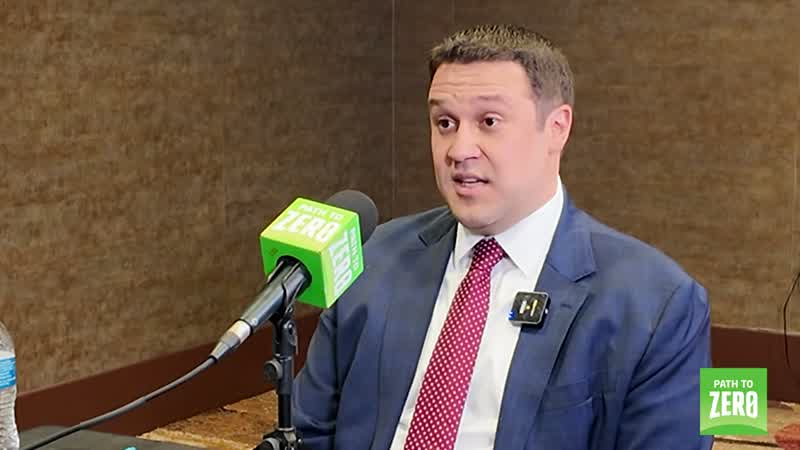
The signature line in Harrell’s argument is the one that opens the Path to Zero interview: “It takes longer to get a federal permit in this country than it takes an 18-year-old to get a college degree.” That is ClearPath’s central complaint. Whether the project is a solar farm, a transmission line, a nuclear reactor, or a geothermal well, the federal permitting process is unpredictable and slow.
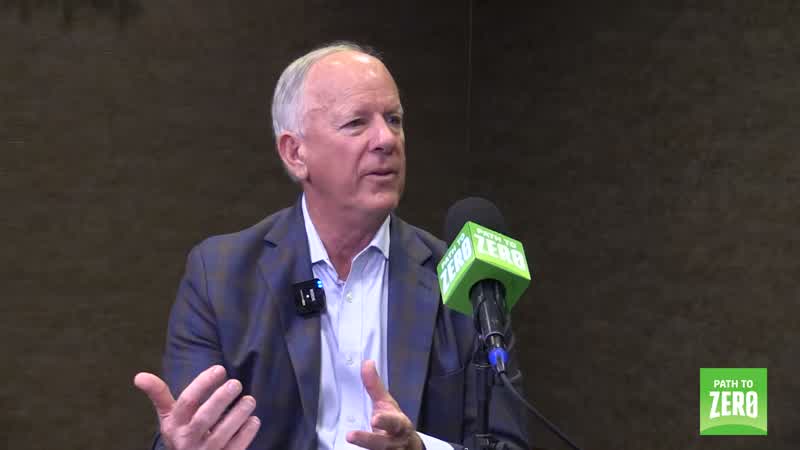
The bipartisan response has already started. The Nuclear Energy Innovation and Modernization Act (NEIMA, 2019) and the Accelerating Deployment of Versatile, Advanced Nuclear for Clean Energy Act (ADVANCE Act, 2024) began modernizing the NRC. Trump’s 2025 executive orders added fixed deadlines. The remaining gap is implementation: agencies need to staff up, coordinate with states, and resolve the environmental-review bottlenecks that can add years to any project.
What this means for EVs
EVs shift emissions from the tailpipe to the power plant. In a grid that’s 60% coal, the emissions savings are smaller. In a grid with abundant nuclear, geothermal, and storage, the savings are enormous. ClearPath’s agenda is therefore relevant to EV buyers in a way that pure climate messaging often isn’t: it promises cheaper, cleaner, more reliable electricity — the exact thing that makes EV ownership attractive.
The link is practical. The charging speed and network density debates are about convenience; the grid-mix debate is about the actual emissions. If the U.S. builds enough clean baseload, EVs become a near-zero-carbon option in most regions. If the grid stays heavy on fossil peakers, EVs still win — but by a smaller margin.
Why conservatives are engaging now
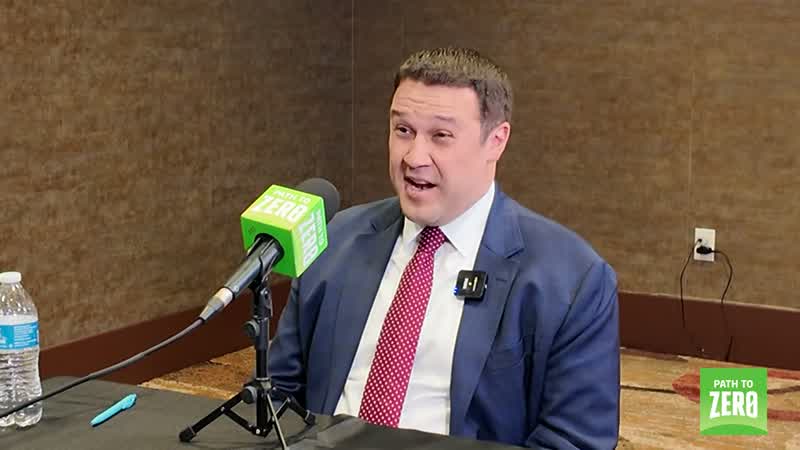
The traditional conservative skepticism of climate regulation is being replaced by an argument that energy abundance is itself a conservative value. More energy means cheaper power, stronger manufacturing, and less dependence on China. ClearPath’s bet is that the same voter who distrusts carbon mandates will support faster nuclear licensing and geothermal drilling if the pitch is framed as economic strength and national security.
FAQ
What is ClearPath?
ClearPath is a conservative clean-energy advocacy organization that promotes advanced nuclear, geothermal, long-duration storage, and cleaner industrial processes through market-based and innovation-focused policies.
What is the conservative clean-energy argument?
ClearPath argues for “markets over mandates” and “innovation over regulations” — accelerating clean energy by reducing permitting barriers, funding early-stage technology, and treating energy as a competitiveness and national-security issue.
Why does permitting matter for clean energy?
Long and unpredictable federal permits can add years to solar, wind, geothermal, nuclear, and transmission projects. Faster, more predictable permitting unlocks private investment and speeds up the grid buildout.
How does this affect EV owners?
An EV’s carbon footprint depends on the grid it charges from. More clean baseload power — especially nuclear and geothermal — lowers grid emissions and makes EVs cleaner over their lifetime.
Sources:
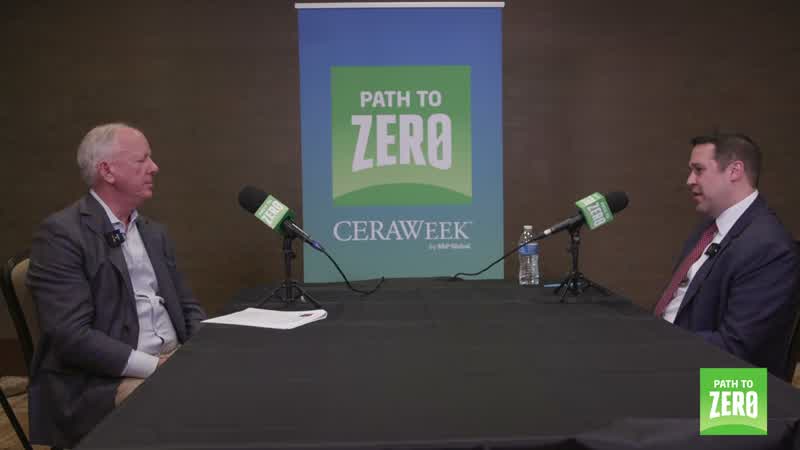
- Path to Zero / Propane: Energy for Everyone — CeraWeek interview with Jeremy Harrell, ClearPath CEO (markets over mandates, permitting, energy race)
- ClearPath Action — “ClearPath Action CEO Jeremy Harrell Testifies on Nuclear Permitting Reform,” June 9, 2026 (China 475 GW vs U.S. 48.6 GW, AI race, NRC reform)
- U.S. House Committee on Natural Resources — testimony of Jeremy Harrell, September 10, 2025 (China 421 GW renewables, 74 GW storage; permitting as competitiveness barrier)
- Related EVCUBE: U.S. nuclear revival, 800V charging baseline, Walmart charging network