No products in the cart.
Nuclear Power Is Back in the U.S. — What That Means for Your EV’s Carbon Footprint
A few years ago, American nuclear power looked doomed. Plants were closing, politicians were celebrating their demise, and the industry’s memory was stuck on Three Mile Island. Then President Trump issued Executive Order 14300, ordering the Nuclear Regulatory Commission to fast-track reactor licensing. The goal is to expand U.S. nuclear capacity from roughly 100 GW today to 400 GW by 2050 — and for EV owners, the source of those electrons matters more than the sticker price.
The shift is dramatic. In the 2010s, utilities retired plants like San Onofre in California and Crystal River in Florida. State governments cheered. Today, the same regulators are scrambling to figure out how to restart retired plants and approve new ones. What’s changed is the math: electricity demand is rising again after two decades of flat growth, driven by data centers, AI, advanced manufacturing, and — eventually — tens of millions of EVs.
What the executive order actually does
On May 23, 2025, President Trump signed EO 14300, “Ordering the Reform of the Nuclear Regulatory Commission.” The directive tells the NRC to set fixed deadlines for reactor licensing: no more than 18 months for a final decision on a new reactor’s construction and operating license, and no more than 12 months for an existing reactor’s continued operation. It also orders science-based radiation limits, expedited approval for designs already tested by the Department of Defense or DOE, and a streamlined process for microreactors and modular reactors.
Those deadlines are not abstract. The NRC’s own data shows the agency has completed recent advanced-reactor reviews ahead of schedule, including TerraPower’s Kemmerer Natrium sodium fast reactor in 18 months — nine months early and 11% under budget. The NRC has also set a 17-month construction-permit schedule for TVA’s Clinch River BWRX-300 and a 9-month review for a Framatome fuel-facility amendment.

Signal for EV owners: The grid is going to get cleaner or dirtier depending on what gets built. Nuclear is the only zero-emission source that runs 24/7 at grid scale. More nuclear capacity directly lowers the lifetime carbon footprint of every EV charged on that grid.
The project pipeline is real
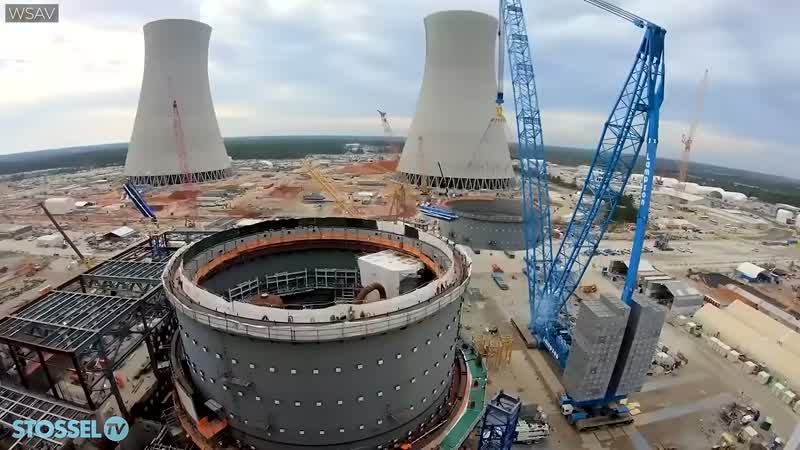
The biggest milestone is TerraPower’s Natrium project in Kemmerer, Wyoming. It received the first NRC construction permit for a commercial non-light-water reactor in more than 50 years, and construction broke ground in April 2026. The design is a sodium fast reactor paired with molten-salt storage, a combination that can load-follow alongside wind and solar.
Other projects are moving too: the Tennessee Valley Authority is pursuing a GE-Hitachi BWRX-300 small modular reactor at Oak Ridge; the Department of Energy selected TVA and Holtec for up to $800 million in federal cost-shared funding; NuScale received NRC approval for its uprated SMR design; and a U.S.-Japan partnership announced in March 2026 aims to deploy 3 GW of BWRX-300 reactors in Tennessee and Alabama. The DOE’s Reactor Pilot Program is pushing at least three advanced reactor designs toward criticality by July 4, 2026.
| Project | Technology | Status |
|---|---|---|
| TerraPower Natrium, Wyoming | Sodium fast reactor + molten-salt storage | Construction permit issued, ground broken |
| TVA Clinch River, Tennessee | GE-Hitachi BWRX-300 SMR | NRC 17-month construction-permit review |
| U.S.-Japan GVH BWRX-300 | Small modular reactor | 3 GW planned for Tennessee and Alabama |
| NuScale uprated SMR | Light-water SMR | NRC design approval granted |
Why this matters for EVs
The average American EV already produces less CO2 over its lifetime than a comparable gas car, but the exact difference depends on where you charge. In California, where the grid is heavy on solar and natural gas, the advantage is large. In states that still rely on coal, the advantage shrinks. Nuclear is the clean-energy cheat code: it runs regardless of weather, it doesn’t need battery backup, and it already supplies about 47% of U.S. carbon-free electricity and 20% of total U.S. power.
If the U.S. triples nuclear capacity by 2050, the carbon intensity of the grid falls — and so does the emissions math for every EV, heat pump, and factory plugged into it. That is why EV buyers should care about reactor licensing as much as they care about 800V charging curves or Walmart’s charging network. The cleanest car in the world is only as clean as the power plant behind the plug.
The safety debate isn’t going away
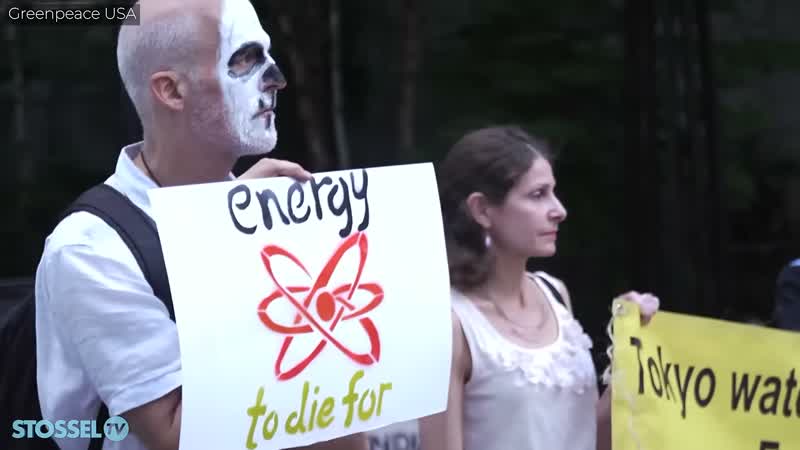
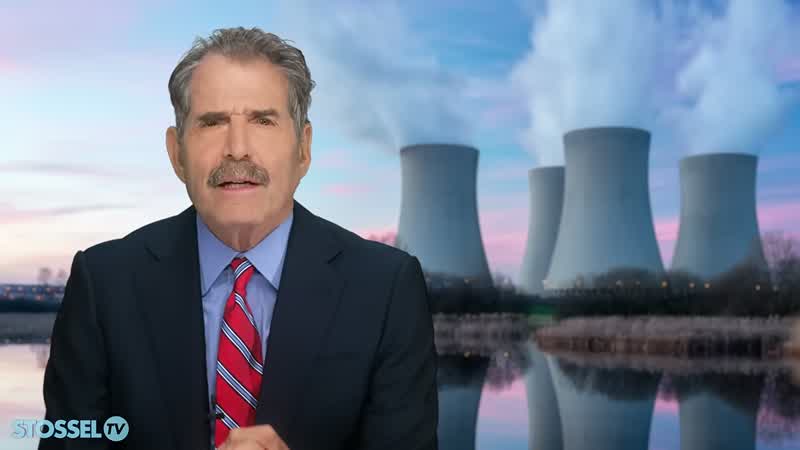
Not everyone is convinced. Democratic senators and some nuclear-safety advocates argue that faster licensing could turn the NRC into a “rubber stamp.” Critics point to the canceled NuScale Idaho project, which ran into cost problems roughly three times higher than wind or solar alternatives, and note that small modular reactors may produce more nuclear waste per gigawatt than larger plants. The Stossel video frames the opposition as partly a legacy of Cold War-era fear — the 1979 Three Mile Island accident and the 1979 film “The China Syndrome” — but the real policy tension is between speed and scrutiny.
The NRC insists it can do both. Its own webpage on licensing efficiencies lists dozens of completed reviews ahead of schedule and under budget, including license renewals that preserve 2,200 reactor-years of operating capacity. Whether that pace can be maintained without sacrificing safety is the question that will define the next 25 years.

What to watch
Keep an eye on the Kemmerer Natrium build and the TVA Clinch River construction permit. If they come in on time and on budget, the U.S. nuclear revival will have proof points. If they slip, the 400 GW by 2050 target will look more like a political slogan than a plan. Either way, the outcome shapes how clean your EV really is.
FAQ
What is Executive Order 14300?
Issued by President Trump on May 23, 2025, it directs the Nuclear Regulatory Commission to reform licensing with fixed deadlines: 18 months for new reactors and 12 months for existing reactor renewals.
How much nuclear capacity does the U.S. have?
About 100 GW today. The Trump administration’s goal is to reach 400 GW by 2050, which would require adding roughly 300 GW of new capacity.
Why does this matter for EV owners?
Nuclear provides about 47% of U.S. carbon-free electricity and 20% of total U.S. power. More nuclear capacity lowers the grid’s carbon intensity, which directly reduces the lifetime emissions of any EV charged from that grid.
Are there risks to faster licensing?
Some nuclear-safety advocates and Democratic senators argue that rushing the NRC could compromise safety oversight. Supporters argue that modern reactor designs are safer and that the current process is needlessly slow.
Sources:
- White House Fact Sheet — EO 14300 (18/12-month deadlines, 100 GW to 400 GW by 2050, NRC reorganization)
- U.S. Department of Energy — “One Year After Executive Orders, U.S. Nuclear Energy Renaissance Is in Full Swing” (TerraPower, TVA, NuScale, US-Japan 3 GW, $800M funding)
- NRC — Licensing Efficiencies and NEIMA milestone schedules (TerraPower 18 months, 9 months early; TVA Clinch River 17 months)
- John Stossel — “Nuclear Power Is Back?” (plant closures, Three Mile Island, NRC reform debate)
- Related EVCUBE: 800V charging baseline, Walmart charging network, ClearPath conservative clean energy