
No products in the cart.
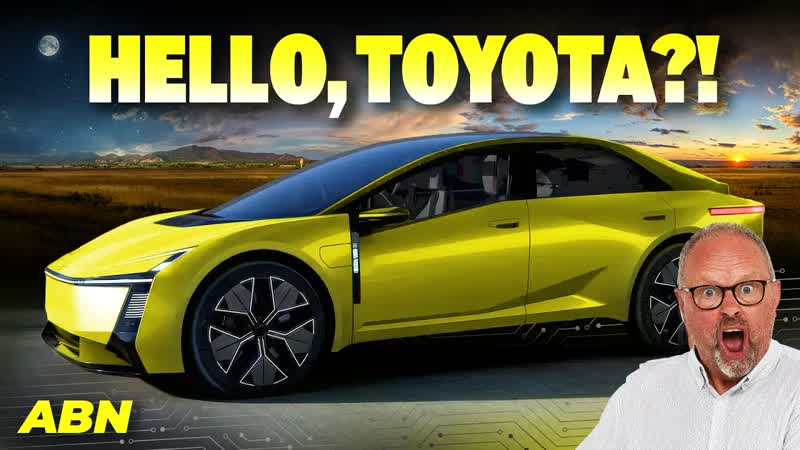
Toyota’s Solid-State Battery Is the Real Deal — But It Won’t Reach Your Driveway Until 2027
Toyota says its first mass-produced solid-state battery will deliver up to 750 miles of range and a 10-minute charge. The technology is real, the patents are filed, and the factory is breaking ground. The catch is the part every American buyer needs to hear: the first one shows up in a six-figure Lexus, not your local dealer.
For two decades, “solid-state battery” has been the carrot dangled in front of every EV skeptic: the miracle cell that would finally kill range anxiety and make charging as fast as a gas stop. This year the story got concrete. Toyota — which holds more solid-state patents than any other company — confirmed it is building the first mass-produced solid-state pack, with a claimed 1,200 km (about 745 miles) WLTP range and a 10-minute charge from a smaller, lighter, more energy-dense cell that works in extreme temperatures and lasts far longer than today’s lithium-ion.

What Toyota is actually promising
Toyota lays out two generations. Gen 1 (2027–2028) targets around 1,000 km (621 miles) and a 10–80% charge in about 10 minutes, at roughly 450 Wh/kg. Gen 2 (post-2030) pushes toward 1,200 km (745 miles) and under 10 minutes, at 500+ Wh/kg. The company received Japanese production approval in October 2025, and its partner Idemitsu Kosan broke ground on a large-scale solid-electrolyte plant in early 2026. Toyota also claims a 15-year cell life with 90% capacity retention — a durability figure that, if real, would make battery replacement a non-event.
Signal for buyers: Solid-state is no longer science fiction — it’s an engineering schedule. But the headline numbers describe a 2027–2028 flagship, not a 2026 family car.
Why this matters more than a bigger number
Energy density is the whole game. Today’s best lithium-ion packs deliver 200–300 Wh/kg. Solid-state aims at 400–500 Wh/kg by swapping the flammable liquid electrolyte for a solid one — typically a ceramic, polymer, or sulfide compound. That single change does three things American owners care about:
- Range: 400–500 Wh/kg is what makes 700–900 real-world miles plausible on a single charge.
- Safety: Solid electrolytes don’t catch fire the way liquid cells do. Thermal events in solid-state systems begin around 247°C versus roughly 90°C for conventional lithium-ion.
- Cold weather: Several makers report strong performance at -30°C to -40°C, where today’s packs shed 15–25% of their range.

The honest catch: nobody sells one yet
Here is the part the breathless headlines skip. As of early 2026, exactly zero all-solid-state cells are installed in a vehicle any customer can buy — anywhere on earth. Not in the U.S., not in Japan, not in China. The only “solid-state-adjacent” packs on real roads are semi-solid: NIO’s 150 kWh semi-solid pack drove an ET7 sedan 1,070 km on a single charge. That is genuinely impressive, but it is a half-step, not the revolution.
And the cost gap is brutal. Current solid-state production runs roughly $600–800 per kWh against about $130 per kWh for lithium-ion (and as low as $63–99 in China’s oversupplied market). Toyota’s own roadmap doesn’t reach lithium-ion price parity until around 2030. Until then, solid-state is a premium technology for premium vehicles.
“The first vehicles with these cells are targeted for 2027–2028, priced between roughly $110,000 and $137,000.” — industry production timelines

| Cell / maker | Energy density | Charge 10–80% | Target | In a car you can buy? |
|---|---|---|---|---|
| Toyota Gen 1 | ~450 Wh/kg | ~10 min | 2027–28 (Lexus) | No |
| Toyota Gen 2 | 500+ Wh/kg | <10 min | post-2030 | No |
| QuantumScape (US) | 844 Wh/L | ~12 min | 2027–28 | No |
| Samsung SDI | ~900 Wh/L | ~9 min | 2027 | No |
| NIO semi-solid | ~360 Wh/kg | slow | shipping now | Yes (China) |
| Today’s Li-ion | 200–300 Wh/kg | 20–30 min | — | Yes, everywhere |
The American angle: U.S. labs are in the race, but Asia leads the clock
It is not just Toyota. American companies are genuinely in the hunt: QuantumScape (Volkswagen-backed) has validated 844 Wh/L cells and a 12-minute charge; Factorial Energy is supplying Mercedes-Benz and Stellantis with semi-solid cells; Solid Power runs BMW test vehicles on its sulfide cells. The catch is that the near-term production lead belongs to Toyota and to Chinese players — and China, already at 62.92% NEV penetration in June 2026, issued its first national solid-state battery standard in July 2026, regulatory leadership that tends to pull manufacturing along with it.
Meanwhile, the fast-charging story is being written on two fronts at once. While solid-state promises 10-minute fills, CATL’s Tekkron 2 cell already demoed a 6-minute 48-second charge using today’s chemistry. The point: the “charging as fast as fueling” future is arriving from multiple directions, not just one miracle battery.

Should you wait for solid-state before buying an EV?
Almost certainly not — unless your purchase is three-plus years out. Today’s lithium-ion EVs are excellent, and a well-cared-for pack lasts well over a decade. Solid-state vehicles will be premium-priced at launch (2027–2028) with mainstream pricing likely 2030–2032. Buy a good EV now; upgrade when the chemistry is cheap.
None of it works without the plugs
A 10-minute battery is only as good as the stall you plug it into. Public infrastructure keeps spreading onto everyday routes — Walmart’s charging network has already reached 73 U.S. sites, planted in parking lots where you already shop. When sub-15-minute sessions become normal, that kind of ubiquitous, boring, convenient charging is what makes the spec sheet matter.

FAQ
What exactly is a solid-state battery?
It replaces the flammable liquid electrolyte in a normal lithium-ion cell with a solid material — ceramic, polymer, or sulfide. That enables much higher energy density, far better safety (no flammable liquid), faster charging with less degradation, and wider temperature tolerance.
When can I actually buy a Toyota with one?
Toyota targets 2027–2028 for the first vehicles, and those are expected to be flagship Lexus models priced around $110,000–$137,000. Broader, mainstream Toyota models (Corolla, Camry class) are a 2030s story at the earliest.
Is any car using solid-state today?
No production car uses a fully solid-state battery as of 2026. The closest thing on real roads is NIO’s semi-solid 150 kWh pack in China. QuantumScape, Samsung SDI, and Toyota all target 2027–2028, but timelines in this field have a long history of slipping.
Why is it taking so long?
Three manufacturing headaches: dendrite growth can short the cell, interface resistance between solid layers saps performance, and sulfide electrolytes are sensitive to air and moisture, requiring ultra-dry, sealed factories. The chemistry works in labs; scaling it cheaply is the unsolved part.
Sources:
- Toyota Global — Solid-State Battery Development Roadmap (production approval Oct 2025; Idemitsu Kosan plant groundbreaking Jan 2026)
- Automotive Dive / WardsAuto — Toyota–Idemitsu Kosan solid-state partnership (745 mi, 10-min charge)
- 2026 Battery Scorecard (liveinthefuture.org) — 0 all-solid cells in customer cars as of March 2026
- QuantumScape QSE-5 specs (844 Wh/L, 12.2-min 10–80%); Samsung SDI, CATL, NIO semi-solid figures
- Related EVCUBE: China 62.92% penetration, CATL Tekkron 2, Walmart charging network












