No products in the cart.
Tesla’s Robotaxi Network Is Failing Hard in 2026 – Here’s Why
For ten years Elon Musk has promised a robo-taxi network that would let any Tesla owner earn passive income while their car drives strangers around. In 2026 the service technically exists — but it is a fleet measured in dozens, not the Uber-meets-Airbnb network he described. The gap between the promise and the reality is now the story.
Every autonomous-driving race eventually collides with a simple question: how many real, driverless, paying rides are you actually running today? By that measure, 2026 is the year Tesla’s robotaxi story stopped being a vision and started being a scoreboard — and the scoreboard is not kind. Google’s Waymo is now completing roughly half a million paid driverless rides a week across eleven U.S. metros. Tesla’s unsupervised fleet, by the most generous independent counts, still runs in the low dozens of vehicles. This is not a close second. It is a different order of magnitude.
A decade of promises, a fleet of dozens
Musk first sketched the robotaxi idea publicly in 2019, framing it as a combination of Uber and Airbnb: owners would add their cars to a network, the vehicles would autonomously pick up passengers, and the owner would collect ride-hailing revenue. The pitch helped sell a lot of Teslas. In 2026 the network still does not exist in that form. What exists is a confined ride service concentrated in Texas.
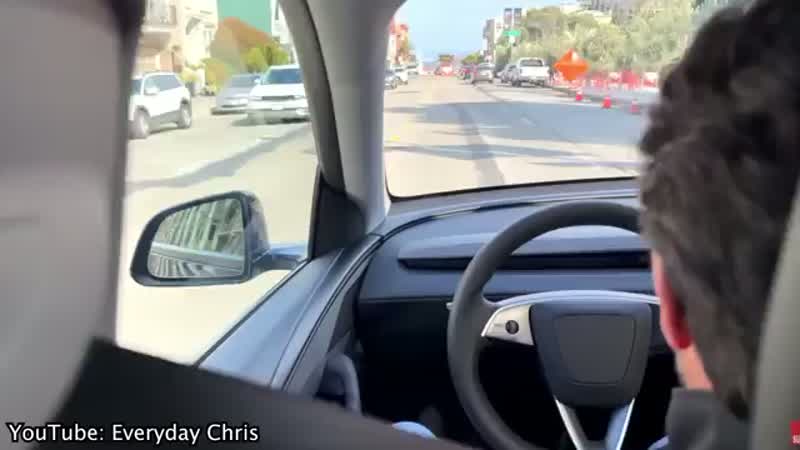
The numbers tell the tale. Tesla’s robotaxi service launched in Austin in mid-2025 and, by the first half of 2026, had expanded unsupervised service to Dallas and Houston, with cumulative paid miles reaching about 1.7 million by the end of Q1 2026 (up from 610,000 at the end of 2025). But cumulative miles are not scale. Independent trackers put the genuinely driverless fleet — cars with no human inside — somewhere between roughly 20 and 39 vehicles, even after Tesla expanded its Austin geofence to cover the entire metro on June 3, 2026. A full-city service area running on a few dozen cars is a demo, not a network.
The Waymo gap: scale is the whole story
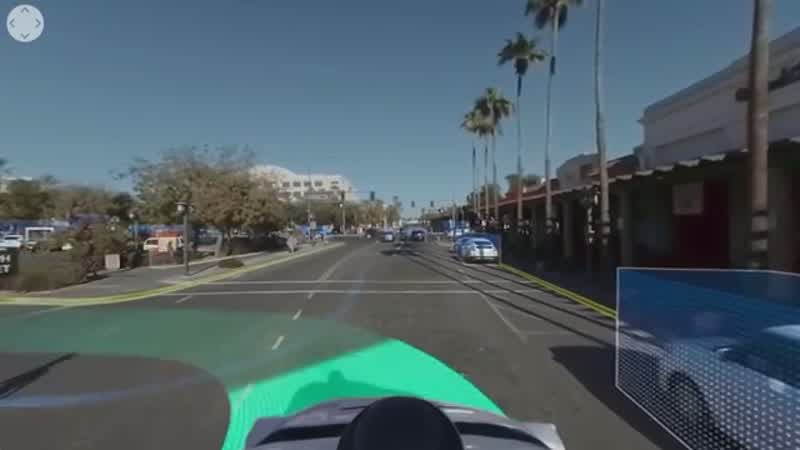
Waymo did not win on charisma. It won on years of slow, conservative, city-by-city build-out — HD-mapping every road, equipping cars with lidar and radar, and earning state permits. The result is a service that, by mid-2026, operates in eleven U.S. metros (with Nashville added July 7 through a Lyft partnership and Washington D.C., Detroit, and London announced) and logs close to four million autonomous miles a week. Waymo also closed a $16 billion funding round in February 2026 at a $126 billion valuation — the largest in AV history — specifically to fund this expansion.
| Metric | Tesla Robotaxi | Waymo |
|---|---|---|
| Active driverless vehicles | ~20-39 unsupervised (dozens total) | ~3,000 |
| U.S. metros | 3 live (Austin, Dallas, Houston); ~7 planned | 11 active; more announced |
| Paid rides per week | Not disclosed; ~1.7M cumulative paid miles (Q1) | ~500,000 |
| Sensor suite | 8 cameras only (no lidar/radar) | Lidar + radar + 13 cameras, HD maps |
| Cumulative autonomous miles | ~1.7M (Mar 2026) | ~220M+ through Mar 2026 |
| Recent funding | Not separately disclosed | $16B raise, $126B valuation (Feb 2026) |
Waymo is not flawless. In May 2026 it paused freeway rides pending a software update, issued a recall after some vehicles drove into flooded Texas roadways, and patched a bug where cars failed to honor lane closures in construction zones. But a fleet that large, running that many miles, is a real business. Tesla’s service is still a pilot wearing a citywide map.
The camera-only gamble
Tesla’s defining choice is to skip lidar and radar entirely and rely on eight exterior cameras, betting that enough real-world video from millions of Teslas will train an AI that beats human drivers anywhere on Earth. It is an elegant, cheap-to-manufacture theory with enormous upside if it works. The problem is that in 2026 it has not been proven at driverless scale. Waymo’s lidar-and-maps approach is slower and more expensive, but it is the one actually carrying paying passengers by the hundreds of thousands each week.
The buyer takeaway: A vision-only system may eventually win on cost, but “eventually” is doing a lot of work. Today the safer, more proven driverless experience for an American rider is Waymo — not a Tesla with no one in the driver’s seat.
Where the crash data points
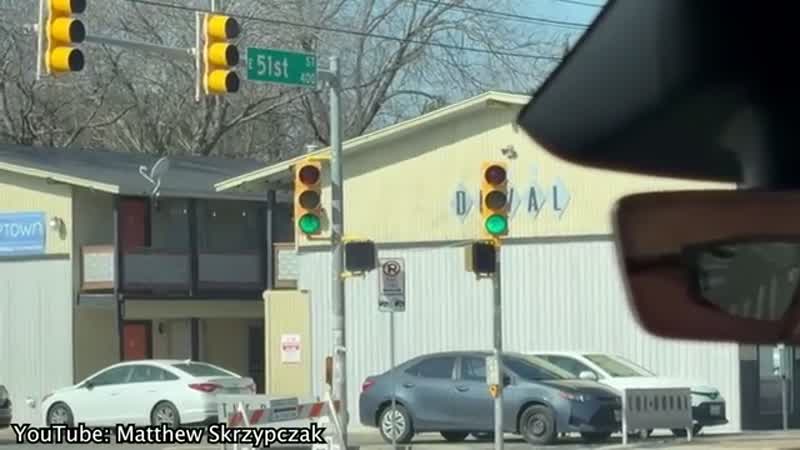
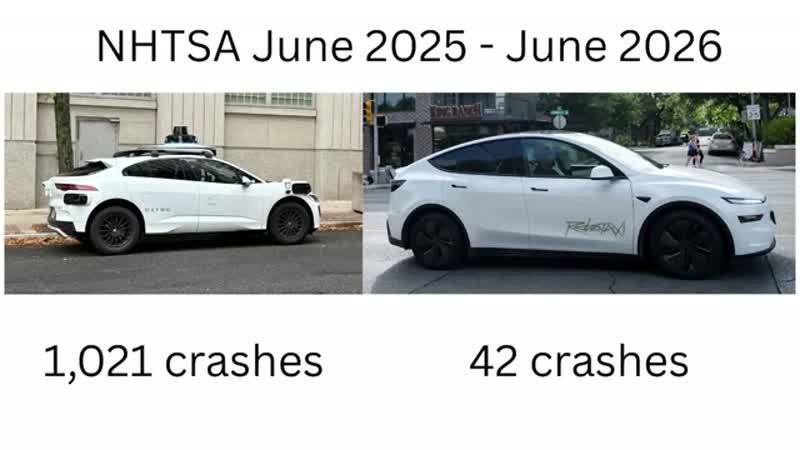
Safety claims in this fight deserve scrutiny. Musk has repeatedly stated Tesla’s robotaxis are “10 times” or even “30 times” safer than human drivers — figures critics note are not backed by published, normalized data. NHTSA’s own data dictionary warns that its standing crash reports are “not normalized” by miles driven or fleet size, so raw counts cannot prove relative safety. Still, the raw reports are uncomfortable: NHTSA received roughly 30 crash reports tied to Tesla’s autonomous system over a recent year, including five with serious injuries. Independent analysis of Tesla’s own investor disclosures suggests its robotaxis are involved in minor collisions at several times the national average rate. That is a long way from “10 times safer.”
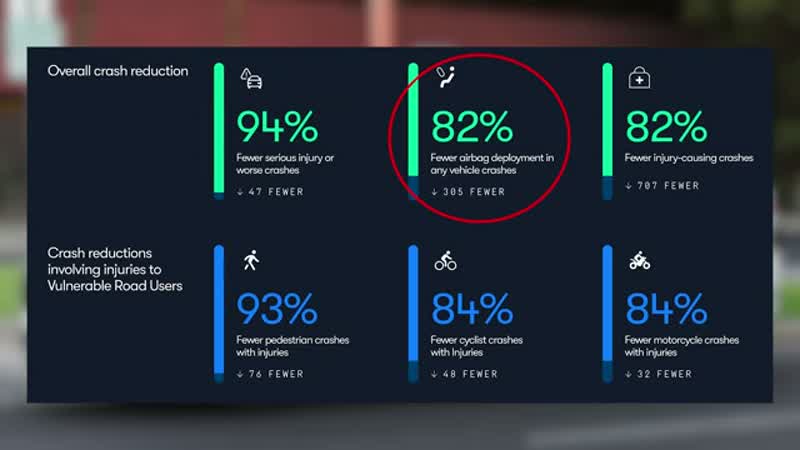
Waymo’s published safety data is stronger and more transparent: across more than 220 million autonomous miles through March 2026, its driver was involved in 94% fewer crashes causing serious or fatal injury and 82% fewer crashes with airbag deployment than the human benchmark in the same areas. Transparency cuts both ways — Waymo’s flooded-roadway and construction-zone incidents became public precisely because the company reports them — but the cumulative evidence favors the mapped, sensor-heavy approach for now.
The expansion map is mostly lines on a slide
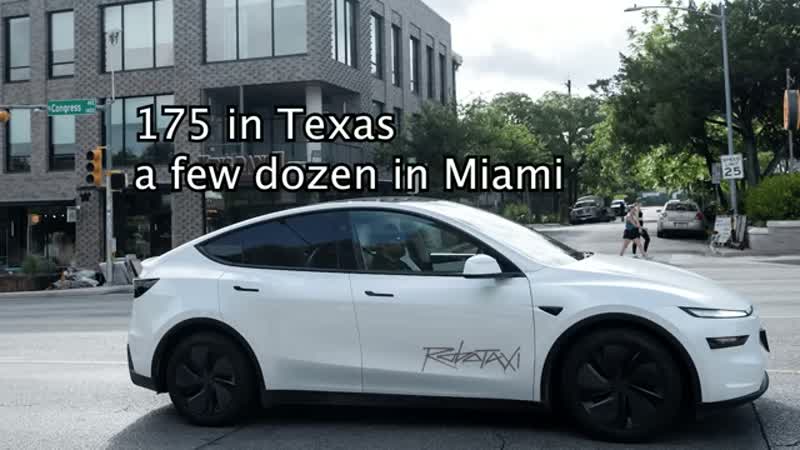
Musk has announced a steady drumbeat of new cities — Phoenix, Miami, Orlando, Tampa, Las Vegas, and more — and Tesla did open Miami on July 3, 2026 with driverless vehicles from day one. But field reports and license-plate tracking found only two to three unsupervised cars operating in the Miami launch zone on launch day. Bloomberg has characterized Tesla’s active fleet as roughly 14 times smaller than Waymo’s. Tesla itself has tied any real scaling to the arrival of a rewritten Full Self-Driving v15, now targeted for late 2026 or early 2027. Until that software lands, the “network” is a collection of small, geofenced pilots.
There is a legitimate counterargument: Tesla can scale production faster than any purpose-built robotaxi competitor, and its supervised FSD already runs on more than a million consumer vehicles with over ten billion cumulative miles logged. If the v15 rewrite delivers, the manufacturing advantage is real. But “if” is the operative word, and a decade of missed robotaxi deadlines argues for judging Tesla on deployed cars, not announced ones.
What it means for the self-driving promise
None of this means Tesla’s robotaxi will fail forever. The company has manufacturing muscle and a massive data engine that no startup can match, and a genuinely generalized, camera-only system would be a breakthrough. But “failing hard in 2026” is accurate as a description of the gap between promise and deployment. A service that covers a whole city on a map while running a few dozen cars is not the network owners were sold. The self-driving future is arriving — it is just arriving first through Waymo’s lidar-topped Jaguar I-PACEs and Zeekr-built “Ojai” vehicles, not through a Tesla in your garage earning you passive income.
FAQ
How big is Tesla’s robotaxi fleet in 2026?
Independent trackers put Tesla’s genuinely driverless (no-human-inside) fleet at roughly 20 to 39 vehicles as of mid-2026, concentrated in Austin, Dallas, and Houston. The total number of Tesla vehicles involved in robotaxi operations is larger, but most still run with safety monitors. That is more than ten times smaller than Waymo’s ~3,000-vehicle fleet.
Is Tesla’s robotaxi safer than human drivers?
Musk has claimed Tesla robotaxis are 10 to 30 times safer than people, but those figures are not backed by published, mileage-normalized data. NHTSA crash reports tied to Tesla’s autonomous system include serious injuries, and independent analysis of Tesla’s own disclosures suggests a higher minor-collision rate than the national average. Waymo, by comparison, publishes data showing far fewer serious-injury crashes than the human benchmark.
Why does Tesla use only cameras while Waymo uses lidar?
Tesla bets that training on massive real-world video from its consumer fleet will produce a generalized, low-cost driver — no expensive lidar or radar required. Waymo uses lidar, radar, and high-definition maps for redundancy and all-weather reliability, accepting much higher per-vehicle cost in exchange for a system already proven at scale.
Will Tesla’s robotaxi ever catch up to Waymo?
Possibly, but not in 2026. Tesla has tied meaningful fleet growth to its FSD v15 rewrite, targeted for late 2026 or early 2027, and still faces regulatory hurdles such as FMVSS steering-wheel requirements for the wheel-less Cybercab. Waymo’s head start in permits, miles, and rider trust is large and growing.
Sources:
- Wall Street Millennial — “Tesla’s Robotaxi Network Is Failing” (YouTube, video l__XCYY79jk): camera-only architecture, 2019 Uber/Airbnb network promise, crash-rate analysis vs national average, Bloomberg forecast history.
- Presenc.ai — Robotaxi Expansion Tracker 2026: Waymo ~3,000 vehicles, ~500k paid rides/week, ~4M autonomous miles/week across 11 cities; Tesla ~44 active vehicles across 7 metros H1 2026.
- The Charge Port — Robotaxi Status July 2026: Waymo 11 metros, ~3,067 vehicles per Dec 2025 NHTSA filing, ~500k rides/week; Tesla full Austin geofence June 3 2026 but only ~20 active driverless vehicles.
- TechTimes — “Waymo Driverless in Four More Cities” (July 11, 2026): Waymo fleet ~14x Tesla’s; 220.6M autonomous miles, 94% fewer serious-injury crashes; $16B raise at $126B valuation; Miami launch ~2-3 unsupervised cars.
- Gasgoo / Robotaxi Tracker (May 2026): NHTSA received ~30 crash reports tied to Tesla’s autonomous system in a year, including 5 serious injuries; unsupervised Tesla fleet ~39 vehicles across Austin, Dallas, Houston.
- Tesorb — Tesla Q1 2026 shareholder update: 1.7M cumulative paid robotaxi miles; Texas HB 2813 AV permit system effective May 28, 2026.