No products in the cart.
Why Chinese EVs Are So Cheap in the UK – and What It Means for U.S. Buyers
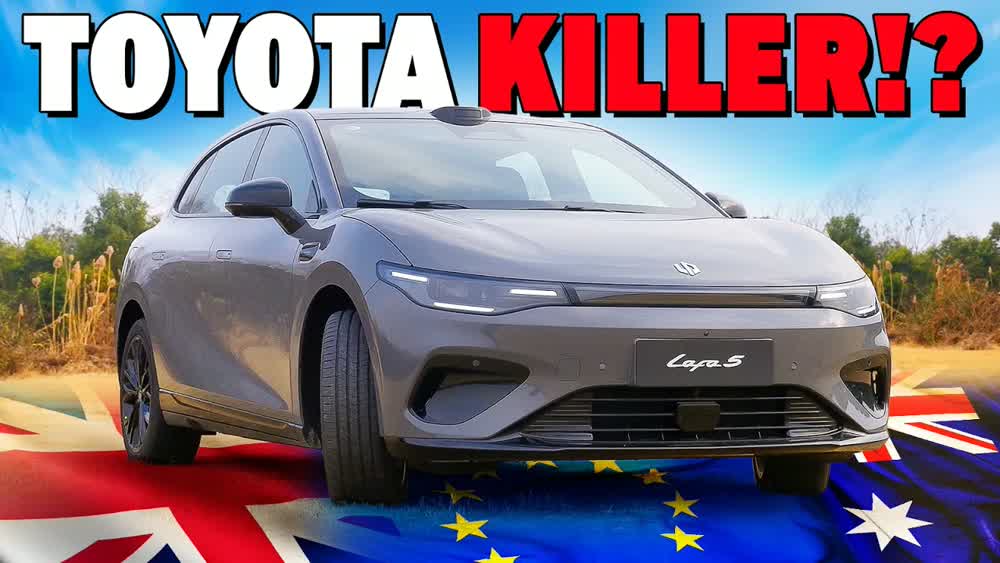
Walk through London today and you’ll share the road with BYD Seals, Geely EX5s, and MG4s that cost thousands less than their European rivals. American buyers should watch closely: the same forces pushing UK prices down are exactly what the U.S. has built a 100% tariff wall to keep out.
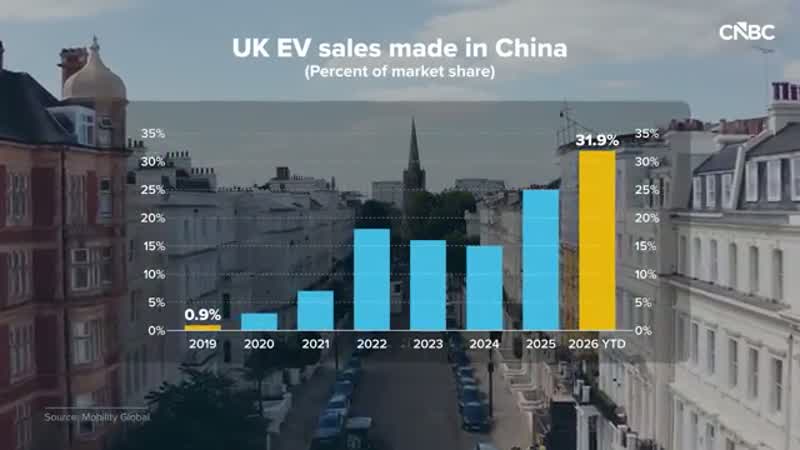
CNBC’s reporting from the UK captures a shift that would have been unthinkable a decade ago. Seven years ago, Chinese-made models held less than 1% of Britain’s electric-vehicle market. Today they account for more than 30%. The speed of that climb is not an accident – it is the result of government backing, brutal manufacturing scale, and a tariff environment in the UK that, unlike the U.S., barely flinches at the “Made in China” label. For American shoppers, the headline is not just “cars are cheap in Britain.” It is that U.S. policy has deliberately made sure those same cars stay expensive – or absent – at home.

How China took a third of the UK’s EV market in seven years
The raw numbers tell the story. Across the first half of 2026, Chinese-brand battery-electric vehicles reached an estimated 13.4% of the UK’s BEV market, with combined deliveries of roughly 72,300 units – up about 34% year over year. The bigger milestone came earlier in the year: BYD became the UK’s single largest electric-vehicle brand. According to UK industry body SMMT, BYD registered 12,754 BEVs in the first four months of 2026, clearing a 7% share and overtaking Tesla, BMW, and Volkswagen. For a brand that sold only about 1,000 cars in Britain in 2023, that is a three-year climb from obscurity to the top of the podium.
MG, owned by China’s SAIC, remains the volume leader, moving more than 41,000 units in the first half of 2026 on the back of the MG4 hatchback and aggressive finance deals. Polestar, GWM, NIO, XPeng, and Zeekr round out a roster that simply did not exist in UK showrooms a few years ago. Shoppers like Chris and Tracy Smith, longtime Jeep owners now eyeing a Geely SUV, sum up the appeal in one phrase: value for money.
The price gap you can actually see
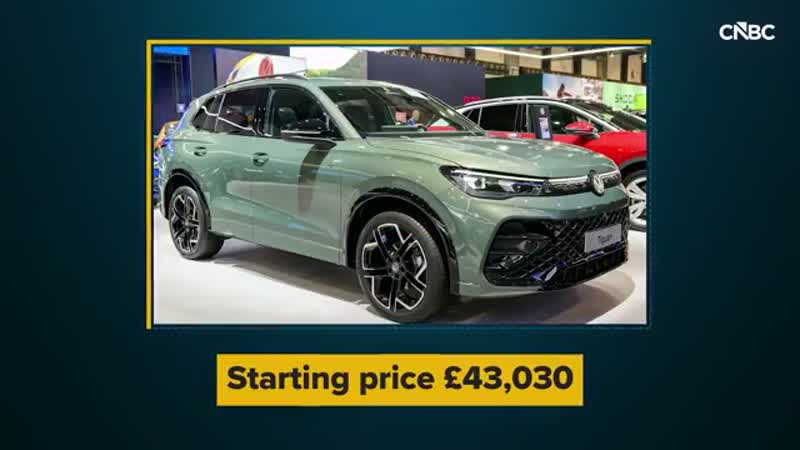
The CNBC piece puts the gap in concrete terms. A Volkswagen Tiguan plug-in hybrid, built in Germany, sells in the UK for just over £43,000. The BYD Seal U, built in China, costs almost £10,000 less for a comparable family SUV. Buyers consistently describe getting more equipment – larger screens, longer warranty terms, plusher cabins – for less cash than equivalent “top brands.” The MG4 can be had on finance from £199 a month, and BYD leans on seven-year, 100,000-mile battery coverage to win hesitant first-timers.
The clearest way to see the divergence is to line up the same class of car on each side of the Atlantic.
| Vehicle | UK starting price (2026) | U.S. starting price | U.S. tariff wall |
|---|---|---|---|
| BYD Seal U (China-built) | ~£33,000 | Not sold | 100% + 2.5% = 102.5% effective |
| MG4 (SAIC, China-built) | from £25,995 | Not sold | Same 102.5% duty |
| Tesla Model 3 | from £39,990 | from $42,490 | N/A (not Chinese-origin) |
| VW Tiguan PHEV | ~£43,000 | ~$43,000+ | N/A (built in Germany) |
Why they’re so cheap: subsidies, scale, and a 10% tariff
Three forces stack in China’s favor. First, the Chinese government has for years provided major subsidies for autos built domestically, especially EVs, which lets exporters price below comparable models abroad. Second, vertical integration – Chinese firms control much of their own battery supply chain – compresses cost in a way legacy automakers are still racing to match. Third, and most important for the UK story, the tariff is tiny. Britain applies just a 10% import duty on Chinese EVs. Its trade-remedies authority has not opened an anti-subsidy investigation, and a March 2026 consultation signaled any future UK measure would likely be capped near 15% – a fraction of the European Union’s brand-specific countervailing duties, which run from 17% on BYD to 36.3% on SAIC.
The U.S. wall: a 100% tariff that keeps them out
American buyers live in a different world. Under the Section 301 trade measures, the additional U.S. duty on Chinese-origin electric vehicles was raised from 25% to 100%, with the increase taking effect in 2024 and further modifications rolling through 2026. On top of the standard 2.5% most-favored-nation auto duty, that produces an effective rate of about 102.5%. In practice, a $30,000 Chinese EV faces a $30,000 duty on top of its price – before it ever reaches a dealer lot. Section 232 steel and aluminum measures can layer on further. The result is blunt: BYD, MG, Geely, NIO, and XPeng do not sell passenger cars in the United States.
The U.S. angle: The 100% tariff is not a price gap you can shop across – it is a wall. It protects domestic and legacy automakers from direct Chinese competition, which is exactly why an American pays more for less equipment than a British buyer gets from the same class of car.

What this means for American buyers
The practical effect is twofold. Domestically, the tariff blunts the competitive pressure that has forced European and Japanese makers to cut prices and load up on standard equipment in the UK. U.S. shoppers therefore face a thinner field and, on many mainstream EVs, higher effective prices than their British counterparts for similar feature sets. The flip side is that the policy is pushing Chinese brands to localize: BYD’s Hungarian plant is set to begin output by the end of 2026, and Mexico-based assembly could eventually route tariff-compliant vehicles toward North America. For now, though, the cheapest, best-equipped EVs on Earth remain a British spectacle Americans can only watch on YouTube.

FAQ
Why are Chinese EVs cheaper in the UK than comparable European cars?
Chinese makers benefit from domestic EV subsidies, deep battery-supply-chain integration, and massive manufacturing scale. In the UK they also face only a 10% import duty, so a BYD Seal U can undercut a German-built VW Tiguan PHEV by roughly £10,000 while offering more standard equipment.
Can I buy a BYD or MG in the United States?
Not as a new passenger car. A 100% Section 301 tariff plus base duty pushes the effective rate on Chinese-origin EVs to about 102.5%, which has kept BYD, MG, Geely, NIO, and XPeng out of the U.S. passenger market. Some Chinese-owned commercial or legacy-branded vehicles exist, but the headline brands do not sell new cars here.
Will the U.S. 100% tariff on Chinese EVs change soon?
There is no sign of relief in 2026. The rate was locked in through the Section 301 review and modified upward through 2026, with ongoing litigation focused on older tariff lists rather than the EV duty itself. Any change would require a reversal of current trade policy.
Why does the UK allow Chinese EVs but the U.S. doesn’t?
The UK has chosen not to open an anti-subsidy investigation and keeps its import duty at 10%, viewing cheap imports as a way to hit EV adoption targets. The U.S. treats Chinese EV dominance as a strategic and economic threat and uses the tariff to shield domestic industry – a fundamentally different policy calculus.
Sources:
- CNBC – “Why Chinese EVs are everywhere in the UK” (field reporting: London/Geely Maidstone, <1% to >30% UK EV share in seven years, VW Tiguan PHEV ~£43,000 vs BYD Seal U ~£10,000 less, Chinese government EV subsidies)
- SMMT UK registrations (via Made-in-China-News / 21st Century Business Herald) – H1 2026 Chinese-brand BEVs ~13.4% of UK market, 72,300 units (+34% YoY); BYD 12,754 BEVs in first 4 months 2026, >7% share, UK’s largest EV brand
- UK tariff context – 10% import duty, no TRA investigation, March 2026 consultation suggesting ~15% cap; EU countervailing duties 17% (BYD) to 36.3% (SAIC)
- U.S. Section 301 tariff schedule (USTR / ustariffrates / tariff-check / Peacock Tariff Consulting) – Chinese EV duty raised 25% to 100%, effective 2024, modified 2026; base MFN 2.5%; effective ~102.5%; a $30,000 EV incurs ~$30,000 duty
- Transcript: D:/tmp/evbatch/C1OJEx0TYKw/transcript_clean.txt