No products in the cart.
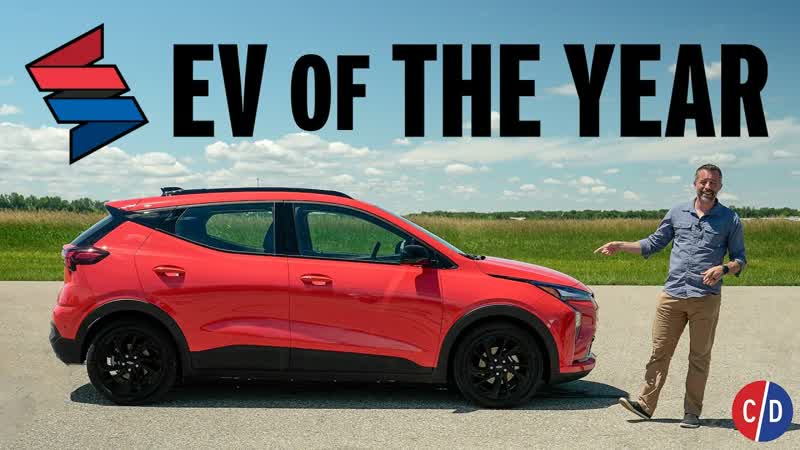
The Chevy Bolt Just Won Car and Driver’s 2026 EV of the Year — and It Costs $29,000
In a year when the average new car in America sells for almost $50,000, the vehicle that just took top EV honors is the one that quietly refuses to play the luxury game. The 2027 Chevrolet Bolt is cheap, it’s honest, and it might be the most important EV America has seen in years.
Every year Car and Driver drags the newest and most updated electric vehicles to the same stretch of road and runs them through the same battery of tests — acceleration, braking, interior room, real-world range, and charging speed. This year 25 vehicles showed up. The winner was not a $120,000 flagship with a cantilever door. It was the Chevrolet Bolt.
That result matters more than a trophy. It tells American buyers something the industry has been reluctant to admit: the electric car does not have to cost as much as a mortgage payment to be genuinely good.
Why a $29,000 car beating $60,000 cars is a big deal
The average transaction price of a new vehicle in the United States now hovers near $50,000. For a lot of households, that number is the whole problem with going electric. The Bolt’s roughly $29,000 starting price meets almost anyone’s definition of affordable — and unlike the compliance cars of a decade ago, it does not ask you to apologize for your budget.

Signal for buyers: A credible, modern EV with real-world range and usable fast charging now starts under $30,000. The “EVs are only for rich people” era is ending — at least at the entry level.
The battery is the real story: LFP changes the math
The 2027 Bolt switches to lithium iron phosphate (LFP) chemistry. That single change is why a peak charge rate of 150 kW is now nearly three times faster than the old Bolt ever managed. The pack holds 65 kWh, and filling it from 10 to 80% takes about 31 minutes.
LFP matters for American owners beyond speed. It is cheaper to build, far more durable over thousands of cycles, and — unlike the nickel-based cells in most pricier EVs — it shrugs off being charged to 100% on a regular basis. For a commuter who plugs in at home every night, that is a real quality-of-life win.
“Starting at roughly 29 grand, the Bolt effectively democratizes the modern battery electric powertrain.” — Car and Driver
The numbers that actually matter on a road trip
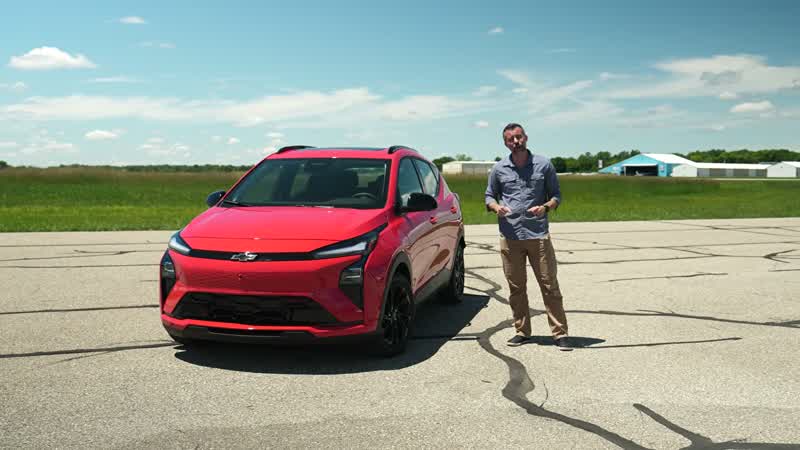
Range is where the Bolt had to prove itself. The EPA rates it at a respectable 262 miles. On Car and Driver’s 75-mph highway loop — the honest test of whether you’ll be white-knuckling the battery gauge between chargers — it returned 230 miles. That beats the Bolt EUV by 40 miles and the original Bolt by 10, and both of those took far longer to recharge.
| Model | Peak charge | 10–80% time | EPA range | Start price |
|---|---|---|---|---|
| 2027 Chevy Bolt | 150 kW | ~31 min | 262 mi | ~$29,000 |
| Nissan Leaf (closest rival) | ~100 kW | slower | ~212 mi | ~$29,000 |
| Original Bolt (1st gen) | 55 kW | much longer | 259 mi | ~$27,000 |
| Typical $50k+ crossover EV | 150–350 kW | 20–30 min | 250–330 mi | $50,000+ |
Put next to the Nissan Leaf — probably its closest competitor — the Bolt comes out ahead on charging, efficiency, and the simple fact that it borrows the longer wheelbase from the departed Bolt EUV, giving rear passengers noticeably more room. In 2026, that a generous back seat is worth celebrating tells you how far budget EVs still have to go. The Bolt just closes more of that gap than anything else at the price.

Context: America is the slow adopter, and that’s the opportunity
It is worth zooming out. While China’s NEV penetration crossed 62.92% in June 2026, the U.S. market is still stuck near single-digit EV share. A genuinely affordable, well-rounded EV like the Bolt is exactly the kind of product that moves hesitant American buyers — the people who aren’t shopping on spec-sheet prestige but on monthly payment and peace of mind.
And charging speed is no longer a luxury-only feature. At the opposite end of the spectrum, CATL’s Tekkron 2 cell demo filled in 6 minutes 48 seconds — proof that the technology curve is bending hard in favor of electrons over gallons. The Bolt’s 31 minutes is not cutting-edge, but it is perfectly usable, and it sits on the right side of the “I can grab a coffee” line.
One honest caveat
To get the well-equipped version with the nicer interior and driver assists, you’re spending closer to $35,000. That’s still well under the market average — but “about $29,000” is the headline, and the trim walk matters. Shop the configuration carefully.
Where you’ll actually charge it
None of this helps if the plugs aren’t there. The good news is that public charging keeps spreading onto everyday routes — Walmart’s EV charging network has already reached 73 sites in the U.S., planted in parking lots where you’re already shopping. For a 31-minute Bolt stop, that’s a better fit than a裸 highway plaza.

FAQ
What is LFP and why should I care?
LFP (lithium iron phosphate) is a battery chemistry that is cheaper, longer-lasting, and safer than the nickel-based cells in most premium EVs. It tolerates being charged to 100% regularly without the same long-term degradation, which makes it ideal for a daily commuter you plug in overnight.
Is 31 minutes from 10 to 80% good enough?
For road trips, yes for most people. It’s about the time it takes to use the restroom and get a coffee. It’s not as fast as a 350 kW Hyundai or a CATL demo cell, but it’s a massive improvement over the old 55 kW Bolt and perfectly competitive with cars costing far more.
How is it better than the Nissan Leaf?
The Leaf is the Bolt’s closest rival on price, but the Bolt charges faster (150 kW vs ~100 kW), returns more real-world highway range, and gains rear legroom from the longer EUV wheelbase. The Leaf remains a solid choice, but the Bolt edges it on the things owners feel daily.
When can I buy the 2027 Bolt?
Chevy positioned the 2027 Bolt as the value anchor of its EV lineup. Check with your local dealer for allocation and trim availability — and watch the option sheet, since the $35,000 figure buys the better-equipped version most people will actually want.
Sources:
- Car and Driver — 2026 EV of the Year (Chevrolet Bolt)
- Chevrolet — 2027 Bolt specifications and pricing
- EPA fuel economy ratings (2027 Chevrolet Bolt)
- Related EVCUBE coverage: China 62.92% penetration, CATL Tekkron 2, Walmart charging network