India’s electric vehicle market shattered every record in June 2026, with 31,368 electric cars sold in a single month for the first time and nearly 2 million electric two-wheelers finding buyers. The question is no longer whether India will adopt EVs, but how fast the internal combustion engine will be relegated to history.
The central insight: India’s EV market has crossed a tipping point where policy incentives, expanding model availability, and consumer acceptance are compounding into exponential growth across both four-wheelers and two-wheelers.
- Electric car sales grew 112% year-on-year, the highest growth rate among major automotive markets globally
- Electric two-wheeler penetration crossed 11%, with 1.99 million units sold in a single month
- Tata Motors alone sold more EVs in June 2026 than the entire Indian market sold in June 2024
The Numbers
June 2026 by the Data
31,368Electric cars sold in June 2026 – an all-time record for the Indian market, surpassing the previous high by over 17% month-on-month
112%Year-on-year growth in EV car sales, more than doubling from June 2025 as model availability expanded across every price segment
1.99MElectric two-wheelers sold in June, with 74% YoY growth and a penetration rate crossing 11% for the first time
38.9%Tata Motors’ dominant market share in electric cars, powered by the Punch EV which has become India’s best-selling EV model
Signal Map
Three Market Indicators
EV Adoption VelocityHigh
Combined EV penetration across cars and two-wheelers has reached critical mass. At current growth rates, EVs could account for 20% of new vehicle sales by early 2028.
Market Concentration RiskMedium
Tata and Mahindra together control nearly 63% of the EV car market. While this signals strong domestic champions, it also creates vulnerability if either stumbles on new model launches.
Two-Wheeler DiversificationHigh
Unlike cars, the two-wheeler segment shows healthy competition with six brands above 5% market share, including the remarkable rise of Grep Electric crossing 10,000 monthly sales for the first time.
Market Visuals
Key Moments from June
Deep Analysis
Reading the Market
Tata’s Unshakeable Grip
Tata Motors sold 12,223 electric cars in June, more than the combined sales of the next three OEMs. The Punch EV has emerged as the unexpected hero: a compact, value-for-money electric sedan that perfectly captures the Indian buyer’s priorities. Tata’s strategy of leveraging the ICE Punch’s popularity into an electric variant, combined with aggressive pricing under FAME II subsidies, has created a product-market fit that competitors have struggled to replicate. With 38.9% market share, Tata is approaching dominant-firm territory that typically triggers regulatory scrutiny in mature markets.
Mahindra vs. MG: The Gap Widens
Throughout 2024 and early 2025, Mahindra and MG traded places in a tight battle for second. June 2026 tells a different story: Mahindra at 7,646 units (24% share) versus MG at 5,785 units (18% share). The XUV 9S has been the catalyst, appealing to the premium SUV buyer who wants electric without compromise. MG’s challenge is that its lineup, while solid, lacks a breakout star equivalent to the XUV 9S. The Windsor and ZS EV are competent but haven’t generated the same consumer excitement.
Two-Wheeler Transformation
The two-wheeler segment tells a more competitive story. TVS leads with 24% share, Bajaj Chetak follows at 22%, and Ather holds 16% – a healthy spread. The standout narrative is Grep Electric, which smashed through the 10,000-unit ceiling for the first time with 10,933 sales. Ola Electric’s year-on-year decline of 22% is the only dark spot, suggesting that the company’s service and quality issues are taking a toll. Hero Vida crossing 10% market share for the first time signals that legacy OEMs are finally getting serious about electric two-wheelers.
Causal Chain
How India Reached This Moment
FAME II and State SubsidiesIndia’s phased manufacturing program and purchase incentives created a fertile ground, reducing the upfront cost gap between EVs and ICE vehicles by 25-30% for mass-market buyers.
Product Explosion (2024-2025)The launch of the Punch EV, XUV 9S, Maruti EVs, and a dozen new two-wheeler models gave consumers real choice. India went from 5 EV models in 2022 to over 30 by mid-2026.
Charging Infrastructure Catch-UpPublic charging stations in urban India grew 3x between 2024 and 2026. While still behind Europe, the density in top-20 cities is now sufficient to alleviate range anxiety for daily commuters.
Tipping Point: June 2026The convergence of policy, product, and infrastructure produced a record month. With 112% YoY growth, India’s EV adoption curve now resembles China’s in 2021 – the steep part of the S-curve.
Data Deep Dive
Top 10 EV Cars: May vs June 2026
| Rank | Brand | May 2026 | June 2026 | MoM Change | Market Share |
|---|
| 1 | Tata Motors | 10,865 | 12,223 | +12.5% | 38.9% |
| 2 | Mahindra | 6,500 | 7,646 | +17.6% | 24.1% |
| 3 | MG Motors | 5,266 | 5,785 | +9.8% | 18.4% |
| 4 | Maruti Suzuki | 1,663 | 1,896 | +14.0% | 6.0% |
| 5 | Win Pass | 1,277 | 1,394 | +9.1% | 4.4% |
| 6 | BY India | 749 | 860 | +14.8% | 2.7% |
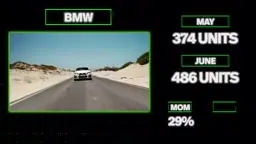
| 7 | BMW | 374 | 486 | +29.0% | 1.5% |
| 8 | Kia | 452 | 446 | -1.0% | 1.4% |
| 9 | Hyundai | 774 | 347 | -26.0% | 1.1% |
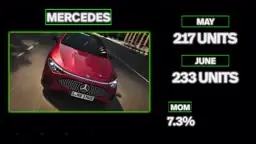
| 10 | Mercedes-Benz | 217 | 233 | +7.0% | 0.7% |
IEA Global EV Outlook 2026International Energy Agency’s annual benchmark report on global EV adoption trends, including India market analysis.
EVL Monthly Sales DashboardIndia’s leading EV sales tracking platform providing registration-level data for electric cars and two-wheelers.
FAME India Scheme DashboardGovernment of India’s Faster Adoption and Manufacturing of Electric Vehicles portal with subsidy and sales data.
Related on EVCUBE
Further Reading
FAQ
Frequently Asked Questions
Which electric car sold the most in India during June 2026?
Tata Motors was the top EV car manufacturer with 12,223 units sold in June 2026, capturing 38.9% market share. The Tata Punch EV was the best-selling individual model, having overtaken the Mahindra XUV 9S which had previously held the top spot.
How did electric two-wheelers perform in June 2026?
The electric two-wheeler segment sold 1,993,523 units in June 2026, with 74% year-on-year growth. TVS led the market with 24% share, followed by Bajaj Chetak at 22% and Ather Energy at 16%. EV penetration in the two-wheeler segment reached 11% for the first time.
Why did Hyundai’s EV sales drop significantly in June?
Hyundai’s EV sales fell 26% month-on-month to 347 units, dropping from 7th to 9th position. This appears linked to consumers delaying purchases in anticipation of the Creta EV launch, creating a holding pattern that temporarily suppressed sales of Hyundai’s existing EV lineup.
What is the outlook for India’s EV market in the second half of 2026?
With June setting a new record at 31,368 cars, the H2 2026 trajectory suggests India could cross 400,000 annual EV car sales for the first time. The two-wheeler segment is on pace for over 10 million units annually. Key factors include continued subsidy support, new model launches from Maruti and Hyundai, and expanding charging infrastructure beyond Tier 1 cities.