BMW Vehicle-to-Load Explained: What the New iX3 Changes for EV Charging, Level 2 EV Charger Owners, and Backup Power
June 11th, 2026
By EVCUBE .NET
No Comments
EVCUBE.NET analysis
BMW Vehicle-to-Load Explained: What the New iX3 Changes for EV Charging, Level 2 EV Charger Owners, and Backup Power
BMW’s how-to video is more important than it looks. It turns the new iX3 into a controlled power source for small loads, while making it clear that vehicle-to-load is not a replacement for a level 2 EV charger, a 48A EV charger, a 50A EV charger, or a public EV charging station. It is a separate tool in the EV charging stack.
Video: BMW iX3 V2L how-to3.7 kW V2L headline in BMW’s latest specsMinimum SOC reserve: 20% by defaultBest fit: e-bikes, camping, tools, laptops
What the video is really teaching
The clip is structured like a product manual, but the real message is strategic. BMW is showing that the battery can do more than refill itself. It can also power useful, low-to-medium loads in the real world without turning the car into a vague promise of future energy independence.
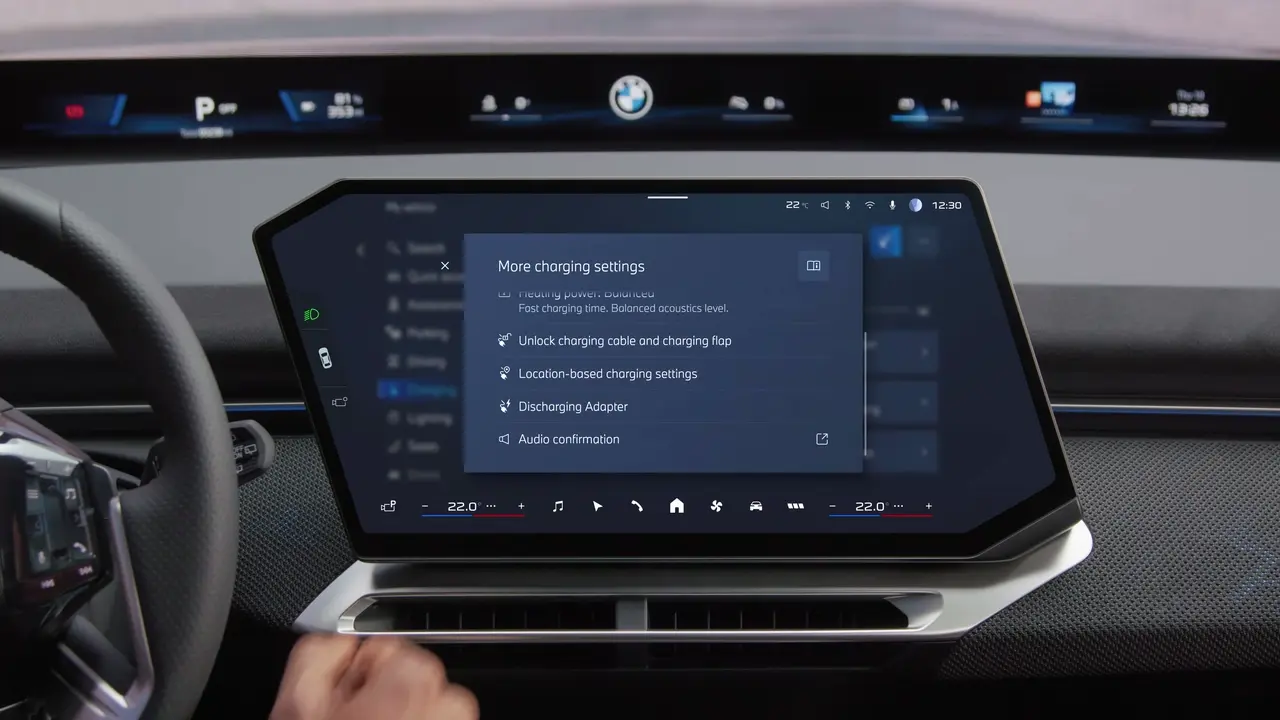
What bidirectional charging meansBMW opens with the idea that charging can go both ways. That framing matters because it moves V2L from novelty to everyday utility.
The accessory and equipment storyThe iX3 needs the AC Charging Professional option plus either the multifunction charger with discharging adapter or the standalone V2L adapter.
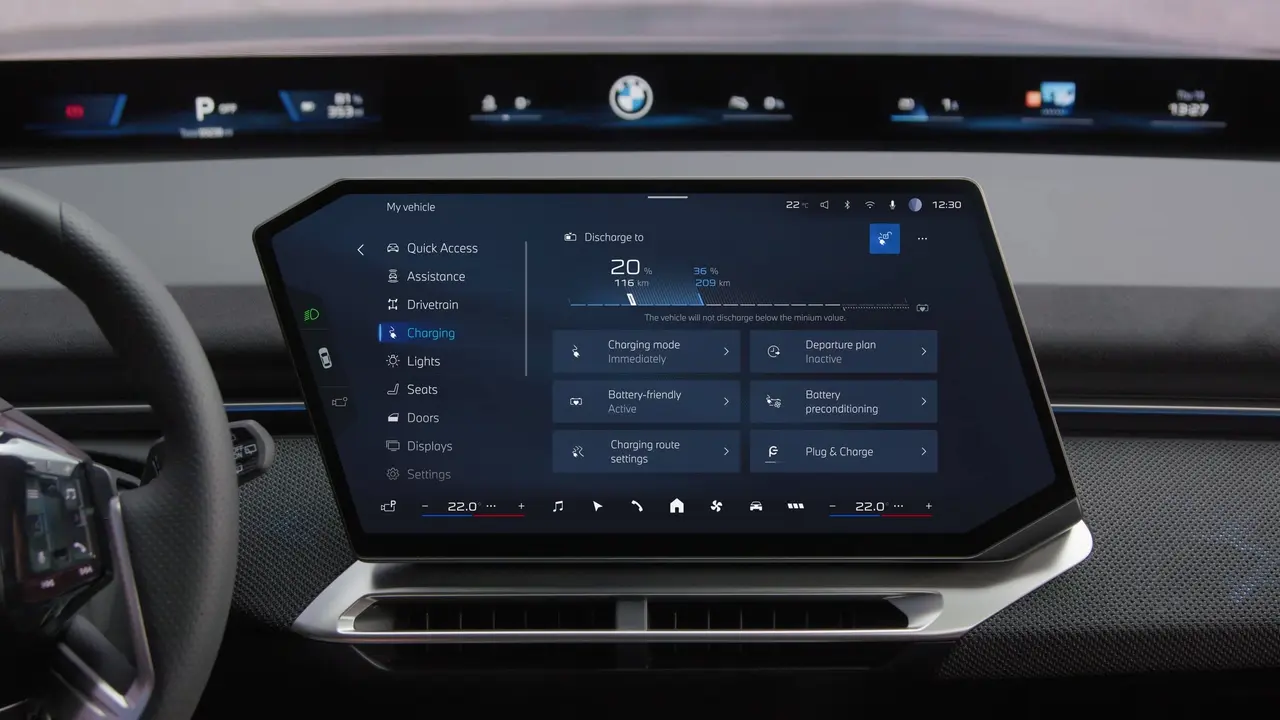
Setup, reserve, and safe shutdownBMW shows the reserve threshold, the country/voltage setup, the ready-to-discharge state, and the automatic stop logic that protects the battery.
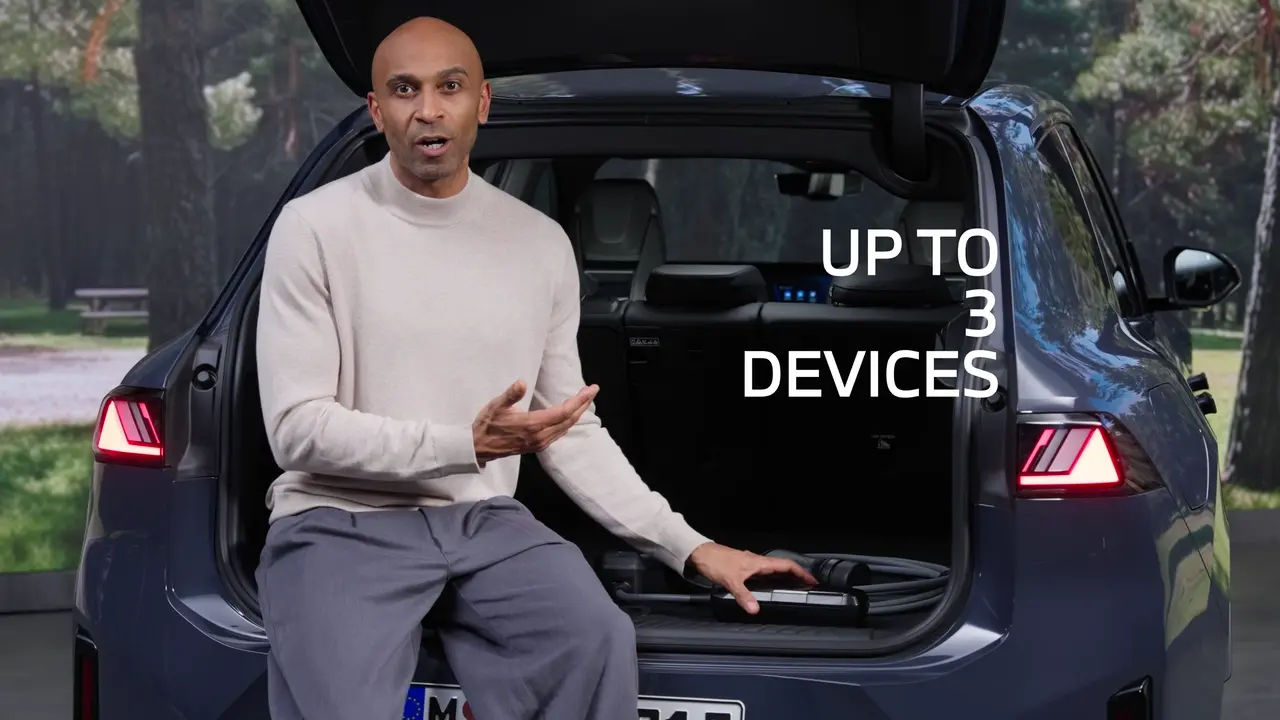
The story starts with a simple idea: the iX3 can act like a mobile power bank. That is the right mental model for V2L.This is the most useful shot in the whole video because it shows the real-world ceiling: small loads, multiple devices, and practical flexibility.The battery reserve controls are what make the feature believable. BMW is not asking owners to drain the pack blindly.Camping gear, e-bikes, and a laptop setup are exactly the kind of use cases that make V2L feel concrete instead of promotional.
Editorial fit chart: where BMW V2L makes sense
This is not a lab test. It is a quick editorial read on where the feature is strongest. The point is to show how V2L fits beside the rest of the EV charging stack, not to replace it.
Camping, e-bikes, outdoor work
Excellent
Laptop, camera, small tools
Strong
Emergency lighting or small backup loads
Useful
Whole-home backup during an outage
Limited
V2L vs level 2 EV charging vs public EV charging stations
If you are shopping for EV hardware, this is the most important distinction in the article. A level 2 EV charger, a 48A EV charger, a 50A EV charger, or a Tesla charger is built to put energy into the car. BMW’s V2L setup is built to send energy out of the car to devices.
Situation
BMW V2L
Level 2 EV charger / EV pile
What it means in practice
Need to refill the battery
Not the job
Yes
Use your home wallbox or a public EV charging station. That is what charging equipment is for.
Need power for a laptop, e-bike, or tools
Yes up to 3.7 kW
No
V2L turns the car into a mobile power source for light to moderate loads.
Need a faster home charging setup
No
Yes
A 48A EV charger or 50A EV charger makes home charging more convenient, but it does not deliver power out of the car.
Need whole-home or grid support
Not enough alone
Needs bidirectional hardware
That is where V2H/V2G wallboxes and utility programs enter the picture.
A Tesla charger is still an AC charger. It can help charge a compatible car, but it does not replace BMW’s V2L accessories or turn the car into a power outlet. Charging in and discharging out are different products.
Latest official news behind this story
BMW is not treating bidirectional charging as a one-off demo. The latest official materials show a broader rollout path, and the wider EV policy world is saying the same thing: the car battery is becoming part of the energy system.
Taken together, these sources tell the same story: V2L is the user-facing version of a larger bidirectional charging shift. The consumer value is immediate, but the strategic value is bigger than camping power.
What this means for EV owners
If you already own or plan to buy a BMW, here is the practical reading. Keep your normal EV charging setup for the battery. Then think of V2L as a second layer that becomes useful after the car is parked.
If you charge at home, a level 2 EV charger is still the backbone. BMW’s V2L does not replace a wallbox.
If you shop for a 48A EV charger or 50A EV charger, you are improving refill speed and convenience, not adding power output.
If you rely on public EV charging stations or an EV pile, use those to replenish the battery, then use V2L only when you need to power devices away from the socket.
If you want longer backup power or solar integration, look at BMW’s V2H / V2G wallbox path rather than expecting V2L to do a whole-house job.
The key editorial point is simple: BMW has made the iX3 battery more useful without overselling it. That restraint is exactly why the feature reads as serious product engineering instead of AI-style hype.
Related EVCUBE.NET reading
If you want the bigger charging picture around this feature, these EVCUBE.NET posts connect the dots from home charging to public infrastructure.
These are the questions readers actually ask when they see bidirectional charging for the first time. The answers are short because that is what works best in search and in real life.
What is BMW vehicle-to-load?
Vehicle-to-load (V2L) lets a compatible BMW use battery energy to power devices outside the car. In this video, BMW shows it as a practical tool for laptops, e-bikes, camping gear, and small tools rather than a whole-home backup system.
How much power does the BMW iX3 V2L system provide?
BMW's technical materials for the new iX3 list V2L at up to 3.7 kW in AC mode, with V2H and V2G at 11 kW in the latest bidirectional setup. Availability and exact specs vary by market.
Do I still need a level 2 EV charger at home?
Yes. A level 2 EV charger, 48A EV charger, 50A EV charger, or any other EV charging station is for putting energy into the car. V2L is for taking energy out of the car and sending it to devices.
Can I use a Tesla charger for BMW V2L?
No. A Tesla charger or any other AC charger can charge the BMW if the connector and adapter setup are compatible, but it does not replace BMW's V2L accessory path. Charging in and discharging out are different jobs.
What safety limit does BMW use before discharging?
BMW shows a default 20% minimum state of charge and says the threshold can be adjusted from 10% to 50%. That reserve protects the battery so the car still has range for the next trip.
Does the process stop automatically?
Yes. BMW says discharging continues even if you leave or lock the car, but it ends automatically after 23 hours or once the battery reaches the minimum charge you set.
Source note
This article is based on the BMW how-to video above, BMW’s official iX3 bidirectional charging materials, the BMW Group and E.ON V2G press release, the U.S. Department of Energy’s bidirectional charging guidance, and the IEA’s latest EV outlook analysis.
Discover the most attractive leasing and financing options for electric vehicles (EVs) this November 2024. Whether you’re looking to lease or finance, there are some excellent deals available that cater…