No products in the cart.
EVCUBE.NET | EV charging analysis
BYD Flash Charging Comes to the UK and Europe: What 5-Minute EV Charging Means for Level 2 EV Charger Owners
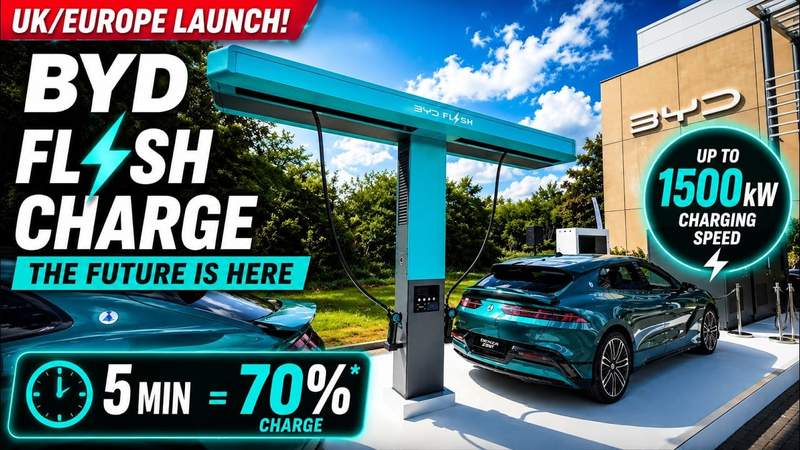
The video is a real-world test of what happens when EV charging stops being a single power number and becomes an infrastructure strategy. BYD is not only selling speed; it is trying to make flash charging feel as ordinary as a fuel stop while keeping Level 2 EV charger ownership relevant for daily life.
5 minutes: 10% to 70%Up to 1,500 kW at the stationStill a CCS story, not a proprietary wall garden
What the video really says
BYD?s message is more subtle than the headline numbers suggest. The system shown in the video is not magic 1,500 kW charging for every EV. It is a battery-buffered charging network that can support very high output, while the vehicle itself still decides the real speed. That distinction matters because it separates station design from car design.
For most drivers, the practical takeaway is simple: a 48A EV charger or 50A EV charger at home still solves the daily problem. Flash charging is for the road-trip problem. Those are different jobs, and good EV strategy needs both.
Editor?s note: the most interesting part of this rollout is not the power number alone. It is the idea that BYD can place high-power sites in existing locations without asking every site to become a full grid-upgrade project on day one.
Three things the video makes clear
- BYD wants the charger to feel like a short refuel stop, not a long wait.
- The station can be rated around 1,500 kW, but supported vehicles still top out at their own limits.
- Preconditioning, battery thermal design, and network placement matter as much as raw charger power.
Key numbers at a glance
Claim in the video
5 min
BYD?s flash charging pitch is about 10% to 70% in roughly five minutes for supported cars.
Station ceiling
1,500 kW
The charger can be rated far above most vehicles, but the car still sets the actual limit.
Why it matters
Less waiting
This is an infrastructure story that keeps home Level 2 charging relevant, not obsolete.
Video frames that carry the story
The first frame is used as the featured image. The rest are chosen because they show different parts of the argument: rollout, hardware, battery safety, and the first European launch environment.
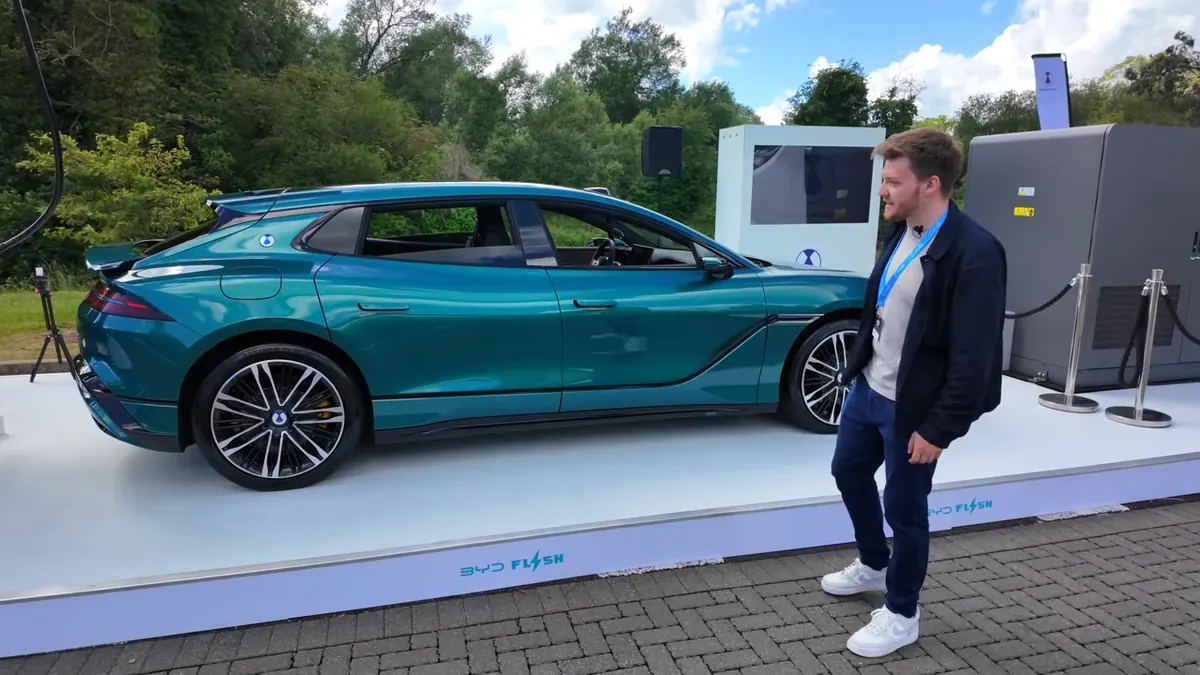
Opening frame from the BYD flash charging video.
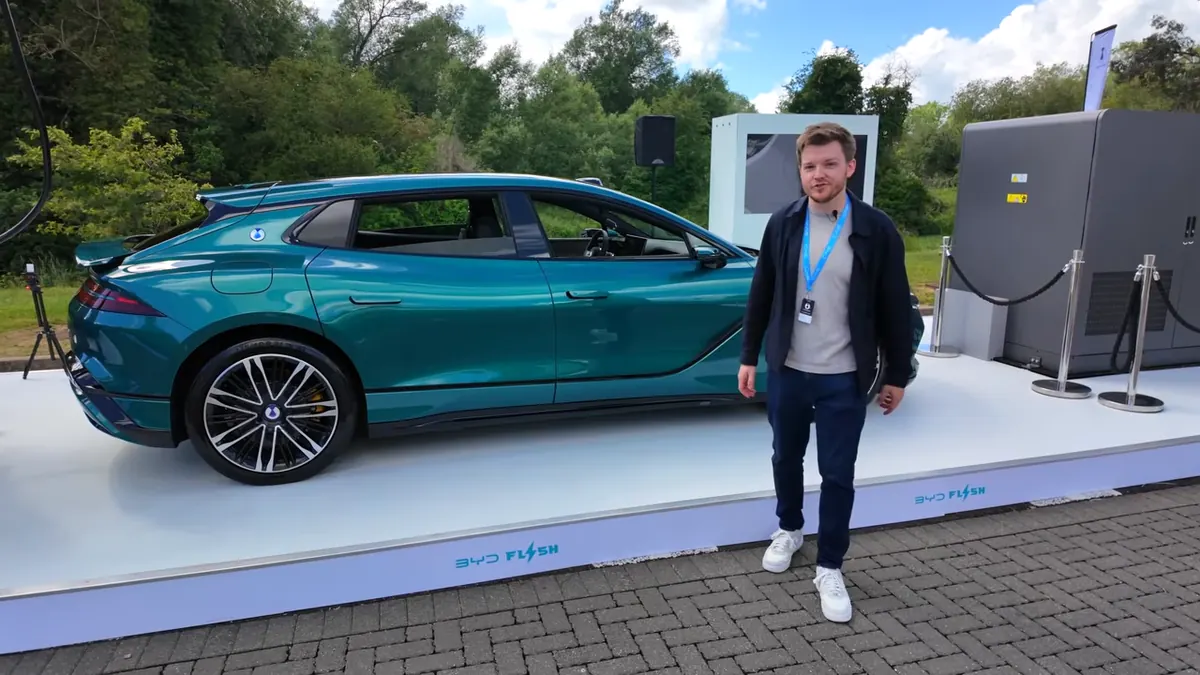
The rollout story is a network story, not just a car story.
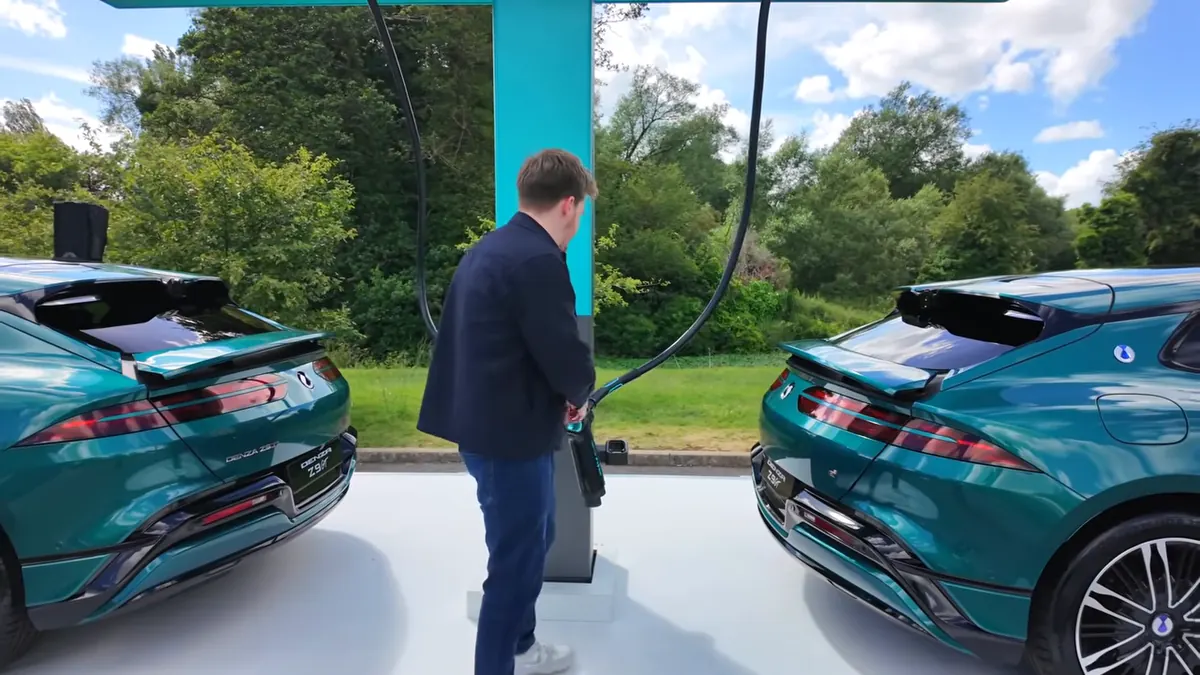
The number is huge, but the car still sets the final ceiling.
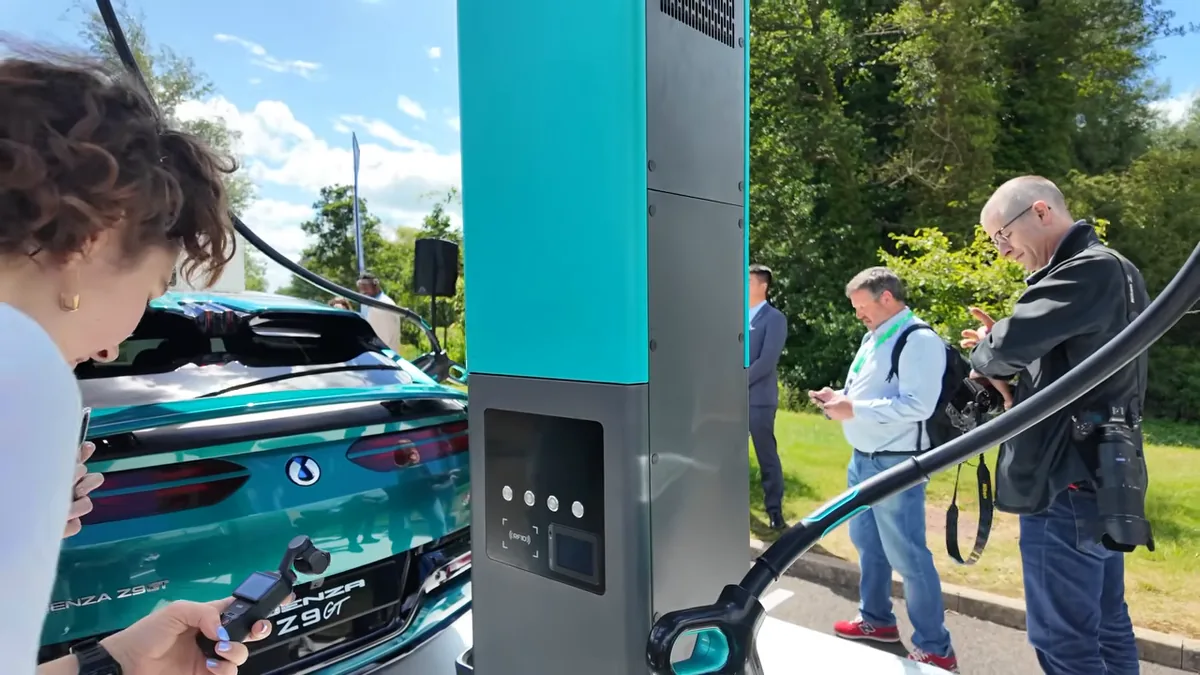
Battery health questions matter as much as charging speed.
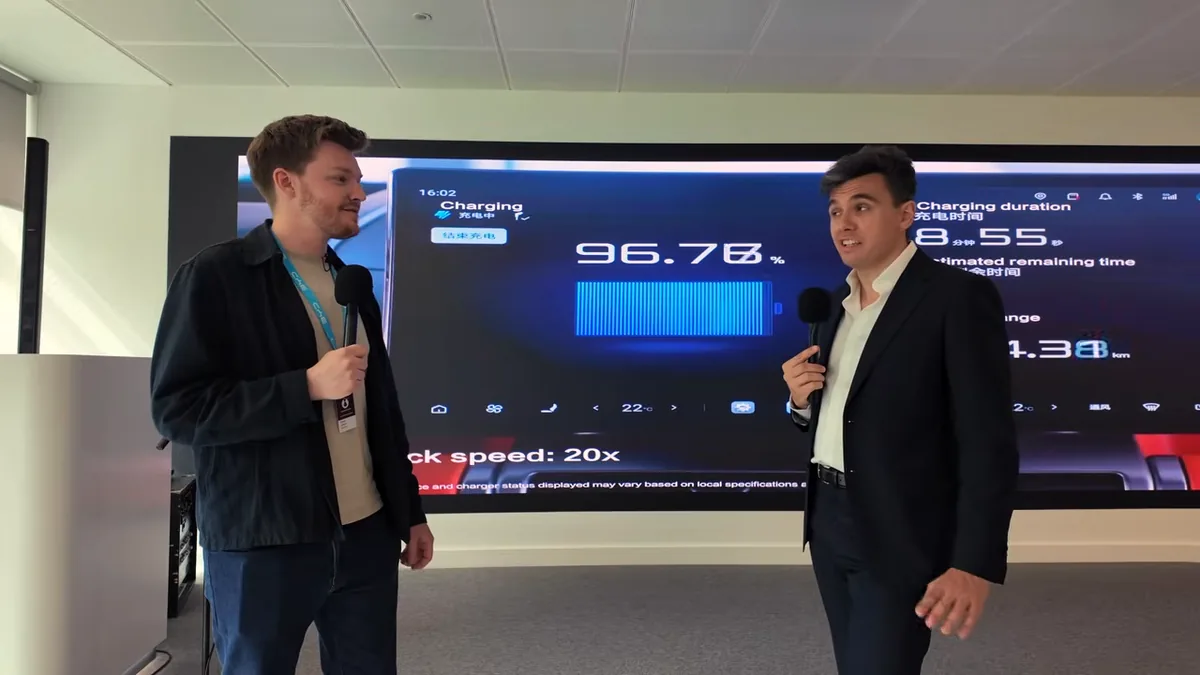
Europe rollout begins with public demo locations.
How fast is fast, really?
One reason this story lands is that it creates a clean comparison between the everyday charger in your garage and the public network on the road. The chart below is intentionally simple: it shows the typical time someone waits, not just the headline power rating.
Level 2 EV charger
48A / 50A home charging
48A / 50A home charging
8-12h
Typical public DC fast charging
Common road-trip top-up
Common road-trip top-up
25-30m
BYD flash charging
Supported vehicle, supported site
Supported vehicle, supported site
5-9m
| Charging option | Typical use case | What matters most | Bottom line |
|---|---|---|---|
| Level 2 EV charger 48A / 50A | Overnight home charging, daily commuting, predictable routines | Convenience and low stress | Still the best answer for most owners |
| Public DC fast charging 50-250 kW | Road trips, quick top-ups, mixed public infrastructure | Availability and reliability | Useful, but still a wait |
| BYD flash charging Up to 1,500 kW station rating | Future corridor hubs, flagship sites, high-traffic stops | Vehicle limit, battery thermal design, site deployment | Infrastructure shift, not just a spec race |
| Tesla charger Home or public network | Tesla owners and CCS-compatible public charging users | Compatibility, access, route planning | Still part of the same bigger charging mix |
What this means for EV owners
Home charging still wins the daily battle
For most households, the smartest setup is still a good Level 2 EV charger. A 48A EV charger or 50A EV charger is enough to make overnight charging feel invisible. That is why flash charging does not replace home charging; it complements it.
Road-trip charging gets a new ceiling
What BYD is really testing is whether charging stops can become short and repeatable enough to feel normal. If the rollout scales, the practical conversation shifts from ?Can I find a charger?? to ?How quickly can the site and car both keep up??
Battery health questions are valid
The video spends time on preconditioning, thermal management, and safety testing for a reason. Fast charging only works as a long-term system if battery chemistry, software, and cooling are treated as one design problem.
Infrastructure matters as much as vehicles
Even if cars can charge faster, public rollout still depends on site planning, grid support, and customer flow. BYD?s battery-buffered approach is interesting because it tries to soften one of the biggest blockers: the site?s peak power requirement.
Latest news and official sources
To keep the analysis grounded, the story should be read against current market and policy data. The video gives the engineering narrative. These sources explain why the rollout matters now.
- BYD?s official flash-charging announcement for Europe
- UK government electric vehicle charging infrastructure statistics collection
- IEA Global EV Outlook 2026
BYD?s flash-charging rollout becomes a European story.
The company positions flash charging as a network model, not just a single flagship car feature.
The company positions flash charging as a network model, not just a single flagship car feature.
The UK and Europe get named in the rollout plan.
The video says BYD is aiming for 300 UK sites and several thousand across Europe.
The video says BYD is aiming for 300 UK sites and several thousand across Europe.
The public-charger picture keeps growing.
The UK government?s charging infrastructure statistics collection continues to update, while the IEA?s Global EV Outlook 2026 shows demand keeps rising.
The UK government?s charging infrastructure statistics collection continues to update, while the IEA?s Global EV Outlook 2026 shows demand keeps rising.
Related reading on EVCUBE.NET
These internal links help readers move from the BYD story into practical charging advice on EVCUBE.NET.
FAQ
These questions reflect the search intent behind EV charging comparisons, home charging decisions, and battery-health concerns.
Will BYD Flash Charging work with every EV?
Not every EV will see the same speed, but the charger is designed to work as a CCS system, so the vehicle?s onboard charging limit becomes the real ceiling. In other words, the station may be rated far above most cars, yet the car still decides the final rate.
Do I still need a Level 2 EV charger at home?
Yes. For most owners, a Level 2 EV charger is still the best daily solution because it is cheaper, simpler, and lets you wake up with a full battery. Flash charging is a road-trip and corridor-network tool, not a replacement for overnight home charging.
Is a 48A EV charger enough for daily charging?
For many drivers, yes. A 48A EV charger usually delivers roughly 11.5 kW at home, which is more than enough for overnight charging, commuting, and normal weekly driving. A 50A EV charger serves a similar purpose in the same Level 2 category.
Does Tesla charging change this conclusion?
No. A Tesla charger or Supercharger helps on the road, but it does not remove the need for a good home charger. The basic rule is still the same: home Level 2 charging for daily life, public DC fast charging for longer trips, and flash charging for the next generation of quick stops.
Is flash charging bad for battery health?
Fast charging always raises battery-health questions, which is why the video spends time on preconditioning and BYD?s safety claims. The right takeaway is not that fast charging is harmless; it is that pack design, thermal management, and real-world use all matter more than a headline power number.