While Washington slaps a 100% tariff on Chinese EVs and Brussels builds its own wall, China just quietly took over Brazil’s car industry — and the exact same playbook is now pointed at a market near you.
The door the West left open
In January 2021, Ford shut every factory it owned in Brazil — ending more than a century of building cars there and erasing roughly 5,000 direct jobs. Mercedes-Benz mothballed its Brazilian passenger-car plant in Iracemápolis. Renault, Nissan, and Volkswagen all cut thousands more. The Western and Japanese auto establishment looked like it was retreating from one of the largest car markets on Earth.
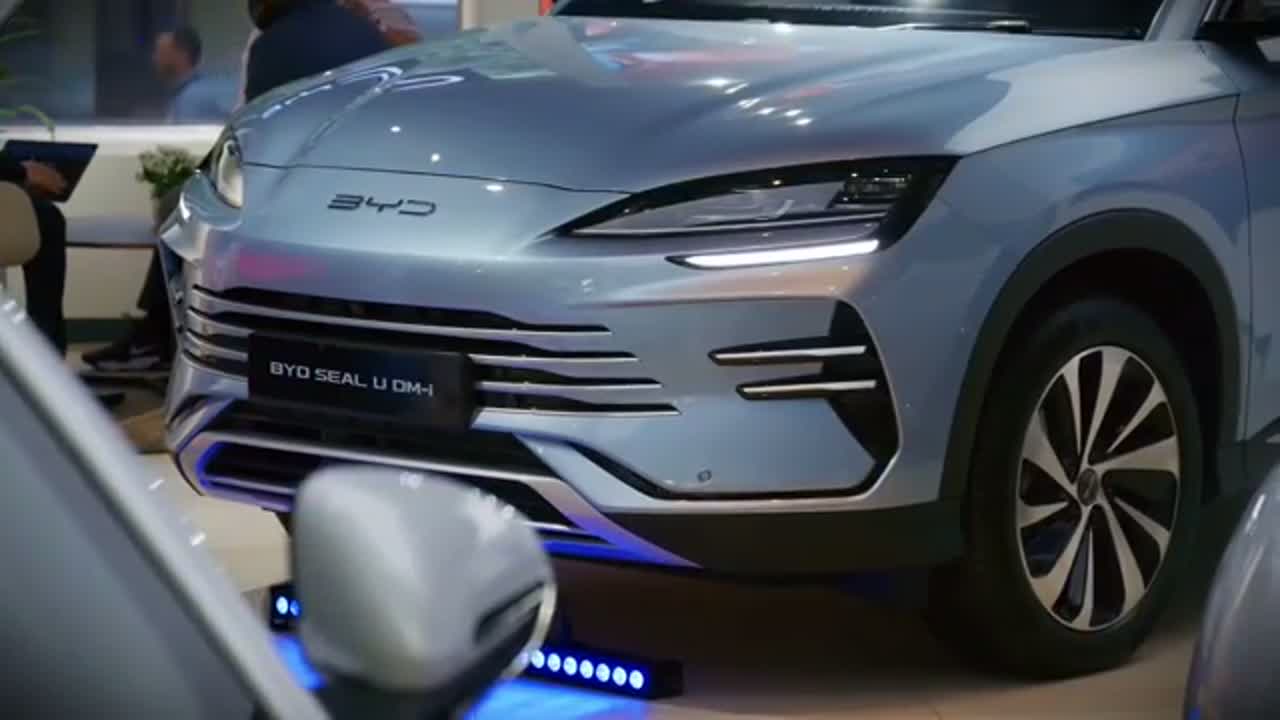
Then something the headlines missed: the Chinese companies almost nobody in the West had heard of walked straight into the exact buildings the old guard abandoned. Chery took over a plant in Jacareí. Great Wall Motor bought the old Mercedes site in Iracemápolis. BYD bought Ford’s Camaçari complex — the same place that built the EcoSport and the Ka for two decades.

Drive into that Camaçari complex today and the road still carries the old name: Henry Ford Avenue. The signage never changed. It didn’t need to. The building underneath it did. A road named after an American company now leads to a factory Ford doesn’t own.
Chinese brand share of Brazil’s electrified vehicle market (2025, Jan–Sep)
The numbers behind the shift
This isn’t a real-estate story. It’s a sales story — and the numbers are where it stops being a curiosity and starts being a problem for every legacy automaker still holding on in Latin America.
Chinese brands accounted for 89% of all EVs sold in Brazil in the first half of 2024, up from 74% a year earlier. By 2025, Chinese makers held about 60% of the entire electrified-vehicle market (BEV + PHEV + HEV + MHEV) through September, and a staggering 85% of pure battery-electric (BEV) sales. Total EV and hybrid sales hit 177,000 units in 2024 — a 90% jump year over year — and Chinese brands captured almost all of that growth.
Brazil imported roughly 138,000 electric and hybrid vehicles from China alone in 2024 — about 100,000 more than the year before. And the pipeline is accelerating: in the first quarter of 2026, Chinese vehicle exports to Brazil nearly tripled to $2.16 billion, and China supplied 65.6% of every car Brazil imported, ahead of traditional supplier Argentina at 11.3%.
Who is winning, by the units
| Brand | 2025 Brazil sales | YoY | Share | Overall rank |
|---|
| BYD | 111,683 | +50.7% | 5.6% | 7th |
| Chery (CAOA) | 71,433 | — | 3.6% | 11th |
| Great Wall Motor | 41,504 | — | 2.1% | — |
| Top three Chinese brands alone = more than 80% of all Chinese-brand sales in Brazil. |
BYD’s Dolphin Mini — a compact hatchback built at the former Ford plant — became the cheapest EV in Brazil at R$115,800 (about $22,000), and local production pushed that as low as R$98,590 for taxi and PCD buyers. For a middle-class family in São Paulo, that’s a real car they can actually afford, often for the first time.
The tariff wall nobody guarded
Here is the part that should worry Detroit and Wolfsburg more than any single sales figure. The West responded to Chinese EVs with tariffs. Brazil did too — but the result flipped the intended outcome.
| Market | Tariff on Chinese EVs | Effect |
|---|
| United States | 100% (since Aug 2024) | Door effectively closed to Chinese EVs |
| European Union | ~27% (BYD) up to ~45% (SAIC + 10% baseline) | Heavy wall, price promises negotiated |
| Brazil | 0% → phased to 35% by July 2026 (CBU); CKD 14% then 35% in 2027 | Tariff pushed Chinese makers to build locally |
Brazil began phasing tariffs back in January 2024 — 10% on BEVs and 15% on plug-in hybrids at first, stepping up every six months toward a full 35%. The stated goal: protect domestic manufacturing and force foreign brands to build inside Brazil instead of shipping finished cars across the ocean.
But the policy meant to slow Chinese imports instead sped up Chinese factories on Brazilian soil. Building inside Brazil sidesteps the tariff almost entirely. So BYD poured roughly $1 billion into the old Ford site at Camaçari (capacity climbing toward 600,000 units a year and as many as 20,000 jobs), and Great Wall inaugurated the old Mercedes plant at Iracemápolis in August 2025 — with President Lula personally in attendance.
“Whoever wants to leave, leave. Whoever wants to come, we welcome you with open arms.” — Luiz Inácio Lula da Silva, at the Great Wall opening
What it signals for the rest of the world
Brazil is not unique. It’s early. The same pattern — tariff walls forcing a foreign maker to localize, a legacy Western competitor deciding the market isn’t worth defending, and a well-capitalized Chinese company stepping into the exact space left behind — is now playing out across Southeast Asia, parts of Africa, and pieces of Europe itself.
The US market, walled off at 100%, won’t see BYD showrooms tomorrow. But the industrial logic travels: Chinese automakers are converting export bases into local manufacturing wherever the door is left open. Geely formed a joint venture with Renault for Brazil in June 2025. GWM is already in talks for a second Brazilian plant worth around $2 billion. Every public signal points to the same long-term bet — that Brazil is not just a market to sell into, but a manufacturing and export base for all of Latin America.
The West built the tariff wall and forgot to guard the door. Brazil simply got there first — loudly enough that the pattern is now visible, quietly enough that most people outside the auto industry never noticed it happening at all.
BYD share of Chinese-branded electrified sales in Brazil (2025)
Was the Chinese takeover of Brazil’s auto industry clean?
Not entirely. In December 2024, Brazilian labor authorities raided BYD’s Camaçari construction site and rescued 163 Chinese nationals whom inspectors said were living and working under slavery-like conditions. BYD denied wrongdoing and framed the allegations as an attempt to smear Chinese brands, but the incident delayed the plant’s timeline and became a genuine point of tension. It’s a reminder that this shift has been contested and occasionally messy — not a tidy, universally welcomed transition.
Can legacy automakers like Volkswagen, Toyota, and Stellantis fight back?
Yes, and they’re not leaving. Those three still run major Brazilian operations, employ tens of thousands, and sell millions of vehicles a year. But the ground has permanently shifted: the competitor across from them in Camaçari and Iracemápolis didn’t exist in any meaningful way a decade ago, and it isn’t going anywhere. Tariffs climbing toward 35% in 2026 may slow imported Chinese vehicles even as locally-owned Chinese factories keep ramping up.
The takeaway for US buyers
You won’t be buying a BYD off a lot in Ohio this year — the 100% tariff sees to that. But the same cost and scale advantages reshaping Brazil are why Chinese EVs are the cheapest options in market after market, and why the global green-transition supply chain is consolidating fast. The question isn’t whether Chinese automakers can build cars the world wants. It’s whether the legacy giants can claw back ground once these Brazilian factories hit full capacity — or whether that window has already closed.

Related reading on EVCUBE