Battery technology is the single most important determinant of EV adoption speed. Energy density determines range and cost. Charging speed determines convenience. Operating temperature range determines geographic viability. CATL, the company that manufactures nearly 40% of the world EV batteries, demonstrated at the Beijing Motor Show 2026 that it is advancing on all three fronts simultaneously. The Jilin Condensed Battery, the 4-minute charging cell, and the sodium-ion chemistry each address a different barrier to adoption, and their combined effect could accelerate the EV transition by 3-5 years.
The 930-Mile Battery: How It Works and Why It Matters
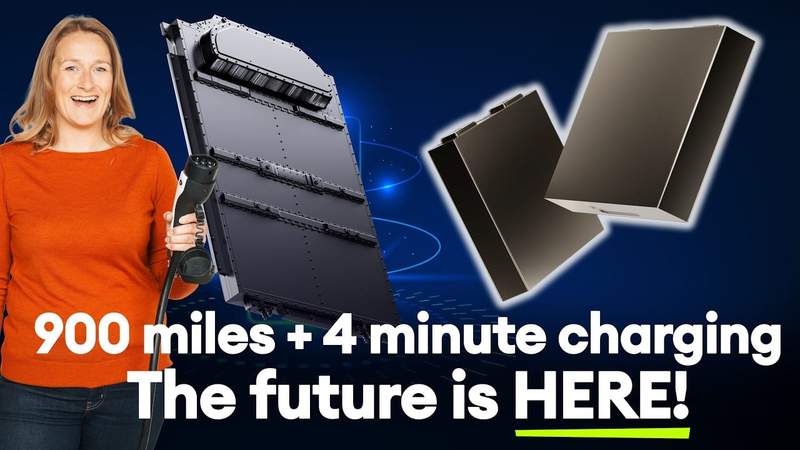
CATL Jilin Condensed Battery achieves approximately 930 miles (1,500 km) of range – roughly three times the current EV average. To understand the significance, we need to examine the relationship between battery capacity, energy density, and vehicle weight.
Current production EV batteries range from 240-260 Wh/kg at the pack level. A 100 kWh pack providing ~300 miles of range weighs approximately 400 kg (880 lbs). To double the range to 600 miles while keeping the same battery weight requires doubling energy density to ~500 Wh/kg. CATL claims the Jilin Condensed technology achieves significant improvements without fundamentally changing the cell chemistry – rather, it increases the active material density within the existing form factor through what the company calls concentrated electrolyte engineering.
The practical implications are profound. A 930-mile range eliminates range anxiety as a consideration for virtually all driving scenarios. The average American drives approximately 13,500 miles per year, or 260 miles per week. A vehicle with 930 miles of range would require charging only once every 3-4 weeks for the average driver. Even accounting for the EPA adjustment factor (typically 0.7x of unadjusted), a 650-mile real-world range still means charging roughly once every 2.5 weeks.
930 milesCATL Jilin range – 3.1x the current EV average. Typical driver charges once every 3-4 weeks.
However, the 930-mile battery is not a universal solution. High energy density typically comes with trade-offs in charging speed and cycle life. The Jilin battery cells are optimized for high energy density, making them ideal for long-range passenger vehicles where the owner charges at home overnight. For applications where charging speed matters more than range – such as highway rest stops or commercial fleets – a different cell chemistry is more appropriate.
| Chemistry | Energy Density | Best Use Case | Expected Timeline |
|---|
| Jilin Condensed | ~500 Wh/kg (est.) | Long-range passenger EVs | 2027-2028 |
| Ultra-Fast Charge | ~280 Wh/kg | Commercial fleets, highway charging | 2026-2027 |
| Sodium-Ion | ~160 Wh/kg | Cold climate, entry-level, storage | Now-2027 |
| Current LFP | ~210 Wh/kg | Mid-range passenger EVs | Current |
Four-Minute Charging: The Charging Speed Breakthrough
The 4-minute 10-80% charging battery is arguably more transformative than the 930-mile range battery. Here is why: range anxiety diminishes rapidly once range exceeds 250 miles. Most consumers realize they rarely drive more than 200 miles in a day. Charging anxiety – the fear that when you do need to charge, it will take too long – becomes the dominant psychological barrier once range anxiety is addressed.
A 4-minute 10-80% charge is faster than filling a gasoline tank. The average gas station visit takes 5-8 minutes including payment. A charging stop that is objectively faster than refueling eliminates the last practical advantage of internal combustion vehicles. This is the real endgame for EV adoption.
<4 minutes10-80% charge time – faster than refueling gasoline. The last practical advantage of ICE vehicles eliminated.
The technical challenge is managing heat. Charging at rates above 4C (where C is the battery capacity in amp-hours) generates enormous heat within the cells. CATL has developed internal cell cooling channels that circulate dielectric fluid directly through the cell stack, removing heat 5x more effectively than conventional side-cooling approaches. The cells are also designed with thicker current collectors and lower internal resistance to reduce heat generation at the source.
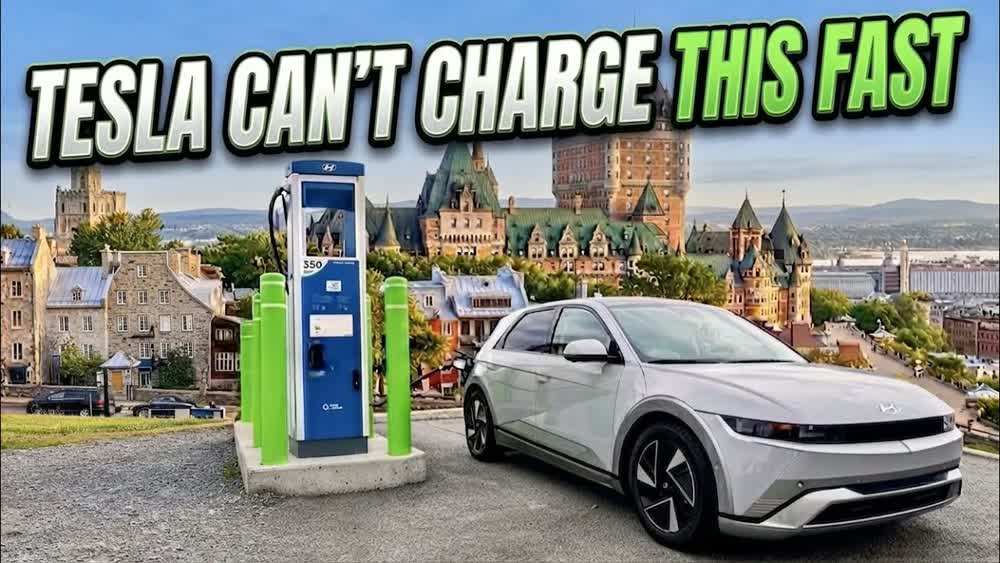
For context, current 800V architecture vehicles like the Hyundai Ioniq 6 peak at approximately 2.4C charging rate (18 minutes 10-80% on a 350 kW charger). CATL new cells appear to operate at approximately 12-15C peak charging rate, representing a 5x improvement in charge acceptance. This requires charging infrastructure capable of delivering sustained power above 500 kW – beyond the capability of most current charging stations, which max out at 350 kW.
| Technology | 10-80% | C-Rate | Required Charger | Miles/min Added |
|---|
| CATL Ultra-Fast | <4 min | ~12-15C | 500 kW+ | ~65 mi |
| Hyundai E-GMP | 18 min | ~2.4C | 350 kW | ~13 mi |
| Tesla V4 | ~25 min | ~1.8C | 350 kW | ~12 mi |
| 400V Standard | ~35 min | ~1.3C | 150 kW | ~6 mi |
Sodium-Ion: The Cold-Climate Solution
Sodium-ion batteries address one of the most stubborn problems in EV adoption: cold-weather performance. Conventional lithium-ion batteries lose 30-40% of their range in freezing conditions and charge very slowly because lithium electrolyte viscosity increases at low temperatures, impeding ion transport.
Sodium ions are larger than lithium ions, which means sodium-ion cells have lower energy density at room temperature. However, sodium-based electrolytes maintain ionic conductivity much better at low temperatures. CATL sodium-ion cells achieve rapid charging at temperatures as low as -50C (-58F), a temperature at which conventional lithium-ion cells cannot function at all.
The cost advantage is equally important. Sodium is abundant and cheap – approximately $3/kg compared to $15-20/kg for lithium carbonate. This makes sodium-ion cells 20-30% cheaper per kWh than LFP lithium-ion cells, even after accounting for the lower energy density. For entry-level EVs where range requirements are modest (150-200 miles) and cold-weather performance is essential, sodium-ion could be the enabling technology for mass adoption in Canada, Scandinavia, Russia, and the northern US.
Battery Swap: 90 Seconds
CATL battery swap system replaces a depleted pack in approximately 90 seconds. While Nio has been the primary proponent of battery swap in China, CATL scale and its relationships with multiple automakers could significantly expand swap adoption. The key metric is not the swap time itself, but the total downtime: 90 seconds is competitive with a gas station visit and dramatically better than even the fastest charging.
Battery swap economics work best for commercial fleets, taxis, and ride-hailing vehicles where every minute of downtime has a direct revenue impact. For personal vehicles that charge at home overnight, swap adds unnecessary complexity. CATL is positioning swap as one option in a diversified battery strategy rather than a universal solution.
Strategic Implications
CATL technology stack reveals a deliberate strategy: different batteries for different applications. This approach recognizes that the EV market is not monolithic. A delivery van operating in Toronto winter needs different battery characteristics than a luxury sedan in Los Angeles or a taxi fleet in Shanghai. By offering a menu of chemistries optimized for different use cases, CATL enables automakers to select the right cell for each vehicle program rather than compromising on a single chemistry.
The competitive pressure this places on other battery manufacturers – LG Energy Solution, Samsung SDI, Panasonic, BYD FinDreams – is enormous. The company that can offer the widest range of high-performance chemistries at competitive prices will win the dominant market share in what is projected to be a $400 billion annual market by 2035.
FAQ
How does the Jilin Condensed battery achieve 930 miles?
Through condensed electrolyte technology that increases active material density within the cell, achieving significantly higher energy density (~500 Wh/kg estimated) than conventional lithium-ion cells (~260 Wh/kg).
What charging infrastructure is needed for 4-minute charging?
Chargers must deliver sustained power above 500 kW with advanced liquid cooling. Most current 350 kW stations cannot support these charge rates, requiring infrastructure upgrades.
Can sodium-ion batteries be used in warm climates?
Yes, but their lower energy density means shorter range for the same battery size. They work best in cold climates where lithium-ion performance degrades, or in entry-level vehicles where cost is the primary concern.
How does CATL battery strategy differ from competitors?
CATL offers multiple chemistries optimized for different use cases (range, charging speed, cold weather, swap) rather than a one-size-fits-all approach. This allows automakers to select the right cell for each vehicle program.
When will these batteries reach production vehicles?
Ultra-fast charging cells expected 2026-2027. Jilin Condensed in high-end European vehicles 2027-2028. Sodium-ion already in early production for Chinese domestic market entry-level EVs.
Sources: CATL press materials Beijing Motor Show 2026, SNE Research global battery market share Q1 2026, IEEE Spectrum battery chemistry analysis, BloombergNEF battery price survey. Video analysis from 900 miles and FOUR minute charging – the future is HERE (YouTube).