Walmart’s EV Charging Bet Is Quietly Reshaping Road-Trip America
August 10th, 2026
By EVCUBE .NET
No Comments
Walmart’s EV Charging Bet Is Quietly Reshaping Road-Trip America
Charging Infrastructure · Deep Dive
Walmart’s EV Charging Bet Is Quietly Reshaping Road-Trip America
Everyone watches Tesla’s Supercharger count. But the most consequential US charging buildout of 2026 may be hiding in plain sight—in the parking lots of America’s largest retailer. Walmart just crossed 100 sites and 800-plus stalls, and the numbers say this is no side experiment.
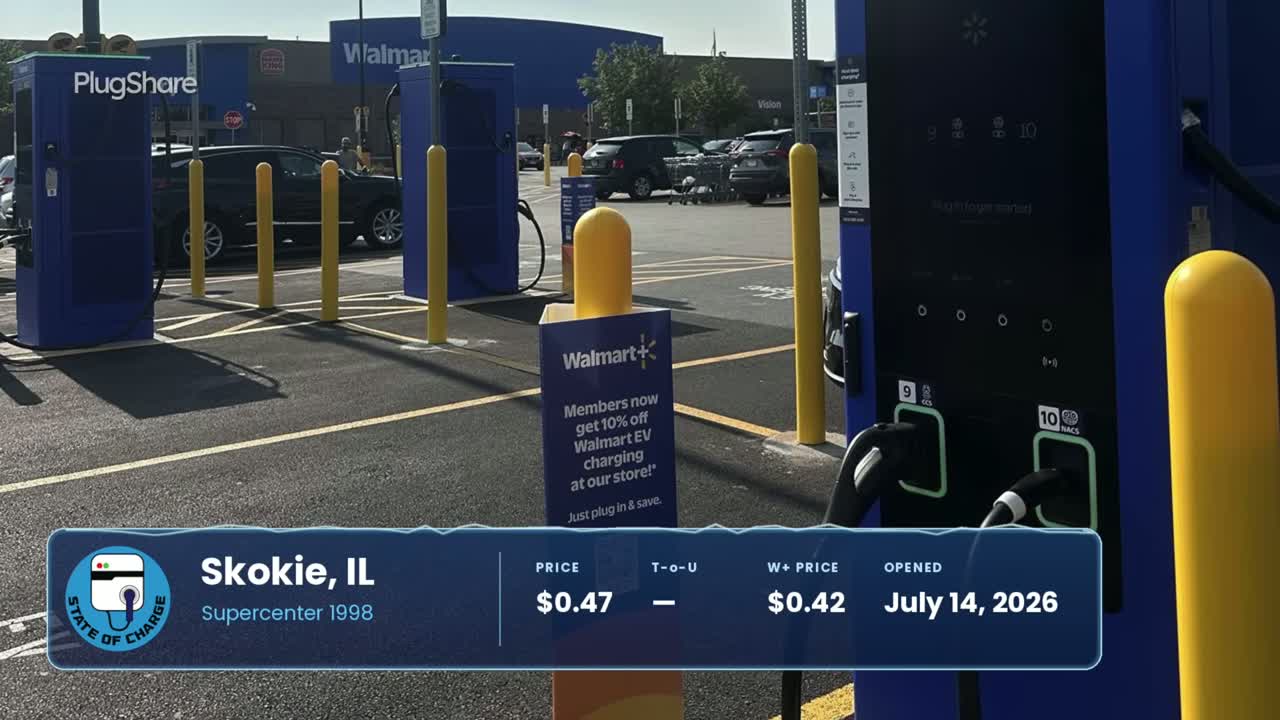
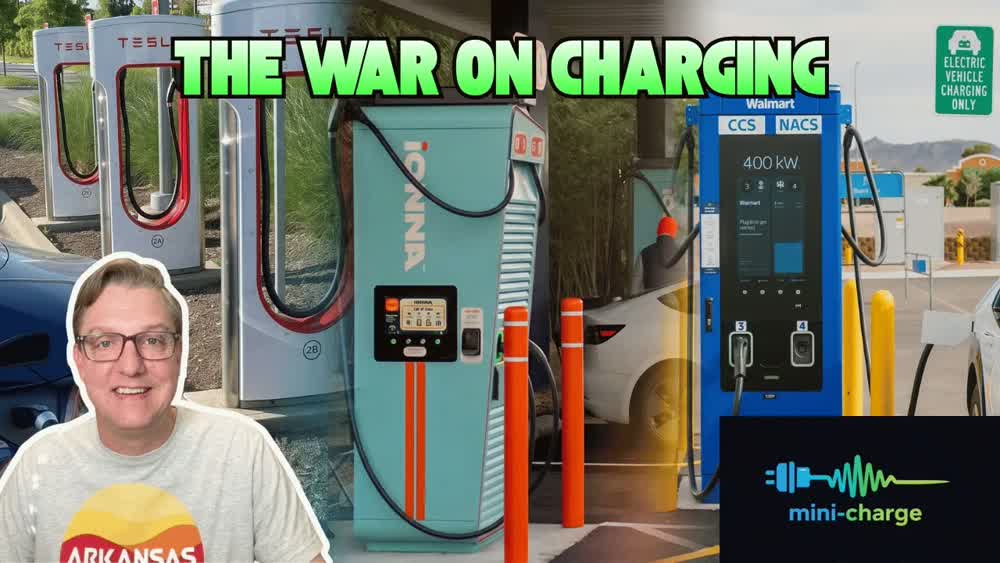
Walmart’s parking-lot chargers pair 400 kW hardware with the foot traffic of 5,200+ US stores.
From 73 Sites to 100+ in a Single Month
At the start of July 2026, Walmart’s network stood at 73 sites and 612 stalls. By August 5 it had blown past 100 sites and 838 stalls—a roughly 37% jump in stalls in about five weeks. That pace matters more than the absolute count, because it tells you the retailer is treating charging as a core traffic engine, not a greenwashing line item.
The buildout is dense by design. With an average of 8.4 stalls per site, a single Walmart stop is a genuine charging destination, not a lonely two-plug afterthought. And the reliability signal is the part competitors should fear: the network is reporting 99% uptime, a figure most third-party networks still dream about.
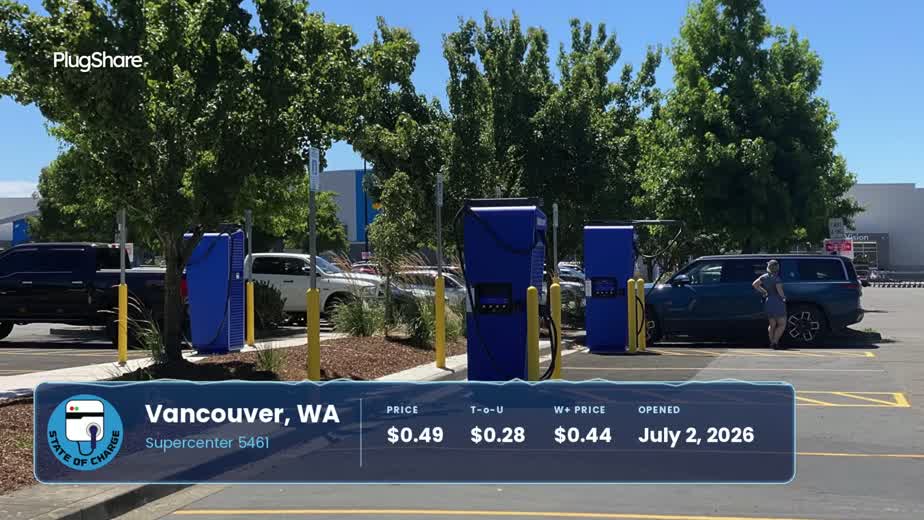
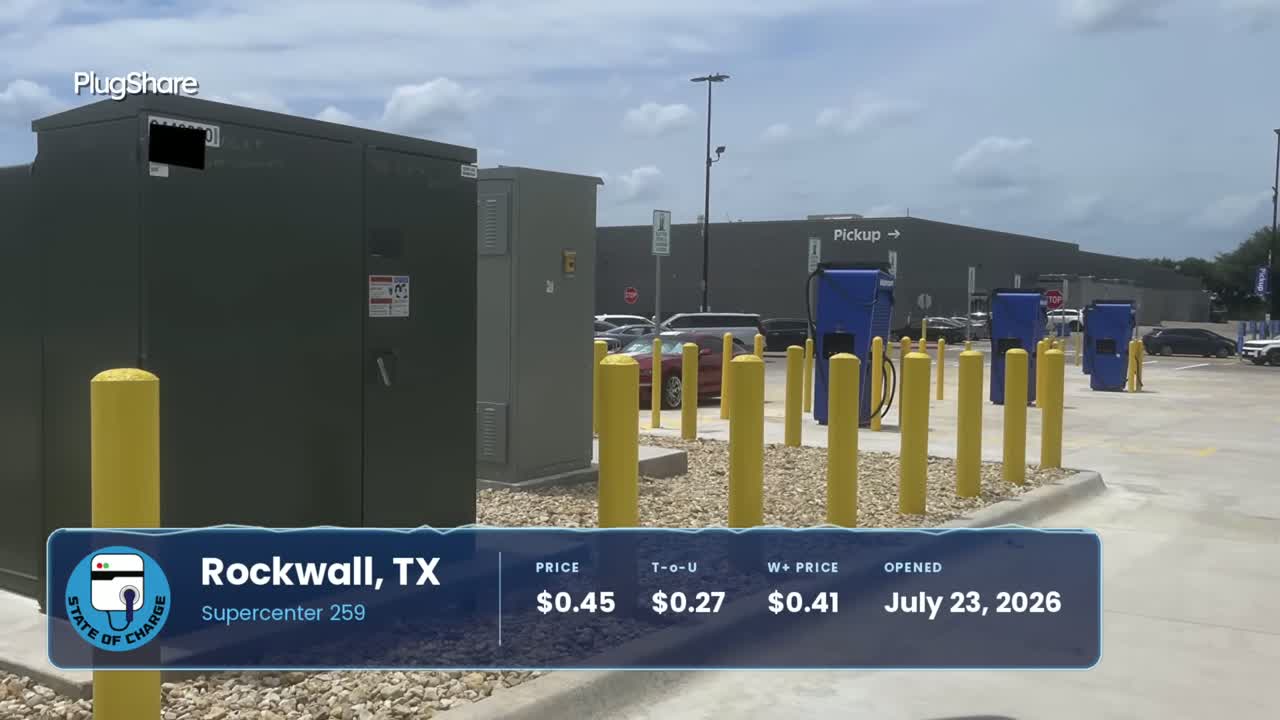
Typical new sites bundle eight or more high-power stalls behind the store.
400 kW Hardware, Dual Standard, Real Pricing
Walmart is not cutting corners on iron. Stalls use ABB’s A400 and Alpitronic’s HYC400 units—both rated to 400 kW, both shipping with dual NACS and CCS1 connectors. That dual-standard choice is the quiet genius: a Tesla, a Ford, a Hyundai, and a Rivian can all plug in at the same row without an adapter hassle.
Pricing is where Walmart sounds like Walmart. Rates run about $0.47/kWh at peak and $0.30/kWh off-peak, with a 10% discount for Walmart+ members. That off-peak number undercuts plenty of highway corridors, and the membership discount turns a grocery run into a cheap top-up.
Network
Sites / Stalls (2026)
Top power
Connector
Peak $/kWh
Walmart (Aug 2026)
100+ sites / 838 stalls
400 kW
NACS + CCS1
~$0.47
Tesla Supercharger (US)
20,000+ sites
325 kW (V4)
NACS
~$0.48
Electrify America
~1,000 sites
350 kW
CCS1
~$0.56
Ionna (automaker JV)
100+ sites
400 kW
NACS + CCS1
~$0.50
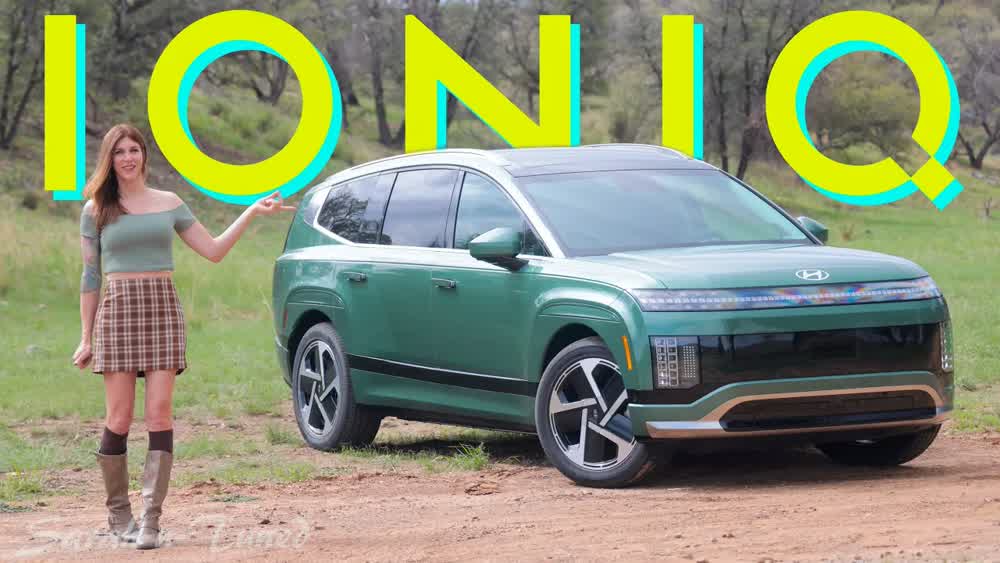
Data points: drawn from Walmart corporate disclosures, ABB and Alpitronic product specs, and independent 2026 US charging price surveys. The standout is the dual-connector 400 kW stall at a sub-Tesla-peak price—exactly what an 800V car like a Hyundai IONIQ or Porsche Macan EV needs to hit its real curve.
ABB’s A400 delivers up to 400 kW and ships with both NACS and CCS1 cables.
What “100 sites” actually means for drivers
90% of Americans live within 10 mi of a Walmart 8.4 stalls avg per site still early vs 20k Superchargers
Walmart operates 5,200+ US stores, and it says 90% of the population is within 10 miles of one. A charger in every third lot is a different class of convenience than a dedicated charging plaza.
Why a Retailer, and Why Now
The April 28, 2026 ABB partnership announcement was the tell. Walmart isn’t buying chargers off a catalog; it’s co-developing rollout strategy with one of the two hardware makers (ABB, Alpitronic) actually shipping 400 kW dual-standard units at scale. The retailer’s logic is brutal and rational: dwell time equals basket size. A 20-minute charge is 20 minutes of potential in-store spending, and a captive, high-income, future-facing customer at that.
This is also a direct answer to the “charging deserts” problem. Superchargers cluster on highways and affluent corridors. Walmart’s footprint is in every town. For the millions of Americans who live far from a 350 kW corridor, a Walmart lot may be the only 400 kW stall they regularly see.
Charge-while-you-shop flips dwell time into the network’s biggest advantage.
The Catch: Coverage, Not Just Count
None of this means Walmart replaces Tesla tomorrow. The Supercharger network still has roughly 20 times the sites, and its native-NACS dominance means非零 anxiety for CCS-only legacy EVs. Walmart’s edge is proximity and price, not raw coverage yet. The right mental model: Superchargers for the road trip, Walmart for the everyday top-up and the underserved town.
That’s a complimentary, not competitive, story for most drivers—and it’s why the dual-connector choice matters. Walmart is explicitly building for the post-NACS-standard US, where a Ford and a Tesla can share a row.
A Few Honest Questions About Walmart’s Chargers
Can any EV use a Walmart stall?
Yes, in practice. The A400 and HYC400 units ship with both NACS and CCS1 cables, so a Tesla, a Ford Mustang Mach-E, a Hyundai IONIQ, or a Rivian can all plug in without adapters. That dual-standard design is the network’s biggest differentiator versus single-connector rivals.
Is $0.30–$0.47 per kWh actually cheap?
Off-peak $0.30/kWh is below the US public fast-charging average and competitive with home rates in many states. The 10% Walmart+ discount pushes it lower still. Peak $0.47 is in line with Supercharger pricing but under most Electrify America corridors.
Will the 99% uptime hold as it scales?
Nobody knows yet—uptime is easy at 100 sites and hard at 1,000. But the choice of proven 400 kW hardware from ABB and Alpitronic, plus a co-development partnership rather than a bulk purchase, suggests reliability was a design goal, not an afterthought.
Should I plan road trips around Walmart?
Today, treat it as a bonus, not a backbone. Use it for daily and weekly top-ups and for towns off the Supercharger grid. As the site count climbs past the low hundreds, it becomes a legitimate primary option on more routes.
Discover the most attractive leasing and financing options for electric vehicles (EVs) this November 2024. Whether you’re looking to lease or finance, there are some excellent deals available that cater…