The EV charging industry is undergoing a fundamental transformation. The connector war is over. The focus has shifted from raw power specifications to the harder problems: reliability, grid integration, multi-dwelling access, and software-defined infrastructure. The EV Charging Summit 2026 in Las Vegas provided a comprehensive view of where the industry stands and where it is heading. This analysis examines the key technologies, business models, and strategic trends that will define charging infrastructure for the next five years.
The Reliability Crisis: 25% Failure Rate Is Unacceptable
Before examining specific technologies, we need to confront the industry most persistent problem: reliability. J.D. Power 2026 EV Charging Satisfaction Study reports that 20-25% of public DC fast charging sessions fail or are interrupted. This is not a niche issue – it is the single biggest barrier to non-Tesla EV adoption among consumers who have access to home charging.
The failures stem from multiple sources: payment system errors (35% of failures), connector communication faults (25%), network connectivity issues (20%), power module failures (12%), and vandalism or physical damage (8%). The root cause is that charging stations are complex networked devices deployed in harsh outdoor environments, and the industry has historically prioritized rapid deployment over reliability engineering.
Alpitronic, the Italian manufacturer that supplies Ionity European network, demonstrated what reliability looks like when it is designed in from the start. Its Hypercharger HPC series achieves 98%+ uptime through redundant power modules (the station continues operating at reduced power if one module fails), conservative thermal design (components operate well below their rated maximum), and comprehensive remote diagnostics that enable predictive maintenance. This reliability comes at a cost – Alpitronic units are more expensive than competitors – but the total cost of ownership over a 10-year deployment often favors the more reliable unit due to reduced maintenance visits and higher revenue from uptime.
98%+Alpitronic Hypercharger uptime in European deployment – the benchmark the US charging industry is working to match
Network Economics: Why Battery Storage Changes Everything
The economics of DC fast charging are poorly understood by most observers. The hardware cost of a 350 kW charging stall ($30,000-$80,000) is only part of the picture. The electricity costs include both energy charges (kWh consumed) and demand charges (peak kW drawn, typically $10-$30 per kW per month). A station with four 350 kW stalls can easily trigger $30,000-$50,000 in monthly demand charges if multiple vehicles charge simultaneously during peak hours.
XCharge battery-buffered charging stations address this directly. By integrating on-site storage that charges slowly during off-peak hours and discharges to supplement grid power during vehicle charging, the peak demand seen by the utility can be reduced by 60-80%. The result is a 30-50% reduction in total electricity costs. The battery also enables the station to participate in utility demand response programs, generating additional revenue.
| Cost Component | Without Storage | With Storage | Savings |
|---|
| Energy Charges | $5,000/mo | $4,000/mo | 20% |
| Demand Charges | $25,000/mo | $8,000/mo | 68% |
| Maintenance | $2,000/mo | $2,500/mo | -25% |
| Total Monthly | $32,000 | $14,500 | 55% reduction |
Multi-Unit Dwellings: The 40 Million Household Opportunity
SWTCH demonstrated charging solutions for multi-unit dwellings (MUDs) – apartment buildings, condos, and mixed-use developments. The addressable market is enormous: over 40 million US households live in multi-unit buildings, representing approximately 30% of the potential EV charging market. Yet this segment has been largely ignored because it is harder than installing chargers in single-family garages.
The core challenges are: limited electrical panel capacity in older buildings, shared parking without assigned spaces, cost allocation across tenants, and the split incentive problem (property owners pay for installation but tenants benefit). SWTCH solution combines load management software that dynamically allocates available electrical capacity across vehicles, tenant billing through the existing utility meter, and a hardware platform that can be deployed without expensive panel upgrades.
As California pushes toward its 2035 zero-emission vehicle target, MUD charging is becoming a policy priority. Several states are considering building codes that require EV charging capacity in new multi-unit construction, and utilities are developing MUD-specific incentive programs.
NACS: What the Standardization Actually Means
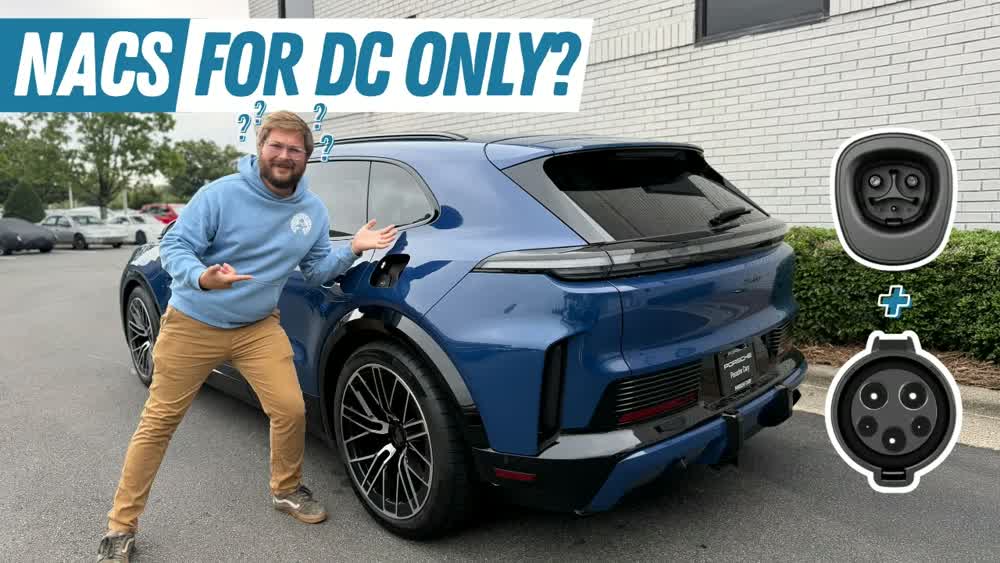
The industry transition to NACS is effectively complete at the hardware level – every major exhibitor at EVCS 2026 displayed NACS connectors. This standardization has three concrete effects on charging infrastructure economics:
Manufacturing efficiency: Charger manufacturers can now produce a single connector variant, reducing inventory complexity and production line changeovers. Cost savings are estimated at 10-15% per unit.
Network utilization: Every charging station now serves the entire EV market rather than being limited to CCS or NACS vehicles. This improves station utilization rates by an estimated 20-30%, directly improving the business case for deployment.
Consumer confidence: The elimination of connector confusion removes a psychological barrier that surveys consistently identify as a top-three concern among potential EV buyers.
Charging Network Competitive Landscape
| Network | US DC Ports | Avg. Power | Key Differentiator | NACS |
|---|
| Tesla Supercharger | 37,000+ | 150-350 kW | Highest reliability, largest coverage | Native |
| Electrify America | 5,600+ | 150-350 kW | Battery storage, 4 CA hubs | Pilot |
| EVgo | ~3,500 | 50-350 kW | Urban focus, 100% renewable | Yes |
| ChargePoint | ~2,000 DC | 62.5-500 kW | Level 2 leadership, software platform | Yes |
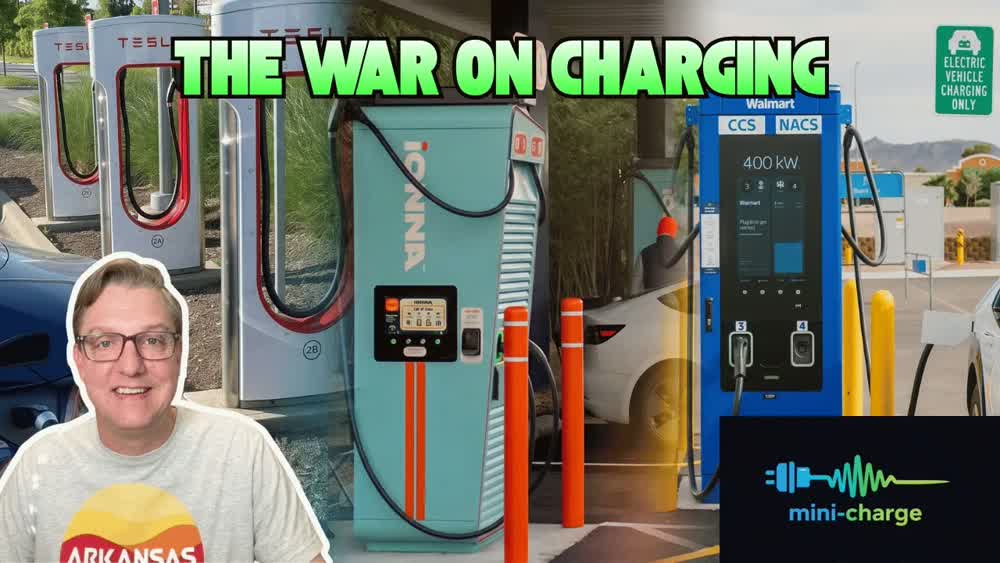
| IONNA (new) | Growing | Up to 400 kW | Alpitronic hardware, automaker-backed | Yes |
Analysis: Five Trends Defining Charging Infrastructure
1. Reliability engineering over power specs. The industry is learning that 400 kW that works 95% of the time is less valuable than 150 kW that works 99% of the time.
2. Battery storage as economic necessity. Without storage, demand charges make DC fast charging economically marginal. With storage, margins improve by 30-50 percentage points.
3. Software-defined networks. Remote monitoring, predictive maintenance, dynamic pricing, and utility integration are increasingly delivered through cloud platforms rather than embedded in hardware.
4. MUD market awakening. The 40 million household opportunity is finally being addressed with purpose-built technology rather than adapted single-family solutions.
5. Consolidation ahead. The current fragmented market of dozens of charging networks will consolidate as the economics favor scale. Tesla, Electrify America, and the newly formed IONNA consortium are best positioned.
FAQ
Why do 25% of charging sessions fail?
Payment errors (35%), connector communication faults (25%), network issues (20%), power module failures (12%), vandalism (8%). The industry is shifting from rapid deployment to reliability engineering.
How does battery storage make charging profitable?
By reducing peak demand charges by 60-80%, battery storage cuts total electricity costs by 30-50%. A four-stall station can save $15,000-$20,000 per month.
What makes MUD charging different from home charging?
Multi-unit dwellings require load management to share limited electrical capacity, billing systems for cost allocation, and approval from property owners. SWTCH addresses all three.
How reliable is Alpitronic Hypercharger HPC?
98%+ uptime in European deployment, achieved through redundant power modules, conservative thermal design, and remote diagnostics that enable predictive maintenance.
Is NACS now the universal standard?
Yes – virtually all new charging stations in North America ship with native NACS support. The remaining CCS-only stations are being retrofitted or phased out.
Sources: EV Charging Summit 2026 exhibition, Out of Spec Reviews tour (YouTube), J.D. Power 2026 EV Charging Satisfaction Study, DOE AFDC network data, California Energy Commission MUD charging policy brief, SCE demand charge tariff schedules.