No products in the cart.
EVCUBE.NET analysis | ACT Expo 2026
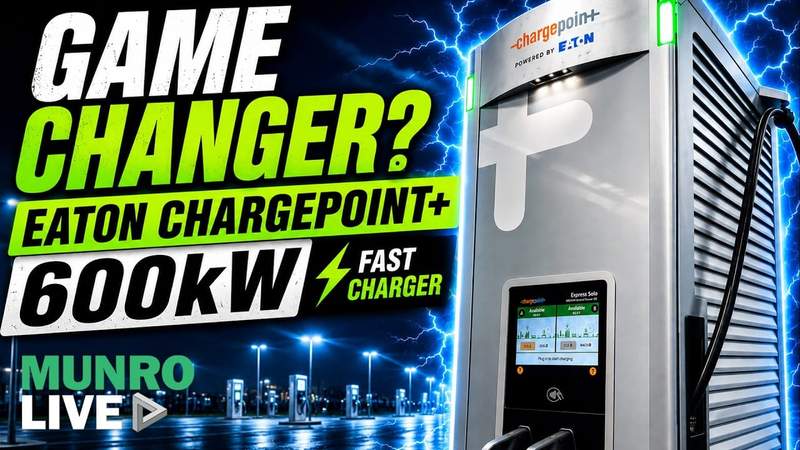
ChargePoint Express Solo 600kW with Eaton: The EV Charging Station That Puts Site Power First
The easiest way to misunderstand this video is to stop at the number on the spec sheet. Yes, Express Solo is a 600kW standalone DC fast charger. But the part that actually matters for operators is the system design: Eaton and ChargePoint are showing a platform that can share power, integrate battery storage, and reduce the amount of site work needed before a single EV ever plugs in. That makes this relevant not only to public EV charging stations and EV pile deployments, but also to the everyday comparisons people make between a Level 2 EV charger, a 48A EV charger, a 50A EV charger, and a Tesla charger at home.
system-level output
600 kW
at the same time
2 vehicles
power can be shared
4 ports
dynamic allocation
300/300 | 200/400
direct integration
Battery storage
What the video actually shows
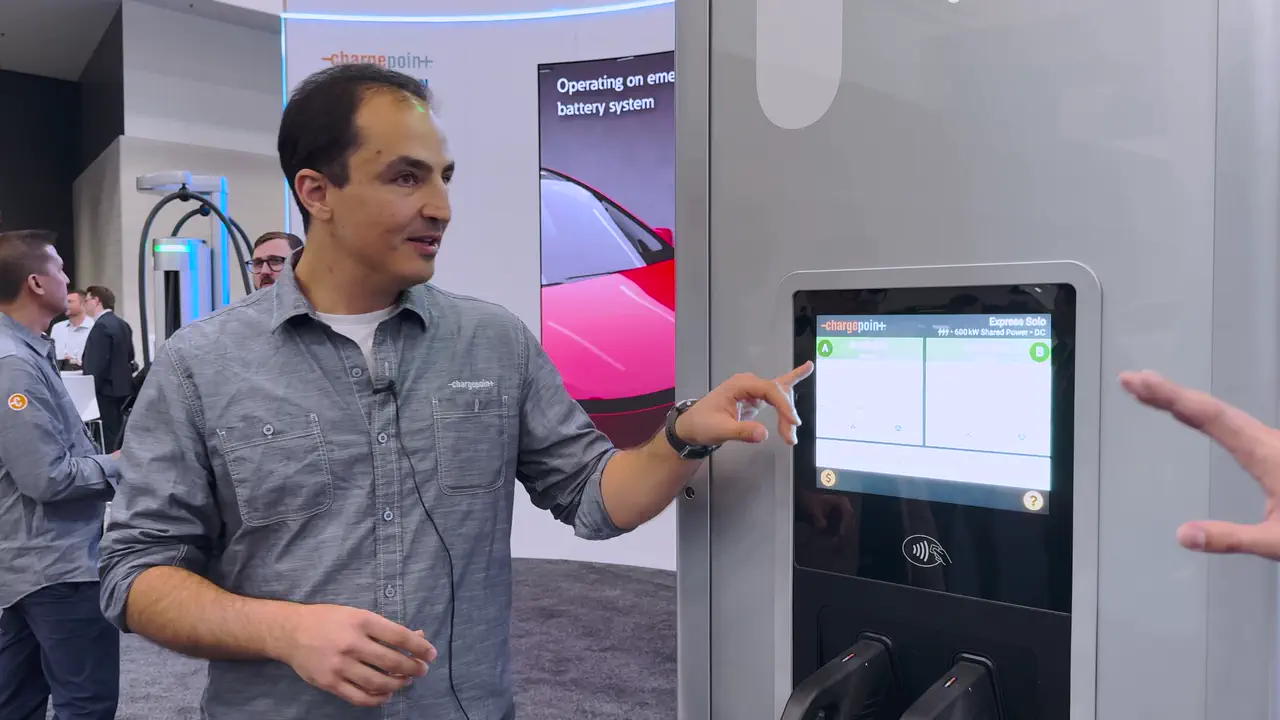
The setting is ACT Expo 2026 in Las Vegas, where Monroe Live interviews people from Eaton and ChargePoint. The conversation quickly leaves the booth and moves into the parts that determine whether fast charging actually works in the real world: utility capacity, electrical service, transformer sizing, switchboards, and how much power can be delivered to the site in the first place.
- The Express Solo is described in the transcript as the fastest charging standalone product available in the market today.
- The system-level output is up to 600kW, with dynamic allocation such as 300/300 or 200/400 depending on need.
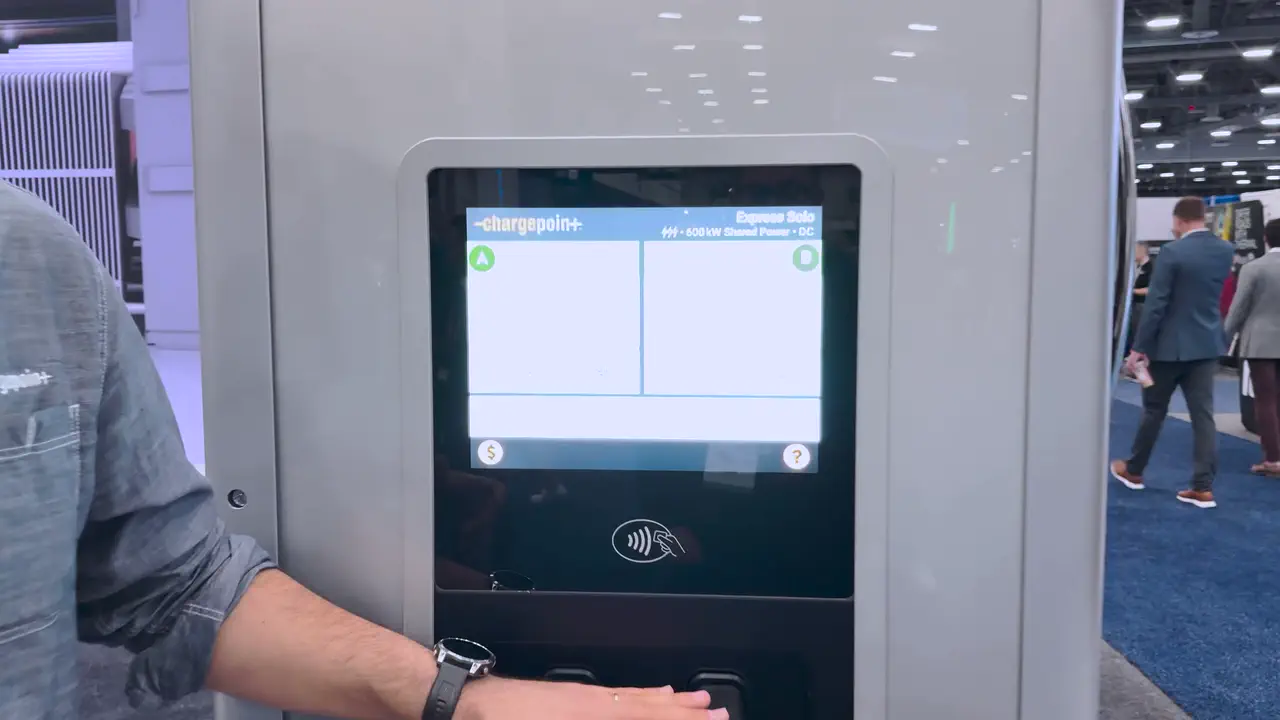
- The demo says the charger can handle two vehicles at once and can distribute power across up to four ports.
- The team explicitly discusses direct battery storage integration, which is the clue that this is a site platform, not just a cabinet.
- The transcript also calls out the likely need for a service upgrade, a new transformer, and a new switchboard for many sites.
Bottom line: the video is not really about a bigger box. It is about making EV charging infrastructure less fragile. The charger matters, but the grid behind the charger matters more.

Why site power is the real story
That hidden side of the project is where the video becomes genuinely useful. If a charging site wants to serve high-power vehicles, the operator is not just buying an EV charging station; they are designing a power system. That is why the transcript spends so much time on battery storage, peak shaving, and utility coordination. Battery storage can be charged when power is cheap and discharged when demand is high, which is exactly the kind of practical move that can make a fast-charging site more viable.
In other words, the right question is not just “how fast is the EV pile?” It is “what does the site need to do to sustain that speed without tearing up the road and waiting months for a larger utility service?”

One more useful detail: the transcript mentions a Lucid Gravity testing at 400kW. That matters because it shows the vehicle side is getting closer to the charger side, but not all the way there yet. Express Solo’s headroom is still about future-proofing and power sharing.
600kW vs Level 2 EV charging
For readers who are comparing a Level 2 EV charger, a 48A EV charger, a 50A EV charger, or a Tesla charger for home use, this is the cleanest way to think about the gap. The home charger solves overnight convenience. Express Solo solves throughput, dwell time, and site economics.
50A EV charger
Typical 40A continuous output on a 50A circuit
9.6 kW
48A EV charger / Tesla Wall Connector
Home charging benchmark for many Tesla drivers
11.5 kW
Level 2 EV charger (upper end)
Useful at home, workplace, and fleet depots
19.2 kW
ChargePoint Express Solo
Public DC fast charging built for high-throughput sites
600 kW| Charging type | Typical output | Best use case |
|---|---|---|
| Level 2 EV charger | 3.8-19.2 kW | Overnight or workplace charging Best for daily top-ups, not highway dwell times |
| 50A EV charger | ~9.6 kW continuous | Typical home charging A 50A breaker usually supports 40A continuous output |
| 48A EV charger / Tesla Wall Connector | 11.5 kW / 48A | Higher-output home charging Tesla's own support page now makes the home-use case explicit |
| EV pile / EV charging station | Varies by AC or DC architecture | General search term for charging hardware The label matters less than dwell time, connector type, and site power |
| ChargePoint Express Solo | 600 kW | Public fast charging with power sharing Built for sites that need throughput, not just a bigger cabinet |
What the latest official pages say
The strongest recent sources here are ChargePoint’s own launch release and investor results page, plus Tesla’s current Wall Connector documentation. They are useful because they show how the industry is thinking right now: not just faster hardware, but broader system design and better load management.
ChargePoint launches Express Solo
BusinessWire | Apr. 22, 2026
The launch release calls Express Solo the world's fastest standalone EV charger and says it can deliver up to 600 kW to a single EV.
ChargePoint Q1 FY2027 financial results
Investor relations | Jun. 3, 2026
The latest results page shows ChargePoint still framing charging infrastructure as a core business line, not a side project.
ChargePoint next-gen station lineup
Official product page
Express Solo sits inside a broader next-gen portfolio that also includes Express Plus and other deployment-focused products.
Tesla Wall Connector support page
Official home-charging guide
Tesla says Wall Connector can provide up to 11.5 kW / 48 amp output and supports most electric vehicles.
Related reading on EVCUBE.NET
If you want the home-side version of this story, or the broader infrastructure angle, these EVCUBE.NET posts are the most relevant next clicks.
Who Needs Level 2 EV Charging at Home
Internal link
A practical look at who actually benefits from overnight charging and when higher output is worth the install.
ChargePoint's New 19.2 kW Home EV Charger
Internal link
A useful companion read if you want the home-side version of this charging story.
17 EV Charging Mistakes You Should Never Make
Internal link
Battery health, public chargers, and smart charging tips that still matter even when the hardware gets faster.
EV Charging Boom: Is the U.S. Keeping Up?
Internal link
A broader look at the charging infrastructure gap behind the headline numbers.
FAQ
These are the questions people actually search when they are trying to compare EV charging options, home installations, and public fast charging.
What is ChargePoint Express Solo?
ChargePoint Express Solo is a standalone DC fast charging system designed to deliver up to 600 kW and to scale around site power, power sharing, and battery-storage-friendly deployment.
How fast is a 600kW EV charging station?
600 kW is extremely fast for public DC charging, but the actual charging speed depends on the vehicle, battery temperature, and charge curve. The charger can supply the power, but the car decides how much it can accept.
What is the difference between a 48A EV charger and a 50A EV charger?
A 48A EV charger usually requires a 60A circuit and can deliver 11.5 kW at 240V. A 50A EV charger often refers to a 50A circuit that supports about 40A continuous output, or about 9.6 kW.
Is Tesla Wall Connector a Level 2 EV charger?
Yes. Tesla Wall Connector is a Level 2 home charging solution, and Tesla's support page lists output up to 11.5 kW / 48 amp depending on the installation and vehicle.
What does EV pile mean?
EV pile is a common term for a charging post or charging station. In practice, the power level and installation type matter more than the label.
Does battery storage help EV charging stations?
Yes. Battery storage can reduce peak demand, help avoid or delay expensive service upgrades, and make high-power charging easier to deploy at sites with limited utility capacity.