No products in the cart.
Chinese EVs Just Landed in Canada – and They’re Eyeing the U.S. Market
Chinese electric vehicles are no longer a theoretical threat on the other side of the Pacific. They are in Canadian showrooms this year, priced to undercut almost everything on the lot, and the people selling them are already talking about the United States.
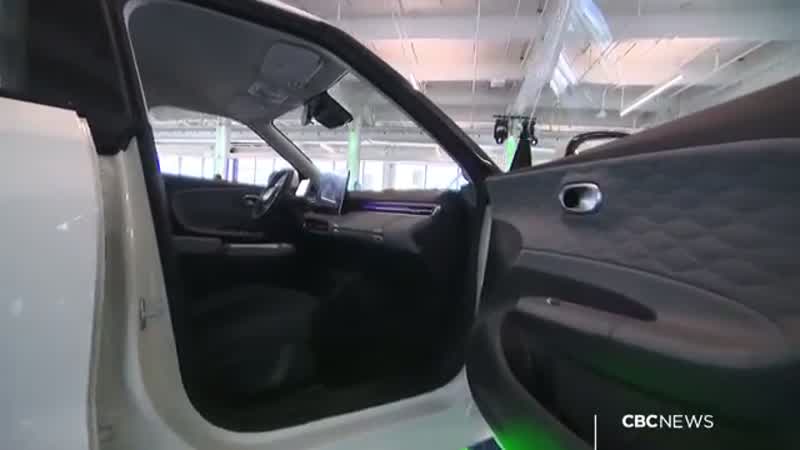
A CBC News report from Montreal shows the first wave of Chinese-built and designed electric vehicles entering Canada after the federal government struck a deal with Beijing. The vehicles are not fringe concepts. They are production-ready models, and the price tags are the headline. Industry experts quoted in the report expect the Dongfeng Nami Box 01 to land between roughly C$25,000 and C$35,000. Last year, Canadians paid an average of about C$60,000 for a new EV. That price gap is why the segment is about to get uncomfortable for legacy automakers.
It is not just one brand. BYD, Chery, Geely’s Zeekr, and Lotus have all begun the work of entering Canada under a quota that lets 49,000 Chinese-made electric vehicles in each year at the standard 6.1% tariff, instead of the 100% surtax Canada imposed in 2024. For U.S. buyers, the message is straightforward: the Chinese EV industry is now at the northern border, and it is treating Canada as a test track before turning south.

What Canada actually agreed to — and why it matters
On October 1, 2024, Canada imposed a 100% surtax on electric vehicles imported from China, on top of the existing 6.1% most-favored-nation tariff. That effectively closed the door. In January 2026, a new arrangement reopened it — but with tight controls.
Effective March 1, 2026, the 100% surtax was repealed and replaced by an annual quota. The first-year quota is 49,000 vehicles, rising 6.5% per year to reach 70,000 by 2030. Import permits are issued on a first-come, first-served basis: 24,500 vehicles for March 1 through August 31, 2026, and another 24,500 for the period through February 28, 2027. Starting in the second year, 10% of the quota must be priced at C$35,000 or below, scaling to 50% by year five.
There is a catch for buyers, though. Canada’s federal Electric Vehicle Availability Program rebates do not apply to Chinese-built EVs. Provincial incentives vary: Quebec’s Roulez Vert program still offers up to C$2,000 for qualifying models until December 31, 2026, depending on final eligibility rules. For most Canadian shoppers, the appeal is the sticker price itself, not a government top-up.
Signal for U.S. buyers: Canada is not the real market. It is the rehearsal stage. Chinese automakers are using the quota to build dealer networks, handle homologation, and prove they can sell in North America before they try to crack the far larger U.S. market.
Who is coming, and what they will cost
BYD is the name that should worry Detroit the most. The world’s largest EV manufacturer by volume has confirmed four Canadian launch models: the Seal sedan at C$44,990, the ATTO 3 compact SUV at C$39,990, the Dolphin hatchback at roughly C$35,000, and the Seagull city car at roughly C$25,000. The company is scouting about 20 dealerships in Toronto, Vancouver, Montreal, and Calgary, with a late-2026 launch.
Those prices are not after incentives. They include the 6.1% tariff. For context, a C$44,990 BYD Seal undercuts the Tesla Model 3’s Canadian starting price while carrying a similar-size 82.6 kWh LFP Blade battery. The Seagull, if it arrives at C$25,000, would be one of the cheapest new EVs in North America by a wide margin.
Lotus has already shipped. Eighteen Eletre SUVs arrived in Canada in May 2026, making it the first Chinese brand to complete certification and deliveries under the new quota. Chery is recruiting staff and planning a 10-dealer network. Geely’s Zeekr brand has posted jobs in Toronto. And Dongfeng is now showing models like the Nami Box 01 directly to Canadian consumers.
Why the U.S. market is the real target
The CBC report is blunt about it: industry experts say Chinese manufacturers see Canada as a gateway. As one analyst put it, “It’s like a rehearse to come to Canada. Their real goal is to, of course, make a come enter the United States.”
They cannot enter the U.S. directly today. The United States currently imposes a 100% tariff on Chinese-built EVs, layered on top of a 2.5% base import duty, for an effective rate of 102.5%. That wall was announced in the U.S. Trade Representative’s four-year Section 301 review on May 14, 2024, and it took effect on September 27, 2024. The Biden administration framed the tariffs as a defense against Chinese subsidies and overcapacity; the Trump administration has kept them in place.
That is why the battleground has moved to Mexico. Under the U.S.-Mexico-Canada Agreement (USMCA), vehicles assembled in Mexico can enter the U.S. duty-free if they meet strict rules of origin: currently 75% of the vehicle’s value must come from North America, and 40% to 45% of core parts must be built by workers earning at least $16 per hour. The idea is that a Chinese automaker could manufacture in Mexico with enough local content to bypass the direct China tariff.
In February 2026, BYD and Geely were reported as finalists to buy the Nissan-Mercedes COMPAS assembly plant in Aguascalientes, Mexico, a facility with roughly 230,000 units of annual capacity. The timing is not accidental. The USMCA is scheduled for its first six-year joint review on July 1, 2026, and U.S. officials are pushing to tighten the rules of origin, possibly raising the regional value content requirement to 80% or 85% and adding a 50% U.S. content floor for key components. In February 2026, five Democratic senators sent a letter to the Trump administration asking the review to include language that would block Chinese EVs and parts from benefiting from USMCA.
“A BYD dealership in Tijuana’s Zona Río said Mexican residents are buying cars and driving them into San Diego.” — The Wall Street Journal, via EVSmarts, on the border-crossing workaround
There is already a smaller workaround. A temporary import rule allows non-U.S. residents to drive foreign-registered vehicles across the border for personal use. The Wall Street Journal reported a Mexican resident in Ciudad Juárez who bought a BYD Song Pro plug-in hybrid for about $31,500 and drives it into Texas several times a week for flight school. That car is not certified for U.S. sale, but it is on U.S. roads.
Chinese EV makers in North America: a snapshot
| Brand | Key Models | North America Status | Starting Price | Possible U.S. Path |
|---|---|---|---|---|
| BYD | Seal, ATTO 3, Dolphin, Seagull | 20 Canadian dealers planned; late 2026 | C$24,990–C$44,990 | Mexico plant / USMCA |
| Chery | Omoda, Tiggo EVs | 10 Canadian dealers planned | ~C$35,000 | Mexico sourcing / JV |
| Dongfeng | Nami Box 01, U-Tour V9 | Unveiled in Canada | ~C$25,000–C$35,000 | Not announced |
| Geely / Zeekr | Zeekr 001, 007 | Hiring in Toronto | Premium segment | Volvo / Polestar channels |
| Lotus | Eletre | 6 Canadian dealers; first deliveries May 2026 | C$119,900 | Under Canada quota |
Pressure on U.S. legacy automakers is already here
Even without a single Chinese-branded EV sold in the U.S. today, the pressure is already affecting American automakers. The global EV price war has been real for more than a year — even if it has been slower to show up in the United States. BYD, NIO, and Geely have used vertical integration to cut costs by 20% to 25% versus Western rivals, while the U.S. market still has the 100% tariff acting as a buffer.
Ford CEO Jim Farley has been the most outspoken legacy executive on the topic. In April 2026, he warned on Fox News that allowing Chinese automakers into the U.S. would be “devastating” for American manufacturing. At the same time, he has repeatedly praised Chinese EV technology, including importing a Xiaomi SU7 to Michigan for personal use, and has discussed with the Trump administration a framework that would let Chinese manufacturers enter only through joint ventures with U.S. controlling stakes. GM, by contrast, has told administration officials it opposes any market opening, arguing that lower-priced Chinese vehicles could weaken domestic suppliers and market share.
President Trump himself signaled openness in January 2026, saying Chinese automakers could enter the U.S. if they built factories and hired American workers. No formal framework exists yet, but the conversation is live. The longer-term danger for Detroit is not a tariff holiday; it is that Chinese companies find a way to build in Mexico, or partner with an American company, and undercut domestic EVs by thousands of dollars.
The evidence is already in the pricing. BYD’s Dolphin Mini launched in Mexico at about $20,990 while the average new vehicle transaction price in the U.S. sits near $50,000. Ford has already cut the F-150 Lightning by roughly 18% to a $49,995 starting point, and GM has let the revived Chevrolet Bolt serve as a bridge rather than a long-term affordable EV. Those are competitive reactions to a market that is being reset from the outside. As we covered earlier, the EV price war is real everywhere except the U.S., and the Canadian opening is how it gets closer to American driveways.

What U.S. buyers should watch
Do not expect to buy a BYD at your local Ford dealer in 2026. The 100% U.S. tariff is still in force, and Chinese brands are months or years away from any U.S. retail launch. But the Canadian experiment will reveal how reliable these cars are in a North American winter, how dealers handle service, and how American shoppers react to prices far below what Detroit and Tesla offer. The real inflection point is the USMCA review in July 2026. If the U.S. fails to tighten the Mexico loophole, Chinese-made EVs could enter through the back door at prices that force the entire U.S. market to respond.
FAQ
Why did Canada lower its tariff on Chinese EVs?
Canada removed the 100% surtax on March 1, 2026, replacing it with a 49,000-vehicle annual quota at the standard 6.1% tariff. The move was part of a broader arrangement with China that also saw Beijing drop some tariffs on Canadian canola, seafood, and agricultural products. The quota is meant to give Canadian consumers access to more affordable EVs while limiting the volume of Chinese imports.
Will Chinese EVs be sold in the United States soon?
Not directly. The U.S. maintains a 100% tariff on Chinese-built EVs, plus a 2.5% base duty, making direct imports commercially unviable. Chinese brands are likely to try entering through Mexican manufacturing under USMCA rules, or through joint ventures with U.S. companies, if policy allows.
What is the Mexico loophole, and why does it matter?
Under USMCA, vehicles assembled in Mexico can enter the U.S. with zero tariff if 75% of their content comes from North America. Chinese automakers are reportedly bidding for existing Mexican plants so they can produce locally and avoid the U.S. China tariff. The U.S. wants to tighten those rules in the July 2026 USMCA review.
How does this pressure U.S. automakers?
Chinese EVs carry an estimated 20% to 30% cost advantage because of vertical integration, battery production, and government-supported scale. If those vehicles reach the U.S. at all, they would force Detroit to cut prices or accelerate affordable EV plans. Ford, GM, and Tesla are already lowering prices and restructuring EV lineups in response to global competition.
Sources:
- CBC News: The National — “Chinese EVs arriving in Canada” (Montreal report, transcript D:/tmp/evbatch/xQTNw9dsAJE/transcript_clean.txt), Dongfeng Nami Box 01 pricing, Canadian EV sales data
- Canada Gazette, SOR/2026-32 — Order Amending the Import Control List, 49,000-unit quota, 6.1% tariff, surtax repeal effective March 1, 2026
- China Daily Global — “Carmakers preparing to enter Canadian market” (quota details, 24,500 first-half permits)
- Global Times — Lotus Eletre first deliveries in Canada, BYD/Chery dealer plans
- China-EV.ca / BYD Today — BYD Canada model lineup and pricing: Seal C$44,990, ATTO 3 C$39,990, Dolphin ~C$35,000, Seagull ~C$25,000
- EVSmarts — “Chinese EVs may reach U.S. roads without arriving straight from China” (USMCA, border crossing, Mexico prices)
- OurAutoWorld — 2026 global EV price war, Chinese cost advantage, Ford/GM pricing pressure
- Related EVCUBE: EV price war everywhere except the U.S., BYD’s Australian warning and U.S. market strategy, Toyota’s solid-state battery push