No products in the cart.

Tesla’s Broken Promises in 2026: What Shipped vs What Was Promised
Ryan Shaw’s latest news digest is a snapshot of where Tesla’s biggest bets actually stand in mid-2026 — and the through-line is uncomfortable. Some promises have quietly shipped, some have been quietly abandoned, and the most important one of all is still half-finished.
Tesla has always sold the future as much as the car. That’s been the deal for more than a decade: buy in now, and the really big stuff — full autonomy, a $25,000 model, a halo supercar, a battery that bends the cost curve — is just around the corner. In his newest roundup, Ryan Shaw covers a mix of Tesla headlines that, taken together, tell you exactly how that deal is aging in 2026. The honest picture is mixed, and it’s worth being precise about which promises broke and which actually arrived.

The autonomy promise: shipped, but not the way it was sold
This is the big one, and the transcript is unusually candid about how it works. Full Self-Driving, Shaw explains, is trained on “massive” models in Tesla’s data centers and then distilled down into a smaller version that runs on your car’s computer. Owners on Hardware 4 — the latest cars — are running a compressed “student” model derived from what the Cybertruck runs. That’s genuinely good news for anyone who bought in the last couple of years: your car remains a candidate for unsupervised driving down the line. Hardware 3, the older computer, is the hard line — Tesla has already said it “cannot do unsupervised driving,” with only about 15% of the memory bandwidth of HW4.
But notice the framing. The goal, as Shaw puts it, is “eventually get it good enough to run with nobody watching it.” We’re still in the “eventually” phase. For regular owners, FSD is a supervised system — the car drives, you watch. The robotaxi side is the proof-of-concept: Tesla is operating driverless Model Ys in Austin, Dallas, and Houston, but the fleet is tiny — roughly 20 cars covering all of Austin’s 245-square-mile metro, with remote operators still backstopping edge cases. Tesla itself has said major expansion waits on FSD v15, expected late 2026 or early 2027. So autonomy shipped — barely, and at a scale that’s a rounding error next to Waymo’s thousands of vehicles.
Buyer takeaway: If you’re buying a Tesla today for “full self-driving,” understand you are buying a supervised system and a promise. HW4 cars are the ones with a real unsupervised future; HW3 cars are permanently capped. The robotaxi exists — but not as the ubiquitous network that’s been implied for years.

One genuine bright spot: Europe. FSD (Supervised) just passed 50 million kilometers — about 31 million miles — across five approved countries (the Netherlands, Estonia, Belgium, Lithuania, and Denmark), adding 30 million km in under two months, and Italy is now under review. A system many said would never clear European regulators is spreading fast. That’s a promise being kept, just not the unsupervised one.
The $25,000 Tesla: dead, not delayed
The most clearly broken promise is the affordable Tesla. First hinted at Battery Day in 2020 and repeated for years as a “next-generation platform” car, the ~$25,000 model — internally codenamed Project Redwood — was shelved in 2024, and Musk later called a conventional cheap car “pointless” next to the autonomous Cybercab. The result for American buyers in 2026: there is no $25,000 Tesla, the federal $7,500 tax credit expired September 30, 2025, and the cheapest cars on the configurator are the Model 3 Standard at $36,990 and the Model Y Standard at $39,990 (both launched October 2025). A genuinely cheaper compact SUV is reportedly in the pipeline at Giga Shanghai, but not before 2027. For a company whose whole growth story was “move down the price curve,” the bottom of the ladder simply isn’t there yet.

The 4680 battery: late, but no longer vaporware
Battery Day 2020 promised a 56% cut in cost per kilowatt-hour and a 54% jump in range from the 4680 cell. By mid-2026 that’s only partly true. The cell is in production at Gigafactory Texas and Nevada, and — per multiple 2026 reports — Tesla reached full dry-electrode production (both anode and cathode) in Austin, with yields above 90% and per-kWh costs reportedly below supplier cells. The structural pack, where 4680s bond into the vehicle floor, is a real architectural win you can’t get with smaller cells. But the cell still trails on energy density and charging specs versus the best competitor chemistry, and it powers only a slice of Tesla’s output; CATL, LG, and Panasonic still supply the majority of packs. So the 4680 is a delayed, partial success — the cost bet may yet pay off, but the “cheaper-than-everything” headline didn’t land on schedule.
The full scorecard
Here’s where each marquee Tesla promise stands in mid-2026, based on the transcript and current reporting.
| Promise | What was said | 2026 reality |
|---|---|---|
| Full Self-Driving (unsupervised) | “Next year” for ~a decade | Owners still supervised; HW3 ruled out; robotaxi live in 3 TX cities but ~20 cars in Austin, FSD v15 pending |
| $25,000 Tesla | Battery Day 2020, “next-gen platform” | Project Redwood shelved 2024; cheapest is Model 3 Standard at $36,990 |
| Roadster | Production by 2020 | 8+ delays; August 2026 Texas reveal target, production now 2027–2028 |
| 4680 battery | 56% cheaper, 54% more range (2020) | Dry-electrode in production 2026; cost-per-kWh competitive but density still trails; partial win |
| Robotaxi network | Driverless rides at scale | Operating driverless in Austin/Dallas/Houston, but tiny fleet + remote operators; v15-gated |
What actually shipped (and shipped well)
A fair accounting has to credit what landed. The three-row Model YL — the long-wheelbase six-seat version — has started arriving in U.S. showrooms as display units, starting at $61,990 with new 20-inch “Uber Helix” wheels and about 320 miles of range. That’s the closest thing Tesla has to a bigger family SUV, and physical cars on the floor usually mean deliveries are close. The Model Y L six-seater is a promise kept for families who outgrew the five-seat Y.

The Tesla Semi is hauling real freight, too — PepsiCo loads plus two new fleets: Paper Transport testing routes around Chicago, and a California carrier replacing 11 diesel day-cabs with 20 Semis at a Los Angeles depot targeted for early 2027. At roughly 500 miles fully loaded at 82,000 lb and ~60% range recovered in 30 minutes, the pitch (lower per-mile fuel and maintenance than diesel) is finally becoming demonstrable at scale. And on the metals-and-mileage front, a real-world Swedish study of nearly 10,000 battery health checks found the cheaper LFP packs in Model 3s that had passed 62,000 miles held 93.3% health versus ~88% for the pricier nickel packs — the budget battery aging more gracefully, partly because you can charge it to 100% daily. (Tesla doesn’t currently sell LFP cars in the U.S., but it’s a useful data point for used-car shoppers.)
Then there’s volume. Tesla delivered a record ~480,000 vehicles in Q2 2026, beating Wall Street estimates, with full earnings due July 22 — enough for Jefferies to lift its price target to $400. None of that erases the broken promises above, but it does mean Tesla in 2026 is still a company shipping hundreds of thousands of cars a quarter, not a stalled one.
Why this matters for an American buyer in 2026
The pattern isn’t incompetence — it’s prioritization. Tesla has repeatedly steered capital and engineering toward autonomy, the Cybercab, Optimus, and AI infrastructure, and away from the low-margin consumer cars and halo products that don’t fit that thesis. The $25,000 model died for exactly that reason. The Roadster keeps losing the internal resource fight. The 4680 slipped for years while Tesla fought manufacturing fires in Austin. If you’re evaluating a Tesla purchase, the practical takeaways are straightforward: don’t pay for autonomy features as if unsupervised driving is here; the cheapest real Tesla is ~$37,000, not $25,000; and the cars that have shipped — the refreshed Model Y, the YL, the Semi, the expanding Supercharger network — are the reliable part of the story.
On pricing, it’s worth remembering the broader context: the U.S. is the one major market where the EV price war is not reaching buyers the way it is elsewhere, now that the federal credit is gone and rivals are discounting aggressively overseas. The EV price war is real everywhere except the U.S., which makes Tesla’s decision to walk away from a cheap mass-market car all the more consequential for American shoppers. And if you want the enthusiast end of what did ship, our 2026 Model Y Performance review covers the quickest family Tesla you can actually buy today.
“The goal is to eventually get it good enough to run with nobody watching it.” — Ryan Shaw, on what Full Self-Driving is actually built to become
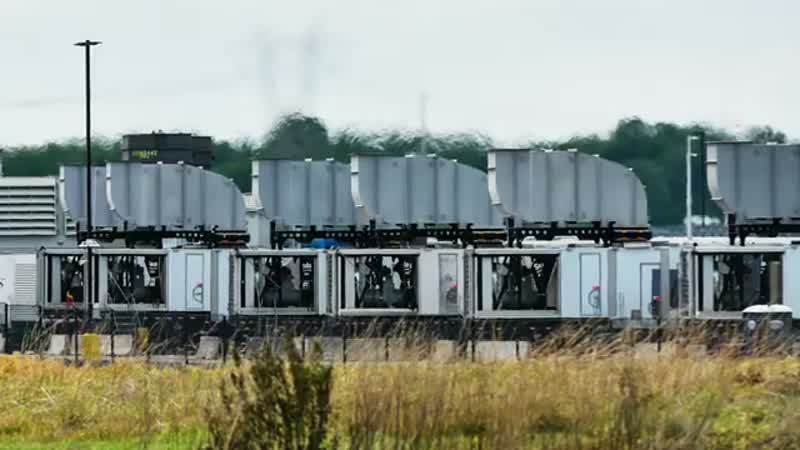
Shaw’s own segment closes on that tension: Tesla is building out the physical robotaxi operation — cleaning robots with robotic arms in Austin depots, self-driving car washes, UV sanitizing arrays — while “the driverless software is still the piece everyone is waiting on.” That line could describe the whole company in 2026. The infrastructure keeps arriving. The headline promises are still, mostly, on the horizon.
FAQ
Is Tesla Full Self-Driving actually unsupervised yet?
No — for regular owners, FSD is a supervised system where you must watch the car. Tesla runs driverless robotaxis in Austin, Dallas, and Houston, but the fleet is tiny (about 20 cars in Austin) and still relies on remote operators. Major expansion is gated on FSD v15, expected late 2026 or early 2027. Hardware 3 cars are permanently ruled out for unsupervised driving; HW4 cars remain candidates.
Will there be a $25,000 Tesla?
Not as originally promised. The dedicated affordable program (Project Redwood) was shelved in 2024 and redirected to the Cybercab. The cheapest Teslas in the U.S. in 2026 are the Model 3 Standard at $36,990 and the Model Y Standard at $39,990, and the federal $7,500 tax credit expired September 30, 2025. A smaller, cheaper SUV is rumored for Giga Shanghai but likely not before 2027.
What happened to the Tesla Roadster?
It has been delayed at least eight times since the 2017 reveal that promised 2020 production. The current target is an August 2026 reveal in Texas, with production now pushed to 2027–2028. Musk has attributed the latest slip to integration of the SpaceX cold-gas thruster package.
Did the 4680 battery live up to Battery Day?
Partly. Tesla reached full dry-electrode 4680 production in Austin in 2026 with yields above 90% and competitive per-kWh costs, and the structural pack is a real win. But the cell still trails the best competitor chemistry on energy density and charging specs, and it powers only a portion of Tesla’s vehicles. The “56% cheaper, 54% more range” headline arrived late and incomplete.
Sources:
- Ryan Shaw — “Tesla’s Broken Promises” news digest (FOU4uGWUwVs): FSD distillation/HW3-vs-HW4, Europe FSD 50M km / 5 countries, Model YL in U.S. showrooms at $61,990, Semi fleets (Paper Transport, CA 20-truck depot), LFP longevity study, record ~480k Q2 deliveries, Jefferies $400 target, robotaxi cleaning robots
- Tesla 4680: dry-electrode production in Austin 2026, >90% yields, structural pack; Battery Day 2020 targets (56% cost / 54% range) — industry reporting, mid-2026
- Tesla $25,000 model / Project Redwood: shelved 2024, redirected to Cybercab; Model 3 Standard $36,990, Model Y Standard $39,990 (Oct 2025); federal credit expired Sept 30, 2025
- Tesla Roadster: 8+ delays, August 2026 Texas reveal target, production 2027–2028 (Q1 2026 earnings; Autohome/iebchina reporting)
- Tesla Robotaxi: Austin ~245 sq mi, ~20 unsupervised cars, remote-operator oversight, FSD v15 gated (TechTimes, Tesorb, June 2026)
- Related EVCUBE: Model Y L six-seater, 2026 Model Y Performance review, The EV price war (everywhere but the U.S.)