• 13850 CENTRAL AVE, CHINO CA
  • Help@evcube.net
  • Help@evcube.net

$0.00 0

Cart

No products in the cart.

Mercedes CLA EV: 800V & 400V Charging Flexibility


1. Mercedes-Benz CLA EV Charging Flexibility: An Introduction

The upcoming U.S.-spec Mercedes-Benz CLA EV is set to revolutionize the charging experience for electric vehicle owners. Initially, there was a plan to limit the CLA EV to 800V fast charging to maximize charging speeds. However, Mercedes-Benz has listened to market needs and made a significant adjustment. The U.S.-bound CLA EV will now be compatible with both 800V and 400V fast chargers. This pivotal decision ensures that the four-door EV can utilize a vast majority of DC fast chargers, including the widely available Tesla Superchargers, enhancing convenience and accessibility for drivers across the United States.

This enhancement addresses a critical concern: charger availability. By including a 400V converter, Mercedes-Benz ensures that CLA EV owners won’t be limited to only the newest, most advanced charging stations. Instead, they can leverage the existing, extensive network of 400V chargers, making long-distance travel and daily commutes more practical and less stressful. This strategic move underscores Mercedes-Benz’s commitment to providing a user-friendly EV experience tailored to the realities of the current charging infrastructure.


2. Diving Deep: Charging Specifications and Capabilities

The Mercedes-Benz CLA electric sedan is engineered for versatility, supporting both 400-volt and 800-volt DC fast chargers. This dual-compatibility is a game-changer, especially considering the initial plan to restrict the vehicle to 800V charging to maximize its potential charging power of 320 kilowatts. The decision to include a 400V converter reflects a strategic pivot to accommodate the existing charging infrastructure in the U.S.

The U.S.-spec CLA EV will feature a Tesla-designed NACS charging port for DC fast charging and a J1772 port for AC home charging. This combination ensures that owners can conveniently charge their vehicles at home and on the go. According to a Mercedes-Benz USA spokesperson, the inclusion of the 400V converter means access to over 140,000 charging points across the U.S. This widespread compatibility addresses a significant hurdle for EV adoption: the availability of convenient and reliable charging options.

When connected to an 800V DC fast charger, the CLA EV can achieve impressive charging speeds, adding up to 202 miles (325 kilometers) of range in just 10 minutes. While Mercedes-Benz hasn’t specified the exact charging speeds from a 400V stall, it’s understood that they will be slower. The limiting factor is the amperage; achieving 320 kW from a 400V source would require 800A, a current level that most U.S. chargers cannot deliver. However, the flexibility to use both 400V and 800V chargers ensures that drivers can always find a charging solution, even if it’s not at the maximum possible speed.


3. Impact on the US Charging Landscape

Mercedes-Benz’s decision to equip the CLA EV with a 400V converter significantly broadens its appeal in the U.S. market. By ensuring compatibility with a wider range of charging stations, including Tesla Superchargers, the CLA EV addresses a major concern for potential buyers: charging accessibility. This move not only enhances the practicality of the CLA EV but also underscores Mercedes-Benz’s commitment to customer convenience.

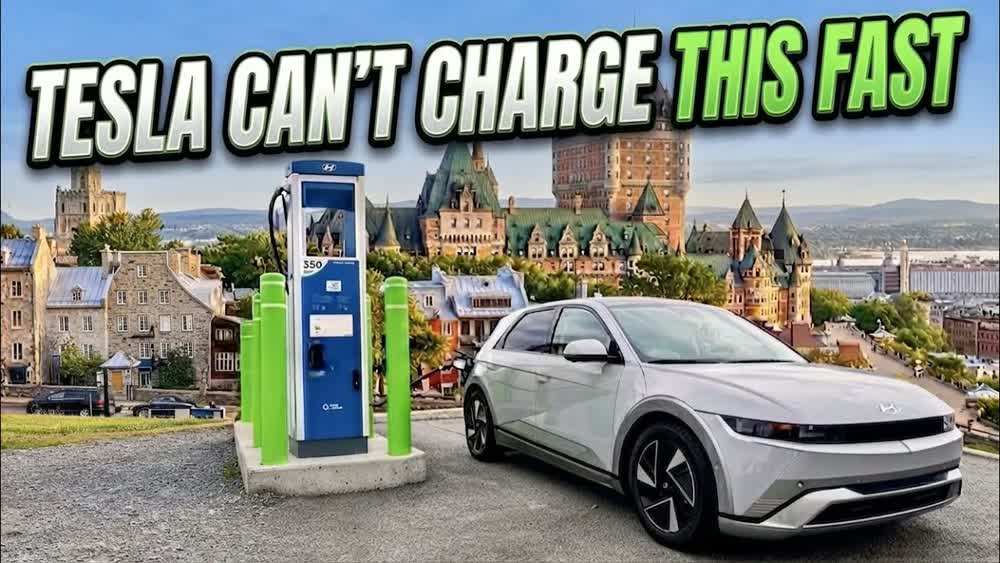
To illustrate the impact, consider the Hyundai Ioniq 5, another EV based on an 800V architecture. While it can charge at over 200 kW from an 800V stall, its charging power decreases by about 100 kW when connected to a V3 Tesla Supercharger, which operates at a maximum of 500V. By incorporating a 400V converter, the Mercedes-Benz CLA EV mitigates this issue, allowing owners to leverage the extensive Tesla Supercharger network without a significant reduction in charging speed.

FeatureSpecification
Charging Compatibility400V and 800V DC Fast Charging
DC Charging PortNACS (Tesla-designed)
AC Charging PortJ1772
Maximum Charging Power (800V)320 kW

Ultimately, Mercedes-Benz’s decision reflects a pragmatic approach to EV adoption. While 800V charging offers faster speeds, the widespread availability of 400V chargers makes the CLA EV a more practical choice for many drivers. This flexibility ensures that owners can always find a charging solution, enhancing the overall ownership experience.


4. Frequently Asked Questions


Will the U.S.-spec Mercedes-Benz CLA EV be compatible with Tesla Superchargers?

Yes, the U.S.-spec Mercedes-Benz CLA EV will be compatible with Tesla Superchargers due to its NACS charging port and 400V converter.


What is the maximum charging power the CLA EV can achieve?

The CLA EV can achieve a maximum charging power of 320 kW when connected to an 800V DC fast charger.


How many miles of range can the CLA EV add in 10 minutes of charging?

When connected to an 800V DC fast charger, the CLA EV can add up to 202 miles (325 kilometers) of range in 10 minutes.


What type of charging ports does the CLA EV have?

The CLA EV comes with a NACS charging port for DC fast charging and a J1772 port for AC home charging.

    Comments are closed

    Search

    Follow us

    Have any questions?

    • help@evcube.net
    • +1 (510)-878-5951
    level 2 ev charger charging at home,tesla charger for home charging

    Safe

    level 2 ev charger charging at home,tesla charger for home charging

    Speed

    level 2 ev charger charging at home,tesla charger for home charging

    Stylish

    level 2 ev charger charging at home,tesla charger for home charging

    Save

    level 2 ev charger charging at home,tesla charger for home charging

    Smart

    level 2 ev charger charging at home,tesla charger for home charging

    Suitablility

    Tesla Redesigns Doors for Emergency Safety

    Table of Contents 1. Introduction: Tesla's Door Handle Redesign 2. NHTSA Investigation and Safety Concerns 3. Details of the New Door Release Design 4. Global Regulatory Landscape 5. FAQ Introduction:…
    Read more

    Lyft Teams With Waymo to Catch Uber

    Table of Contents 1. Lyft's Pursuit of Autonomous Vehicles 2. The Waymo-Lyft Collaboration: A Game Changer? 3. Uber's Autonomous Driving Initiatives 4. Nashville as the Launchpad for Robotaxis 5. FAQ…
    Read more

    Hyundai’s 600-Mile EREV: 2027 Game Changer

    Table of Contents 1. Hyundai's Electrified Future: The 2027 EREV Launch 2. Understanding Extended Range Electric Vehicles (EREVs) 3. Hyundai's Unique EREV Strategy and Genesis Expansion 4. EREVs in the…
    Read more

    Tesla Redesigns Doors for Emergency Safety

    Table of Contents 1. Introduction: Tesla's Door Dilemma 2. The Proposed Design Change: A Unified Approach 3. NHTSA Investigation and Regulatory Scrutiny 4. Global Impact and Future Solutions 5. FAQ…
    Read more

    BMW: Gas Engines Will Never Die

    Table of Contents 1. BMW's Dual-Track Strategy: EVs and Combustion Engines 2. Market Dynamics Driving BMW’s Decision 3. The Future of BMW Platforms: A Diverse Approach 4. FAQ 1. BMW's…
    Read more

    Tesla FSD vs NYC Chaos: Robotaxi Test

    Table of Contents 1. Introduction: The Tesla Robotaxi Challenge in NYC 2. Navigating NYC with Tesla's Full Self-Driving 3. Tesla's Vision-Based Autonomy vs. the Competition 4. FSD Beyond NYC: Suburban…
    Read more
    evcubnb level 2ev charer,tesla charger,home charger,50a charger,nema 14-50charger

    Any Charging Problem?
    Let Us Know 24/7

    • 13850 CENTRAL AVE, CHINO CA
    • help@evcube.net
    ©2022 EVCUBE - All rights reserved