No products in the cart.
8 EVs Nobody’s Buying in Q2 2026 — and the “Flops” That Are Secretly Great Deals
The U.S. EV market just had its most confusing quarter yet. While a handful of nameplates set sales records, eight others collapsed so hard that one sold just 36 units in three entire months. But a bad sales number in 2026 can mean three very different things — and only one of them is a warning.
Two weeks ago the headlines were all about the fastest-selling EVs in America. Flip the lot around and you get the other list — the vehicles sitting on dealer lots while the rest of the market moves on. Some earned their slow sales. Some were quietly strangled by their own manufacturers. And a few are genuinely good cars you can steal for a discount right now. Here’s the rundown, ranked from “weird flop” to “total tombstone.”
8. Toyota bZ Woodland — a best-seller’s awkward sibling
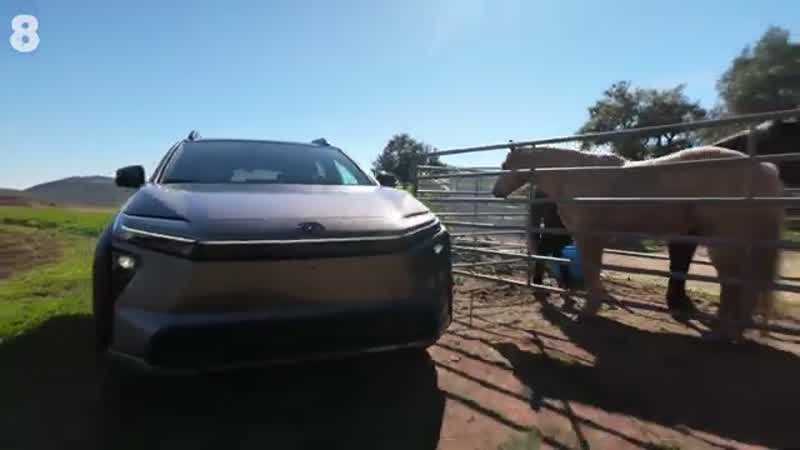
The standard Toyota bZ has been one of the surprise stories of 2026, moving more than 17,500 units in the first half and briefly becoming America’s best-selling non-Tesla EV. The Woodland — the rugged, lifted, overlanding-styled version of that exact same car — sold 554 units in Q2. Toyota dressed the bZ in body cladding and roof rails and priced it thousands above the standard car, chasing an adventure crowd that isn’t the people actually buying bZs. Those buyers want a trustworthy electric appliance at a bargain: 300-plus miles of range, $7,000 in discounts, 0% financing, a Toyota badge. Add cost without adding range or real capability and the value equation that made the bZ a hit simply collapses.
Buyer takeaway: If you love the Woodland look, dealers will be desperate to move them. But the standard bZ delivers everything that matters for less. Sometimes a flop is just a good car wearing an expensive costume.
7. GMC Hummer EV — the six-figure monster America stopped wanting
Sales of the Hummer pickup and SUV together slid roughly 56% year-over-year in Q2 — one of the steepest drops of any established EV nameplate. When money was cheap and the federal tax credit was alive, buyers lined up to pay six figures for 1,000 horsepower, crab-walking, and a moonshot of a truck. Strip away the credit, push gas past $4 a gallon, and put value at the center of every decision, and suddenly a vehicle whose battery weighs as much as a compact car is the first thing shoppers cross off. GM has been cutting production across its EV lineup, and the Hummer took one of the deepest cuts.

There’s a bigger story underneath: the entire electric-truck experiment is retreating. The F-150 Lightning is discontinued, Ram canceled its electric pickup before launch, and Cybertruck demand has cooled dramatically. The Hummer surviving at half volume makes it one of the last full-size electric trucks standing — but the era of automakers betting billions on $100,000 electric monsters is closing. Remaining-inventory discounts are getting serious if you ever wanted one. Just understand you’re buying a monument to a market moment that has passed.
6. Chevrolet Bolt — America’s cheapest EV, starved on purpose
This is the flop that makes no sense until you hear the full story. The revived Chevrolet Bolt — starting under $29,000, with 255 miles of range, an LFP battery you can charge to 100% daily, and a native NACS port with Supercharger access — sold just 3,433 units in Q2 (barely 4,200 all year). For the cheapest new EV in America, those numbers look impossible. They are: this is a supply flop, not a demand flop. GM runs a single production shift at its Fairfax, Kansas plant and is throttling output to a trickle. Nearly every Bolt built finds a buyer almost immediately.

Worse, reports indicate Bolt production is scheduled to end next year, with GM treating the revived car as a short bridge rather than a long-term commitment. America’s cheapest electric car lands on the flop list not because buyers rejected it, but because its own maker never gave it a real chance. This is the rare flop we’d tell you to hurry up and buy — our earlier 2027 Bolt review agrees it’s one of the best value propositions on the market.
5. Chevrolet Blazer EV — the middle child that lost the argument
Sales collapsed 68% year-over-year in Q2 — the worst percentage drop of any volume GM product, deeper than the Equinox, the Hummer, or the Lyriq. The Blazer EV lost the argument inside its own showroom. Below it sits the Equinox EV with more range (319 miles) for thousands less (starting $33,600) — the best range-per-dollar in America. Above it sits the Cadillac Optiq, which offers a nicer cabin and a luxury badge for not much more, and which grew 43% this quarter while the Blazer cratered. When buyers walk one aisle over and find better value in both directions from the same company, the middle child gets skipped. Then there’s the reputation problem: the Blazer EV launched with software issues bad enough that GM halted sales entirely, and Consumer Reports still ranks it among the least reliable EVs on sale.
Buyer takeaway: Discounts are real, but this is the one flop on the list where we’d think hard before taking the bait. A discount doesn’t fix a reliability record.
4. BMW iX — a flagship dying with dignity
BMW moved just 1,657 iX units as it phases the model out of the American market — a quiet ending for what was once the boldest statement in BMW’s electric lineup. To be fair, this is a planned sunset, not a rejection. BMW’s next generation has arrived: the new iX3 launches this year on the Neue Klasle platform with 400 kW charging and over 400 miles of range, and the just-revealed iX5 follows with a 144-kWh battery, 435 miles of range, and production starting in South Carolina. Against hardware like that, the aging iX simply ran out of tomorrow.

But there’s a genuine opportunity hiding in this flop. The iX is still one of the most comfortable, best-built luxury EVs of its generation, with strong reliability scores and a hushed, beautifully finished cabin. Dealers clearing the last of them are dealing aggressively, and depreciation on outgoing generations always cuts deepest right at the changeover. If you care about comfort more than having the newest platform, the iX’s funeral sale might be the best luxury-EV bargain of the year.
3. The entire Stellantis EV portfolio
Number three isn’t one vehicle — it’s a whole company’s electric lineup. The Fiat 500e barely registers on sales charts. The Jeep Wagoneer S posted some of the worst numbers of any new EV launch in recent memory. And the Dodge Charger Daytona needs $15,000–$20,000 off sticker just to leave dealer lots. The collapse traces straight to the top: Stellantis took the largest EV write-down in industry history — $27 billion — abandoned its all-electric targets, forced out its CEO, and canceled programs across Dodge, Jeep, Chrysler, and Ram.

When a company publicly retreats from its own electric strategy, buyers hear the message loud and clear: don’t bet your money on a vehicle the maker itself has given up on. Resale values, software support, and long-term parts availability all become question marks — and question marks don’t sell cars. Some of these are interesting vehicles at fire-sale prices, but of everything on this list, the Stellantis EVs carry the most risk per dollar saved. A discount only helps if the company behind the warranty stays committed.
2. Ford E-Transit — when the fleet math broke
The Ford E-Transit posted the single steepest percentage collapse of the quarter: 293 vans in Q2, down 88% from a year ago. For context, the E-Transit was once the best-selling electric van in America. Commercial buyers are the most rational customers on Earth — they buy on spreadsheet math, nothing else. When the federal incentives died, the math died with them. Fleet managers who once ordered electric vans by the hundreds to hit sustainability targets at subsidized prices went right back to gas Transits, which cost less up front and refuel anywhere. Add Ford’s broader EV retreat — $19 billion in losses, the Lightning discontinued, everything waiting on next year’s new platform — and the E-Transit simply fell off corporate shopping lists.
The bigger lesson: Passenger EV buyers can fall in love with a car. Fleet buyers cannot. When the spreadsheet says no, an 88% drop is what it looks like.
1. Nissan Ariya — 36 units, a tombstone
The EV nobody in America is buying: the Nissan Ariya, 36 units in Q2. Three months, an entire country — roughly one Ariya sold every two and a half days across all 50 states. The context: Nissan stopped importing the Ariya for the 2026 model year, so those 36 sales are the last crumbs of leftover inventory. But that only sharpens the story, because the Ariya never got the ending it deserved. It was a decent electric crossover with an upscale interior, undone by import tariffs that wrecked its pricing, mediocre efficiency, no one-pedal driving, and a badge that never convinced EV shoppers. It arrived late, cost too much, and left quietly. 36 units isn’t a sales figure. It’s a tombstone.

The flop list at a glance
| Rank | Model | Q2 2026 sales | What happened |
|---|---|---|---|
| 8 | Toyota bZ Woodland | 554 | Mis-priced adventure trim of a hit car |
| 7 | GMC Hummer EV | ~down 56% YoY | $100k truck era ended with the credit |
| 6 | Chevrolet Bolt | 3,433 | Supply-starved; single shift at Fairfax |
| 5 | Chevrolet Blazer EV | down 68% YoY | Out-valued by Equinox EV and Optiq |
| 4 | BMW iX | 1,657 | Phased out ahead of Neue Klasse |
| 3 | Stellantis EVs (500e/Wagoneer S/Charger) | minimal | $27B write-down, strategy abandoned |
| 2 | Ford E-Transit | 293 (down 88%) | Fleet incentives expired |
| 1 | Nissan Ariya | 36 | Import stopped for 2026 model year |
What eight flops teach you as a buyer
A bad sales number in 2026 has at least three meanings. Some failed on merit — the Blazer EV’s reliability record, the Ariya’s pricing, an entire company retreating from its own strategy. Some failed by circumstance — the Bolt and the Leaf are good cars being starved by their own makers. And some simply outlived their moment — the Hummer’s excess and the iX’s aging platform in a market that moved on. The flop list is where the deepest discounts live. Just know which kind of flop you’re looking at before you sign: a supply flop is a bargain, a merit flop is a warning, and the difference is worth thousands.
One flop we have to defend: the Nissan Leaf
The redesigned Leaf sold barely a thousand units in Q2 — flop numbers on paper, but not a flop. It’s a hostage situation. The new Leaf is one of the best value EVs in America: over 300 miles of range for under $30,000. Nissan has capped imports at roughly 500 cars a month over tariff costs while fighting battery shortages on top. Demand is there; the cars are not. If you find one on a lot, that scarcity is the only thing wrong with it.
FAQ
Which “flop” is actually the best deal right now?
The Chevrolet Bolt (if you can find one before production ends next year) and the outgoing BMW iX. Both are supply or lifecycle flops, not merit flops — meaning you get a genuinely good car at a steep discount. The Blazer EV’s discounts aren’t worth the reliability risk.
Why did the GMC Hummer EV sales drop 56%?
The federal EV tax credit expired, gas prices rose, and value took over buying decisions. A 9,000-lb, six-figure truck stopped making spreadsheet sense. The whole electric-truck category retreated: the F-150 Lightning was discontinued and Ram canceled its electric pickup.
Is the Chevy Bolt being discontinued?
GM runs a single shift at its Fairfax, Kansas plant and reports indicate Bolt production is scheduled to end next year. The revived Bolt appears to be a bridge product until GM’s next-generation affordable EVs arrive — so the window to buy one is closing fast.
Why did the Nissan Ariya only sell 36 units?
Nissan stopped importing the Ariya for the 2026 model year, so Q2’s 36 sales were leftover inventory. The model was also undermined by import tariffs, mediocre efficiency, no one-pedal driving, and weak brand pull with EV shoppers.
Sources:
- Nick’s Car Review — “8 Electric Cars NOBODY Is Buying in Q2 2026” (full countdown, sales figures, and buyer analysis)
- Transcript (D:/tmp/evbatch/KLqmRAiW3Us/transcript_clean.txt) — Q2 2026 unit counts: bZ Woodland 554; Hummer EV −56% YoY; Bolt 3,433; Blazer EV −68% YoY; iX 1,657; E-Transit 293 (−88%); Ariya 36
- GM production cuts and Fairfax single-shift Bolt output; Stellantis $27B EV write-down and CEO exit
- Ford $19B EV losses and F-150 Lightning discontinuation; BMW Neue Klasse iX3 (400 kW, 400+ mi) and iX5 (144 kWh, 435 mi)
- Related EVCUBE: 2027 Chevy Bolt review, The EV price war, California’s $3,500 rebate, 800V charging baseline