Table of Contents
Walmart’s Ambitious EV Charging Plans
Walmart is making a significant move into the electric vehicle charging market. After a period of relative silence following their initial announcement, the retail giant is now ready to share its detailed plans for building a nationwide EV charging network. In an exclusive interview, Adam Happel, Walmart’s General Manager of Retail EV Charging, revealed the company’s vision to offer customers a convenient, cost-effective, and valuable charging experience, aligning with Walmart’s long-standing commitment to customer satisfaction. The goal is to enhance the overall shopping experience by integrating EV charging seamlessly into their existing services.
By 2030, Walmart aims to install Walmart EV charging stations at thousands of its locations, with further expansion planned in the following decade. The number of charging stalls at each location will be determined by market conditions, including the prevalence of EVs and the availability of other charging networks in the area. This strategic approach ensures that Walmart can effectively meet local demand and avoid over-saturation in areas already well-served by existing infrastructure. Walmart will also continuously monitor utilization rates to ensure adequate charging capacity and prevent long wait times for customers.
A First Look: The McKinney, Texas Charging Station
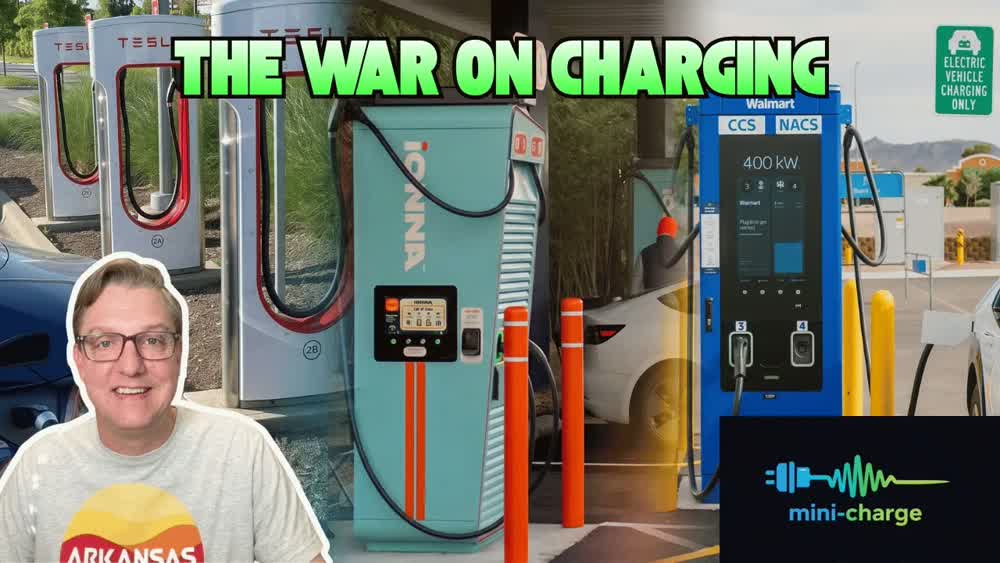
To get a firsthand experience of Walmart’s new charging network, a visit was made to the first official site in McKinney, Texas. This site features four Alpitronic chargers, each capable of serving two vehicles simultaneously, for a total of eight charging bays. Each charger is equipped with both NACS (North American Charging Standard) and CCS1 (Combined Charging System) connectors, allowing for broad compatibility with various EV models. The chargers dynamically split 400 kW of power, providing up to 600 amps per cable. However, CHAdeMO connectors, commonly used by older Nissan LEAF models, are not available at this location, indicating a focus on newer charging standards.
During the test, a rented GMC Hummer EV was charged using the 400 kW Alpitronic charger. The Hummer’s battery was charged from 1% to 53% in just 27 minutes, drawing 100 kWh of electricity. The charging session cost $42.00, reflecting a rate of $0.42 per kWh. Adam Happel clarified that Walmart’s electric vehicle charging pricing will vary by location based on local electricity rates, similar to other EV charging networks. Furthermore, Walmart Plus customers may receive discounted charging rates, adding another layer of value for loyal shoppers.
| Charging Details | Value |
|---|---|
| Charger Type | Alpitronic 400 kW |
| Charging Time (1% to 53%) | 27 minutes |
| Electricity Dispensed | 100 kWh |
| Cost | $42.00 ($0.42 per kWh) |

The Walmart Advantage: Location, Capital, and Service
Walmart’s entry into the public EV charging market is underpinned by several key advantages. With over 4,600 stores and 600 Sam’s Clubs across the United States, Walmart boasts over 5,200 potential charging locations. Remarkably, 90% of the U.S. population lives within 10 miles of a Walmart store, providing unparalleled accessibility for EV owners. This extensive footprint eliminates the significant challenge of securing suitable locations, which often plagues other charging networks that must negotiate leases and navigate property ownership complexities.
The financial strength of Walmart is another critical advantage. With projected revenues exceeding $700 billion by 2025, the company has the capital to invest heavily in building and maintaining a comprehensive nationwide charging network. Unlike smaller networks that may struggle with funding, Walmart’s financial stability ensures that the project’s success is a matter of strategic prioritization rather than financial feasibility. Moreover, the presence of on-site employees during business hours (typically from 6:00 am to 11:00 pm) offers a unique level of customer support, addressing a common pain point in the EV charging industry. The availability of trained staff can help resolve charging issues, provide assistance, and ensure that broken chargers are promptly reported and repaired.
Impact and Future of Walmart’s EV Network
The establishment of the Walmart charging network has the potential to significantly transform the EV charging landscape in the United States. If Walmart successfully builds out 2,000 to 3,000 charging stations with 25,000 to 30,000 stalls by 2030, capable of delivering up to 400 kW charging speeds, it could rival Tesla’s Supercharger network in scale and impact. To put this into perspective, Tesla has built approximately 2,600 Supercharger locations with 30,000 stalls over 13 years. Walmart has the resources to potentially match this achievement in under five years.
The move by Walmart is likely to spur its competitors, such as Costco and Target, to enhance their own EV charging infrastructure. These retailers may face the risk of losing EV-driving customers to Walmart if they cannot offer comparable charging convenience. The Walmart charging network will be particularly beneficial for individuals who lack home charging options and rely on public infrastructure. By providing convenient charging during routine shopping trips, Walmart is addressing a key barrier to EV adoption. Furthermore, Walmart’s reputation as a value-oriented brand suggests that it will offer competitive pricing for EV charging, potentially undercutting the competition and further incentivizing EV adoption.