Weekly EV News · Episode 118 · June 7, 2026What Honda, Nissan, CATL, and California Mean for EV Charging in 2026
This episode is not only about battery chemistry headlines. The practical story is how charger economics, site funding, and battery research all shape the real EV charging experience for drivers and site hosts.
If you are comparing a level 2 EV charger, a 48A EV charger, a Tesla charger, or a 50A EV charger, the useful question is not which keyword sounds bigger. The useful question is what matches your panel, your driving pattern, and the charging access you actually have.
Immediate: California fast-charging funding
Near term: better site economics
Long view: battery chemistry still matters
Funding
$55.2M
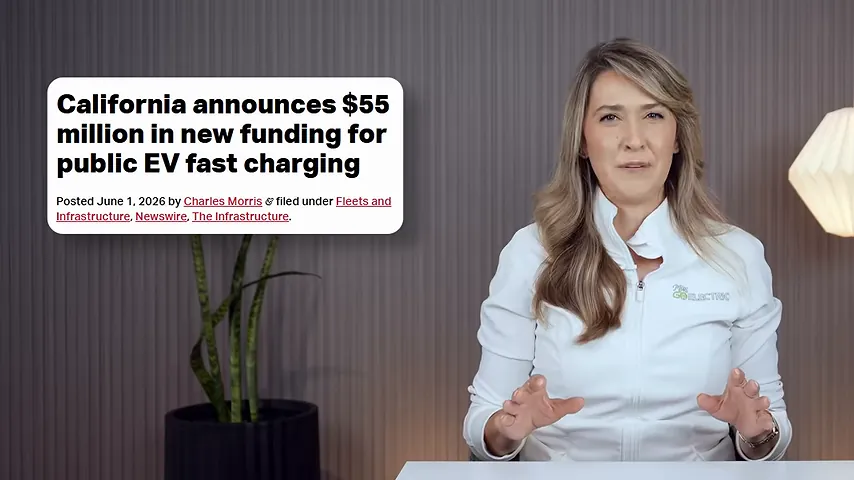
The most actionable news in the episode is the new California fast-charging funding round.
Scale
17K+
California already has more than 17,000 public DC fast charging ports.
Research horizon
12,000
CATL’s lithium-air number is a research signal, not a product you can buy this year.
Three screenshots worth slowing down on
The episode covers four big story lines, but three screenshots tell the story best. These are the frames that matter if you care about EV charging, range, and where public infrastructure is heading next.

Battery materialsHonda + Nexeon: better anodes are a range story, not an instant charging fix
Honda’s stake in Nexeon is about improving the battery stack underneath the car. That can help range and energy density over time, but it does not change a homeowner’s panel capacity or turn a garage circuit into DC fast charging.
- Good for future efficiency and battery performance.
- Not a shortcut around proper home charger installation.
- Useful context when choosing a level 2 EV charger today.
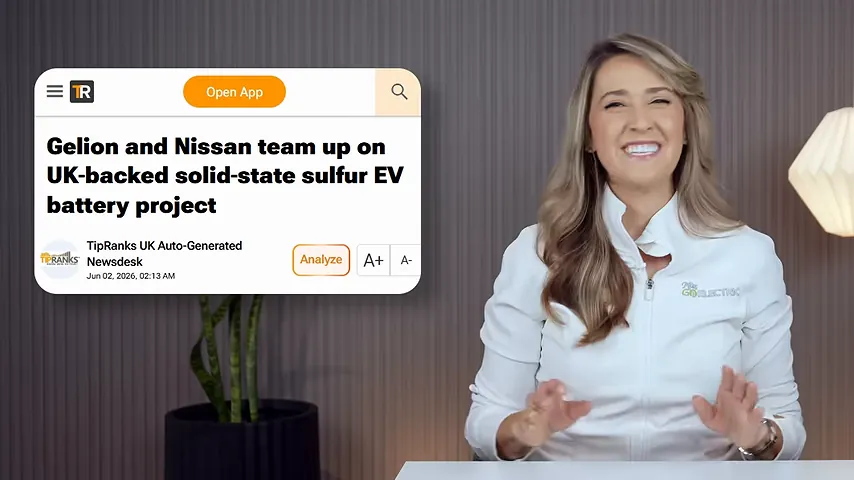
Future chemistryNissan + CATL: chemistry is moving fast, but the charger aisle is still the real-world test
The episode places Nissan and Gelion in the same long-view conversation as CATL’s lithium-air research. That is exactly the right framing: promising science on one side, practical charging decisions on the other.
- Sulfur and lithium-air work are still horizon technologies.
- Drivers still need reliable public charging now.
- For most readers, battery headlines are context, not a buying trigger.
Infrastructure nowCalifornia: the news that actually changes charging project economics
California’s $55.2 million funding round is the most immediately useful part of the episode. It affects installation budgets, site-host planning, and where new EV charging stations can realistically go next.
- Directly relevant to site hosts and charging operators.
- Supports more public DC fast charging deployment.
- Best near-term signal for readers comparing home vs public charging.
Bottom line: if you are planning a home Level 2 EV charger, the battery science headlines are interesting but secondary. If you run a site or choose public charging locations, California’s funding and port growth matter right now.
How to read these stories as a charger buyer
Battery chemistry can move the market, but the choice most readers still have to make is simple: which charging setup fits their home, schedule, and electrical panel.
| Option | Best for | What it solves | What it does not solve |
|---|
| Level 2 EV charger | Most home charging use cases | Overnight charging, predictable routine, lower cost than DC fast charging | It will not replace highway fast charging |
| 48A EV charger | Households with enough panel capacity and heavier daily mileage | Faster home replenishment with a properly sized circuit | It still needs the right electrical setup and professional installation |
| Tesla charger | Tesla owners who want a clean home setup | Convenient home charging and strong compatibility in the Tesla ecosystem | It does not matter if the panel cannot support the circuit safely |
| 50A EV charger | Drivers who want a balanced home charger install | Good everyday charging speed for many garages and driveways | It does not magically improve battery chemistry or public charging density |
| Public EV charging station | Road trips, fleets, multifamily, and retail destinations | Convenience away from home and charging access for non-garage drivers | It depends heavily on site economics, permits, and utility coordination |
This is where the episode lands best: the future of EVs is exciting, but real readers still need dependable charging infrastructure and a safe install that works today.
Related reading on EVCUBE.NET
These earlier posts connect the weekly news to real charging decisions and infrastructure trends.
FAQ
The FAQ is kept short, concrete, and useful so it reads naturally on mobile and desktop.
What does this episode mean for EV charging right now?
The most immediate signal is California’s funding for public fast charging. The battery news matters too, but mostly as a reminder that near-term charging access and installation cost still drive the real-world EV experience.
Is a 48A EV charger better than a 50A EV charger?
Not automatically. The better choice depends on panel capacity, circuit sizing, and how much overnight range you actually need. For many homes, the right Level 2 EV charger is the one that is safely installed and matches your daily miles.
Do Tesla owners need a Tesla charger?
A Tesla Wall Connector is a strong home option, but it is not the only good answer. The key is a properly sized Level 2 setup that fits the home electrical system and the owner’s charging habits.
Why does CATL’s lithium-air research matter if I only care about charging stations?
Because battery chemistry and charging behavior are linked. Better energy density can change how often drivers rely on public charging and how far future EVs can go between stops, even if the technology is still far from production.
What should site hosts learn from California’s funding round?
That public charging is still being treated like infrastructure, not decoration. The grants help offset installation economics and make new EV charging station projects easier to justify.
Sources used in this analysis