Self-parking has quietly become one of the most useful driver-assist features on modern cars. For a lot of American buyers, the weekly slog of squeezing a Model 3 between two lifted trucks at a packed Walmart lot, or nailing a tight parallel spot on a busy city street, is exactly the kind of low-speed stress that automation should be able to take off our plates. So when Tesla bundles “Autopark” into its software, the obvious question is: does it actually work in the real world, or is it another beta that looks great in a demo and falls apart in your neighborhood?
We dug into a hands-on test of the 2026 Model 3’s Auto Park, cross-checked it against Tesla’s current US feature set, and compared it with what Ford, GM, BMW, and Hyundai are offering. Here’s the honest verdict for everyday US drivers.
What Tesla’s Auto Park Actually Does
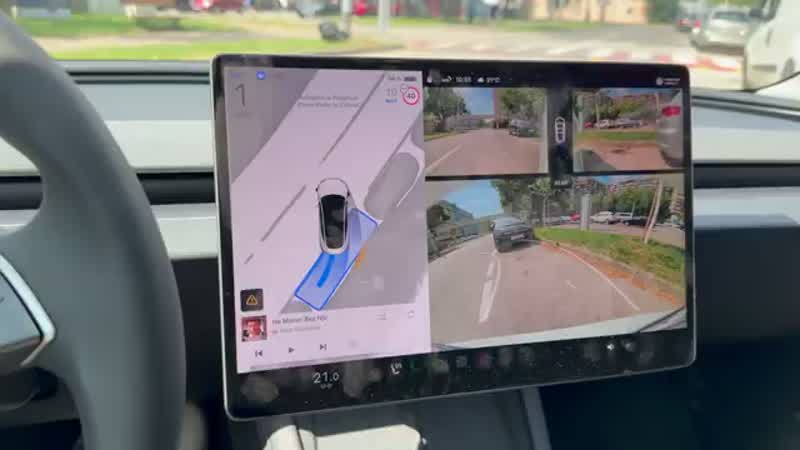
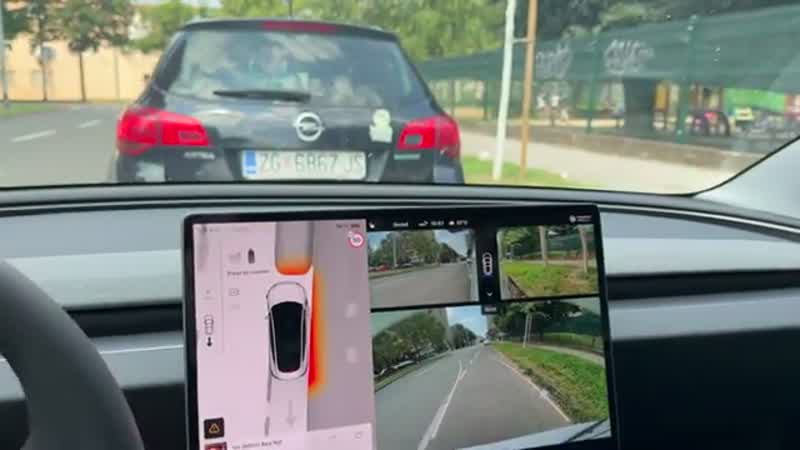
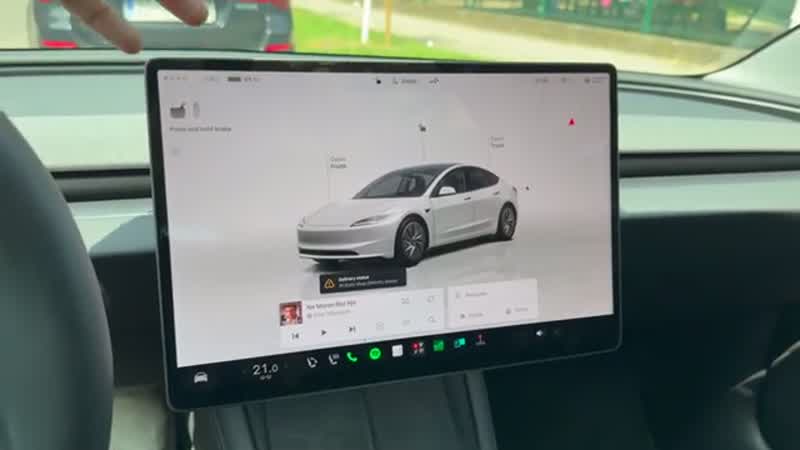
Autopark is Tesla’s self-parking feature. When you creep through a lot looking for a spot, the car scans the painted lines on either side. If it finds a gap it likes, a gray “P” icon pops up on the screen. Drive slow enough — below about 15 mph for parallel spots and about 10 mph for perpendicular ones — shift into Reverse, and tap “Start Autopark.” From there the car takes over steering, throttle, and brake, shuffling itself into the space and dropping into Park when it’s done. You can grab the wheel at any time to cancel.

There’s a catch that matters for US shoppers: on the 2026 Model 3, Autopark is not a standalone purchase. It’s bundled inside Full Self-Driving (Supervised), which in 2026 is a $99-per-month subscription. Tesla no longer sells the old mid-tier Enhanced Autopilot that used to package Autopark and Smart Summon separately, so if you want the car to park itself, you’re subscribing to the whole FSD stack.
The other thing to understand is the hardware. Every new Model 3 is “vision-only” — Tesla ripped out the ultrasonic parking sensors back in late 2022 and now relies entirely on cameras and software to judge distance. That decision is central to how Auto Park behaves, as we’ll see.
The Real-World Test: Impressive, But Fussy
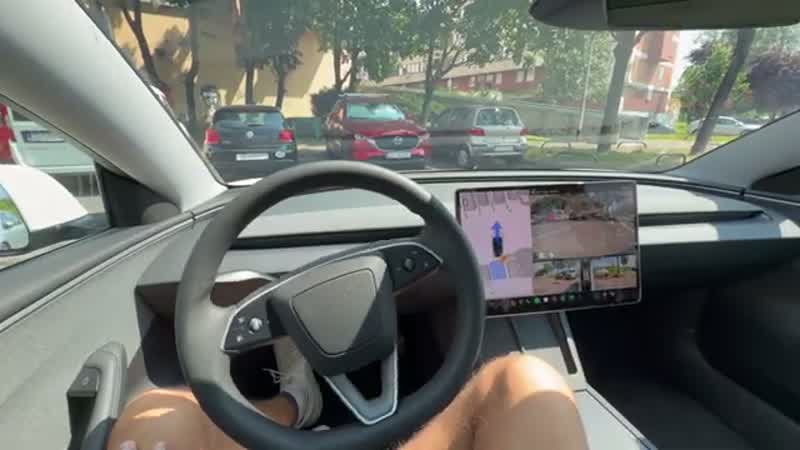
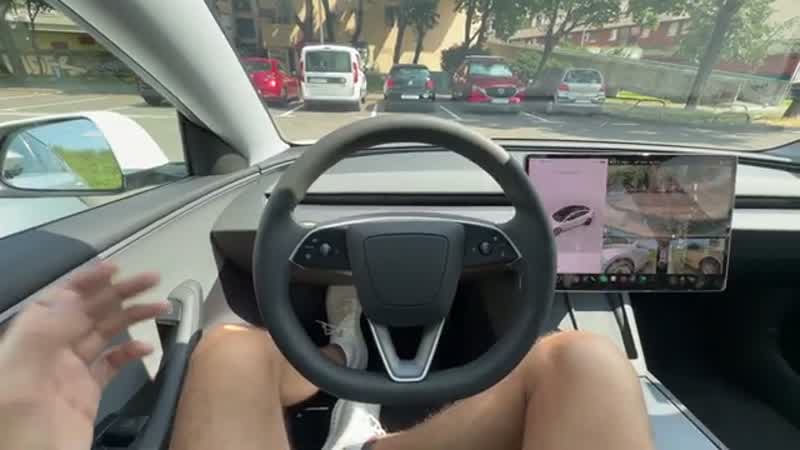
In a live parking-lot test, the reviewer picked the hardest spots on purpose: tight gaps between other cars, not pulled all the way forward, with minimal room to maneuver. The headline result? It works. The car repeatedly found a marked spot, backed and straightened, and finished neatly between the lines, leaving healthy clearance for the neighboring vehicles.
But “works” came with some asterisks that US drivers will recognize. The maneuver often took far more small corrections than it ideally should — the kind of multi-step shuffle where the car creeps forward, reverses, nudges, and re-centers several times. At one point it simply froze, unable to decide, because overgrown grass creeping past the edge of the parking space read to the cameras like an obstacle. Once the grass was accounted for, it completed the park — but only after a long hesitation.
Another limitation showed up clearly: the system would not recognize unmarked spaces. Pull into a lot where people informally park but nobody painted lines, and Autopark shrugs. It only “sees” painted stalls, and only when you’re in the correct lane to read them. That’s a real constraint in the older, frayed lots many Americans actually use.
When it finished, the car was sometimes a touch crooked — not badly, but not perfectly centered either. The reviewer, who is a confident human parker, concluded that for people who genuinely struggle with parking, this could be a big help. For skilled drivers, it’s a nice convenience that occasionally needs a final nudge.
Why It Sometimes Gets “Spooked”
The grass-hesitation moment isn’t a one-off quirk. Because the 2026 Model 3 has no ultrasonic sensors, it leans entirely on cameras to understand its surroundings. Tesla’s “High-Fidelity Park Assist” builds a 3D picture from those cameras, and it’s genuinely impressive when the lighting and lines are clean. But camera-only perception can be tripped up by things a $5 ultrasonic sensor would shrug off: overhanging grass, weird shadows, heavy rain on the lens, or faded markings.
This is the trade-off Tesla made. The on-screen visualization — watching your car render its world in crisp 3D — is the best in the business. But the raw reliability at close range, especially in messy real-world conditions, is where sensor-backed rivals tend to feel more consistent.
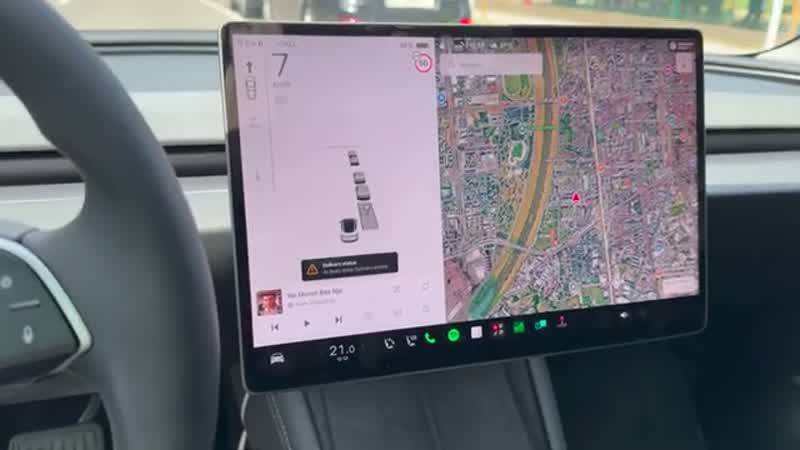
One related feature worth knowing about: Actually Smart Summon, also inside the FSD subscription, lets you pull the car out of a spot and drive it to you across a parking lot from your phone. NHTSA opened a preliminary investigation into it in early 2025 and closed it in April 2026 — the agency found incident rates under 1%, all low-speed, with no injuries. Tesla had expanded the feature’s range by roughly 20% in a 2025 update. It’s still officially meant for private lots and driveways, and you must keep the car in sight.
How It Compares to Rivals
Tesla isn’t the only game in town, and for pure parking, some competitors are arguably more polished:
- Ford Active Park Assist 2.0 (Mustang Mach-E, F-150, Explorer): Fully automatic — steering, throttle, and brake — plus a “Park Out” mode that drives you back out of a tight parallel spot. Reviewers consistently call it the most dependable, set-it-and-forget-it system, and it uses ultrasonic sensors alongside cameras for rock-solid close-range detection.
- GM (Chevy, Cadillac, Buick): Automatic Parking Assist with HD Surround Vision handles perpendicular and parallel spots on several EVs and crossovers, backed by traditional sensors rather than camera-only guessing.
- BMW Parking Assistant Professional: Smooth and precise, with a standout “Reversing Assistant” that remembers your last ~165 feet and traces the exact path back out — brilliant for tight driveways. Remote parking via the app is a bonus.
- Hyundai / Kia / Genesis RSPA 2: Lets you pull the car in or out of a spot from the key fob while standing outside, and it’s notably good at reading faded lines and even diagonal spaces.
The pattern is clear: nearly every rival pairs cameras with ultrasonic sensors for the final few feet, which makes them less likely to get spooked by a shadow or a tuft of grass. Tesla bets everything on vision and delivers the slickest visuals but a slightly less predictable finish.
The Pricing Reality for US Buyers
Here’s the part that stings. If all you want is “help me park,” you still have to pay for the full FSD (Supervised) subscription at $99 a month. There’s no à-la-carte Autopark. The reviewer’s European wish — sell self-parking as a one-time ~€500 option — doesn’t exist in the US either. You’re buying summon, navigate-on-highway, traffic-light control, and city-street Autosteer whether you want them or not.
For a nervous parallel-parker or someone whose partner dreads tight lots, $99 a month might be worth it for the parking alone. For a confident driver who rarely needs help, it’s a tougher sell when Ford and others bake comparable automatic parking into far cheaper packages.
Verdict: Should You Rely on It?
For everyday US drivers, Tesla’s 2026 Model 3 Auto Park is genuinely useful and, in clean conditions with marked stalls, it parks well. It shines in the scenarios Americans actually face: crowded perpendicular lots, tight parallel streets, and pulling out of a spot you’d rather not climb back into. The visualization is unmatched, and Actually Smart Summon adds real convenience for rainy-day walks to your car.
But manage your expectations. It can hesitate around odd obstacles, it ignores unmarked spaces, and it occasionally finishes a little off-center — all side effects of going camera-only. If you want the most foolproof, consistent self-parking money can buy today, a Ford, BMW, or Hyundai may edge it out. If you’re already in the Tesla ecosystem and subscribed to FSD, Autopark is a solid, if occasionally fussy, perk that most owners will be glad to have.
Want more of our Tesla coverage? Check out our other Tesla Model 3 reviews and EV buying guides before your next test drive.