For years, Rivian has been the adventure brand for people who could already afford a $70,000 truck or SUV. The R1T and R1S are terrific, but they were never going to put Rivian on every suburban driveway in America. The 2026 Rivian R2 is the car that’s supposed to change that. It’s smaller, cheaper, and built to go head-to-head with the Toyota RAV4, Honda CR-V, Tesla Model Y, and Ford Mustang Mach-E for the hearts of mainstream American buyers.
We got behind the wheel of a near-production R2 at Rivian’s flagship location in Austin, Texas, on a sweltering 104-degree day. After a real-world first drive — city streets, highway pulls, and a lot of poking at the screens — here’s what the R2 reveals about Rivian’s mainstream moment.
First Impressions: A Real SUV, Not a Jelly Bean
The first thing you notice about the R2 is that it looks like an SUV. Rivian kept the classic two-box silhouette — a long, expansive hood you can actually see the corners of, an upright windshield, and a big square rear window that opens. In a sea of rounded “jelly bean” crossovers, the R2 has real presence. It feels big and commanding, yet it’s noticeably more compact than an R1S.
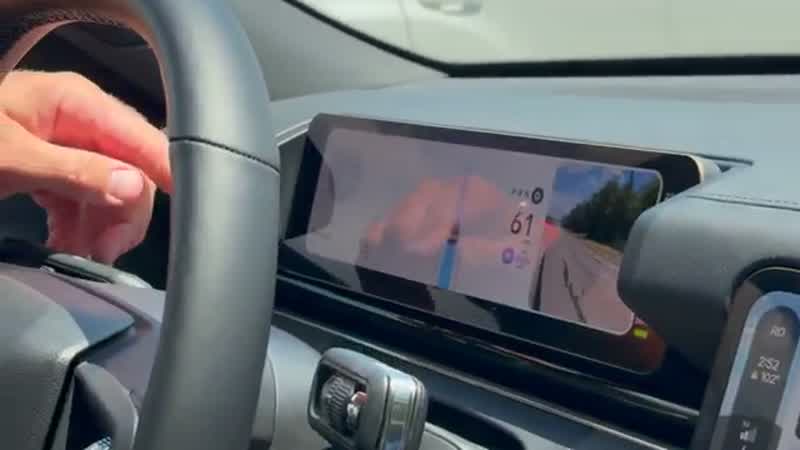
Climb in and the cabin feels genuinely premium without being precious. The seats are a highlight — firm, supportive, with wide bottom bolstering that bigger drivers will appreciate. The steering wheel gets Rivian’s “haptic halo” scroll wheels, which click and roll with a satisfying stop at the ends (volume maxes out and physically won’t turn further). It’s a small touch, but it tells you Rivian sweats the details.
Out on the road, the R2 is the most nimble vehicle Rivian has ever built. The steering is tighter and more direct than the body-on-frame R1, and the whole thing feels “poised” rather than floaty. Throttle modulation is smooth and intuitive — right up there with the best from Tesla. And the power delivery is its own kind of animal: instead of snapping your neck like a Model S Plaid, the R2 rolls on and then hits like a freight train. It’s effortless and a little addictive.

Range, Charging, and the NACS Advantage
Rivian hasn’t skimped on the numbers that matter to American road-trippers. The higher trims of the R2 are EPA-estimated at up to 330 miles of range, and Rivian’s own estimate for the long-range version reaches 345 miles. Even the most affordable variant is targeting 275-plus miles. In a compact electric SUV, that’s right in the sweet spot for crossing state lines without range anxiety.
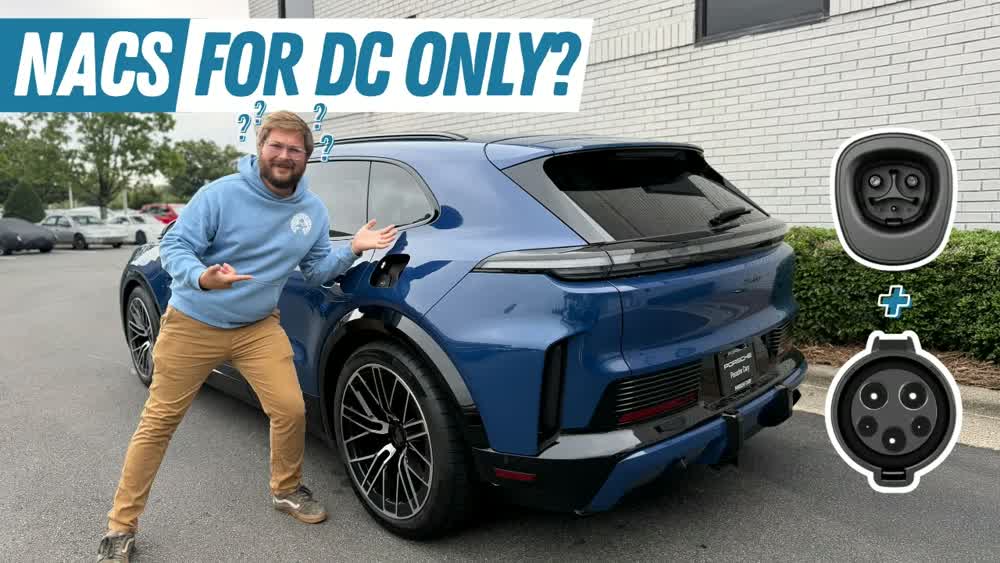
Just as important for US buyers: every R2 ships with a native NACS charge port. That means adapter-free access to more than 20,000 Tesla Superchargers across the United States and Canada — the single biggest fast-charging network in the country. Rivian says you can go from 10% to 80% in about 29 minutes and add roughly 150 miles in 15 minutes. Peak DC charging lands around 217–220 kW.
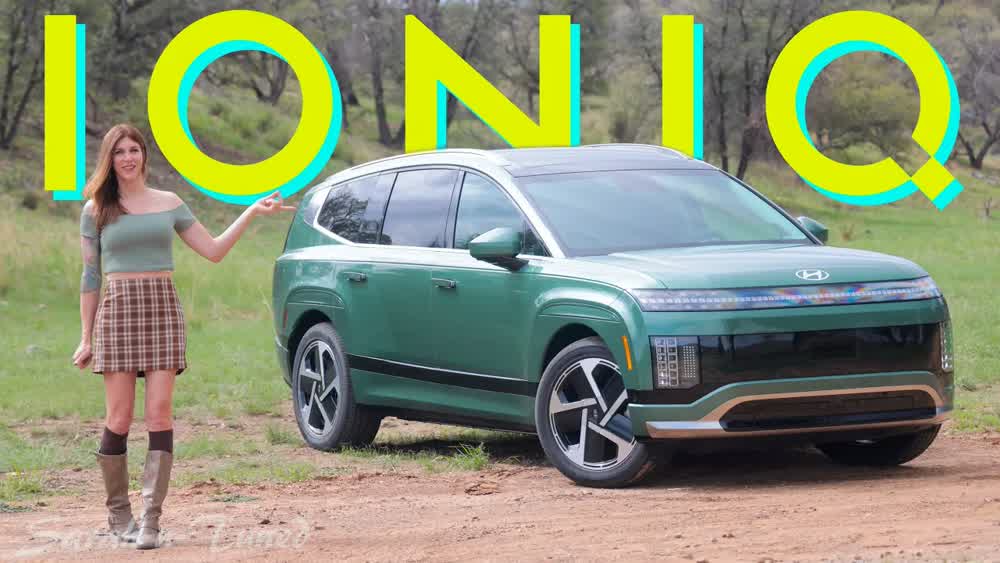
One honest caveat: the R2 runs on a 400-volt architecture, not the 800-volt setup you’ll find in a Hyundai Ioniq 5 or Kia EV6. That means it won’t match those Koreans’ peak charging curve. We dig into why charging speed — not just range — is becoming the real battleground in our piece on why 800 volts is the new baseline for 2026 EVs. The R2 counters with Supercharger access and strong range rather than record-breaking plug speeds.
Price and Where the R2 Fits in the US Market
Rivian has promised a starting price around $45,000 — the figure that gets quoted everywhere — but it’s worth being precise about timing. The first R2s to reach customers are the higher trims: the Performance Launch Edition at $57,990 (dual-motor AWD, 656 hp) and the Premium at $53,990, both arriving through 2026. A long-range Standard follows at $48,490, with the true ~$45,000 base variant expected later in the lineup.
So if you want a $45K Rivian, you’ll be waiting a bit. But even at $48,000–$58,000, the R2 undercuts the R1S (which starts near $73,000) by a wide margin and lands squarely in the heart of the American compact-SUV market. Rivian is building the R2 at its plant in Normal, Illinois, with capacity planned for up to 155,000 units a year — real volume, not a token compliance car.
Reservations are open now with a $100 refundable deposit. For context, that puts the R2 in direct conversation with the Tesla Model Y Long Range at $47,990 (330 miles), the Ford Mustang Mach-E at $47,495 (310 miles), and the Hyundai Ioniq 5 at $41,995 (245 miles). The R2’s adventure cred and Supercharger access are its differentiators.
How It Stacks Up Against the Rivals
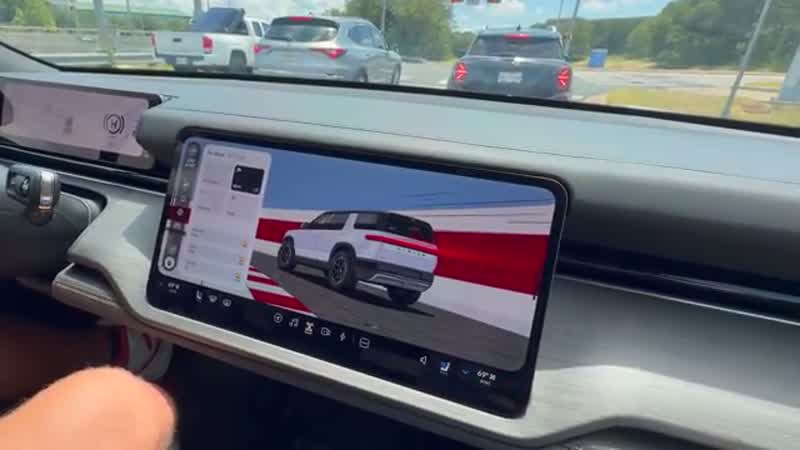
On our drive, the R2 drew constant comparisons to the Model Y — and mostly won them. Our co-driver, who has owned Teslas, said flatly that the R2 drives better than a Model Y: roomier, more fun, more storage, and a more “real SUV” feel. The R2 also beats the Model Y on one quiet feature war: a true 3D 360-degree bird’s-eye camera, which Tesla still doesn’t offer.
Against the Mach-E and Ioniq 5, the Rivian leans on capability and character. The R2’s party tricks are genuinely useful: a power rear window that drops into the tailgate (like a 4Runner), a frunk big enough for a set of golf clubs, one-pedal driving so smooth you’ll forget the brake pedal exists, and wildly effective ventilated seats that were a lifesaver in the Texas heat.
The cabin tech holds its own, too. Rivian’s interface is widely regarded as second only to Tesla’s for intuitiveness — climate, drive modes, cameras, and charging are all a tap away, with no buried submenus. Wireless charging uses a MagSafe-style magnetic pad that locks your phone in place over bumps. And the drive-mode personality is broad, ranging from a sluggish “Conserve” mode to a “Sport” setting that unleashes the freight-train torque.
Driver Assistance: Universal Hands-Free Shows Promise
The R2 comes with hardware for Rivian’s Universal Hands-Free system on every trim. On the highway, it handled lane-keeping, traffic-aware speed control, and even recognized traffic lights — more capable than first-generation Tesla Autopilot, though it still won’t slow for red lights and only performs lane changes on limited-access highways (it politely refused with a red indicator line on surface streets). Rivian is also adding a LiDAR sensor up front for real-time verification of what the cameras see, a sign the company is serious about autonomy.
Off the pavement, the R2’s shorter wheelbase gave it a surprisingly tight turning circle — no three-point turn required where an R1S would have climbed a curb. Even on fixed (non-air) suspension in our test unit, the ride soaked up rough Texas roads well enough that you’d swear it had air springs, with distinct soft and firm settings.
The Verdict: Rivian’s Mainstream Moment
After a full day with the R2, the hype holds up. This is exactly the kind of efficient, capable, characterful two-row SUV the American market has been missing from the EV side — not grotesquely oversized, but with that “king of the road” feel buyers love. It’s quiet (quieter than a new Model 3 even on chunky all-terrain tires), quick, practical, and genuinely fun to drive.
Will a $45K Rivian finally take EVs mainstream? The base price is still a ways out, and early trims ask Model Y money. But the R2 proves Rivian can build a mass-market car that’s both desirable and distinctly American-made. For US buyers who want adventure credibility, Supercharger access, and a real SUV shape without a six-figure price tag, the 2026 Rivian R2 is the most compelling option yet — and the closest Rivian has come to its mainstream moment.