Xpeng X9 Performance 1000 km Challenge: Is This the Best Family EV Van in 2026?
June 18th, 2026
By EVCUBE .NET
No Comments
Six years ago, Bjorn Nyland tested the first Xpeng G3. It was slow to charge, awkward software, front-wheel drive, and honestly a bit of a joke. Six years later, the Xpeng X9 Performance arrives ? and according to the same tester, it “puts the Germans to shame.” With a 110 kWh battery, 542 kW peak charging capability, a charging curve that holds 400 kW from 10% to 65%, and real-world consumption of just 230 Wh/km, this MPV might be the most complete family EV on the market in 2026. Here is our deep analysis.
The 1000 km Challenge: A New Record
~8h 53min
1000 km challenge time
Fastest van ever tested
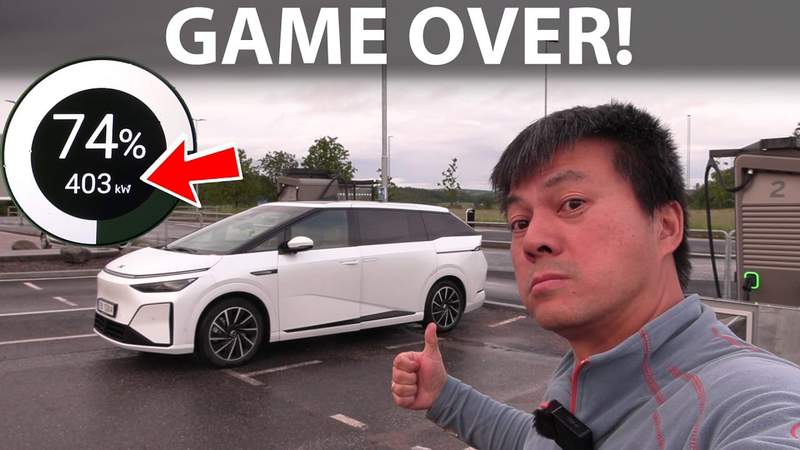
403 kW @ 65%
Charging power at 65% SOC
Virtually no taper from 10% to 65%
Key charging observations:
Takes approximately 5.5 minutes to ramp to full speed from a low state of charge
Once ramped, holds maximum power flat to around 60-65%
Using 600-amp boosted cables (Alpitronic Hypercharger 400 kW)
Car preheated battery automatically ? reported “optimal temperature” at arrival
Even at 80% charge rate remained impressive
Efficiency: The Most Efficient Van Ever Tested
At 234 Wh/km displayed (approximately 230 Wh/km actual after accounting for the car’s ~2.5% under-reporting), the X9 is the most efficient van Bjorn Nyland has ever tested.
In rainy conditions ? which typically increase consumption by 5-10% ? the Xpeng X9 achieved approximately 230 Wh/km real-world consumption. The car under-reports by about 2.5%, meaning the actual efficiency is even more impressive than the displayed figures. For a vehicle of this size (a seven-seat MPV), this is exceptional.
The car’s range on the 110 kWh battery (107.2 kWh measured usable) translated to roughly 975 km of real-world driving capability at highway speeds in the 1000 km challenge ? meaning the X9 could approach its 1000 km claimed range in mixed conditions.
Interior & Family Features
The X9’s interior includes zero gravity seats, a hot box that can heat food without preheating, built-in fridge, ceiling TV, and exceptional soundproofing.
The Xpeng X9 interior is where the family value proposition truly shines:
Zero gravity seats ? front seats with reclining relaxation mode
Hot box ? a heated compartment that can warm food during drives (3+ hours runtime tested)
Built-in refrigerator ? for cold drinks and groceries
Ceiling-mounted TV ? entertainment for rear passengers
Premium sound system ? with excellent audio quality
Exceptional soundproofing ? tunnel test showed barely noticeable noise increase
Massage function ? genuinely effective, not a gimmick
“If I didn’t tell you that I was in a tunnel, you wouldn’t have guessed it. That’s how quiet this car is.”
? Bjorn Nyland, EV tester
One minor ergonomic note: the second-row seats are narrow seats (not the wide version), making child seat installation slightly more awkward.
Discover the most attractive leasing and financing options for electric vehicles (EVs) this November 2024. Whether you’re looking to lease or finance, there are some excellent deals available that cater…