Every Hybrid Powertrain Explained: From Mild Hybrid to EREV ? Which Is Right for You in 2026?
June 18th, 2026
By EVCUBE .NET
No Comments
In 2026, the line between hybrid and electric has never been thinner ? or more confusing. From mild hybrids that save 5% fuel to extended-range EVs that drive like a full electric car with a gas generator as backup, there are now six fundamentally different hybrid architectures on the market. This is our comprehensive guide to every hybrid powertrain, how they work, who they are for, and which one makes sense for you.
The Complete Hybrid Powertrain Guide
Level 1
Mild Hybrid (MHEV)
How it works: A small electric motor (10-20 kW) paired with a conventional combustion engine. The motor cannot drive the wheels alone ? it assists acceleration, recovers energy during braking, and enables silent start-stop.
Fuel savings: 5-15%, most noticeable in city traffic with frequent stop-and-go. Highway gains are minimal.
Who it is for: Buyers who want a small efficiency improvement without any change in driving habits. Often goes unnoticed ? many drivers don’t even know their car has it.
Examples: Compact European hatchbacks, large American pickup trucks. Widely adopted post-2017 for emissions compliance.
Level 2
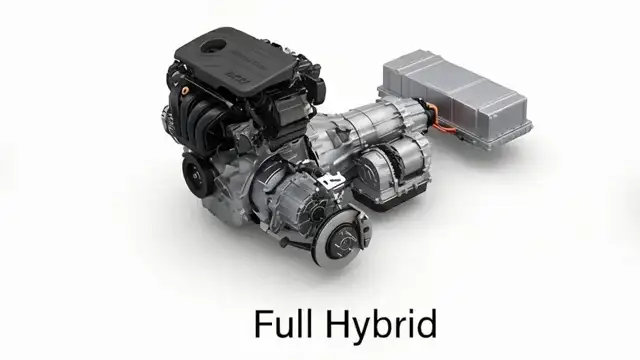
Full Hybrid (HEV)
Toyota’s full hybrid system, debuted in the 1997 Prius, remains one of the most durable and refined hybrid architectures on the market.
How it works: A larger battery and motor can drive the wheels at low speeds. The system constantly decides in real-time whether the engine, the motor, or both should provide power. Transitions are seamless enough that most drivers do not notice them.
Key advantage: No plug required. The hybrid charges its own battery through regenerative braking and the engine. It is a normal car that uses noticeably less fuel.
Who it is for: Buyers who want significant fuel savings without changing their refueling routine. Ideal for city driving where electric-only low-speed operation is most useful.
Examples: Toyota Prius (1997-present), Toyota RAV4 Hybrid, Hyundai Ioniq Hybrid.
Level 3
Series Hybrid (EREV-Lite)
How it works: The combustion engine never connects to the wheels. It runs a generator that charges the battery or powers the electric motor. The engine operates at a fixed efficient speed regardless of road speed, decoupled from driving demand.
Key advantage: Driving experience feels like a pure EV ? smooth, immediate throttle response. Engine noise is constant and predictable when running.
Trade-off: At sustained highway speeds, the double energy conversion (fuel ? mechanical ? electrical ? mechanical) is less efficient than a direct mechanical connection.
Examples: Nissan e-Power (Qashqai, X-Trail). Popular in Japan and increasingly in Australia.
Level 4
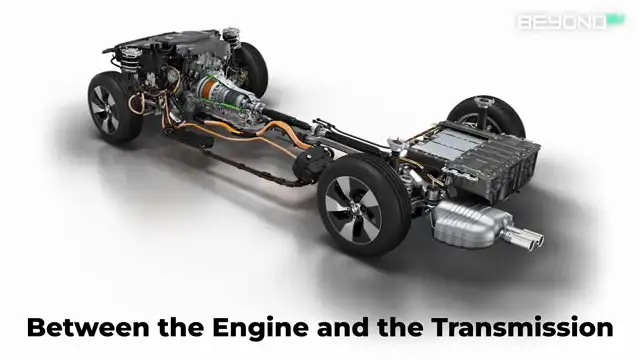
Plug-In Hybrid (PHEV)
How it works: A conventional combustion powertrain with an electric motor inserted between engine and transmission (P2 layout). The motor can drive the wheels independently, assist under load, or recover energy. The engine can be completely disconnected for electric-only driving.
Key advantage: Meaningful electric-only range for daily commuting. Can handle a full day of local driving on a single overnight charge, with the engine available for longer trips.
Who it is for: Buyers who want to run electric for daily use but need the range confidence of petrol for longer trips or towing. Popular in truck-based applications where towing capacity must be maintained.
Examples: GWM Cannon Alpha, Ford Ranger Stormtrak, BMW 330e.
Level 5
Super Hybrid (BYD DM Approach)
BYD’s 5th gen DM starts from an EV architecture ? the engine primarily acts as a generator, only connecting to the wheels at highway speeds for efficiency.
How it works: Starts with an electric vehicle powertrain and adds a combustion engine to support it. The wheels are driven by electric motors. A large battery covers significant daily distances on electricity alone. The engine operates primarily as a generator, with the ability to connect directly to the wheels at sustained highway speeds.
Key advantage: Drives like an EV most of the time while carrying the range confidence of a combustion engine. Substantially more electric range than a typical PHEV.
Who it is for: Buyers who want an EV-first driving experience but are not ready to go fully electric. BYD’s approach has proven highly successful, with their DM platform driving massive global sales growth ? as covered in our analysis of China’s EV expansion.
Examples: BYD Qin DM-i, Song DM-i, Seal DM-i (5th generation).
Level 6
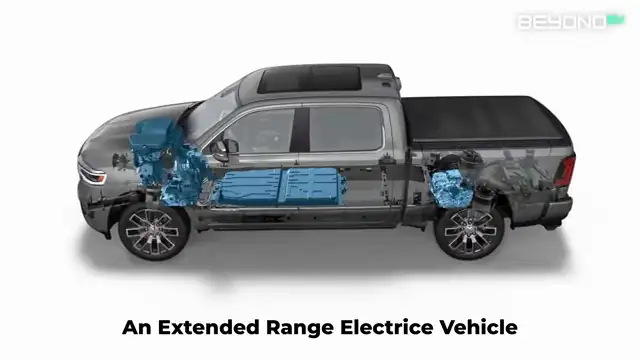
Extended Range Electric Vehicle (EREV)
Li Auto has found remarkable commercial success with the EREV formula: a full electric driving experience with a generator that eliminates range anxiety entirely.
How it works: Built from the ground up as an electric car. Large battery. Electric motors are the primary propulsion. The combustion engine exists solely as a backup generator that activates only when the battery runs low. It runs at a fixed speed optimized for generation efficiency.
Key advantage: Completely eliminates range anxiety. Most drivers can complete their daily commute on electricity alone, while retaining the freedom to drive across the country without planning around charging stops.
Who it is for: Buyers who want a pure EV driving experience but need absolute flexibility for long-distance travel. The GM Chevrolet Volt (2010) first proved the concept; Li Auto has since perfected it.
Examples: Chevrolet Volt, Li Auto L7/L8/L9, NIO (with battery swap).
Head-to-Head Comparison
Feature
Mild Hybrid
Full Hybrid
Series Hybrid
PHEV
Super Hybrid
EREV
Electric-Only Driving
No
Low speed only
Yes (limited)
Yes (30-80 km)
Yes (100+ km)
Yes (150+ km)
Plug Required
No
No
No
Yes
Yes
Yes
Fuel Savings (city)
5-15%
30-50%
20-40%
50-80%*
80-95%*
80-95%*
EV Driving Feel
No
Partial
Close
Partial
Yes
Yes
Highway Efficiency
Good
Good
Lower
Good
Good
Good
Complexity
Low
Medium
Medium
High
High
Medium
Cost Premium
$1-2k
$3-5k
$3-5k
$5-8k
$5-8k
$6-10k
* Fuel savings depend on daily driving distance and charging frequency. Higher end assumes regular charging.
Which Hybrid Is Right for You?
Recommendation by Driving Profile
City commuter with home charging
EREV or Super Hybrid
Highway commuter, no charging
Full Hybrid
Towing / off-road needs
PHEV (P2 layout)
Minimal cost, small improvement
Mild Hybrid
EV-curious, not ready to commit
Super Hybrid (BYD DM)
No plug, want EV-like feel
Series Hybrid (e-Power)
The Bigger Story: Convergence
The most striking trend across all six architectures is convergence. The line between hybrid and electric is thinning every year. BYD’s Super Hybrid is essentially an EV with a backup generator. Li Auto’s EREV is a full EV with a range extender. Even Toyota’s latest full hybrids are adding more electric-only range.
Our battery technology analysis explains why: as LFP pack costs cross $80/kWh and energy density continues improving, the economic case for adding meaningful electric range to any vehicle ? even one with an engine ? becomes overwhelming. The hybrid of 2030 may barely be recognizable as a hybrid at all.
Frequently Asked Questions
What is the difference between a full hybrid and a plug-in hybrid?
A full hybrid charges its own battery through regenerative braking and the engine ? no plug needed. A plug-in hybrid (PHEV) has a larger battery that must be charged externally for electric-only driving, offering 30-80 km of EV range before the engine engages.
Does a mild hybrid improve fuel economy significantly?
Mild hybrids typically improve fuel economy by 5-15%, most noticeable in city driving with frequent stop-and-go. On highways the benefit shrinks. The system cannot drive the wheels on its own.
What is a super hybrid and how is it different from a PHEV?
A super hybrid (like BYD’s DM system) starts from an EV architecture and adds an engine as a generator. A PHEV starts from a combustion architecture and adds electric capability. The super hybrid drives like an EV most of the time, with substantially more electric range (100+ km).
What is an EREV and is it better than a regular hybrid?
An Extended Range Electric Vehicle is a full EV with a backup generator engine. The wheels are always driven by electric motors; the engine only runs when the battery is low. It eliminates range anxiety entirely while providing a pure EV driving experience. Li Auto has proven this formula commercially.
Which hybrid type is best for highway driving?
Full hybrids and PHEVs with direct mechanical engine connection are most efficient at sustained highway speeds. Series hybrids and EREVs face an efficiency penalty from the double energy conversion (fuel to electricity to motion).
Do I need to plug in a full hybrid?
No. Full hybrids charge their own battery through regenerative braking and the engine. They offer better fuel economy without any change to your refueling routine.
Discover the most attractive leasing and financing options for electric vehicles (EVs) this November 2024. Whether you’re looking to lease or finance, there are some excellent deals available that cater…