No products in the cart.

Chinese automakers built more than 60% of the world’s electric vehicles last year, and BYD — a company Americans can barely buy from — now outsells Tesla globally by more than 100,000 vehicles per quarter. The tariff wall keeping them out of the U.S. is also quietly shaping what Americans can afford, what U.S. automakers build, and how fast the domestic EV market grows.
The CBS Sunday Morning segment that anchors this analysis opens at a London dealership that has sold Volkswagens for more than 50 years — now pushing BYDs to customers like Justin Watson, who traded in his Lexus. “The level of technology is far superior than anything I’ve had before,” he says. A London dealer admits he never imagined selling Chinese cars. “When you see the growth and the quality of the product, it’s phenomenal.” That’s the world outside the United States. Inside it, none of this exists on dealer lots.
The numbers behind the lead
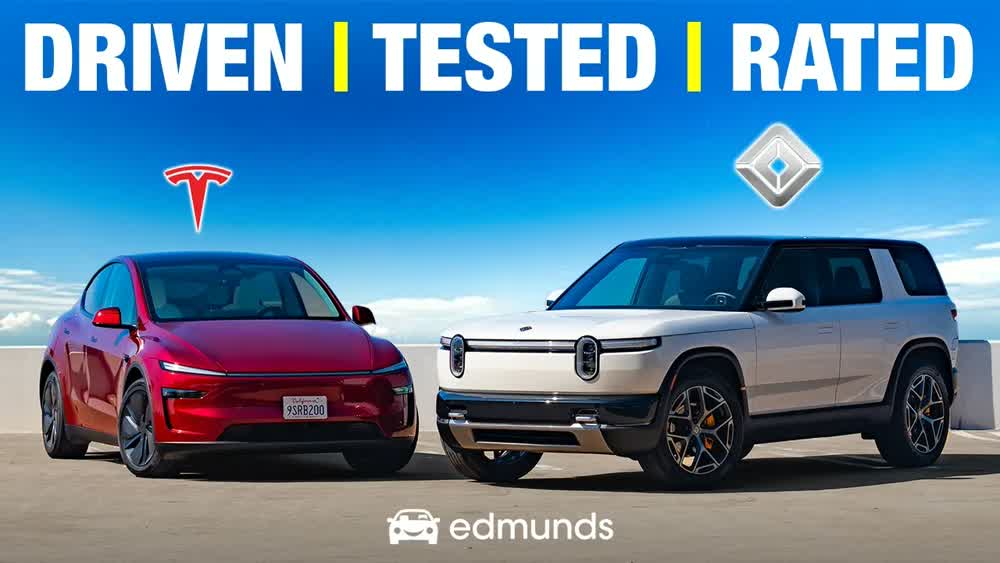
China’s new-energy-vehicle share of global sales hit 62.8% in January 2026 and 61% across Q1, and Chinese brands hold 11 of the world’s top-20 EV brands and 16 of the top-20 EV models. BYD delivered 557,090 pure-electric vehicles in Q2 2026 against Tesla’s roughly 396,000–406,000 — the gap was more than 600,000 units in BYD’s favor for full-year 2025. BYD’s May 2026 exports alone hit about 156,000–160,000 vehicles, more than 40% of its NEV sales that month, and it has raised its 2026 overseas target to 1.5 million units. The average selling price difference is the story American buyers should pay attention to: roughly $20,300 for BYD, $41,300 for Tesla, $90,700 for Rivian.
| Region | EV share (new sales) | Trend |
|---|---|---|
| China | >50% (2025); NEV world share 62.8% | penetration holding >40% domestically |
| Norway | ~97% | world’s highest |
| Europe | ~20.6% BEV share Q1 2026 | BEV sales +26% YoY |
| United States | ~7–8.5% | Q1 2026 BEV sales −27% YoY |
| Japan | ~3% | slowest major market |
SIGNAL: The U.S. isn’t just behind on EV adoption — it’s now the only major market actively shrinking it. Q1 2026 U.S. BEV sales fell 27% year-over-year after the federal $7,500 credit expired, while Europe’s BEV sales rose 26% and China kept exporting at record pace. Tariffs protected Detroit from Chinese competition and simultaneously protected Tesla’s 54% U.S. EV share.
Why the tariff cuts both ways
The 100% U.S. tariff on Chinese-made EVs — imposed in 2024 and kept since — effectively closes the market to imports: a $25,000 BYD becomes a $50,000 BYD. The CBS report quotes a UK industry analyst on the trade-off: tariffs may protect U.S. jobs temporarily, “but if the future of all car making is electric, you might simply be preventing American car makers from making that journey.” The warning matters because BYD owns its entire supply chain — it started as a battery maker — which is how New Automotive estimates it builds cars about 25% cheaper than Western rivals.
Meanwhile, U.S. automakers are retreating, not advancing: Ford’s Q1 2026 U.S. EV sales fell nearly 70% year-over-year, GM’s Chevrolet dropped more than 30%, and both companies have scaled back EV investments and taken writedowns. Tesla, with its Supercharger network and brand loyalty, held a 54.2% U.S. EV share even as its own sales slipped 8.4%. The one bright spot: used EVs, whose prices now approach comparable gasoline cars — helped by high gas prices and post-incentive new-car pricing.
The uncomfortable summary for American buyers: the world’s most affordable, most advanced EVs exist — you just can’t buy them. The tariff is a jobs policy first and a consumer policy second, and U.S. shoppers are the ones paying the difference at the window sticker.
Why can’t I buy a BYD in the US?
A 100% U.S. tariff on Chinese-made EVs doubles their price on arrival, effectively banning them from the market. BYD and most other Chinese brands do not sell new vehicles in the U.S.
Is the US EV market shrinking?
New BEV sales fell 27% year-over-year in Q1 2026 after the federal $7,500 tax credit expired at the end of September 2025. Used EV demand is rising as prices fall toward parity with gasoline cars.
What would change if the tariff were lifted?
Chinese EVs like the BYD Seagull (priced around $10,000–15,000 in their home market) would likely undercut nearly every U.S. EV on price, reshaping the market quickly — which is precisely why the tariff exists.