No products in the cart.
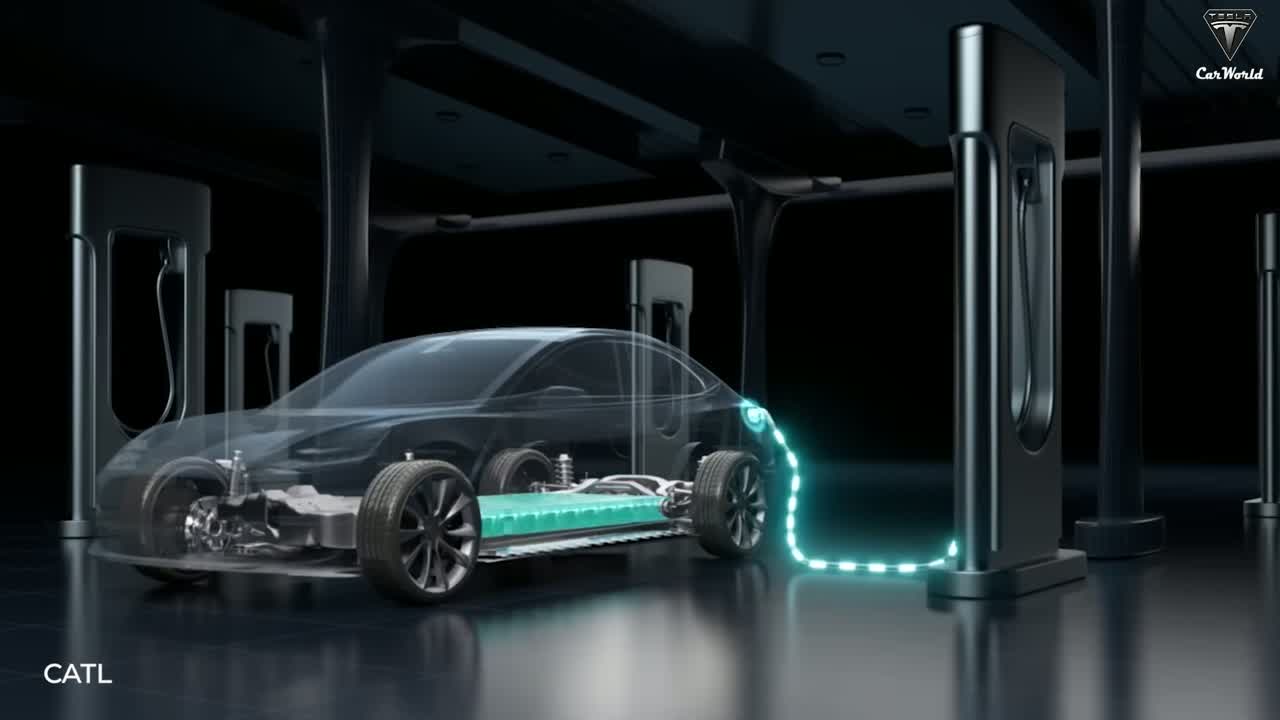
Toyota says its first-generation solid-state battery delivers roughly 1,000 km of range and charges 10–80% in about 10 minutes. That’s the kind of claim that would end range anxiety forever — if it ships. The latest timeline, confirmed this year, pushes first vehicles to 2027–2028, and by then Toyota may not be first.
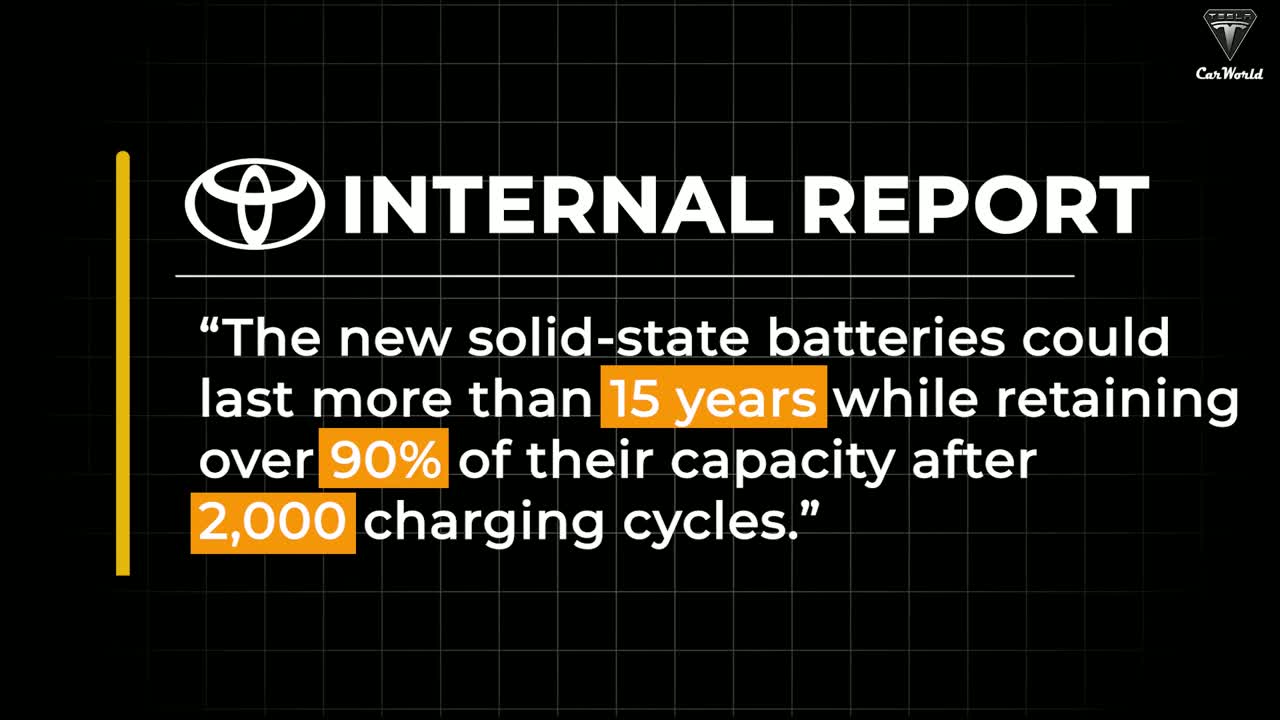
Here’s the pitch: an EV that leaves Los Angeles in the morning and covers more than 600 miles without a charging stop, then refills 10–80% in the time it takes to buy coffee. Solid-state batteries promise exactly that — higher energy density, faster charging, and better durability than today’s lithium-ion packs. Toyota’s Gen 1 cells target around 450–500 Wh/kg, roughly double the energy density of many current NMC packs, with a claimed 2,000 charge cycles holding more than 90% capacity over a projected 15-year life.
The claim vs. the timeline
Toyota has promised solid-state before. In 2014 it said production by 2020. Then 2023, then 2025, then 2026. In February 2026, Toyota formally pushed mass production of its sulfide-based cells from 2026 to 2028, citing weaker-than-expected global EV demand and the “enormous engineering gap” between lab samples and scaled production. The current roadmap: cell production starts in late 2026 or 2027, with the first vehicles — expected to be Lexus flagships, potentially the electric LFA successor — arriving in 2027–2028. Initial volumes are tiny: a pilot line, not a factory.
| Program | Energy density | Claimed range | Timing |
|---|---|---|---|
| Toyota solid-state Gen 1 | ~450 Wh/kg | ~1,000 km / 621 mi (WLTP) | vehicles 2027–28 |
| Toyota solid-state Gen 2 | 500+ Wh/kg | ~1,200 km / 745 mi | post-2030 |
| BYD sulfide solid-state | 400 → 500 Wh/kg | 500–600 mi (NEDC) | pilot 2027 |
| Factorial (US) | ~375 Wh/kg | EQS test ~750 mi / 1,200 km | in Dodge Charger Daytona now |
| Toyota Performance Li-ion (bridge) | ~current NMC class | ~800 km / 500 mi (WLTP) | 2026 models |
SIGNAL: Solid-state’s hardest problem was never energy density — it’s staying alive. Cells that expand and contract with every cycle lose contact at solid-solid interfaces, and that’s the durability wall every sulfide battery has hit. Toyota says it solved it with a new high-durability cathode; BYD and Factorial are attacking the same problem from different directions.
Why 2,000 cycles is the real battleground
In a liquid-electrolyte cell, ions flow through the liquid and fill microscopic gaps. In a solid-state cell, the solid particles must stay in direct physical contact — but charging and discharging makes them swell and shrink. Tiny voids form, contact is lost, resistance climbs, and capacity fades. A battery can post incredible numbers in a lab and still degrade after a few hundred real-world cycles. That’s why Toyota’s 2,000-cycle / 90%-retention claim matters more than the 1,000-km range figure. A car that loses a third of its range by year three is a failure no matter how far it goes on day one.
The three-way race — and the American wildcard
Toyota is betting on sulfide chemistry with its partner Idemitsu Kosan, which broke ground on a large-scale electrolyte pilot plant in early 2026. BYD is investing in sulfide cells targeting 400–500 Wh/kg, with a pilot rollout around 2027 — though its own executives admit second-generation Blade LFP batteries will remain cheaper in the short term. CATL is pushing its own solid-state pilot with a reported 100 GWh target by 2027, and Chery says it may beat everyone to market with a solid-state EV later this year.
Then there’s Factorial, a U.S.-backed startup with Stellantis, Mercedes-Benz, Hyundai, and Kia as investors. Its cells — around 375 Wh/kg, roughly 35–40% above today’s NMC packs — are already being tested in a Dodge Charger Daytona, a heavy American muscle car that was never designed to be an efficiency champion. If solid-state can make a Charger a long-range car, the same cells in a lighter sedan should do even better. In a Mercedes EQS test vehicle, Factorial cells reportedly covered about 750 miles (1,200+ km) with an estimated 85 miles of range left. The cells charge from 15–90% in about 18 minutes and operate from about −30°C to 45°C.
What this means for American buyers
Do not wait for solid-state. If you need an EV in 2026 or 2027, today’s LFP and NMC packs — including Toyota’s own “Performance” lithium-ion bridge battery (roughly 500 miles WLTP, 10–80% in about 20 minutes, and about 20% cheaper to produce than the bZ4X’s pack) — are the realistic purchase. Solid-state will arrive first in low-volume luxury vehicles, likely Lexus flagships in 2027–2028, and will take years to reach mainstream prices. The technology is real; the affordability is not yet.
Every delay Toyota has announced was a different version of the same engineering lesson: a battery that works in a lab and a battery that survives 10 years of American roads are two different inventions. The race isn’t about who announces 1,000 km first — it’s about who proves 2,000 cycles first.
Will solid-state batteries really charge in 10 minutes?
That’s the target for Toyota’s Gen 1 cells (10–80% in ~10 min) and BYD claims about 400 miles added in ~12 minutes. Factorial cells are targeting 15–90% in ~18 minutes. These are engineering claims, not yet mass-production realities.
When will solid-state EVs be affordable in the US?
Not soon. First vehicles arrive as low-volume luxury models around 2027–2028 (Lexus flagship, possibly Chery/Zeekr in China). Mainstream pricing is generally projected post-2030, when sulfide costs fall and production scales.
Is Toyota’s solid-state battery safer?
Solid electrolytes are non-flammable, which reduces fire risk compared to liquid electrolytes. Sulfide chemistry also brings manufacturing hazards (air/water sensitivity), which is part of why production scale-up is slow.