No products in the cart.
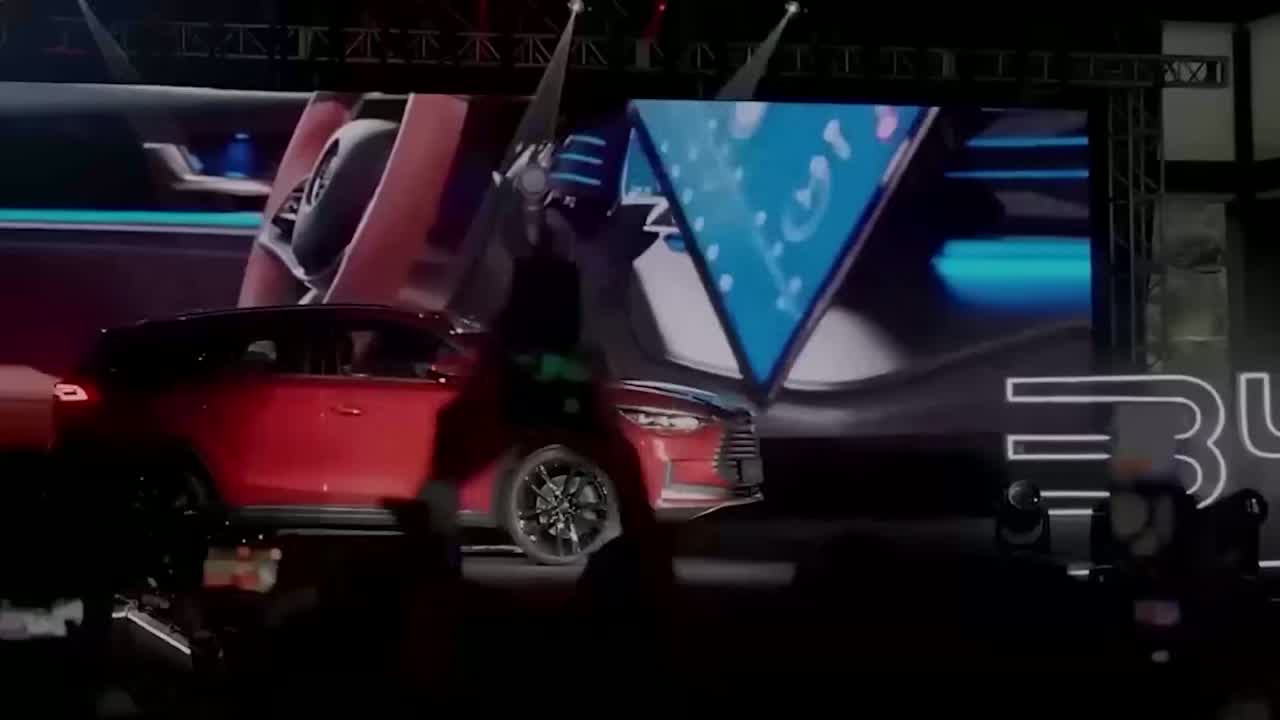
BYD’s two 2025 announcements — putting its God’s Eye driver-assistance suite on every model at no extra cost, and a Super e-Platform that adds 400 km of range in five minutes — did more than grab headlines. They reset the global pricing conversation for every automaker, including Tesla, Ford, and GM. Here’s what the “shaking” announcement actually was, and why it matters to U.S. buyers.
To understand why a company most Americans have never bought from can move an entire industry, you have to start before the cars. BYD — “Build Your Dreams” — was founded in 1995 by Wang Chuanfu, a chemist who began making rechargeable batteries in Shenzhen with roughly $300,000. It became the world’s largest Ni-Cd battery maker by 2000 and a major lithium-ion supplier by 2002, then bought a struggling automaker in 2003. Warren Buffett’s Berkshire Hathaway bought a ~10% stake for $232 million in 2008; by 2021 that stake was worth more than $8 billion. The point: BYD spent 30 years building batteries and vertical integration before it ever became a car brand that could out-sell Tesla.
Announcement one: God’s Eye for everyone
In 2025, BYD announced its God’s Eye ADAS — adaptive cruise, lane centering, highway assist, automated parking, and map-free city navigation — would be standard on every model and every trim, including the ~$10,000 Seagull. Competitors typically charge $3,000–$15,000 for comparable packages. BYD reported that around 1.2 million vehicles with the system sold within months of the February announcement, and its wider ADAS fleet has passed 2.7 million units, generating more than 170 million km of driving data per day. Even Elon Musk called the move “impressive” on X.
Announcement two: Super e-Platform, 400 km in 5 minutes
BYD’s Super e-Platform is the first mass-production 1,000-volt architecture for passenger cars — battery, motor, power electronics, and air conditioning all run at 1 kV. Combined with 1,000A current, it delivers a 1-megawatt peak charge rate (10C) that adds about 407 km of range in 5 minutes in BYD’s tests — roughly 2 km per second. The Han L, the first model on the platform, pairs that flash charging with a 30,511-rpm motor producing 580 kW (778 hp), and the second-generation Blade battery pushes range past 1,000 km (CLTC) while still managing a 20–97% charge in about 12 minutes at −30°C. BYD has opened the first 500 of a planned 4,000+ liquid-cooled megawatt stations across China.
| Feature | BYD Super e-Platform | Typical current EV |
|---|---|---|
| Architecture | 1,000 V (1 MW peak) | 400–800 V |
| 5-min charge add | ~400 km (claim, Han L) | ~100–180 mi typical |
| Motor speed | 30,511 rpm (580 kW) | ~16,000–20,000 rpm |
| ADAS on base trim | standard (God’s Eye) | often $3k–$15k option |
| Cost advantage | UBS estimate: BYD builds ~35% cheaper than comparable VW models | |
SIGNAL: The real shock wasn’t one technology — it was the bundle. BYD combines standard ADAS, megawatt charging, and a 35% cost advantage, then prices like a volume brand. That combination is what forces Tesla, Ford, and GM to cut prices and rethink packages. The customer wins; the margin pressure is everyone else’s problem.
What it means for American buyers and U.S. automakers
BYD’s scale is the context: it sold 1.76 million pure EVs in 2024 (3.4 million including plug-in hybrids, up 41% year-over-year) and net profit around $5.6 billion — while Ford’s EV division lost roughly $5 billion and GM is pouring about $35 billion into EV development. In Q1 2025, BYD alone sold 416,000 pure EVs, more than the entire U.S. EV market (about 350,000) in the same quarter. Its cars now sell in 116+ countries, it’s building plants in Hungary and Brazil (at a former Ford site), and it’s scouting Mexico for North American assembly.
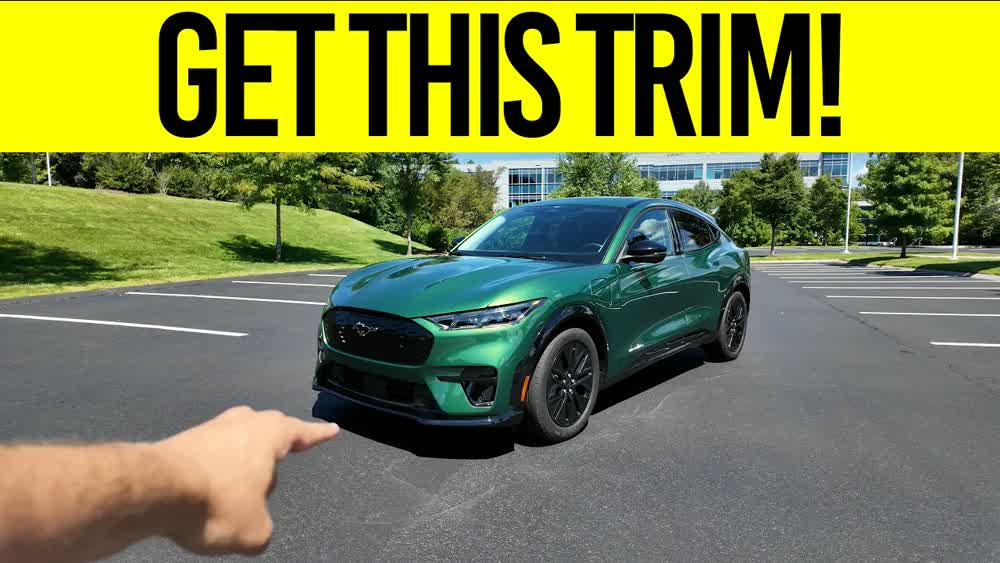
None of that reaches U.S. showrooms: the 100% tariff on Chinese-built EVs — imposed in 2024 and kept since — roughly doubles a BYD’s price on arrival. Yet the pressure already landed here: Tesla has cut prices repeatedly, Ford slashed Mustang Mach-E pricing, and Chevrolet positioned the Equinox EV aggressively. The one segment still sheltered is pickup trucks — but BYD’s Shark plug-in pickup shows where the company’s attention is heading.
The tariff wall buys Detroit time, not immunity. BYD has spent 30 years turning batteries, chips, motors, and even seat foam into one cost machine — a structural advantage no trade barrier can erase, only delay.
Why is BYD cheaper than competitors?
Vertical integration: BYD makes its own batteries (Blade), semiconductors, motors, and many components (glass, steel, seat materials). UBS estimates its manufacturing cost is about 35% below comparable Volkswagen models. It also benefited from early Chinese government support, but has remained profitable after subsidy levels fell.
Can BYD really add 400 km in 5 minutes?
That’s the company’s claim for the Super e-Platform (1,000V/1,000A/1 MW) demonstrated on the Han L with an 82 kWh pack. It requires megawatt-class chargers — BYD is building 4,000+ stations in China. Real-world verification at scale is still in progress.
Will BYD ever sell in the US?
Not cheaply. The 100% tariff on Chinese EVs doubles the price, making direct imports impractical. BYD is expanding in Mexico and Brazil for other Americas markets; U.S. entry would require local North American production, which BYD has not committed to for passenger cars.