No products in the cart.
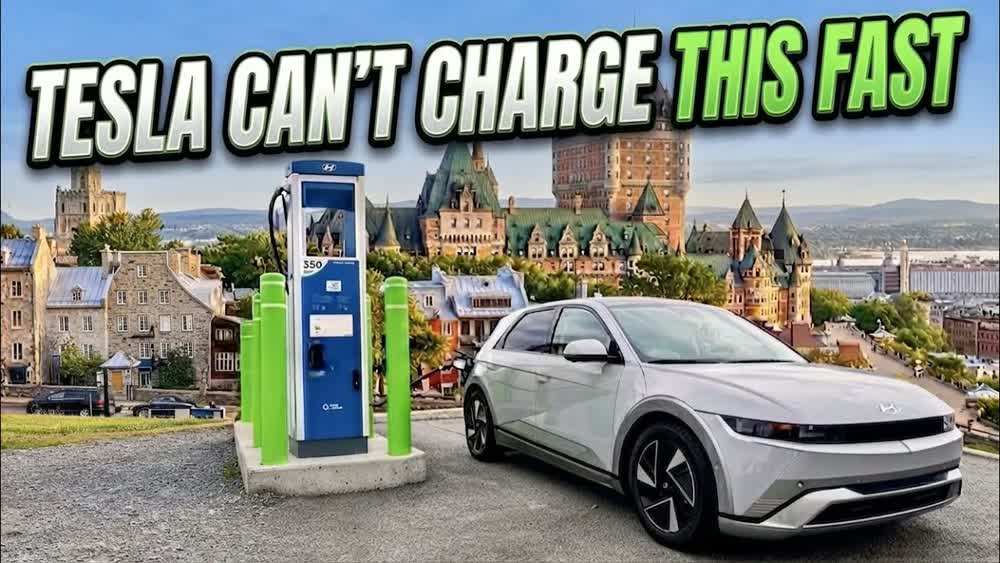
Over 5,000 miles and 40+ charging stops later, the honest answer to whether you can really take an EV across America in 2026 is conditional: yes, if you plan around two weak corridors, accept paying roughly 30% more per kWh than gas costs, and add an hour a day for charging. The interesting part isn’t whether it works — it’s which networks deliver that “yes,” and which ones still drag the experience down hard enough that first-time EV road-trippers walk away convinced EVs can’t road-trip.
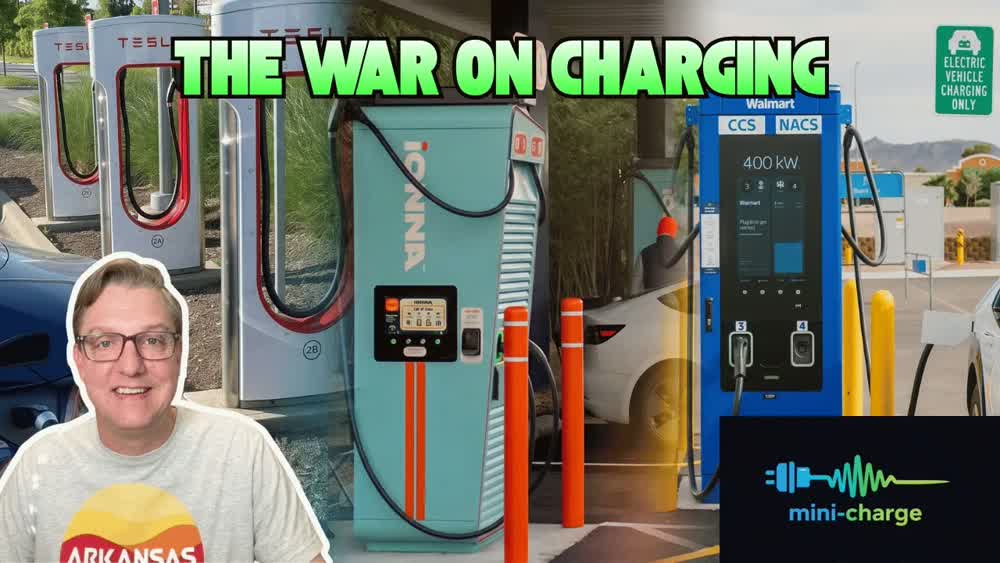
The backbone: who actually owns the US charging map
As of mid-2026, the US public charging network looks dramatically more developed than it did three years ago — about 192,000 public ports and roughly 45,000 DC fast-charge ports, according to the US Department of Energy’s Alternative Fuels Data Center (AFDC). But the ownership concentration is the real story: Tesla alone runs about 52% of every DC fast-charge port in the country. If you’re not using the Supercharger network on a cross-country drive, you’re working with a much smaller and much less reliable pool of stalls.
| Network | US stations | US ports | Peak power | Uptime | J.D. Power 2025 score |
|---|---|---|---|---|---|
| Tesla Supercharger | ~3,088 | ~37,400 | 250–500 kW (V4) | >99.9% | 745 / 1,000 |
| Electrify America | ~1,000 | ~5,400 | 350 kW | ~85% | 601 / 1,000 |
| EVgo | ~1,200 | ~4,200 | 350 kW | ~88% | 579 / 1,000 |
| ChargePoint (DCFC) | ~750 | ~2,300 | 250 kW | ~80% | 619 / 1,000 |
| NEVI-funded (multi-network) | ~520 | ~2,100 | 150–350 kW | building out | n/a |
The reliability gap is the single most consequential number in this table. Independent ICCT audits put non-Tesla DC fast chargers out-of-service at roughly 20% of stalls at any given moment versus less than 4% for Superchargers. J.D. Power’s 2025 US Electric Vehicle Experience (EVX) Public Charging Study gave Tesla 745 out of 1,000 — roughly 100 points ahead of every other DC fast network measured. Paren, a third-party monitoring firm, put the national reliability average at 93.5% in Q1 2026, up from 85–92% a year earlier, but still well below where Tesla has been sitting for years.
Signal: In 2026, if you buy an EV without a NACS port or adapter, you’re choosing a network that is roughly 5x more likely to have a broken stall when you arrive. The reliability gap isn’t a complaint — it’s a planning input.
The corridors that work — and the two that don’t
Coverage on the main interstate spine has caught up to the marketing. Tesla stations are spaced every 35–60 miles on I-5 and every 25–50 miles on I-95, with Electrify America and EVgo backing them up at most major exits. The cross-country picture is uneven though, and two corridors still trip up first-time EV road-trippers.
I-80, San Francisco to New York (~2,900 miles): Still the toughest transcontinental route in the country. Coverage is solid from the Bay Area through Nevada and most of Nebraska, but the stretch between Lincoln, NE and Salt Lake City, UT is thin — most experienced road-trippers plan stops at Sidney NE, Cheyenne WY, Rawlins WY, Rock Springs WY, and Evanston WY. NEVI funding is closing the gaps: by mid-2026, every state along I-80 has at least one new 150 kW+ site under construction every 50 miles, but in early 2026 you still need to plan those Wyoming stops carefully and carry backup options.
I-10, Los Angeles to Jacksonville (~2,400 miles): Filled in through 2024 and 2025. The West Texas stretch between El Paso and San Antonio is now NEVI-compliant, and the Texas Hill Country plus Louisiana gulf segments have 200 kW+ stalls at roughly every interchange town. The Greenlane Colton-to-Phoenix corridor opened in late 2025 with 400 kW stalls, and the old Tucson-to-El Paso gap is bridged by EVgo and Tesla stops at Lordsburg, Deming, and Las Cruces.
Rural secondary routes remain the failure case. AFDC and PlugShare data still document 100+ mile gaps between any DC fast charger in parts of Montana, Wyoming, North Dakota, and Idaho. NEVI’s $5 billion was designed to cover the designated Alternative Fuel Corridors — not the back roads a rural resident actually drives. If your destination is 80 miles off the interstate, the corridor math changes entirely.
Signal: A 150-mile leg with two chargers along the way is a holiday. A 150-mile leg with one charger at the end is the failure scenario. Build backup options into every leg of a cross-country EV plan.
The money math: what a coast-to-coast charge actually costs
EV road-trip economics depend almost entirely on where you plug in. Home charging at the 2026 US residential average of $0.16/kWh works out to about $0.046 per mile; DC fast charging on the road averages $0.42–$0.47/kWh, which is roughly $0.12–$0.13 per mile — about the same as a 30-mpg gas car at $3.50/gallon. The economic case for an EV lives or dies on whether you can charge at home.
| Charging source | 2026 US avg price | Cost per mile (3.5 mi/kWh) | Notes |
|---|---|---|---|
| Home (off-peak) | $0.10–$0.14/kWh | $0.03 | Best economics; not always available to renters |
| Home (US avg residential) | $0.16/kWh | $0.046 | Reference baseline |
| Public Level 2 (hotel, garage) | $0.22–$0.30/kWh | $0.06–$0.09 | Often free at chain hotels with J1772 |
| Tesla Supercharger | $0.25–$0.50/kWh | $0.07–$0.14 | Off-peak cheaper; non-Teslas pay 30–35% premium without $12.99/mo membership |
| Electrify America | $0.48–$0.56/kWh | $0.14–$0.16 | Pass+ ($4–7/mo) cuts rates ~25% |
| EVgo | $0.45–$0.55/kWh + $0.99 session fee | $0.13–$0.16 | Metro-focused |
| Gas (30 mpg, $3.50/gal) | — | $0.117 | Reference |
At 3.5 mi/kWh, a 1,000-mile leg needs about 285 kWh. Done entirely on public DC fast charging at the 2026 average of $0.42/kWh, that’s roughly $120. Mix in Tesla Supercharger off-peak at $0.35 and home L2 at $0.14 for the start and end of the trip, and the effective cost drops to about $80 per 1,000 miles — versus roughly $130 in gasoline for a 28-mpg sedan. The headline cross-country comparison: a Tesla Model 3 LR running LA to NYC (2,800 miles) costs about $180 in charging versus $415 in gas at $3.50/gallon, a $235 saving on the same trip. The catch is peak-hour surcharges: at popular stations, dynamic pricing can push fast-charging above $0.65/kWh, and at that level public charging actually costs about 16% more per mile than gasoline — the worst-of-both-worlds scenario.
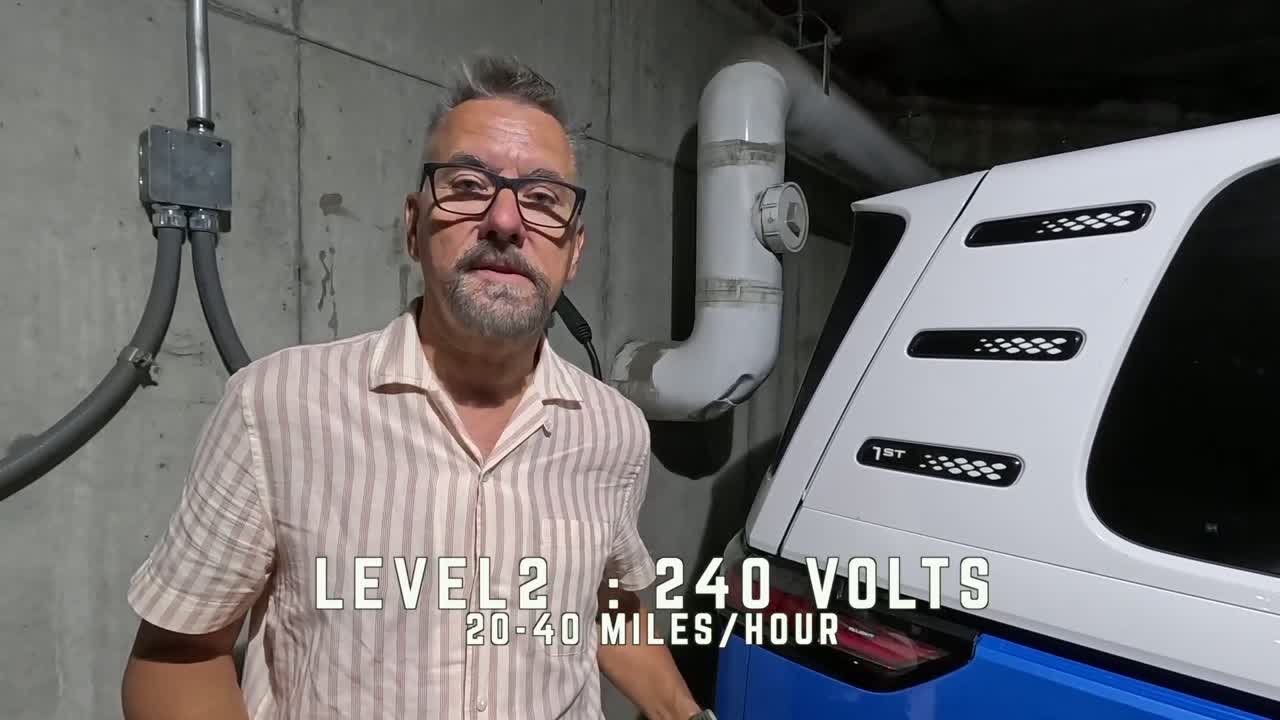
Level 2 charging at 240V — the free overnight top-up at a hotel that turns an EV road trip from a charging marathon into a series of normal days.
The time math: how much longer does an EV trip really take?
The time penalty is real but smaller than most people expect, and it depends almost entirely on which EV you drive. On a 2,800-mile coast-to-coast run, a Honda Accord takes about 42.5 hours with five eight-minute gas stops. A Tesla Model 3 LR running on the Supercharger network takes about 45 hours — eight to ten stops averaging 22 minutes each, or roughly 176–220 minutes of charging. A Hyundai IONIQ 6 on Electrify America’s 350 kW network does it in about 44.5 hours thanks to its 800V architecture and faster ramp. A Chevy Bolt on a mixed network, with its slower charging curve, takes about 54 hours — an extra 11.5 hours across the whole drive, or 3–4 hours per day.
The single biggest lever is the charging curve. On any DC fast charger, going from 10% to 80% takes 20–30 minutes; going from 80% to 100% takes another 20–25 minutes — the same time as the first 70%. Road-trippers who stop at 80% and move on arrive hours earlier than drivers who top off to 100% at every stop. The general rule for 2026: plan stops at 20% state of charge, target 80%, and treat each 25-minute stop as a meal break. Most EV drivers shave the practical difference to under an hour per day versus gas, and the trip stops feeling like a charging exercise.
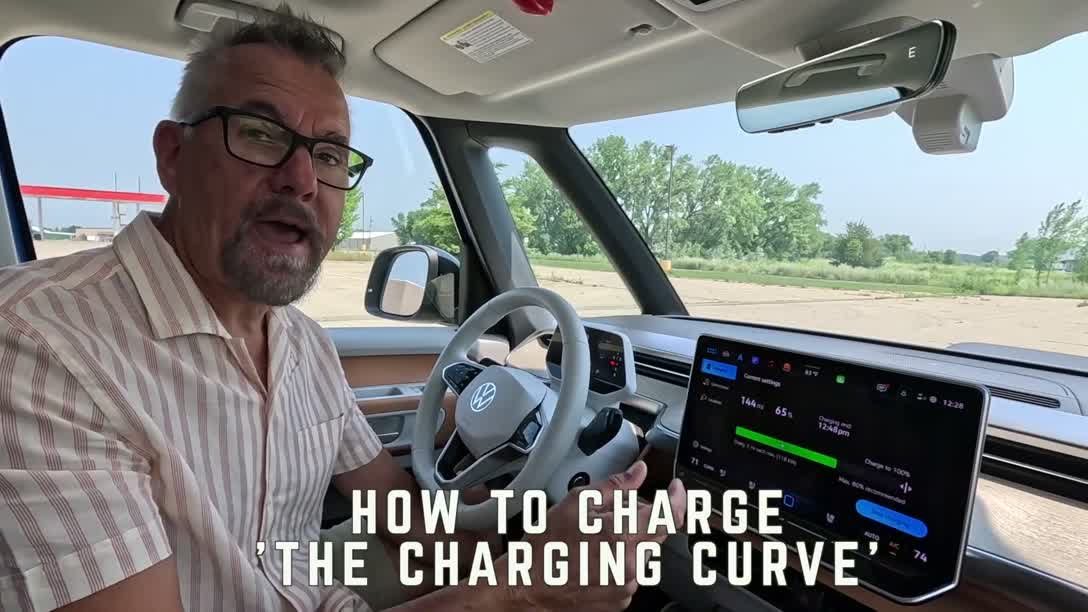
The charging curve in plain English — 20% to 80% is the sweet spot. Above 80%, charging slows dramatically to protect the battery; below 20%, range anxiety does.
Signal: The difference between a 45-hour trip and a 54-hour trip isn’t the charger — it’s the car’s voltage architecture and your discipline about the 20→80% curve. Charging speed discipline saves more time than any single hardware upgrade.
Winter and desert change everything
Range loss is the one scenario where EVs genuinely underperform gas cars. Lithium-ion chemistry slows in the cold, cabin heating draws 3–5 kW from a resistive heater, and dense cold air adds rolling resistance. Real-world winter loss in the US ranges from 10–15% at 32°F to 25–40% at -10°F to -20°F. AAA’s 2026 EV efficiency analysis found preconditioning while plugged in cuts that winter loss from around 40% down to 10–15% — the single most effective habit for cold-weather driving, and one every modern EV supports through its app.
Summer heat hurts less but is not free. Highway driving in 95°F desert conditions typically lands 12–17% below EPA range, mostly because of air-conditioning load. Plan to carry a 10–15% state-of-charge reserve on desert legs, precondition the battery before each fast-charge stop (most cars do this automatically when you navigate to a Supercharger or NACS site), and avoid arriving at a charger with single-digit percentage remaining in extreme heat or cold — both slow charging dramatically until the pack warms or cools.
Highway speed matters more than temperature for range. Aerodynamic drag rises sharply above 70 mph; cruising at 80 mph instead of 65 mph typically costs 10–20% more energy. Drive 65–70 mph on long legs, and you’ll often arrive earlier overall because you skip a charging stop.
What 5,000 miles and 40 chargers actually taught one driver
The data above tells you how the networks behave in aggregate. To translate that into a usable US road trip in 2026, it’s worth listening to the people who have actually driven one. One driver — Paul from Paul’Z Garage — logged 5,000+ miles and stopped at 40+ public chargers on a coast-to-coast run in early 2026. His network-by-network notes line up with the macro data almost perfectly.
On Tesla Superchargers, he found the network “everywhere” and reliable, but flagged two recurring frustrations: you need the Tesla app to start a session, and the V2/V3 cords are short enough that non-Teslas sometimes have to jockey into adjacent stalls to reach the plug. The V4 rollout with its longer cable solves the latter problem. On Electrify America, his most damning single observation: a station with four stalls, two of them out of order, with no estimated repair time. “You really can’t depend on them.” That matches the ~85% uptime and 601 out of 1,000 J.D. Power score to the decimal.
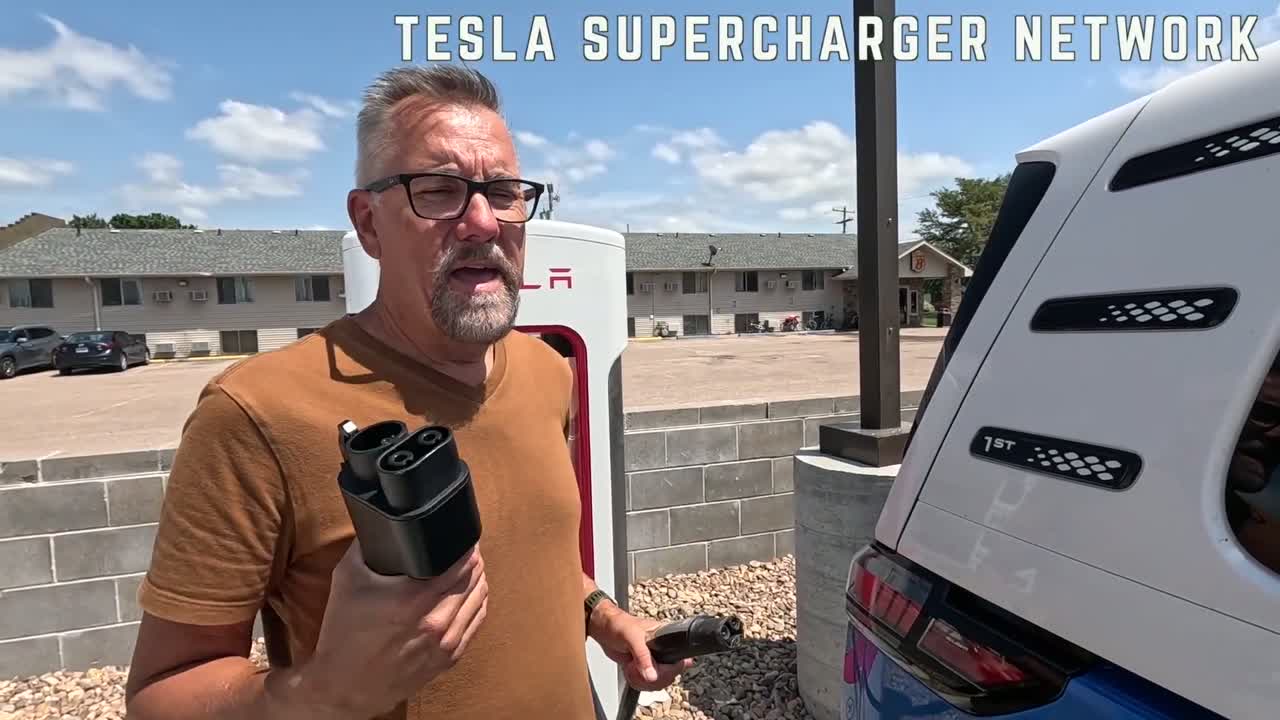
A Tesla Supercharger stall with a Magic Dock adapter — the connector that opened the most reliable US network to every NACS-equipped brand.
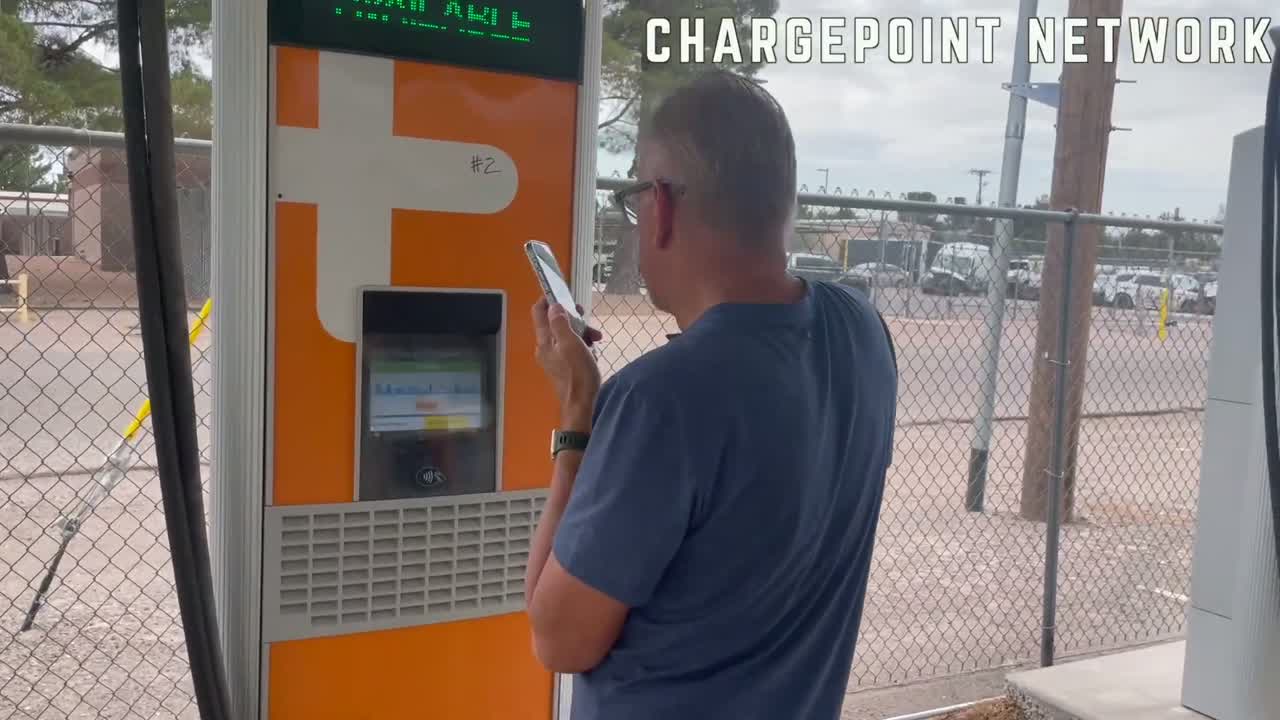
ChargePoint was his most frustrating experience: 30 minutes trying to start a charge at one station, a follow-up where all four chargers at a second station failed to deliver energy even after remote intervention by ChargePoint support, and a third stop where half the stalls were out. “So far the ChargePoint network has been the least reliable” — consistent with the ~80% uptime and 619 out of 1,000 J.D. Power score. EVgo showed up only once on his route, and at a higher price than the nearby Tesla, so he skipped it.
On the positive side, IONNA (credit-card tap, simple screen, easy onboarding), QuikTrip (gas-station-clean, dual NACS + CCS, credit card or app or tap-to-pay), and Red E in Michigan (tap-and-go, intuitive, designed like a gas pump) all earned praise for being easy to use. Francis Energy in Oklahoma and New Mexico also scored well — large screens, tap-and-go, informative displays. He even stumbled into free fast charging at the UFO Museum in Roswell, NM and at an Xcel Energy site in Clovis, NM, driving Roswell to Amarillo on free electrons. Rivian’s Adventure Network was reliable and fast but expensive — $32 for a 23-minute session, roughly $0.22 per mile.
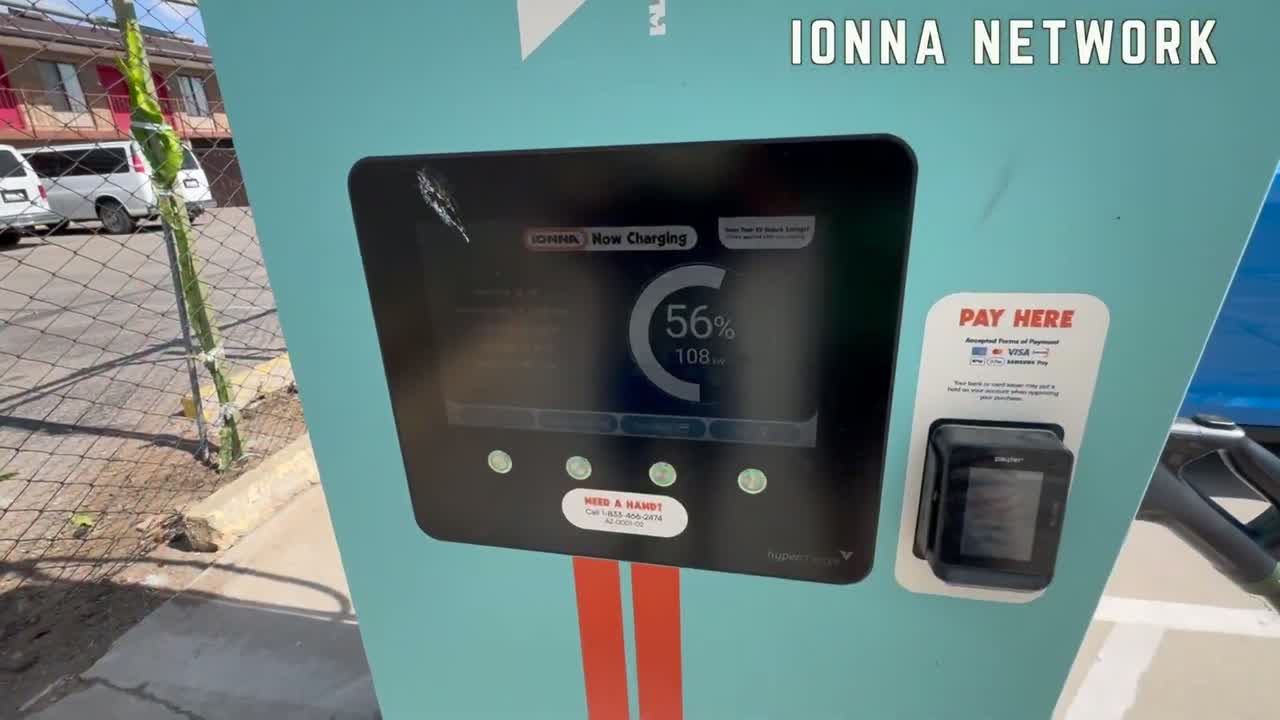
The IONNA network’s screen and credit-card reader — the design target every other US charging network is now chasing.
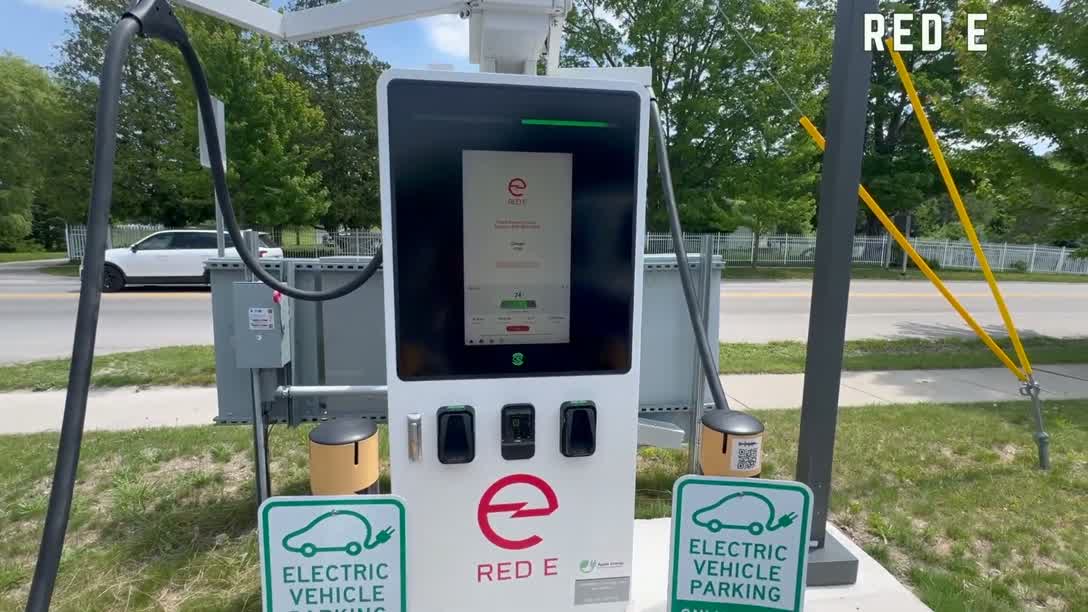
A Red E regional charging station in Michigan — the kind of well-designed, tap-and-go hardware that smaller networks are getting right.
The lesson he drew, and the one the macro data supports: the best networks all share three habits. Tap-and-go payment so a sketchy cellular signal doesn’t ruin your day. A screen that clearly tells you how to start a session, because every network starts a charge differently and confusing flow at the stall is the most common reason drivers walk away. Real-time availability data published to Google Maps and apps like A Better Route Planner so you can see which stalls are broken before you commit to a stop. None of these are technical breakthroughs. They’re operational discipline — and they’re why Tesla’s uptime is more than 99.9% while everyone else is still chasing 90%.
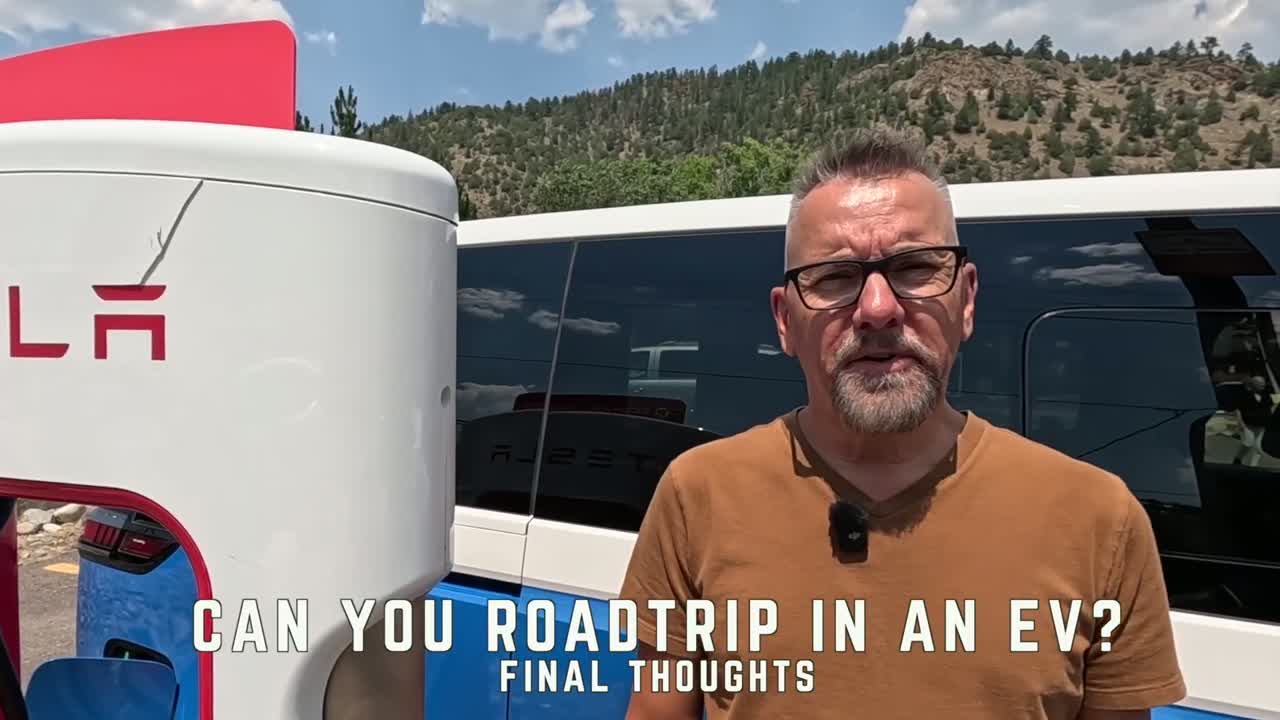
The final word after 5,000 miles and 40+ charging stops: yes, you can take an EV across America in 2026 — but the answer is conditional on which corridor, which network, and which weather you meet along the way.
Can you really drive an EV from New York to Los Angeles in 2026?
Yes, with planning. The route runs roughly 2,800 miles and Tesla’s Supercharger network hits it every 35–60 miles along I-80 and I-70/I-44 alternatives. A Tesla Model 3 LR will complete the trip in about 45 hours versus 42.5 hours for a Honda Accord — an extra 2.5 hours across the whole drive, or roughly an hour per day. The trip costs about $180 in Supercharger fees versus $415 in gas at $3.50/gallon. The weak spots are Wyoming and Nebraska on I-80 and the western I-10 stretch through West Texas — both now have NEVI-funded 150–350 kW sites under construction, but in early 2026 plan stops at every interchange and carry backup options for the rural legs.
How much extra time does an EV road trip really add?
About an hour per day for a modern 800V EV on the Tesla or Electrify America network, once you count charging stops that double as meal breaks. A Tesla Model 3 LR loses 176–220 minutes of charging time across a 2,800-mile drive; a Hyundai IONIQ 6 on EA loses 140–180 minutes thanks to its 800V architecture; a slower-charging Chevy Bolt loses 700–800 minutes, which works out to 3–4 extra hours per day. The fastest way to shrink the time penalty is to stop at 80% and move on instead of topping to 100% — the last 20% takes as long as the first 60%, and disciplined drivers save 30–45 minutes per charging cycle.
What is the cheapest way to charge an EV on a road trip?
Mix networks strategically. Home L2 at off-peak rates ($0.10–$0.14/kWh) for the start and end of the trip, Tesla Superchargers off-peak (often $0.25–$0.35/kWh) for the bulk of the miles, and avoid peak-hour DC fast charging where $0.15–$0.20/kWh surcharges can push the effective rate above $0.65/kWh. The Tesla Supercharging Membership ($12.99/month) pays back at 4–5 sessions per month and removes the 30–35% premium non-Teslas otherwise pay at Superchargers. Hotel Level 2 overnight charging, often free at chain hotels with a J1772 plug, is the most overlooked trick — Paul from Paul’Z Garage topped up to full for nothing at a hotel garage in the middle of one leg, the closest thing to free energy you’ll find on a public road trip.
Related reading on EVCUBE
Sources
- iEVChina — US Interstate EV Charging Network Map 2026: Tesla, EA, EVgo Coverage Reality
- Car Cost Breakdown — EV Road Trip Cost Guide 2026: What It Really Costs to Drive Cross-Country
- Charge Cost Lab — What It Really Costs to Charge an EV in 2026
- EVSeekers — Tesla Supercharger vs Other EV Charging Networks (J.D. Power 2025 EVX data)
- Healvanna — EV Winter Driving Tips 2026: Range Loss, Preconditioning, and Cold Weather Survival