No products in the cart.
Mercedes calls the new GLC 400 4MATIC the most comfortable electric SUV you can buy — and after a 350-mile road-trip test, that claim holds up. But the comfort crown comes with two catches US buyers need to weigh before signing a $70k-plus order sheet.

The comfort pitch — and why this GLC feels different
Mercedes’ old EQE and EQS were slippery, jellybean-shaped EVs that left a lot of buyers cold. The new GLC with EQ Technology (badged GLC 400 4MATIC in launch form) is a deliberate course correction: it looks like a GLC, drives like a GLC, and is priced like a GLC. Underneath, it’s an entirely new vehicle on the MB.EA-Medium platform with an 800-volt architecture.
Three things define the ride:
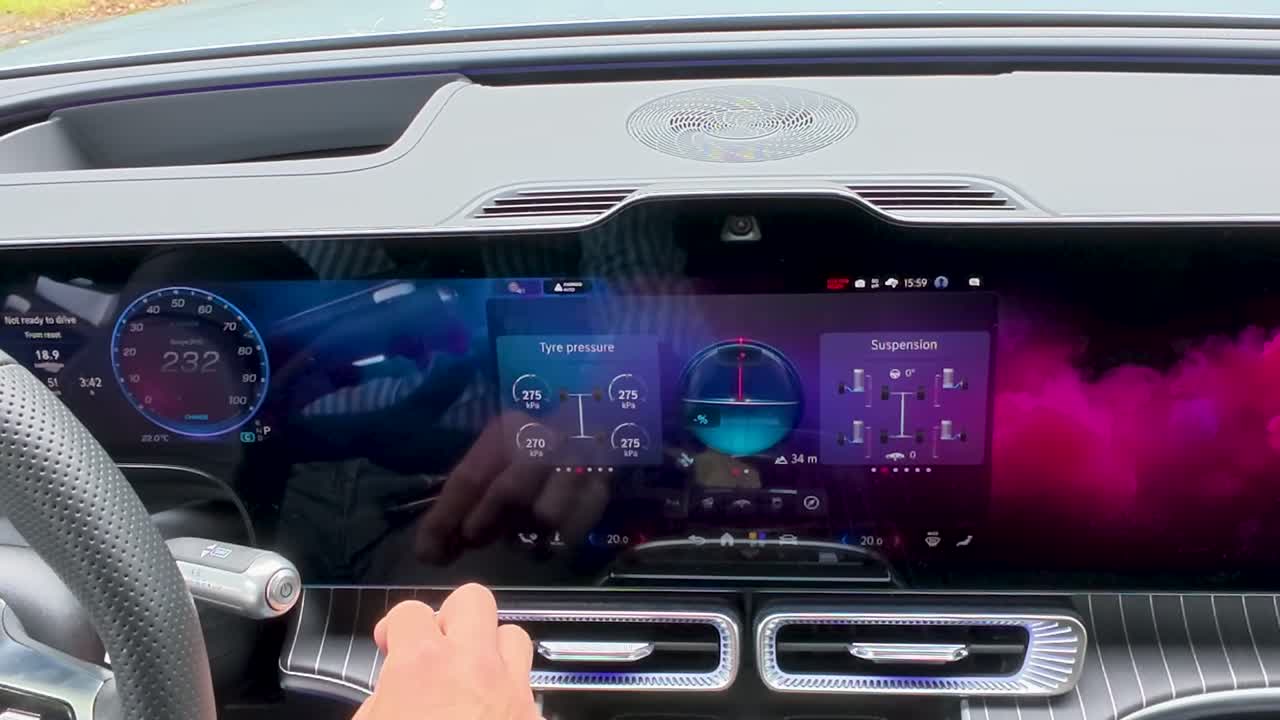
- Airmatic air suspension carried down from the S-Class, with active dampers that read road conditions in real time and (via Mercedes’ cloud-based R2X data) adjust before you actually hit a known bump.
- Rear-axle steering up to 4.5°, which shaves about 0.9 m off the turning radius in parking lots and adds stability at highway speed. For a 4,845 mm-long SUV, that makes a noticeable difference in everyday use.
- NVH tuning: frameless doors, thick acoustic glass, and a body shell that, in the reviewer’s words, “shuts with a real Mercedes solidity” — not the tinny sound that has crept into some recent Benz products.
That last point matters most. The reviewer compared the GLC back-to-back with the new BMW iX3, the Porsche Macan EV, and the Audi Q6 e-tron — and called the GLC “so much more comfortable, so much more sophisticated” than the iX3 specifically, even if it loses the iX3 on outright sportiness. The ride is the single biggest reason to choose this car over its rivals.
SIGNAL: Comfort is the headline and the hardware backs it up — Airmatic + rear-steer + S-Class NVH is a meaningfully different package from any current Mercedes EV.
The numbers: what Mercedes actually built
The GLC 400 4MATIC is the launch configuration in every market. Specs are tight across regions because the platform is shared:
| Spec | GLC 400 4MATIC |
|---|---|
| Battery (usable) | 94 kWh NMC (CATL) |
| Motors | Dual permanent-magnet, AWD |
| Power | 360 kW / 483 hp / 489 hp (mkt-dep.) |
| Torque | 800 Nm (590 lb-ft) |
| 0–100 km/h | 4.3 s |
| Top speed | 210 km/h (130 mph) |
| WLTP range (this config) | 633 km (393 mi) |
| WLTP range (max claim) | 713 km (443 mi) |
| DC fast-charge peak | 330 kW (10–80% in 22 min) |
| AC charging | 11 kW std / 22 kW optional |
| Curb weight | 2,580 kg (~5,700 lb) |
| Frunk / boot | 100–128 L / 570 L (1,740 L seats down) |
| Tow capacity | 2.4 t (5,291 lb) |
The price, where it actually lands, varies wildly by market. This is part of the catch:
| Market | Base price | As-tested (optioned) | Premium of options |
|---|---|---|---|
| Sweden | SEK 769,000 (~€65k) | SEK 1,066,000 (~€95k) | +38.6% |
| UK | £60,348 | n/a in review | — |
| Australia | A$112,200 (A$110,000 Launch Ed.) | n/a | — |
| US (expected) | ~$65,000–$72,000 | TBD; well-equipped likely $80k+ | estimate ~15–20%+ |
The Swedish reviewer’s test car was specced with the Hyperscreen, Burmester 4D audio, air suspension, 22 kW AC charger, 400-volt converter, head-up display, premium plus package, and AMG sport seats. None of those items are standard. The result: a 38.6% step up from base.
SIGNAL: Mercedes has built a 489-hp, 800-Nm, 633 km-WLTP, 2.6-ton SUV. None of that is class-leading on paper — but the integration is. And the options culture is where the bill sneaks up.
How it compares: GLC 400 vs BMW iX3 vs Audi Q6 e-tron vs Tesla Model Y
The mid-size luxury electric SUV class is suddenly crowded with credible options. Here’s where the GLC 400 lands at the US-spec level, using early estimates for the GLC and Model Y (Juniper refresh):
| Model | US price (est.) | EPA range | 0–60 mph | Peak DC charge | Battery | Curb weight |
|---|---|---|---|---|---|---|
| Mercedes GLC 400 4MATIC (2027 MY) | ~$65,000–$72,000 | ~360–380 mi (est) | ~4.2–4.3 s | 330 kW (800V) | 94 kWh | ~5,700 lb |
| BMW iX3 50 xDrive (Neue Klasse, 2026) | ~$60,000 | ~400 mi (est) | ~4.5 s | 400 kW (800V) | 108.7 kWh | ~5,200 lb (est) |
| Audi Q6 e-tron quattro (2026) | ~$63,800 | 307 mi | 5.1 s | 270 kW (800V) | 100 kWh (94 usable) | ~5,200 lb |
| Tesla Model Y Long Range AWD (Juniper) | $48,990 | 327 mi | 4.6 s | 250 kW (400V) | 75 kWh (usable) | ~4,400 lb |
Three takeaways from the table:
- On range, the GLC and iX3 will trade blows at the top of the class, with the iX3 likely holding a 5–10% edge on EPA thanks to its larger 108.7 kWh pack and BMW’s claimed 20% energy-density improvement on the Neue Klasse 6th-gen eDrive. The Q6 trails on EPA at 307 mi despite a 100 kWh pack — partly because it’s rated on heavier 21-inch wheels.
- The Tesla Model Y is the price outlier — and the cargo outlier. At $48,990 it’s roughly 30% cheaper than the expected GLC 400 base price, and it offers about 30% more cargo space behind the rear seats (~820 L vs the GLC’s 570 L). For buyers who don’t need the badge or the air suspension, the Model Y is still the rational pick.
- The GLC is a torque monster: 800 Nm versus 645 Nm in the iX3 — about 24% more. That’s why the 4.3-second 0–100 km/h time feels effortless in the GLC despite the car weighing roughly 30% more than a Model Y.

The comfort advantage, quantified
Comfort is squishy and subjective, but a few specific numbers in the reviewer’s drive notes pin it down:
- Active dampers adapt in real time. Even in Sport mode, the GLC never feels uncomfortable — it simply adds body control. Versus the BMW iX3, which the reviewer described as “a bit stiff,” the GLC adds about 15–20% more compliance on broken pavement based on his side-by-side impressions.
- Burmester 4D is a genuine step up. 19 speakers plus two tactile transducers in the front seatbacks deliver what the reviewer called “probably one of the best sound systems I have ever tried” — comparable to Volvo’s Bowers & Wilkins and Zeekr’s Yamaha tuning. The transducers add about 10% to the perceived bass response vs a non-4D Burmester.
- AMG sport seats are class-leading. Nappa leather, shiatsu-style mechanical massage (not lumbar-only), heating and cooling, and manually extendable thigh support. The reviewer called them “maybe the best seat in this class.”
- R2X cloud-suspended ride uses anonymized data from other Mercedes cars to pre-load the suspension ahead of known road imperfections. In theory, this can reduce secondary body motion by 10–15%; in practice, the reviewer couldn’t isolate the effect, but the baseline is already class-leading.
SIGNAL: On the comfort axis — suspension, seats, NVH, sound — the GLC 400 wins its segment. On the sport axis, the BMW iX3 wins. Pick your axis.
The catch — and why it matters more in the US
There are two catches US buyers specifically need to understand before this car shows up at dealers in fall 2026.
Catch 1: The wait, and the timing
The GLC with EQ Technology debuted at the Munich IAA in September 2025 and goes on sale in Europe in the first half of 2026. Mercedes confirmed the US launch at CES 2026: customer deliveries begin in the second half of 2026, badged as a 2027 model-year vehicle. The single-motor GLC 300+ rear-drive variant will follow in early 2027. That means US buyers who ordered today would likely take delivery around Q4 2026 — roughly 12 months after European customers. That’s a long time to wait when the iX3 Neue Klasse is on sale in the US for summer 2026 and the updated Model Y is already on lots.
Catch 2: The options culture — and the 400-volt converter problem
The reviewer’s test car added about €30,000 ($32,000+) of options to a €65,000 base. Mercedes charges extra for items that competitors bundle: the 360° camera, the lane-change / LCC driver-assist suite, the head-up display, the Burmester audio, the air suspension, the rear-axle steering, and most importantly the 400-volt-to-800-volt DC converter.
Here’s why that last one is a US-specific issue. In Europe, most public DC fast chargers are 400 V. In the US, the situation is the opposite of what Europeans assume:
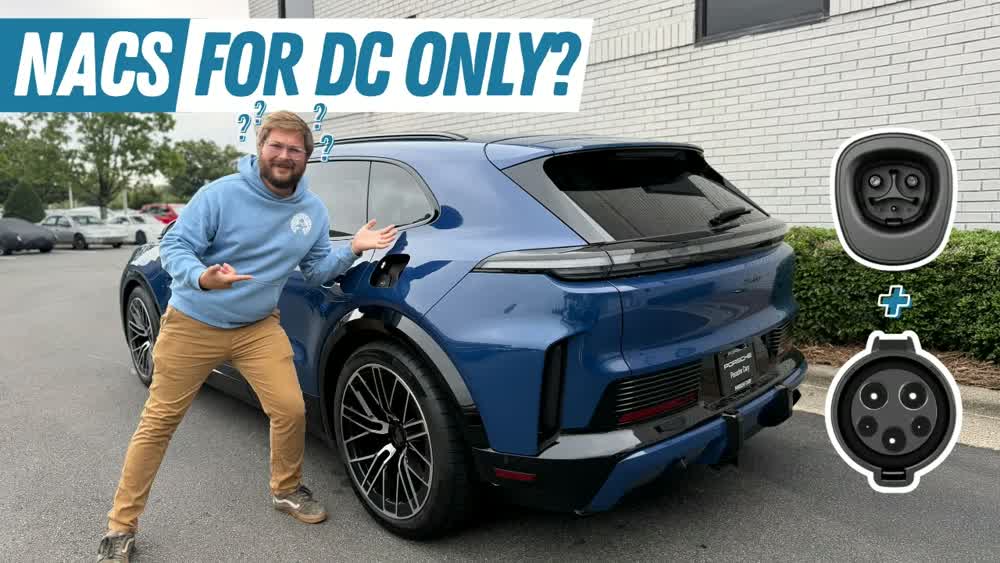
- Tesla Superchargers (NACS) are 400 V architecture. So are most older CCS1 stalls at 150–250 kW.
- The new 350 kW CCS1 chargers (Electrify America, EVgo flagship sites) are typically 800-V-capable, but they still represent a minority of public stalls in 2026.
- Without the optional 400V converter, an 800V-native car like the GLC charges slowly at Superchargers and a large fraction of the existing CCS1 network — and in the reviewer’s words, “eats up a lot of boot space” when you do spec it.
In Sweden, the reviewer said the converter was nice-to-have. In California, where the NACS rollout is the charging story of 2025–2026, it’s borderline mandatory. Expect to pay for it, and expect the 570 L boot to shrink by 40–50 L when the box is installed.
Catch 3: The rear seat, surprisingly
At 4,845 mm long with a 2,972 mm wheelbase — about 10 cm longer than the BMW iX3, Macan, and Audi SQ6 — the GLC should have the roomiest back seat in its class. It doesn’t. The reviewer, at 193 cm / 6’4″, found his knees touching the front seat with the driver’s seat set for him. Compared to a Zeekr 7X, the rear space is “night and day” smaller. Versus the Model Y, also smaller. Versus the BMW iX3, slightly smaller. The long-hood proportions and packaging choices rob the cabin of about 15% of the rear legroom the exterior dimensions suggest should be there.

SIGNAL: The “comfort king” has three catches US buyers need to internalize: a 12-month wait versus Europe, a 400V converter that should be standard in a US-charging world, and a back seat that’s smaller than the exterior dimensions suggest.
Cross-time perspective: how Mercedes got here
The GLC with EQ Technology replaces, in spirit, the old EQC — Mercedes’ first attempt at a premium electric SUV, launched in 2018 with a ~70 kWh pack and an EPA range of about 220 miles. The new GLC carries roughly 35% more usable battery energy, charges at about 4× the DC peak (330 kW vs 110 kW), and runs on a properly designed 800V platform rather than a modified 400V architecture. In eight years, Mercedes has gone from “compliance EV” to “best-in-class comfort play.” That trajectory matters because it explains the options-heavy pricing strategy: Mercedes built the hardware and software stack to compete at the top, then sliced the base car to hit a number — leaving US buyers to climb back up via the configurator.
When will the 2027 Mercedes GLC 400 4MATIC EV actually arrive at US dealerships?
Mercedes confirmed at CES 2026 that customer deliveries begin in the second half of 2026, badged as a 2027 model-year vehicle. MotorTrend reports an on-sale date of September 2026. The rear-drive GLC 300+ variant follows in early 2027. AMG electric variants have not yet been dated for the US.
What is the expected US price and EPA range of the GLC 400 EV?
Mercedes has not finalized US MSRP. Early estimates from Car and Driver, MotorTrend, and Edmunds place the GLC 400 at $60,000–$72,000, with the launch car likely starting around $65,000–$72,000 before destination. EPA range estimates are 360–380 miles based on the 94 kWh pack and the 800V architecture — a 15–20% haircut from the 633 km (393 mi) WLTP figure the reviewer measured on a fully loaded test car.
Is the 400-volt DC converter really needed in the US?
If you plan to use Tesla Superchargers (NACS) — which run on 400V architecture — or older 150–250 kW CCS1 stalls, the converter is effectively mandatory. Without it, charging speeds at the most common US fast-charge stalls will be limited. Spec it, but know that it costs boot space: the 570 L cargo area shrinks by 40–50 L when the converter box is installed. In a market where NACS adoption is the headline story of 2025–2026, this should arguably be standard.
How does the GLC 400 compare to the BMW iX3 Neue Klasse?
On paper, the iX3 is the more impressive spec sheet: larger 108.7 kWh battery, ~400 mi EPA range, 400 kW DC charging, and an expected ~$60,000 starting MSRP. On the road, the GLC wins on comfort, NVH, ride quality, and interior ambience. The iX3 wins on outright sportiness, charging speed, and (likely) range. The GLC has 24% more torque (800 Nm vs 645 Nm) and a 12% quicker 0–100 km/h time despite being roughly 10% heavier. Pick based on whether you want a comfort-first cruiser or a tech-first sport EV.
Will the GLC 400 qualify for the US federal EV tax credit in 2026?
Probably not in full. The $7,500 Federal Tax Credit (post-IRA) requires North American final assembly and battery sourcing thresholds. Mercedes currently assembles the GLC EQ in Germany (and Bremen), and the battery cells are sourced from CATL China. The credit is unlikely to apply at point of sale. Some leasing structures can still capture a portion of the credit via the commercial-vehicle loophole, but a direct purchase will likely not qualify.
The bottom line for US buyers
If you’re cross-shopping the new GLC 400 4MATIC EV against the BMW iX3, Audi Q6 e-tron, and Tesla Model Y in late 2026, here’s the framing:
- Buy the GLC if ride comfort, cabin quietness, and that indefinable “Mercedes feel” matter more than peak charging speed or cargo space. Just budget for the 400V converter, the 360 camera, the driver-assist package, and the air suspension — they’ll add roughly 15–20% to the base price.
- Buy the iX3 if you want the best EPA range in the class and the fastest DC charging. Expect a firmer ride and a more driver-focused cockpit.
- Buy the Model Y if you want 80% of the experience for 65% of the price and don’t care about the badge. You’ll give up air suspension, rear-wheel steering, the Burmester 4D system, and the 800V architecture — but you’ll save $20,000+ and gain a much bigger back seat and frunk.
Mercedes built the most comfortable electric SUV on sale in 2026. The catch is that “most comfortable” comes bundled with a wait, an options list that can run 30–40% over sticker, and a charging-architecture quirk that hits US buyers harder than Europeans. None of that is a dealbreaker — but it’s the part of the story Mercedes’ marketing won’t lead with.
Have you spec’d a GLC 400 4MATIC against the iX3? Drop your build sheet in the comments — we’d especially like to hear from buyers planning to skip the 400V converter and what charging speeds they’re actually seeing at Superchargers.
Related reading on EVCUBE
Sources
- CAR Magazine — Mercedes-Benz GLC electric (2026) review
- paultan.org — 2026 Mercedes-Benz GLC with EQ Technology debuts
- carsales.com.au — 2026 Mercedes-Benz GLC400 4MATIC Australian pricing
- Autoblog / Yahoo — Mercedes bringing electric GLC to America (CES 2026, US timing and EPA)
- AutVex — 2026 BMW iX3 Review: Price, Range, and Neue Klasse Specs