No products in the cart.
For the first time in years, the loudest complaint about owning an EV in America isn’t range — it’s the five-app scavenger hunt every time you want to plug in. With one June 2026 announcement, GM decided to delete that scavenger hunt, and the move quietly resets the baseline for what “easy public charging” is supposed to mean in the US.
What GM actually announced — and why now
On June 9, 2026, at its GM Empower event in San Francisco, GM Energy launched Energy Pass, a unified public-charging platform built directly into the MyChevrolet, MyCadillac, and MyGMC apps that existing EV owners already have on their phones. Sitting underneath it is the second half of the announcement: Plug & Charge, the ISO 15118-style “plug in and walk away” feature finally showing up at scale on a US automaker’s app. Head of Public Charging Will Hotchkiss framed the pitch bluntly in the launch post: “It seems like this only happens when it’s raining or freezing cold.”
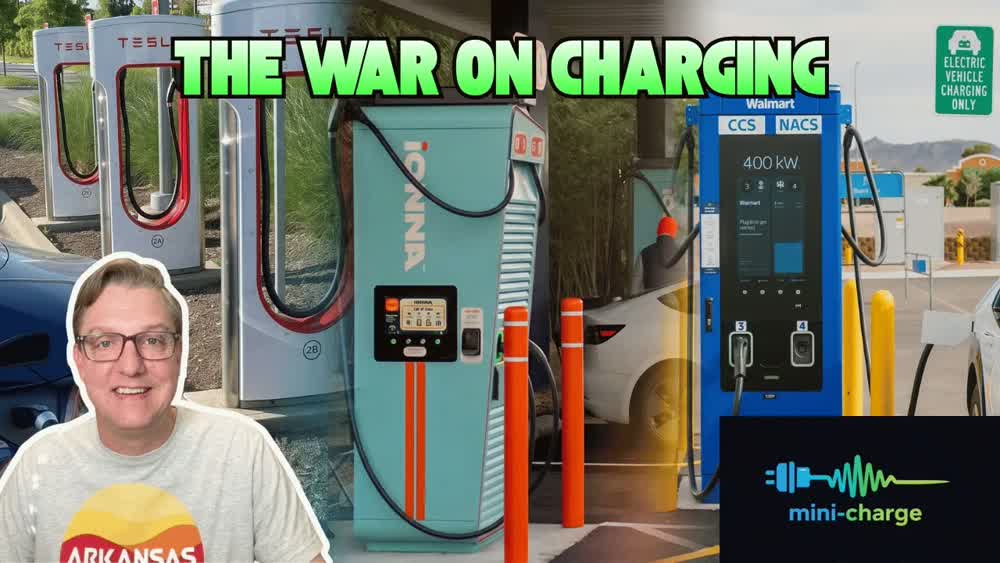
GM is not pitching a new network. It’s pitching a single login, a single card on file, one live map and one receipt inbox that already covers the networks American EV drivers actually use. At launch, Energy Pass works with Tesla Superchargers, IONNA, and Electrify America, with ChargePoint joined and EVgo scheduled next — a footprint GM says represents nearly 70% of all US DC fast chargers. The platform’s stated target is 75% of US DC fast chargers by 2027, with more networks and discounts “designed to grow over time.”
SIGNAL: Energy Pass is not a charger, it’s a wrapper. GM is owning the customer relationship, but the electrons still come from Tesla, IONNA, Electrify America and friends. That distinction is the whole story.
The reliability problem GM is actually trying to fix
To understand why GM timed this for mid-2026, you have to look at the J.D. Power 2025 U.S. Electric Vehicle Experience (EVX) Public Charging Study, the industry’s de facto scorecard. The headline number is encouraging — only 14% of EV owners reported a “non-charging visit” in 2025, down from 19% in 2024 and the lowest level in four years. But the satisfaction score went the wrong way: DC fast chargers fell to 654 out of 1,000 (down 10 points), and Level 2 to 607 (down 7). The reason wasn’t uptime. It was payment and price.
Drilling into the J.D. Power data, “cost of charging” became the single least-satisfying factor for DC fast users, dropping to 430 / 1,000 — a 16-point year-over-year decline. Sixty percent of the failed visits that did happen were caused by chargers simply being out of service. In other words, public charging in the US got a little more reliable, but it also got more expensive and more frustrating to start. The fragment is the friction Energy Pass is built to remove.
SIGNAL: Reliability is no longer the worst part of US public charging. Price, payment and app-switching are — and that’s a software problem, not a hardware problem. GM is buying the software.
What “Energy Pass” actually does in the MyChevrolet app
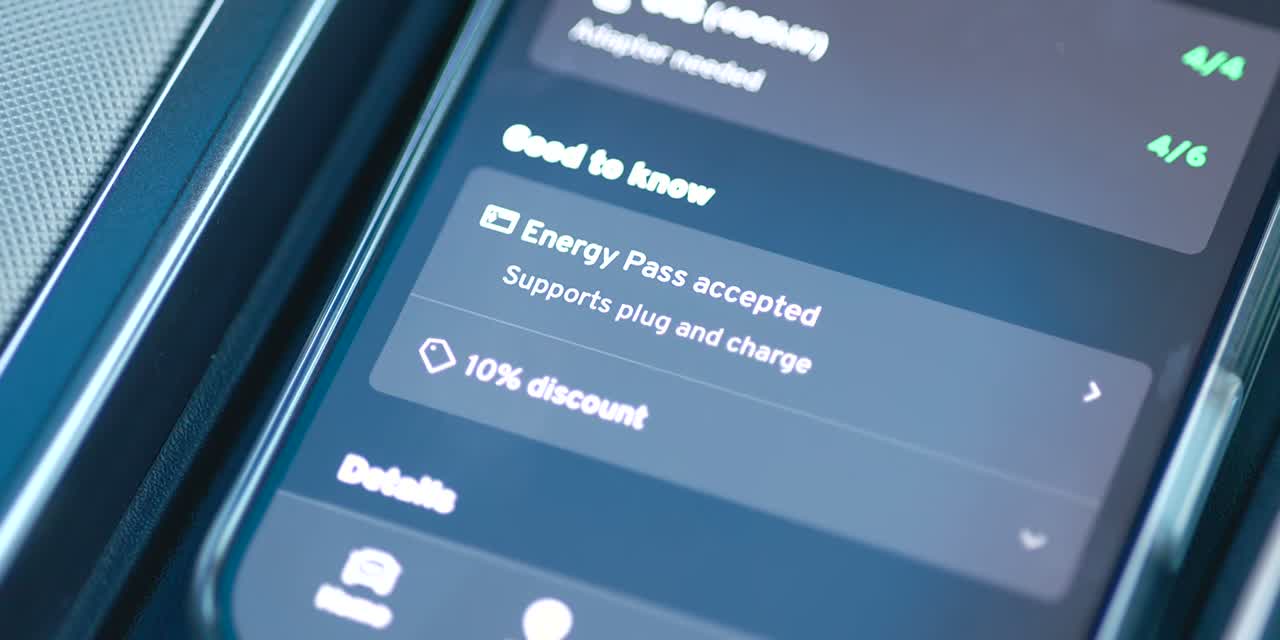
Energy Pass replaces the spreadsheet of network apps with a single in-app dashboard. Open MyChevrolet, MyCadillac or MyGMC, enroll once, store a payment method, and you can see every participating station on a live map. Tap one, and the listing shows address, hours, distance, pricing, ratings, connector types (CCS or NACS), whether an adapter is needed, and whether the stall supports Plug & Charge. Charging sessions stream live, and the history tab gives you one inbox of receipts with price breakdown and the network used. The video demonstrates a ChargePoint receipt — 8.5 kWh at $0.25/kWh base, $1.00 charging fee, $4.23 flat session fee — all without ever leaving the GM app.
Enrollment is free, and the discount structure is the carrot: Energy Pass users get 10% off IONNA Rechargery sessions, the first OEM-specific discount in IONNA’s lineup. That’s a meaningful number for a 350 kW stop, where DC fast charging has been averaging around $0.53/kWh across the US in Q1 2026. At a 25-minute top-up that adds 150 miles of range, ten cents a kWh is a few dollars off the bill — not life-changing, but a clear signal that networks are willing to pay for guaranteed GM traffic.
Plug & Charge: the part that finally feels like gas-stationing
Plug & Charge is the feature that sells the rest of the bundle. Pull up to a compatible stall, plug the cable into the car, and the vehicle negotiates authentication and payment with the charger autonomously. No phone, no card, no app tap. The dashboard consent screen in the GM app — confirmed and authorized by the driver once — looks like this.
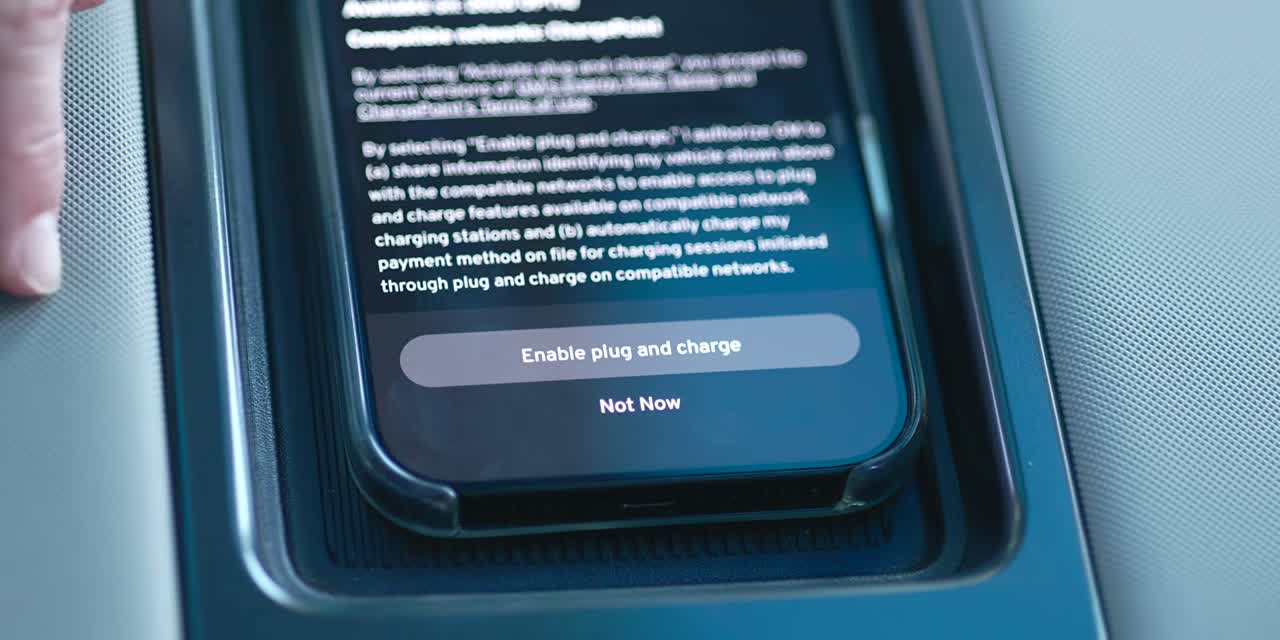
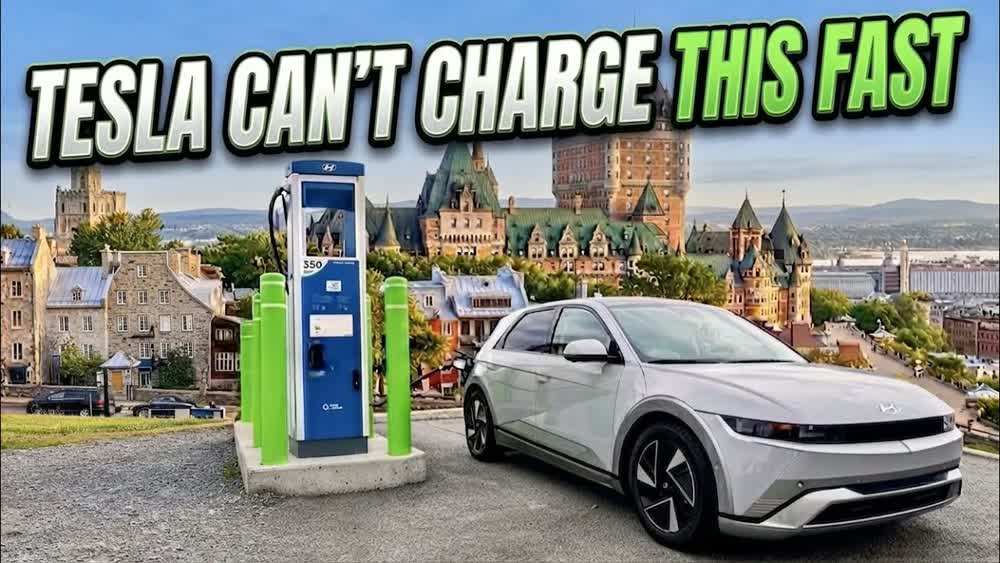
The rollout is staged. Plug & Charge is already live across the IONNA Rechargery network. ChargePoint is scheduled to flip on this summer. And for the GM EVs that already have a native NACS port — the 2026 Cadillac OPTIQ and the 2027 Chevrolet Bolt, with all 2027-model-year Chevrolet, GMC and Cadillac EVs following between now and December — Plug & Charge will arrive at Tesla Superchargers via an over-the-air update later in 2026. CCS-equipped GM EVs will still use the existing GM-approved NACS-DC adapter ($225) for Supercharger access, as has been the case since GM flipped the switch on September 18, 2024.
SIGNAL: Plug & Charge is the only widely-asked-for EV feature that didn’t meaningfully exist at US scale until 2024. Energy Pass is the first OEM wrapper that puts it in front of a real customer base without forcing them to read a forum post first.
The networks inside the Energy Pass bundle
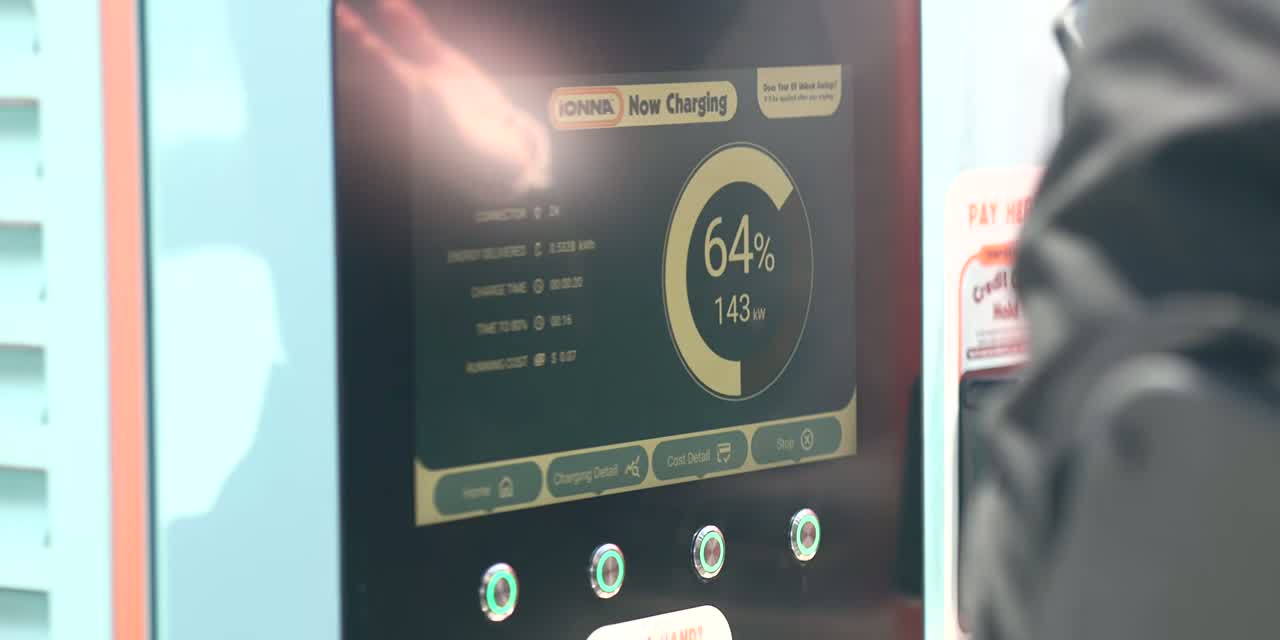
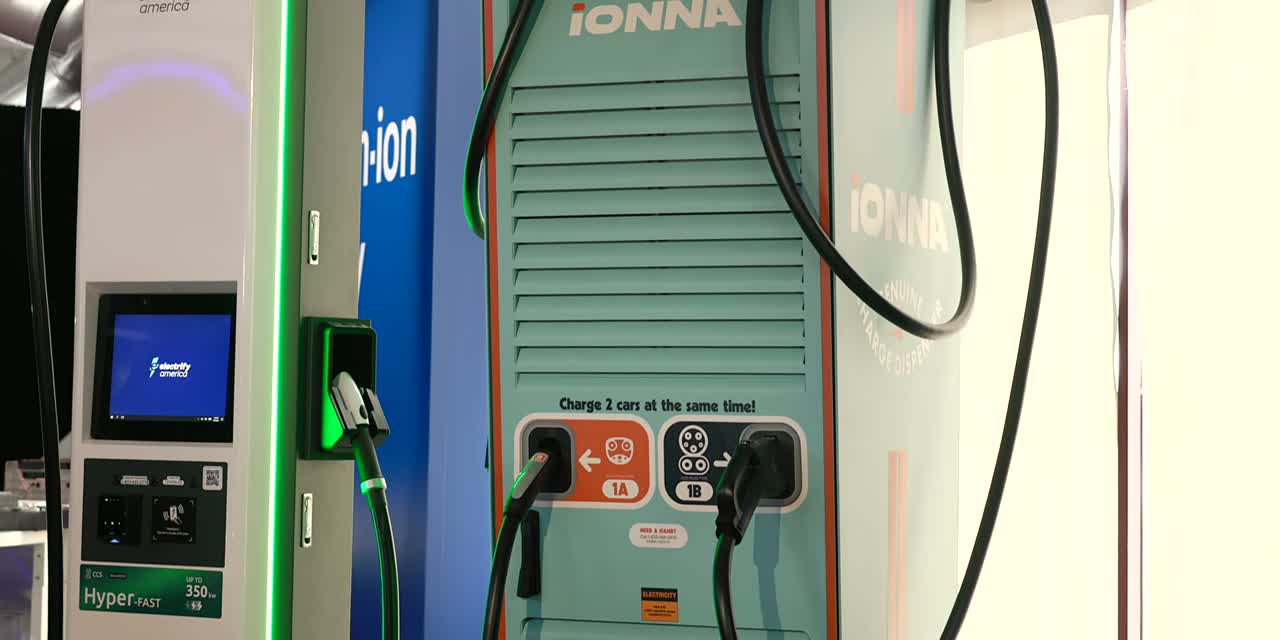
Tesla Supercharger, IONNA and Electrify America are the launch partners. ChargePoint has joined the platform and EVgo is scheduled to be added. Coverage is not equal — Tesla alone is roughly half of every public DC fast plug in the country — which is why GM is leaning on the IONNA Rechargery architecture for the in-person experience. The image below is the kind of double-stall site that will increasingly carry both flags.
How the bundle maps to the US DC fast-charging landscape
Here’s the Energy Pass anchor table against the actual US DC fast market, as of July 2026 (AFDC monthly tally).
| Network | Stalls (US) | Share of US DC fast | Connector on the dispenser | Energy Pass at launch |
|---|---|---|---|---|
| Tesla Supercharger | ~37,159 | ~50% | NACS (J3400) | Yes (Plug & Charge via OTA later in 2026 for NACS-native GM EVs) |
| Electrify America | ~5,743 | ~7.7% | CCS1 (NACS rolling out) | Yes |
| EVgo (incl. Pilot / Flying J) | ~5,208 | ~7.0% | CCS1 (NACS rolling out) | Coming soon |
| ChargePoint | ~4,848 | ~6.5% | Mostly CCS1 | Joined (Plug & Charge this summer) |
| IONNA Rechargery | ~1,190 | ~1.6% | Both NACS and CCS1, every stall | Yes (Plug & Charge live, 10% GM discount) |
| Other US DC fast networks | ~20,117 | ~27% | Mixed | Not yet listed |
| US total DC fast | ~74,265 | 100% | — | ~70% covered today, target 75% by 2027 |
Total US DC fast ports grew ~27% year-over-year as of mid-2026. The top 10 networks account for 83.9% of all ports; the long tail is everything else. GM’s bet is that bundling the three biggest (Tesla, EA, ChargePoint) plus the two networks built specifically for cross-OEM access (IONNA, EVgo) gets a Chevrolet driver through essentially any road trip without ever leaving MyChevrolet.
FAQ: what GM owners actually need to know
Does Energy Pass replace the Tesla app?
For charging, yes, at the Superchargers that show up as available in your GM brand app. For trip planning, preconditioning, and the wider Supercharger map, the Tesla app is still useful — but you no longer need it to start a session at a supported stall. Plug & Charge mode will be automatic for NACS-native GM EVs at Tesla Superchargers after the 2026 OTA.
Do I need the $225 NACS adapter?
Only if your GM EV has a CCS1 port and you want to use V3 or compatible V4 Tesla Superchargers before the OTA enables Plug & Charge on NACS-native cars. The 2026 Cadillac OPTIQ, the 2027 Chevrolet Bolt, and every new 2027 model-year Chevrolet, GMC and Cadillac EV ship with a native NACS port, so no adapter is needed for those. Older Bolts (some 2019/2020 cars) need a free dealer software update before they can Supercharge via the adapter.
Is the IONNA 10% discount a real saving?
Yes, and it’s automatically applied to Energy Pass users — no coupon, no membership. With US DC fast averaging $0.53/kWh in Q1 2026, a 10% IONNA discount lands around $0.48/kWh before idle fees. On a typical 50 kWh top-up that’s roughly $2.50 in pocket, which compounds if you road-trip.
What does “nearly 70%” of US DC fast chargers actually mean for road trips?
It means the three networks you will physically encounter most often — Tesla Supercharger, Electrify America, ChargePoint — are all in the Energy Pass basket, plus IONNA’s growing Rechargery network. The remaining ~30% is a mix of smaller regional operators and host-owned ChargePoint DC sites; those still work, but you may need to load their native app or tap a card at the stall.
Related reading on EVCUBE
Sources
- General Motors — Meet Energy Pass: an easier way to charge on the go (June 9, 2026)
- General Motors — GM expands charging access to Tesla Supercharger network (NACS deal, June 2023)
- J.D. Power 2025 U.S. EVX Public Charging Study — release via Automotive World (reliability, satisfaction, cost)
- IONNA passes 100 live sites in second-anniversary milestone — Automotive World
- Largest DC Fast-Charging Networks in the US: July 2026 — evchargingstations.com (AFDC tally)
- Electrek — GM is making EV charging a LOT easier (Aug 8, 2026)