No products in the cart.
A number that sounds like science fiction went up on a screen in Beijing in April: a 930-mile EV battery built by CATL. Before American shoppers start canceling their gas-station loyalty cards, we tear apart the spec sheet — what the chemistry actually is, what test cycle the number was measured on, and when (or whether) it ever lands in a car you can buy in the United States.
The headline, fact-checked
CATL — the company that supplied roughly 37% of every EV battery shipped on Earth in 2025 (SNE Research) and roughly 45.5% of China’s installed cell volume in March 2026 — used its “Super Technology Day” event in Beijing on April 21, 2026 to unveil six battery and infrastructure products. The headline act was the Qilin Condensed Battery: 350 Wh/kg cell gravimetric energy density, 760 Wh/L volumetric, claimed sedan range of 1,500 km (~930 miles), claimed large-SUV range of >1,000 km (~620 miles), with the entire pack held under 650 kg. CATL also showed a Naxtra sodium-ion variant entering GWh-scale mass production by the end of 2026, and a third-generation Shenxing cell that the company says can charge from 10% to 80% in 3 minutes 44 seconds.
SIGNAL: That 930-mile figure is a CLTC number, not an EPA number. It is roughly 28–35% more optimistic than the EPA range an American window-sticker would carry. Confusing the two is how internet headlines get made.
To put the underlying chemistry in context: matching 930 miles with a standard LFP pack would require roughly 400 kg of additional battery weight, per CATL’s own math. The condensed cell closes that gap by replacing most of the volatile liquid electrolyte inside the cell with a semi-solid (“condensed”) one — still 5–10% liquid by mass, which is why a Factorial Energy–style label is not “all-solid-state.” The trick borrows from CATL’s aviation programme, where 500 Wh/kg systems have already completed maiden-flight validation on a 4-tonne electric aircraft.
What “condensed” actually means (and what it doesn’t)
“Condensed” is a CATL-branded umbrella for a class the rest of the industry usually calls semi-solid-state. The cell still uses a high-nickel cathode and a low-expansion silicon-carbon anode, and it is packaged in a first-ever aviation-grade titanium-alloy case that is 60% thinner and 30% lighter than a conventional aluminium shell while tripling unit strength. The genuine leap is the electrolyte: a gel-like matrix instead of a free-flowing liquid. CATL says you can saw the cell in half without it leaking or igniting, which — if it holds up in third-party testing — would be the first time a passenger-car cell cleared that bar.
It is not the “all-solid-state” breakthrough the industry has been promising for a decade. Real all-solid-state cells from a Changan, Toyota, or Mercedes partner are still on pilot lines with 2027–2030 mass-production timelines. CATL’s own press materials call this a “new record for mass-produced batteries” — emphasis on “mass-produced,” not “next generation.” For a US buyer in 2026, that distinction is the entire difference between a car you can order this year and a chemistry you cannot buy at any price.
SIGNAL: Semi-solid ≠ solid. The 930-mile battery is real, but it is a smarter, denser version of the lithium-ion cell we already have — not the long-promised solid-state leap. Speculation: expect the marketing to blur this line hard.
The test-standard problem: 930 CLTC miles is not 930 EPA miles
This is where the viral headline quietly dies. CATL’s range number is measured on CLTC (China Light-Duty Vehicle Test Cycle), a low-speed, urban-biased cycle that averages around 18 mph with mild accelerations and no sustained highway. EPA and WLTP, the two cycles American and European stickers respectively use, simulate higher speeds, accessory loads, and cold temperatures, and then apply a correction factor (EPA multiplies lab results by roughly 0.7).
The widely accepted empirical conversion between the three cycles is:
- CLTC → WLTP: divide by 1.15–1.25 (roughly −18%)
- CLTC → EPA: multiply by 0.70–0.75 (roughly −28%)
- WLTP → EPA: multiply by 0.87–0.90 (roughly −12%)
Apply that to CATL’s sedan claim and the American-style numbers start to fall out:
| Vehicle class | CATL claim (CLTC) | WLTP estimate | EPA estimate | Real-world highway (mild) |
|---|---|---|---|---|
| Sedan (Qilin Condensed) | 1,500 km / ~930 mi | ~1,200–1,300 km / ~745–810 mi | ~1,050–1,125 km / ~650–700 mi | ~500–600 mi (per CATL’s own real-world framing) |
| Large 3-row SUV | >1,000 km / ~620 mi | ~800–870 km / ~500–540 mi | ~700–750 km / ~435–465 mi | ~380–440 mi |
So the honest way to read “930 miles” for an American buyer is: somewhere between 650 and 700 miles on a window-sticker-style test, and realistically 500–600 miles on a steady highway run. That is still ~2× the typical affordable EV on sale in the US today — but it is a very different number from the poster.
The fast-charging half of the story (Shenxing, gen-3)
The video deliberately splices the 930-mile pack with the new Shenxing Superfast Charging Battery, and untangling them is where the real analysis lives. The Shenxing is the volume play; the Qilin Condensed is the halo. Gen-3 Shenxing specs CATL announced:
- Equivalent 10C charging, peak 15C — translating to roughly 1.3 MW peak power when paired with the right station
- 10% → 80% SOC in 3 min 44 sec; 10% → 98% in 6 min 27 sec
- At −30°C: 20% → 98% in roughly 9 minutes
- >90% capacity retention after 1,000 full cycles
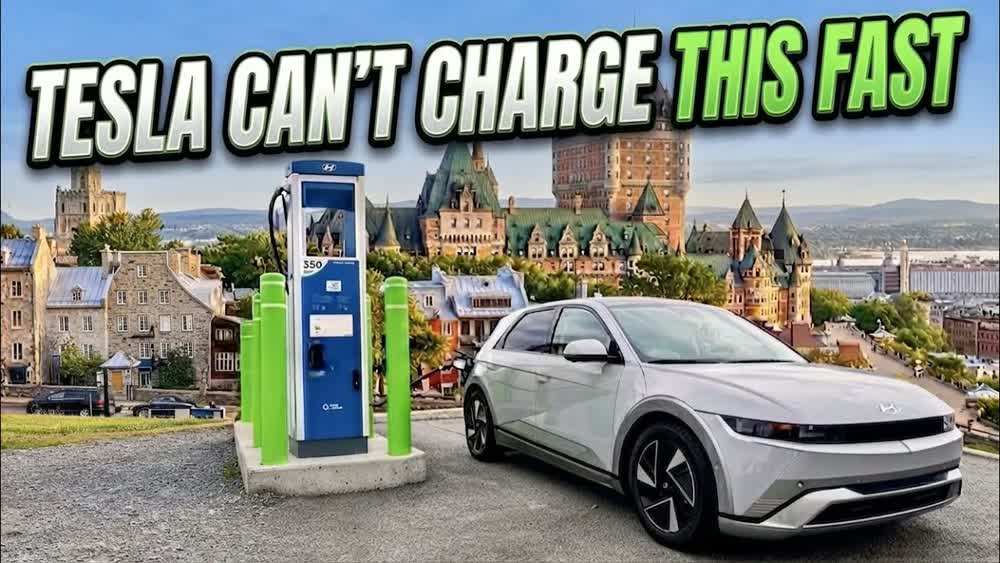
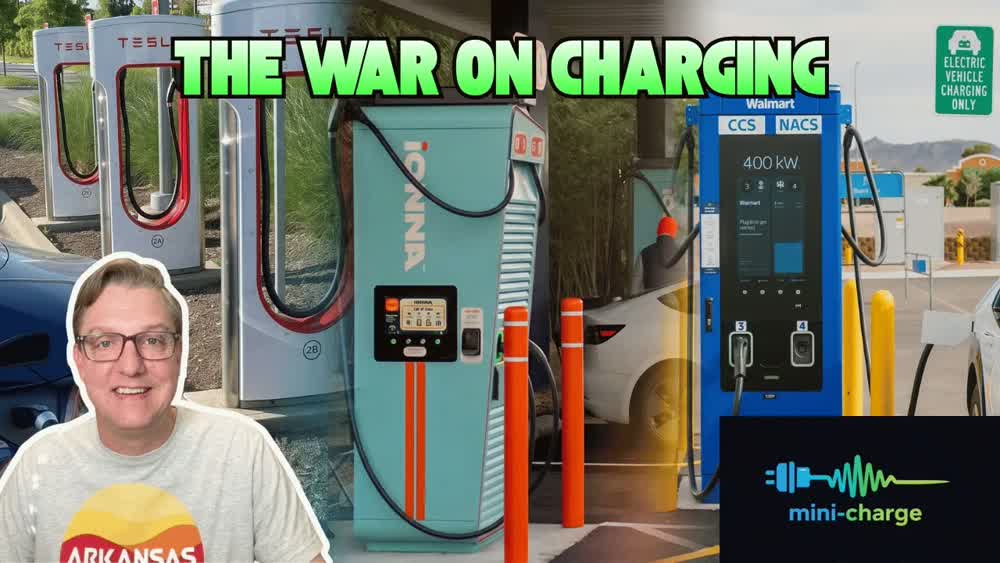
The megawatt claim is real on the cell side and a problem on the infrastructure side. Tesla’s V3/V4 Superchargers max out near 250 kW; the highest-power CCS stations in the US today top out around 350–400 kW. A 1.3 MW charge takes a liquid-cooled cable, a dedicated transformer, and a grid connection roughly 3–5× what a typical DC fast-charging site pulls. CATL says it plans to build 4,000 integrated charge-and-swap stations in China by end of 2026 and 100,000 shared stations by end of 2028 — none of which solves the US side of the equation, where NACS adoption is still in its first full year and the public-charging uptime debate is unresolved.
SIGNAL: Charging speed is a packaging problem, not a battery problem. The cell can drink megawatt-class power; the plug, the cable, and the grid are the bottleneck. In the US in 2026, those bottlenecks have not been fixed.
The sodium twist — and the cold-weather number nobody talks about
Beside the condensed pack, CATL also unveiled Naxtra, a sodium-ion cell at 175 Wh/kg entering GWh-scale mass production by the end of 2026. Together with partner Changan, CATL already launched what it calls “the world’s first mass-production sodium-ion passenger vehicle,” and CATL says sodium-ion’s total cost could run 20–30% below LFP by 2027.
For US buyers, the more important number is the cold-weather one: CATL says the sodium-ion pack retains roughly 90% of its usable capacity at −40°C, with charging from 20% → 98% in roughly 30 minutes at −30°C. A typical lithium-ion pack loses 20–30% of its EPA range below freezing before you leave the driveway, and a US Department of Energy study showed DC fast-charging acceptance dropping by roughly 36% near 0°C. That is the quiet reason the Minneapolis fleet driver keeps putting off the EV purchase — and it is the exact pain point Naxtra is engineered to remove.
The solid-state race around it
Beijing in April was not a one-company moment. It was a starting gun, and the rest of the field heard it:
| Maker / pack | Cell chemistry | Cell energy density | Claimed range (CLTC) | Status (Aug 2026) |
|---|---|---|---|---|
| CATL Qilin Condensed | Semi-solid (high-Ni + Si-C) | 350 Wh/kg | 1,500 km sedan / >1,000 km SUV | Mass-produced 2026; OEM fitments TBD |
| CATL 3rd-gen Shenxing | LFP-derived, 15C fast-charge | n/d publicly | n/d; optimised for 10–80% in 3:44 | Mass-production ramp 2026 |
| CATL Naxtra sodium-ion | Sodium-ion hard carbon | 175 Wh/kg | 300–400 km in Changan Nevo A06 | GWh mass-production end-2026 |
| Changan “Golden Bell” ASSB | All-solid-state | 400 Wh/kg | >1,500 km | Trial install Q3 2026; mass production 2027 |
| Dongfeng solid-state | All-solid-state prototype | 350 Wh/kg | >1,000 km | Extreme-cold validation in progress |
| BYD 2nd-gen Blade Battery | LFP “Blade 2.0” | n/d (vs ~180 Wh/kg gen-1) | 1,000 km (Seal 08); 1,036 km (DENZA Z9GT) | March 2026 launch; mass-production |
| Mercedes EQS + Factorial | Solid-state (Factorial cells) | ~391 Wh/kg (Factorial published) | 1,200 km / 745 mi real-world drive, Sept 2025 | Validation vehicle; OEM partnership with Stellantis |
| Toyota | All-solid-state | Target ~400+ Wh/kg | ~1,000 km targeted | >1,000 patents; 2027–2028 commercial target |
The interesting read is that Changan and Dongfeng — both “Big Four” state-owned carmakers — are running on roughly the same timeline CATL is, but with full all-solid-state chemistry rather than semi-solid. Changan announced trial installations of its 400 Wh/kg Golden Bell cell before the end of Q3 2026 and mass production in 2027, supported by a planned 150 GWh of dedicated capacity. The Mercedes EQS + Factorial result (a real 745-mile drive in September 2025) is the closest thing to a US-relevant data point, because Factorial is a Massachusetts-headquartered company with Stellantis and Hyundai partnerships.
What this actually means for a US buyer in 2026
The uncomfortable reality sitting underneath the press cycle: the United States already runs on CATL. The 100% Section 301 tariff on Chinese-built EVs keeps the cars out, but it does not keep the technology out. Ford’s $3.5B BlueOval Battery Park Michigan licensed CATL LFP technology, GM’s Ultium cells were co-developed with CATL engineering support, and Tesla procures CATL cells for its Shanghai-built Model 3 and Y. The battery inside the next US-built affordable EV is statistically likely to have been invented in Ningde.
What the Beijing announcement does change is the conversation US automakers are about to have with their own engineering teams:
- Range as a purchase objection: if a 2027 Changan or CATL-equipped sedan can credibly post ~650 EPA-equivalent miles, the “I need 400 miles or I can’t road-trip” argument loses ground. The Ford Mustang Mach-E’s 320 mi EPA starts looking mid-pack, not best-in-class.
- Cold weather: sodium-ion at 90% capacity at −40°C is the answer to the question every US dealer hears in October in Minnesota, Michigan, and upstate New York. If a sodium-pack ends up in a US-spec vehicle in 2027, that is a structural shift in EV adoption geography.
- Charging time: 10–80% in 3:44 is irrelevant to a US buyer until megawatt-class stations exist outside China. Per the DOE, the US public fast-charging network topped out near 200,000 ports in 2026 with average reliability below 85% in cold climates. Speculation: expect the megawatt hardware to land in China first and reach the US via OEM partnerships, not retail roll-out, before 2028.
- Tariff calculus: the Biden-era 100% tariff stays in place through at least 2027; a US-spec CATL cell will most likely arrive via a licensed joint-venture cell (Ford/CATL pattern) rather than as a direct import. That is the same playbook that put LG Energy Solution and SK On batteries inside every US-built EV — and it is how the technology gets in without the cars coming in.
SIGNAL: The 930-mile headline is half chemistry breakthrough, half test-cycle optimism. For a US buyer today, the live changes are: better cold-weather packs starting late 2026, faster charging on cars you cannot yet buy, and the slow disappearance of “range anxiety” as a talking point by 2028.
Is the 930-mile battery real?
Yes — it is a real, mass-produced pack from CATL called the Qilin Condensed Battery, announced April 21, 2026. The cell achieves 350 Wh/kg and uses a semi-solid electrolyte. The 930-mile figure is a CLTC range on a sedan; in EPA terms it works out to roughly 650–700 miles, with realistic US highway driving landing in the 500–600 mile range, per CATL’s own framing.
Is it solid-state?
No. CATL calls it “condensed” — the industry label is semi-solid-state. The electrolyte is still 5–10% liquid. All-solid-state cells at the same energy density are still in pilot production (Changan’s 400 Wh/kg Golden Bell, Toyota, Mercedes via Factorial). Treat any headline that conflates “condensed” with “solid-state” as marketing.
Why does CLTC show so much more range than EPA?
CLTC is a low-speed urban cycle averaging around 18 mph with gentle accelerations and no cold-temperature correction. EPA adds highway speeds, accessory load, and a 0.7 adjustment factor. Empirically, CLTC ≈ 1.18× WLTP and ≈ 1.35× EPA. Multiplying 930 CLTC miles by ~0.72 gives ~670 EPA-equivalent miles, before any real-world discount.
When could a US buyer actually get this?
For the 930-mile pack itself: CATL has not named a US-spec OEM partner for the Qilin Condensed; speculation is that the first US-bound CATL cell of this class arrives via a Ford or GM licensing deal in 2027–2028. The 3rd-gen Shenxing’s faster charging (10–80% in 3:44) is more likely to land sooner, on a Chinese-built Geely/Zeekr/Xpeng or a Chinese-spec Stellantis model first. The sodium-ion Naxtra cell, with its −40°C / 90% capacity retention, is the most likely US-relevant CATL product to show up in a dealer showroom by end of 2027.
Related reading on EVCUBE
Sources
- CATL — “CATL Unveils Six Major Innovations” (Qilin Condensed, 3rd-gen Shenxing, Naxtra specs)
- CnEVPost — CATL unveils new battery products at 2026 Tech Day (3rd-gen Qilin 280 Wh/kg, condensed, market share)
- Electrifying — Fancy an EV with 930 miles of range? This new battery could be the answer
- CNBC-TV18 — China’s CATL unveils EV battery with 6-minute charge and 1,500 km range
- Electrek — Solid-state EV batteries rolling out in China (Changan, Dongfeng, Mercedes/Factorial 745-mile run)
- EVRange.app — CLTC vs WLTP: Understanding EV Range Testing Standards (×0.70–0.75 conversion factors)
- Eletric-vehicles.com — CATL Announces New 932-Mile Range Battery Amid Product Offensive to BYD
- CarNewsChina — CATL 2025 Tech Day (sodium-ion cold-weather figures, BYD Blade 2.0 context)