No products in the cart.
The RAV4 has been America’s most-bought non-pickup for years. For 2026, Toyota killed the gas-only model entirely and put a Gazoo Racing badge on the PHEV. The result: 324 horsepower, 54 miles of EPA-estimated EV range on the base SE, a starting price under $43,000 — and it lands at the exact moment the $7,500 federal EV tax credit has expired and US plug-in hybrid sales just dropped 26.6% year over year. That collision of timing, price, and powertrain makes this the most consequential compact SUV of the year for American buyers.
“Boy, howdy”: KBB’s first GR-badged RAV4
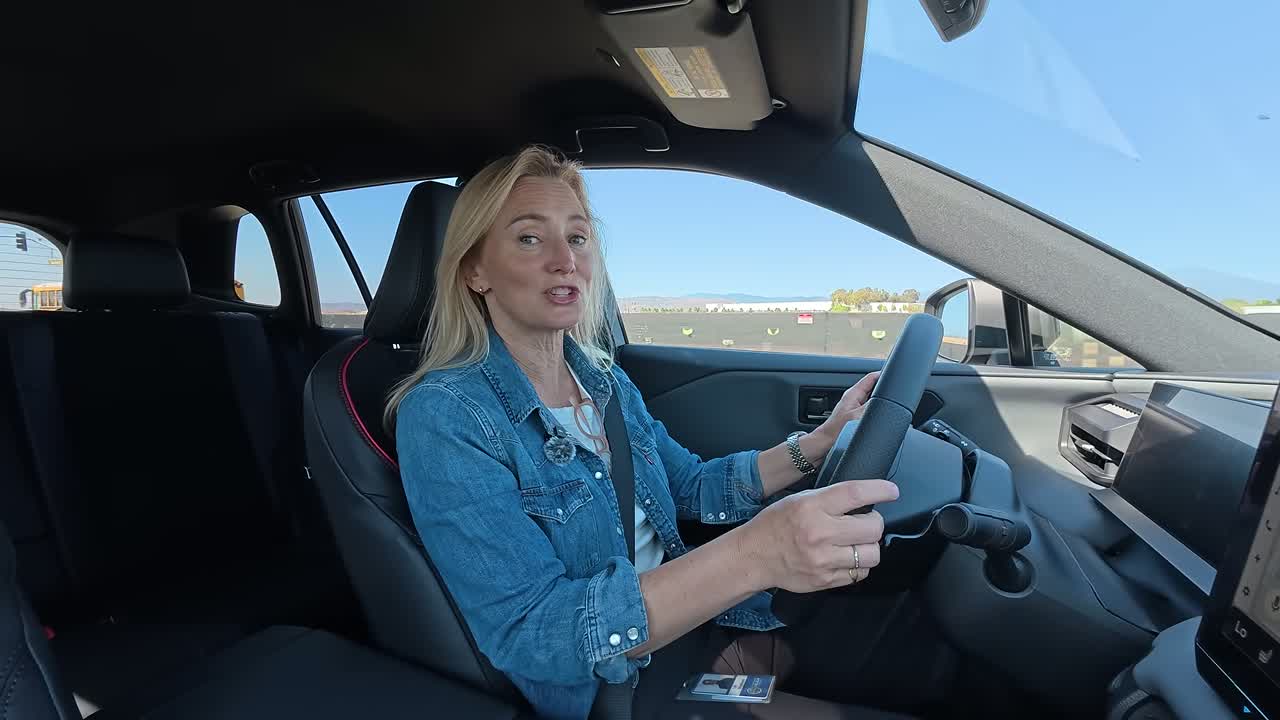
Toyota has built GR models for the Corolla, the Supra, the 86, and the Land Cruiser. The 2026 RAV4 Plug-in Hybrid GR Sport is the first time the Gazoo Racing treatment has been applied to America’s most popular SUV. KBB’s reviewer does not bury the lede: “Boy, howdy. Yes. This thing is a little rocket.”
The numbers back her up. Every 2026 RAV4 Plug-in Hybrid combines a 2.5-liter Dynamic Force Atkinson-cycle four-cylinder with two electric motors and a 22.7 kWh battery for 324 system-net horsepower — up 22 hp from the 302 hp outgoing RAV4 Prime, and 98 hp more than the regular 2026 RAV4 Hybrid (226 hp). Toyota’s official 0-60 mph claim is 5.4 seconds; US News found it “well less than 6 seconds” in informal testing; The Weekly Driver measured 5.7 seconds. For a five-seat family crossover that can still tow 3,500 lb on SE, XSE and Woodland grades, that is genuinely fast.
The GR Sport is more than a body kit. Toyota Gazoo Racing widened the front and rear track by 20 mm, retuned the front MacPherson strut and rear trailing-arm spring and damper rates, added a front lateral performance damper, strengthened the rear suspension brace, and re-tuned the electric power steering with a dedicated Sport mapping. The ride height is lower, summer performance tires are standard, and the red GR brake calipers hide behind unique 20-inch black machined alloys. Inside, the GR Sport gets its own suede-and-synthetic-leather seats with red stitching, a heated GR three-spoke wheel with paddle shifters, suede knee pads on the center console, alloy pedals, a digital rear-view mirror and a head-up display.
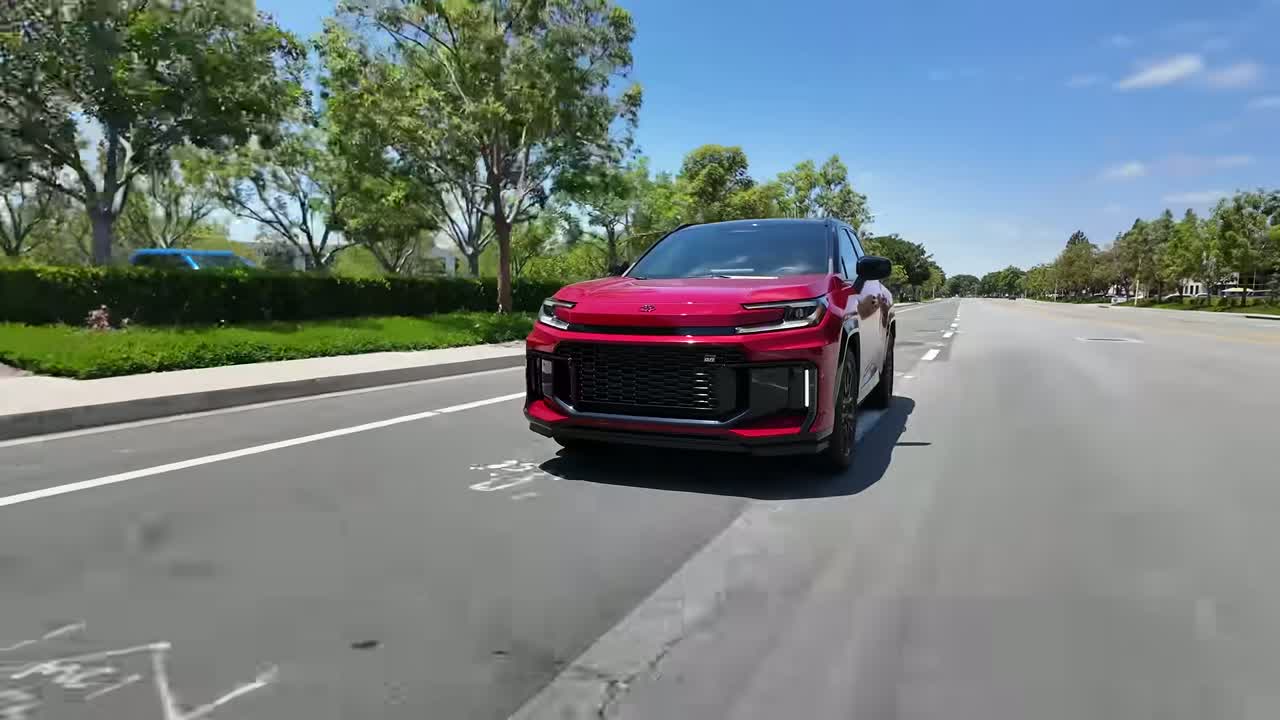
KBB notes two honest caveats. The steering is “a little bit light” with “a big spot that’s a little dead on the center” even in Sport mode, which feels underdone for a chassis that can comfortably cruise at 90-100 mph. And the Gazoo team could have pushed the suspension tuning “just a little bit harder” — you still feel body roll in tight turns. The brakes, however, are substantive and confident, with regen blended cleanly enough that the transition is almost invisible. The verdict in the review: a “really effective package” that still defaults to comfortable Toyota-ish ride quality rather than true hot-hatch territory.
SIGNAL: The 2026 RAV4 PHEV GR Sport is the quickest RAV4 Toyota has ever sold in America, and the first one to wear a GR badge. It is not a Type R — but for a five-seat family crossover that can also drive itself 48 miles on electricity, the combination is unique in the segment.
Trim lineup, and the price-cut surprise
Toyora offers the 2026 RAV4 PHEV in four US trims. All share the same 324-hp powertrain; the differences are in range, efficiency, charging hardware, and wheel/tire packages.
| Trim (US 2026) | MSRP (incl. $1,450 dest.) | EV range (EPA) | MPGe (combined) | Combined MPG (hybrid mode) | Charge port | DC fast? | 0-60 mph |
|---|---|---|---|---|---|---|---|
| SE | $42,950 | 54 mi | 101 | 40 mpg | J1772 | No | 5.4-5.7 s |
| Woodland | $46,720 | 49 mi | 94 | 38 mpg | CCS | Yes | 5.4-5.7 s |
| XSE | $48,685 | 52 mi | 96 | 40 mpg | CCS | Yes | 5.4-5.7 s |
| GR Sport | $49,950 | 48 mi | 86 | 37 mpg | J1772 | No | 5.4-5.7 s |
Put next to the outgoing 2025 RAV4 Prime — which started at $46,265, made 302 hp, delivered 42 miles of EPA EV range and 38 mpg combined — the 2026 redesign is remarkable. The base SE is $3,315 cheaper (about 7.2% lower), 22 hp stronger, 12 miles better in EV range, and 2 mpg thriftier in hybrid mode. Price down, capability up: a combination almost never seen in a mid-cycle redesign.
Two quirks are worth flagging. First, the charge-port split is unusual: the SE and GR Sport ship with the older J1772 connector, while the XSE and Woodland use CCS. Neither is the NACS (Tesla) connector the rest of the industry is migrating to; Toyota confirmed NACS is coming but has not announced when. KBB notes: “Both of those are not kind of what everybody’s doing right now.” Second, only the CCS-equipped XSE and Woodland support DC fast charging at about 35 minutes from 10-80%; the SE and GR Sport rely on Level 2 at about four hours for a full charge. If you live near a Supercharger, wait for NACS or buy the XSE.
SIGNAL: Toyota just cut the entry price by about 7.2% while adding 22 hp and 12 miles of EV range. In today’s car market, that combination is rare enough to be the whole story.
RAV4 PHEV vs the compact-SUV plug-in field
The brief from Kelley Blue Book told us to compare the RAV4 PHEV against three specific competitors: the Honda CR-V Hybrid, the Hyundai Tucson PHEV, and the Ford Escape PHEV. Here is the actual 2026 US picture, side by side.
| 2026 model (US) | Base price (incl. dest.) | EV range (EPA) | MPGe | Hybrid-mode mpg (combined) | System horsepower | AWD? |
|---|---|---|---|---|---|---|
| Toyota RAV4 PHEV (SE) | $42,950 | 54 mi | 101 | 40 | 324 | Standard |
| Hyundai Tucson PHEV (SEL) | ~$42,275 | 32-33 mi | 77 | ~35 | 268 | Standard |
| Ford Escape PHEV | $36,895 | 37 mi | 101 | 40 | 210 | No (FWD only) |
| Honda CR-V Hybrid (Sport) | $37,080 | None (no PHEV in US) | n/a | 40 | 204 | Optional |
The RAV4 PHEV is the range, horsepower and traction benchmark of this group: 21-22 more EV miles than Tucson or Escape, 56-114 more system horsepower than any rival, and standard AWD across the lineup. The Tucson PHEV undercuts it slightly on price but loses 20+ miles of EV range and 23 MPGe. The Escape PHEV is the cheapest of the three plug-ins at $36,895, ties the RAV4 SE on MPGe (101), and offers 37 miles of EV range — but it is front-wheel-drive only, and Ford does not sell it in California or other CARB-states following emissions rules, which removes it from a huge chunk of the US market. Honda, notably, does not sell a CR-V PHEV in America at all; the 204-hp CR-V Hybrid is the closest analog, and it requires you to run gasoline for every mile.
SIGNAL: The RAV4 PHEV is the only compact plug-in SUV in America that gives you 50+ EV miles, standard AWD, and a 320+ hp powertrain under $50,000. The Tucson is cheaper to start; the Escape is the cheapest plug-in; the CR-V Hybrid has no plug. None of the three rivals match the RAV4 on all three axes at once.
Why the US market is rediscovering the plug-in hybrid
The federal $7,500 Clean Vehicle Credit expired on September 30, 2025, under the One Big Beautiful Bill Act. The OBBBA loan-interest deduction ($10,000/year) replaced it, but only for vehicles assembled in the United States — which excludes the Japan-built RAV4 PHEV. That policy shift is reshaping what Americans are buying.
Q2 2026 retail data from Urban Science, drawing on daily new-vehicle sales through June 30, 2026, shows just how violently the market has tilted:
- Hybrid (HEV): 592,018 units, +26.2% YoY, 18.1% share — the only electrified powertrain growing.
- Battery electric (BEV): 242,240 units, -13.9% YoY, 7.4% share.
- Plug-in hybrid (PHEV): 46,534 units, -26.6% YoY, 1.4% share.
The US Energy Information Administration confirms the same picture for Q2 2026: 24% of all new light-duty vehicles sold were electrified (up from 22% a year earlier). HEV hit a record 16% share. BEV slipped from 7% to 6%, PHEV from 1.9% to 1.4%. BEV market share peaked at 12% in September 2025, the month before the credit expired. Half-year totals compiled by EE Times China / BigGo Finance are even more brutal: H1 2026 PHEV sales fell 43.1% YoY, while HEV rose 19.4% and Toyota took the top US sales spot with 585,000 units, +2.6%.
Why are buyers walking away from full EVs and plug-ins in droves? The biggest single factor is charging access. Roughly 80% of all EV charging happens at home, but only about 5% of US apartment buildings currently offer any on-site EV charging (per the National Multifamily Housing Council and EVS for All America). An estimated 34% of American households are renters without a dedicated parking space — the second-largest structural barrier to EV adoption, behind range anxiety, in J.D. Power’s 2026 US EV Consideration Study. For those buyers, public DC fast charging costs two to three times what home charging does and adds 20-30 minute stops every 200-280 highway miles.
The economics also hurt BEVs. The average new EV transacts around $62,000 vs about $47,600 for the average new hybrid — roughly a $14,400 gap the federal credit used to bridge. New EVs lose about 57% of their value over five years vs about 35% for hybrids. A PHEV like the RAV4 sidesteps both problems: the 54-mile EPA EV cushion covers the average US commute (under 40 mi/day) on electricity, and the moment you exceed it, the vehicle becomes a 40 mpg hybrid with no public-charging dependency. You can plug it in at home on Level 1 (120V) and still cover most daily miles.

SIGNAL: A 54-mile EPA EV window covers the average American commute entirely on electricity. Beyond that, the RAV4 PHEV becomes a 40 mpg hybrid that needs no charger, no app and no subscription. In a year when BEV sales are down 13.9% and PHEVs are down 26.6%, that flexibility is the whole pitch.
Verdict: the right plug-in at the right time
KBB calls the 2026 RAV4 Plug-in Hybrid “an incredible time to be alive” if you want something “super sporty but still practical.” The GR Sport adds genuine chassis hardware, real performance tires, and the only GR badge ever attached to a RAV4 in the US. None of the three named rivals — CR-V Hybrid, Tucson PHEV, Escape PHEV — delivers 50+ EV miles, AWD and 300+ hp at this price.
For American buyers in 2026, the math is clearer than it has been in years. The federal EV credit is gone; PHEV sales collapsed 26.6% in Q2 even though the vehicles themselves are objectively better than they were 12 months ago; home-charging access is concentrated in the 64% of households that own single-family homes. The RAV4 PHEV slots into that gap precisely: a 40-mpg family hauler that doubles as a 54-mile daily EV if you can plug in, and asks nothing of you if you cannot.
If you want maximum EV range, buy the SE at $42,950 and accept J1772 plus a four-hour Level 2 fill. If you want DC fast charging for road trips, step up to the CCS-equipped XSE at $48,685 and wait for NACS. If you want the GR chassis and do not mind losing 6 miles of EV range and 15 MPGe to summer tires, the GR Sport at $49,950 is the most fun RAV4 Toyota has ever sold in America.
Toyota began US deliveries of the 2026 RAV4 Plug-in Hybrid in spring 2026. Japan got the new RAV4 PHEV on March 9, 2026; Australia launched it for the first time ever this year, where the GR Sport AWD lists at AUD $66,340 (about USD $43k at current rates). In every market, the message is the same: the plug-in RAV4 is the no-compromise choice for the post-credit, charger-limited America.
Is the 2026 RAV4 PHEV the same as the old RAV4 Prime?
Toyota dropped the “Prime” nameplate starting with the 2025 model year, so the 2026 RAV4 Plug-in Hybrid is the direct successor to the RAV4 Prime — but it is a full sixth-generation redesign, not a carryover. The new car gets a 22.7 kWh battery (up from 18.1 kWh on the previous Prime), 324 hp (up from 302), 54 miles of EPA EV range on the SE (up from 42 on the 2025 Prime), and the new GR Sport trim. Pricing dropped about 7.2%.
How long does the RAV4 PHEV take to charge?
It depends on the trim. The XSE and Woodland get a CCS connector and DC fast charging at about 35 minutes from 10% to 80%; Level 2 takes roughly 2.5 hours on those trims. The SE and GR Sport ship with J1772 and no DC fast support; Level 2 fills them in roughly 3.5-4 hours. Both groups will eventually support NACS, but Toyota has not confirmed a date.
Why does the GR Sport have less EV range than the SE?
Summer performance tires, the stiffer GR suspension, and the lower ride height cost the GR Sport about 6 miles of EPA EV range (48 mi vs 54 mi on the SE) and about 15 MPGe (86 vs 101). You are paying for chassis hardware, not losing engineering quality. If your priority is maximum electric miles, buy the SE and add summer tires aftermarket.
Is the federal $7,500 EV tax credit available on the 2026 RAV4 PHEV?
No. The Clean Vehicle Credit (Section 30D, up to $7,500 new) and the used-EV credit (Section 25E, up to $4,000) both expired on September 30, 2025 under the One Big Beautiful Bill Act. The RAV4 PHEV was built in Japan, so it would not have qualified for the new OBBBA auto-loan-interest deduction even if it were still on offer. State credits still exist in California, New York, Colorado and Massachusetts (roughly $1,500-$7,500 each), so check your state DMV before assuming no incentive applies.
When does the GR Sport go on sale in the US?
Toyota began 2026 RAV4 Plug-in Hybrid US deliveries in spring 2026. The GR Sport trim is positioned at the top of the lineup and is available through Toyota dealers nationwide now; expect waiting lists in coastal markets where RAV4 demand routinely runs ahead of supply.
Related reading on EVCUBE
Sources
- Toyota.com — 2026 RAV4 Plug-in Hybrid official model page (324 hp, 54 mi EPA EV range, 101 MPGe SE, 0-60 in 5.4 s)
- Toyota Canada media release — 2026 RAV4 Plug-in Hybrid pricing, MSRP $48,750 CAD, 20% increase in all-electric range, first-ever GR SPORT
- Urban Science — Q2 2026 U.S. EV Sales Report (HEV +26.2% YoY to 592k units / 18.1% share; BEV -13.9%; PHEV -26.6%)
- U.S. Energy Information Administration — Today in Energy: Hybrid sales rise while battery electric sales remain lower after tax credit expiration
- Cars.com — More Range, Less Money: 2026 Toyota RAV4 Plug-In pricing, base SE 52 mi / 41 mpg / 324 hp at $42,950 vs 2025 Prime at $46,265
- U.S. EPA fueleconomy.gov — 2026 Ford Escape PHEV: 37 mi EV range, 101 MPGe combined, 40 mpg hybrid mode, MSRP $35,400
- U.S. News & World Report — 2026 Toyota RAV4 Plug-In Hybrid: trim pricing SE $41,500 / Woodland $45,300 / XSE $47,200 / GR Sport $48,500