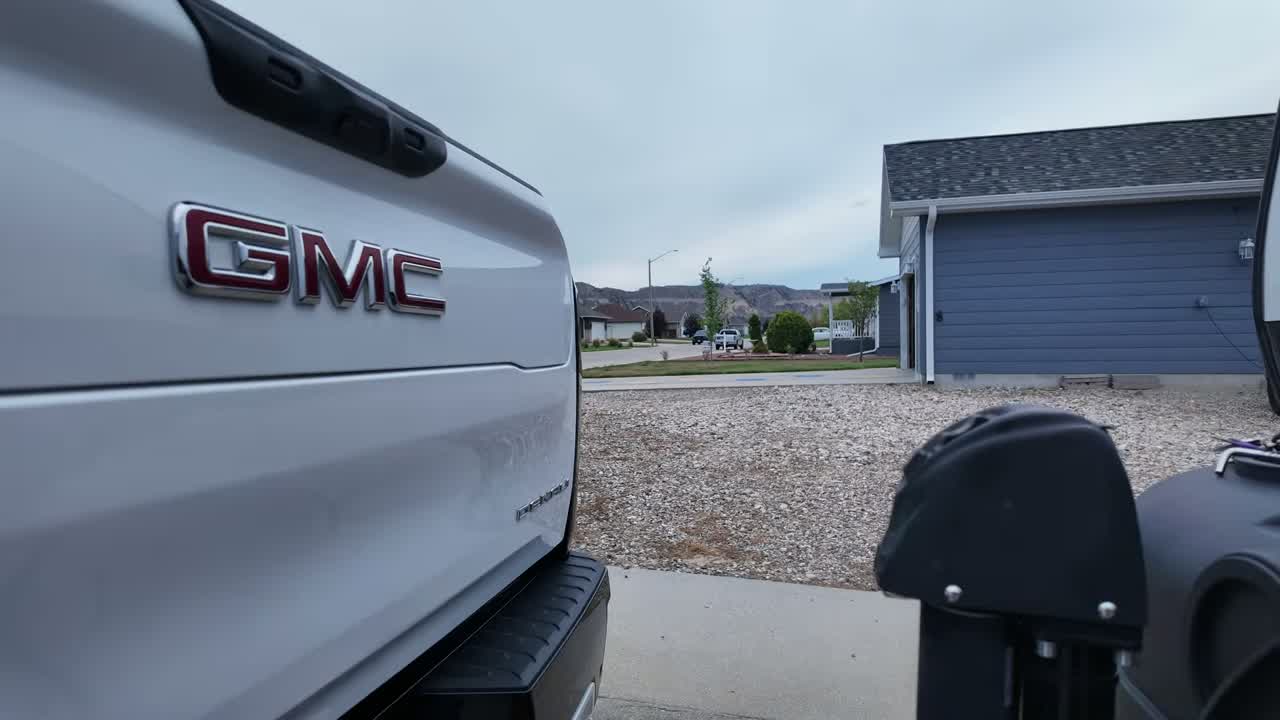
Hitch a 30-foot camper to a 2026 GMC Sierra EV Denali and the range display drops to 298 miles before you leave the driveway. Tim from Pickup Truck Plus SUV Talk did it anyway — 152 miles round trip to a Nebraska campground — and came home with the most honest electric-towing data you’ll see this year.
The Setup: 9,100 Pounds of Truck, 30 Feet of Trailer
The numbers on the door sticker set the stage. The 2026 Sierra EV Denali in this test is rated for 10,000 pounds of conventional towing, a 1,000-pound max tongue weight, a 10,500-pound GVWR, and a gross combined weight rating of 19,700 pounds. Payload is a modest 1,469 pounds, because the truck itself weighs a staggering 9,131 pounds — roughly 3,500 pounds more than a comparable gas Sierra 1500 crew cab. That mass is mostly battery, and it’s the reason this whole experiment is interesting.

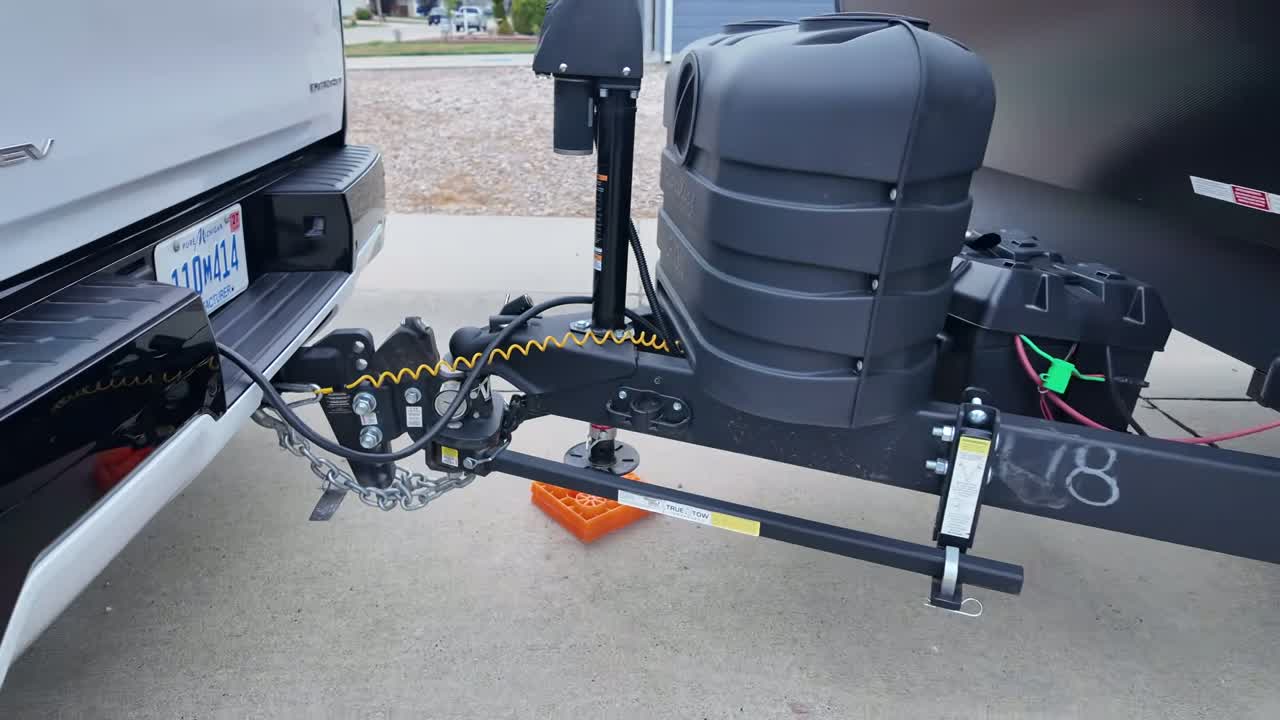
The trailer is a Keystone Coleman Light 26BX: 30 feet 3 inches long, 10 feet 9 inches tall, with a 5,290-pound dry weight and a 7,000-pound GVWR. Loaded for this trip — no fresh water, some food and gear — it ran about 5,500 pounds. That’s a textbook half-ton camping load, well under the truck’s rating, and it’s almost exactly the kind of trailer the “can an EV really go camping?” debate keeps circling around.
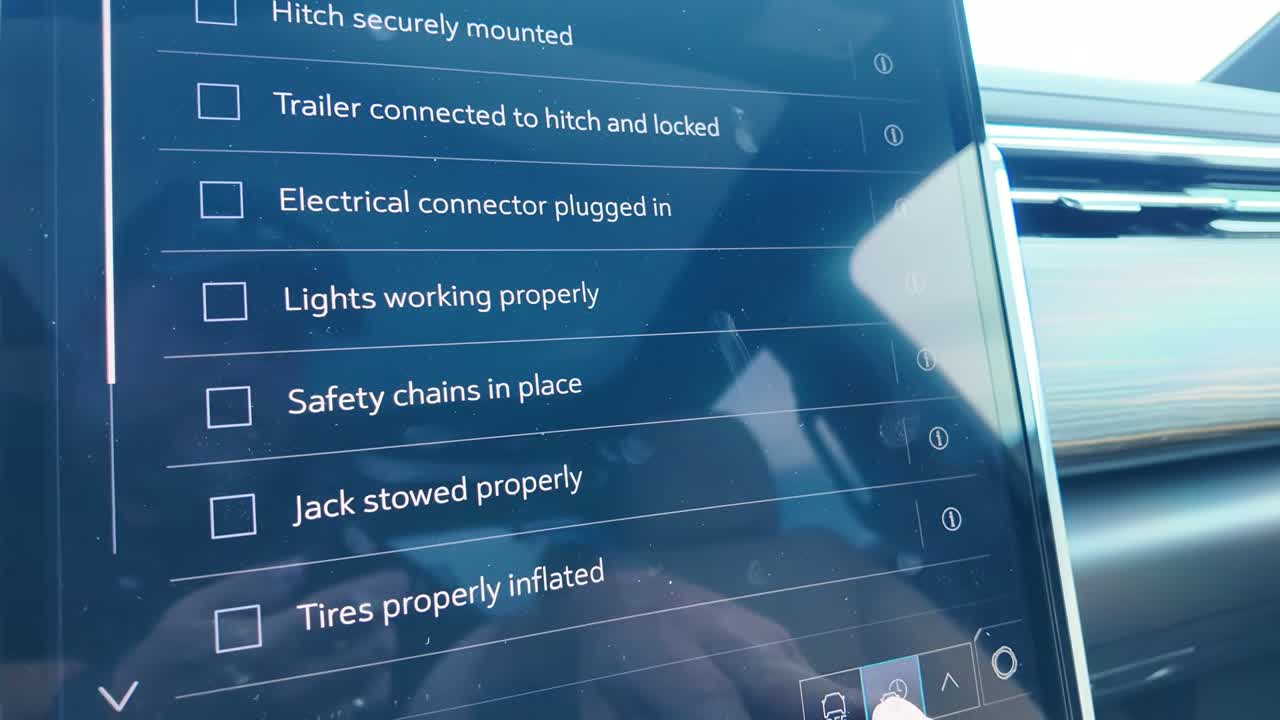
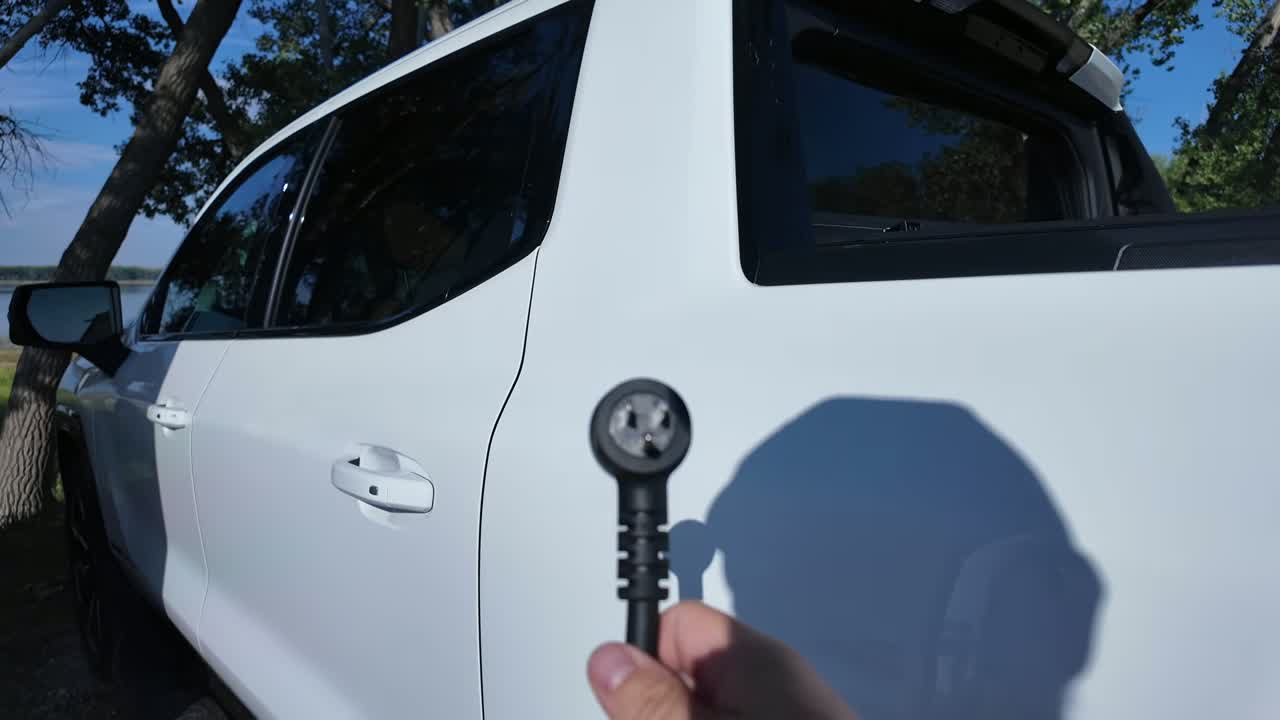
One detail worth copying: GM’s trailering software walks you through the hookup. The truck stores a trailer profile, runs a light test, checks the electric brake connection, lets you set brake gain from the screen, and even flags whether you’re over the gross combined weight. With the trailer detected, the range estimate immediately cut itself down to 298 miles from a full charge — the truck splitting its optimistic solo number roughly in half before a single mile was driven.
What 30 Feet of Trailer Does to the Battery
The route was about 76 miles each way to a Nebraska state campground, mostly two-lane country roads at 65 mph and interstate stretches at 70–80 mph, on a 94°F day with the prairie wind doing what prairie wind does.
The scoreboard, leg by leg:
- Efficiency while towing: as low as 1.6 miles per kWh on the outbound leg — the truck’s own trip computer called the overall trip 2.2 mi/kWh once the solo miles were averaged in. For context, this same truck can top 2.5 mi/kWh unloaded.
- Battery used: each ~76-mile leg consumed 38% of the pack — 100% down to 62% on arrival, and after a full overnight recharge, 100% down to 62% again coming home.
- Implied towing range: right around 195–200 miles from full to empty, though nobody sane tows to 0%. Call it 150–160 usable miles with a 20% buffer.
That’s a range cut of roughly 55–60% versus the Denali’s unloaded rating. Sounds brutal — until you line it up against every other electric truck on the market. The penalty isn’t a GMC problem; it’s physics dragging a 10-foot-9 wall through the air.
| Truck | EPA / est. range (unloaded) | Real-world towing range (5,000–7,000 lb trailer) | Range retained |
|---|
| GMC Sierra EV Denali (this test) | up to 460–478 mi | ~195 mi (1.6 mi/kWh observed) | ~42% |
| Chevrolet Silverado EV (205 kWh) | 450–492 mi | 210–280 mi | ~50–55% |
| Rivian R1T Max Pack | 410 mi | 150–225 mi | ~45–50% |
| Ford F-150 Lightning ER | 320 mi | 120–170 mi | ~45–50% |
| Tesla Cybertruck AWD | 325–340 mi | 115–180 mi | ~45–50% |
Read that table twice and the GM trucks’ advantage becomes obvious: they don’t lose a smaller percentage, they just start from a far bigger battery. The Sierra EV’s ~200-mile towing range beats what a Lightning or Cybertruck manages by 30 to 80 miles, purely on pack size. It’s a brute-force answer, but when you’re 20 miles from the campground watching the guess-o-meter recalculate, brute force is exactly what you want.
The $40 Campground Charging Trick
Here’s the part of this test that changes the math. The campsite had 50-amp electrical service — standard at thousands of US state parks and private RV campgrounds. Using an adapter on the truck’s dual-level charge cord, the Sierra EV pulled a continuous 40 amps (the 80% rule for continuous loads), adding about 9 miles of range per hour.
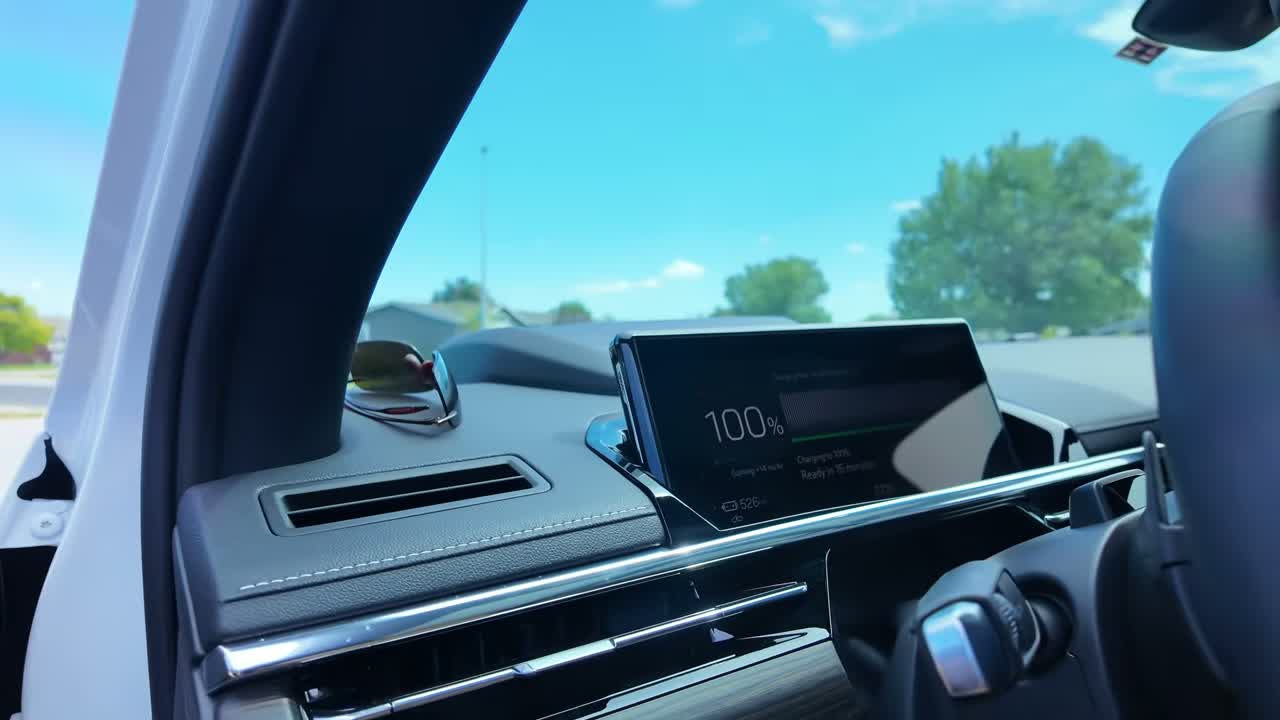
Plugged in at dinner, the truck showed a 7 a.m. finish time — and by morning it sat at 100%. The campsite cost $40 for the night, power included. The truck arrived with 62% and left with a full pack, which means the entire 152-mile round trip effectively cost zero dollars in fuel beyond a campsite fee the family was paying anyway.
Run the same trip in a gas half-ton and the math looks different. Independent testing consistently puts gas full-size trucks at about 10 mpg towing a similar camper — TFL’s F-150 EcoBoost returned exactly that, less than half its EPA rating. At 152 miles, that’s roughly 15 gallons, or about $45–50 at $3-a-gallon regular. Not life-changing money, but every camping weekend, forever, in the EV’s favor — provided your campground has the hookup. A 120V outlet, for the record, is nearly useless here: the truck estimated a Monday finish for a Wednesday-night plug-in.
Super Cruise With a Trailer Is the Sleeper Feature
The spec sheets never capture this, but it may be the best reason to pick a GM truck for towing: Super Cruise works hands-free while trailering, and not just on interstates. This test ran it on a two-lane Nebraska country road at 65 mph, in gusty crosswind, with 30 feet of camper behind. GM says the system now covers more than 600,000 miles of compatible roads in the US and Canada, and it remains the only hands-free driver-assist system that operates with a trailer attached.
The payoff isn’t a party trick — it’s fatigue. Fighting crosswind with a tall trailer is the most tiring part of any towing day, and letting the truck hold the lane changes how you arrive at camp. Two honest caveats from the test, though:
- The stock mirrors are inadequate for a 30-foot camper. Visibility behind the box is poor; plan on towing mirrors or leaning hard on the camera views GM added for 2026.
- High regen braking is powerful enough to rearrange your camper. It works like a diesel exhaust brake — excellent control, near-zero friction brake use — but on the high setting, gear inside the trailer moved more than expected. Pack accordingly.
So Is This a Failure or a Success?
Tim’s own verdict is the right one: it depends entirely on your map. Here’s how the trip grades out on the things that matter.
Towing confidence & stability
Campground charging convenience
Driver-assist while trailering
Towing range for Western distances
If you camp the way most Midwestern and East Coast families do — 50 to 80 miles from home, at a developed campground with electrical service — the Sierra EV Denali isn’t a compromise, it’s an upgrade. You tow with 760 hp and 785 lb-ft of instant torque, you never visit a gas station, you sleep while the truck refills, and you drive home on electrons the campsite fee already covered.
If your camping means 300-mile hauls into the Mountain West with a boondocking site at the end, the math collapses. A ~150-mile comfortable towing radius with a 30-foot trailer, plus fast-charging stops that mostly require unhitching, is not a cross-country towing tool. That’s not pessimism; that’s the door-sticker honesty this segment needs more of.
The Sierra EV doesn’t fail the camping test. It redraws the map of where camping is easy — and you need to check whether your favorite campground is inside the new lines.
How far can the 2026 Sierra EV Denali actually tow a travel trailer?
In this 152-mile real-world test with a 5,500-pound, 30-foot camper at 65–80 mph, the truck used 38% of its battery per 76-mile leg — about 195–200 miles of theoretical towing range, or 150–160 miles keeping a sane reserve. Colder weather, headwinds, or a heavier trailer would shrink that further.
Can you charge an electric truck at a regular campground?
Yes, if the site has 50-amp RV service. Drawing the continuous-rated 40 amps, the Sierra EV added roughly 9 miles of range per hour and went from 62% to 100% overnight. A standard 120V outlet is too slow to matter — the truck estimated several days for a full charge.
Does Super Cruise work while towing?
Yes. GM’s Super Cruise is the only hands-free driver-assist system in the US that operates with a trailer attached, and it works on compatible two-lane roads as well as interstates — over 600,000 miles of mapped roads in the US and Canada.
Related reading on EVCUBE